
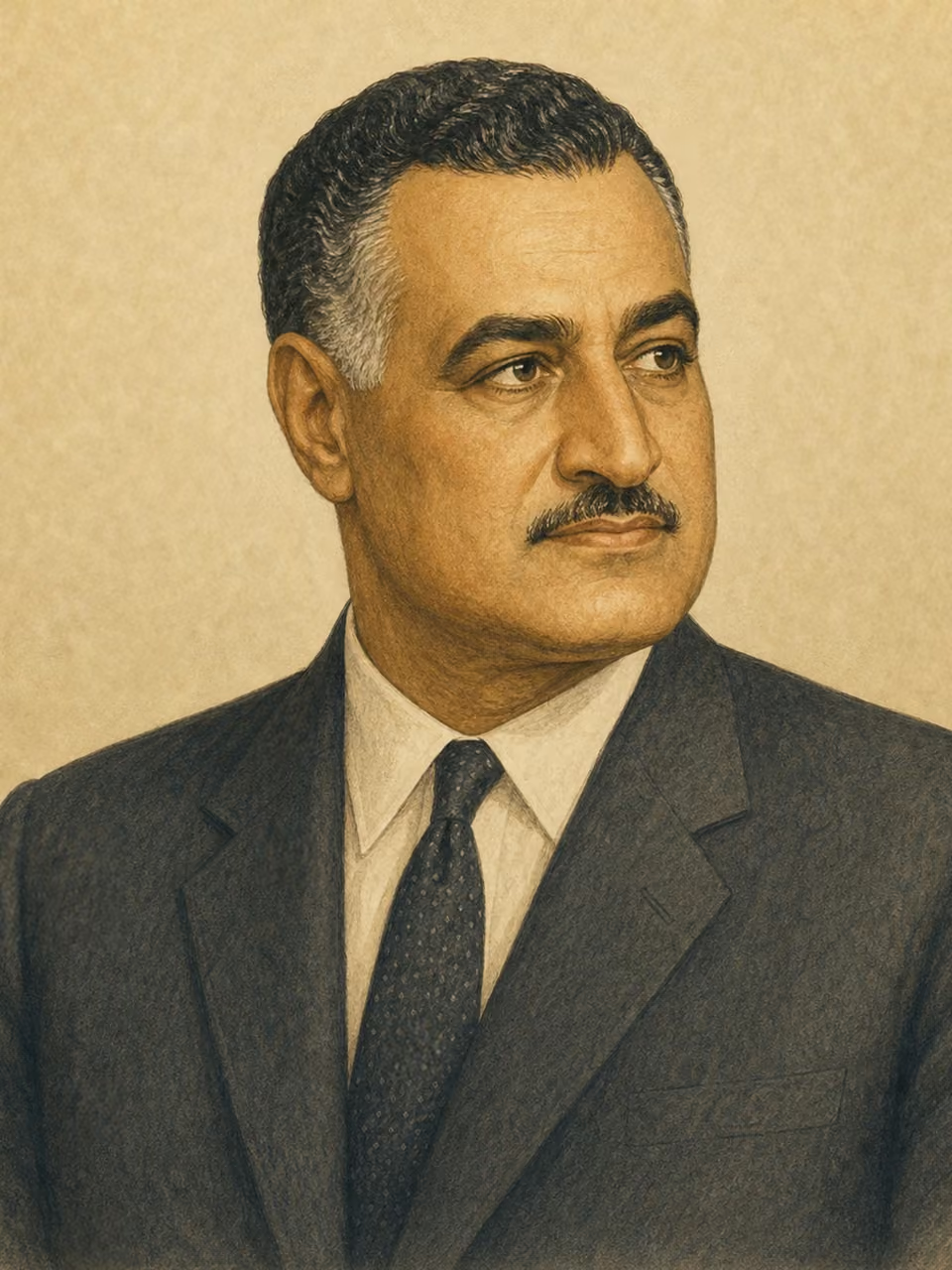
Gamal Abdel Nasser

Portrait: AI-generated imagined likeness

Gamal Abdel Nasser

Politician · Military leader · revolutionary

Years
1918–1970
Birthplace
Egypt
Birth polity
Egypt under the monarchy
Era
Contemporary
Field
Politics
Occupations
Politician · Military leader · revolutionary

Egyptian military officer and politician. He became president after the Free Officers Revolution, and advocated the nationalization of the Suez Canal and Arab nationalism. He is a person who thinks about the independence of the Third World.

View in catalog

Historical context

Places

  • Cairo

    Work

Events

  • Egyptian Revolution of 1952

    1952

    Revolution · Leader

  • Suez Crisis

    1956

    War · Leader

Origins

Origins map
Birth country
Birth country
Egypt

Map: Natural Earth (PD)

Biography

Early life

Born in Egypt, he became a military man and became increasingly dissatisfied with the British military presence and the monarchy. In the Middle East after World War II, major issues were the survival of colonial rule, the establishment of the State of Israel, and social reform.

Achievements

He led the Egyptian revolution of 1952 and abolished the monarchy. In 1956, it nationalized the Suez Canal and became a symbol of anti-colonialism in the face of British, French and Israeli military intervention.

Character & anecdotes

Nasser's speech attracted many people in the Arab world. However, the ideal of Arab unity faced great difficulties due to national interests and military defeat.

Historical Impact

Learning about Nasser shows that the Third World during the Cold War did not simply follow either the US or the Soviet Union, but sought independence through a combination of nationalism, socialism, and non-alignment. His politics are key to understanding states and regionalism in the modern Middle East.