
Suez Crisis
1956
Britain, France, and Israel intervened militarily after Nasser nationalized the canal, but withdrew under international pressure.

- Period
- 1956
- Kind
- War
- Regions
- Middle East, Africa, Europe
- Keywords
- Suez Crisis · nationalization of the Suez Canal · Gamal Abdel Nasser · Anthony Eden · decolonization · United Nations Emergency Force
Follow the story · Four stages
Background
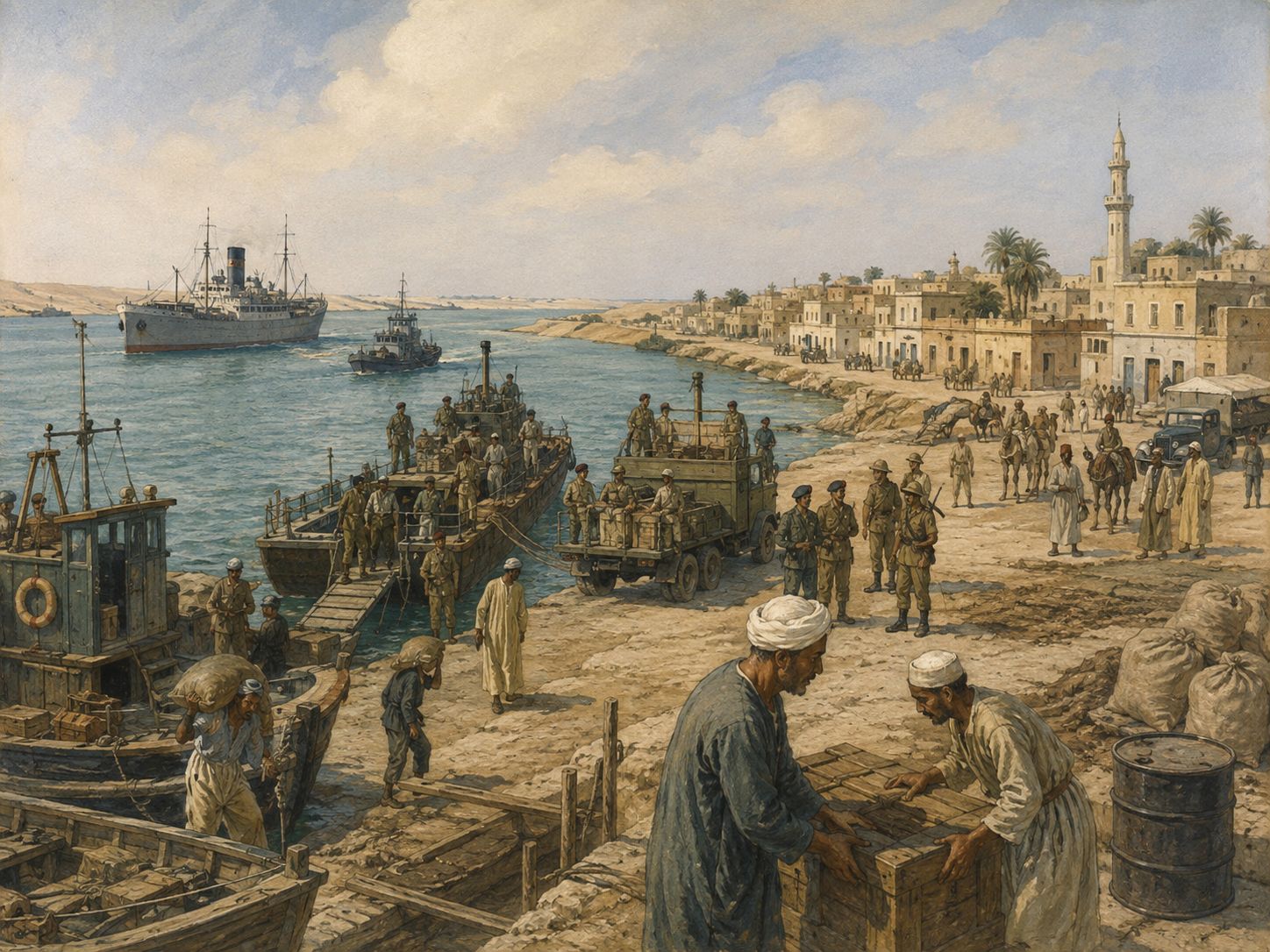
Political, social, and commercial changes around the Suez Canal and Egypt formed the setting: Britain, France, and Israel intervened militarily after Nasser nationalized the canal, but withdrew under international pressure.
- The Suez Canal's construction and its opening as an international route
- Egypt after the 1952 revolution and Nasser's government
- Colonial legacies and the struggle over sovereignty
Course
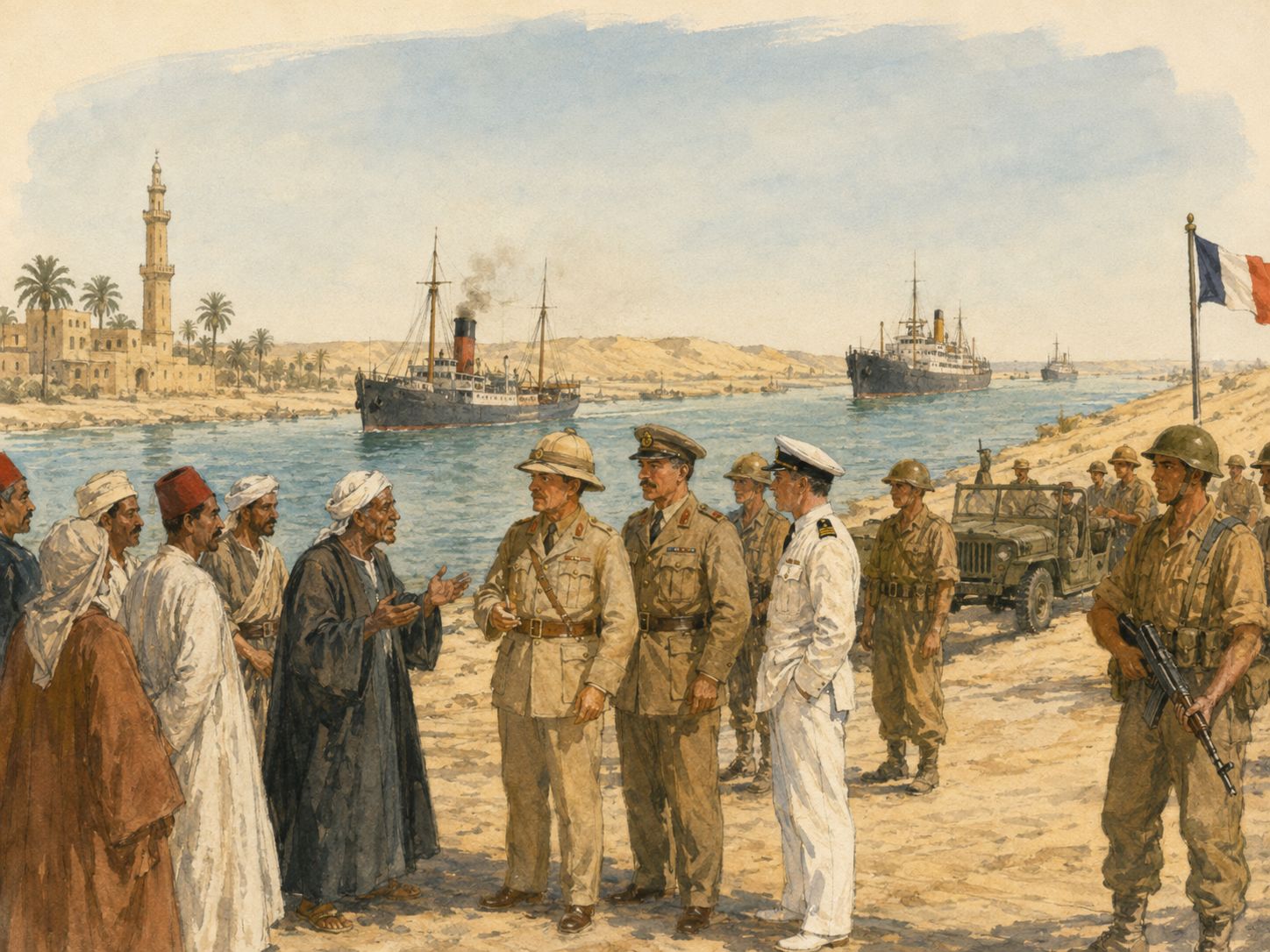
Britain, France, and Israel intervened militarily after Nasser nationalized the canal, but withdrew under international pressure. The choices of the participating powers and responses of local communities shaped the course.
- Nasser's July 1956 nationalization of the canal
- The Israeli, British, and French military intervention
- US and Soviet pressure and the UN-led ceasefire and withdrawal
Outcome
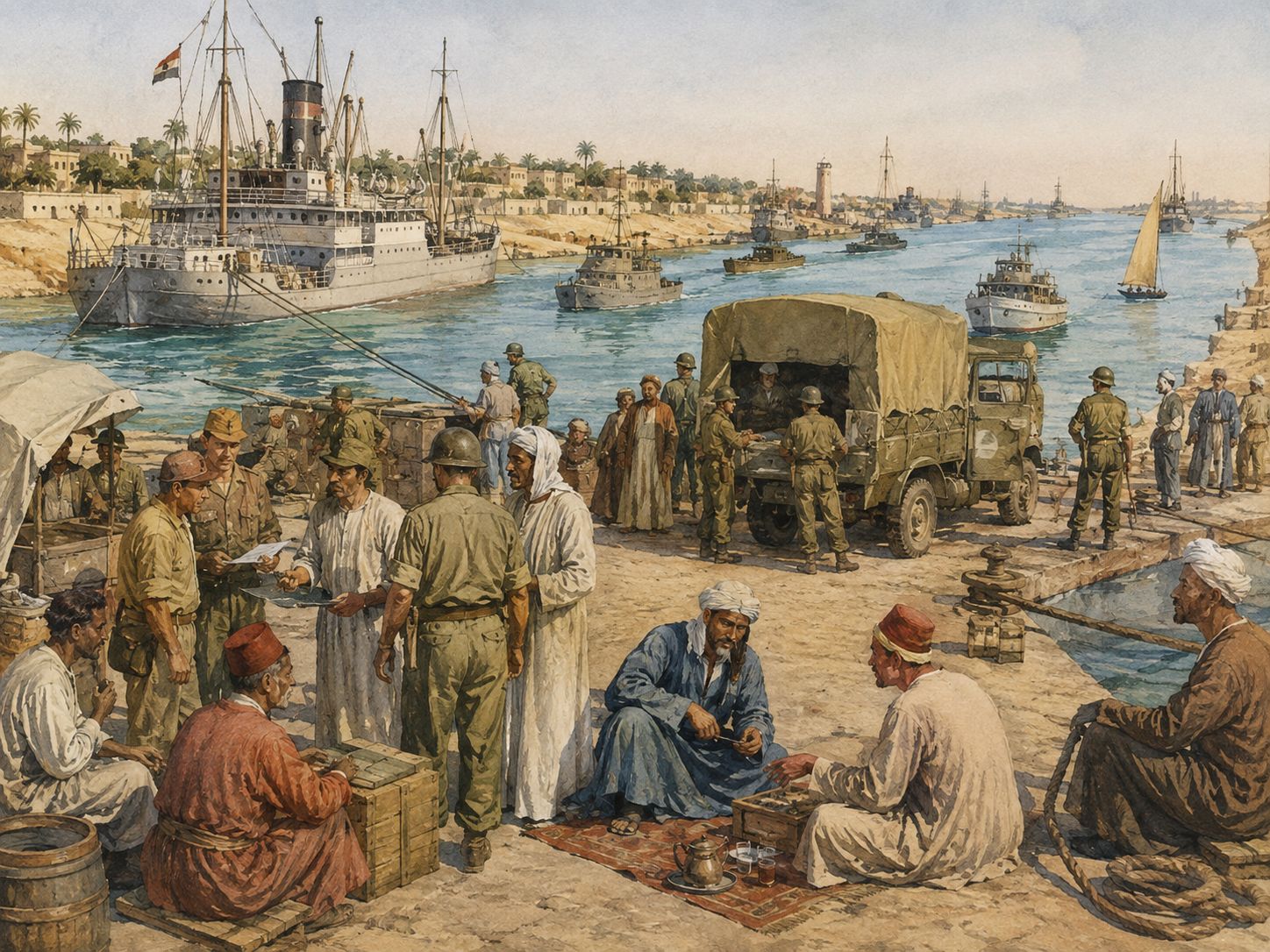
As a result, It exposed the decline of old European imperial influence and new power relations involving the United States, the Soviet Union, and the Middle East.
- Egypt's control over the canal established
- The retreat of British and French influence in the Middle East
- A precedent for UN peacekeeping and a reordering of the Cold War
Historical significance
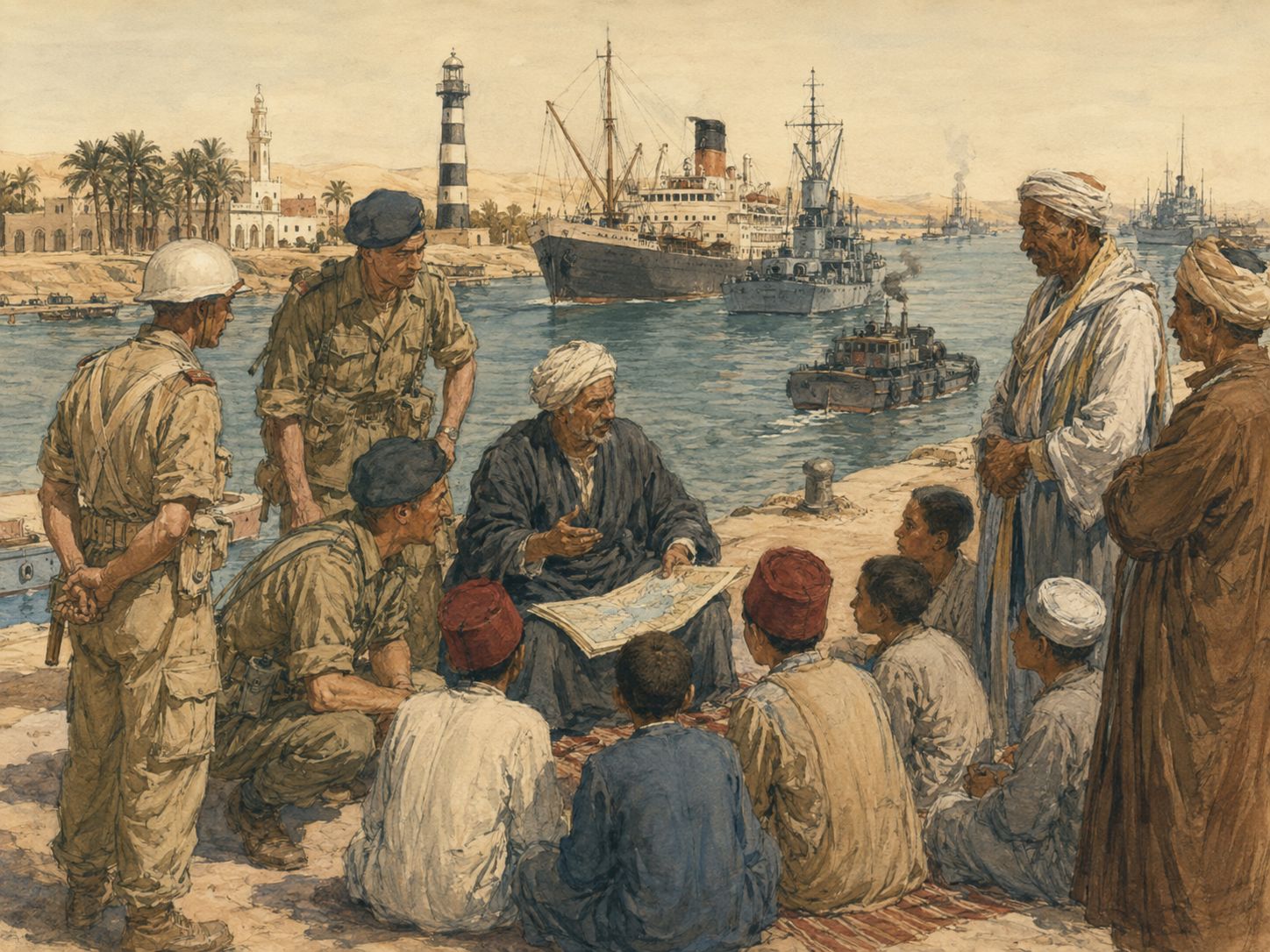
The significance of this event lies in the fact that it exposed the decline of old european imperial influence and new power relations involving the united states, the soviet union, and the middle east.
- Decolonization and sovereignty over resources and routes
- A turning point in which the superpowers restrained former imperial powers
- A reference point for state sovereignty and international intervention in the Middle East


Related figures

Related events
c. 1859
Canal construction and global route
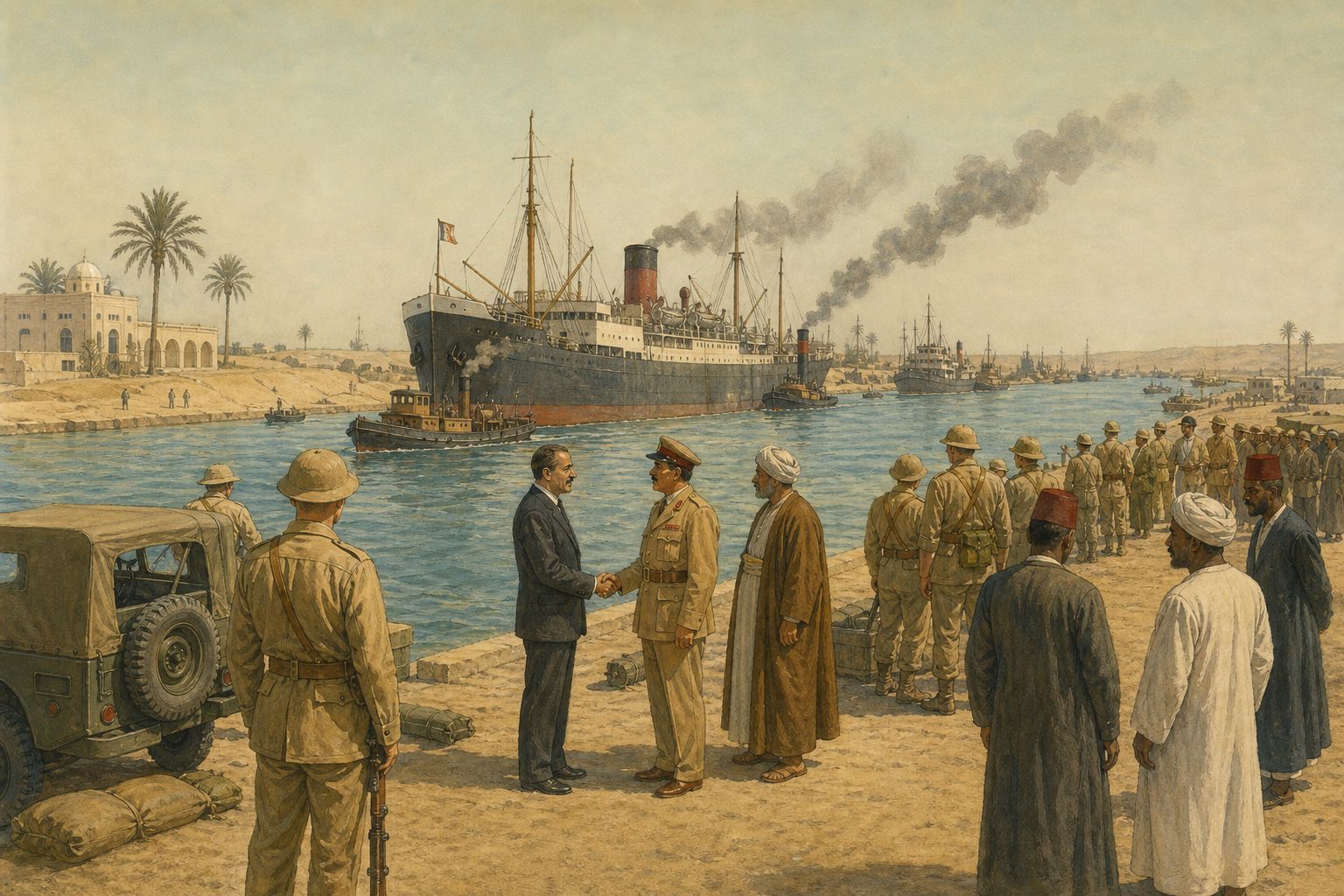
Construction began in 1859 and the Suez Canal opened in 1869, linking the Mediterranean and Red Sea as an international route.
c. 1952
Revolution and the road to nationalization
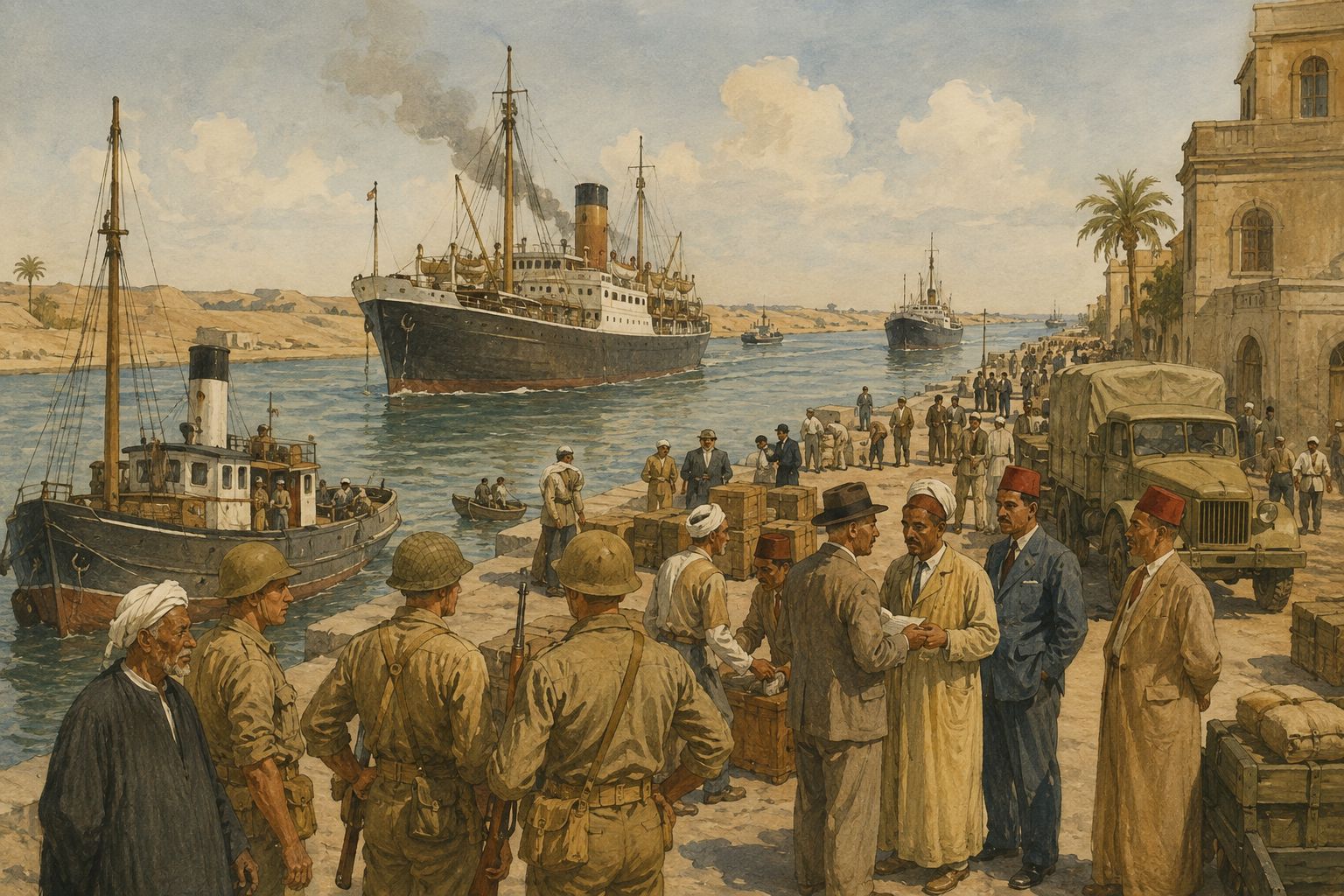
The 1952 Egyptian revolution brought Nasser and the Free Officers to power and sharpened the dispute over the canal's sovereignty.
1956–1957
Invasion and international pressure
Current event
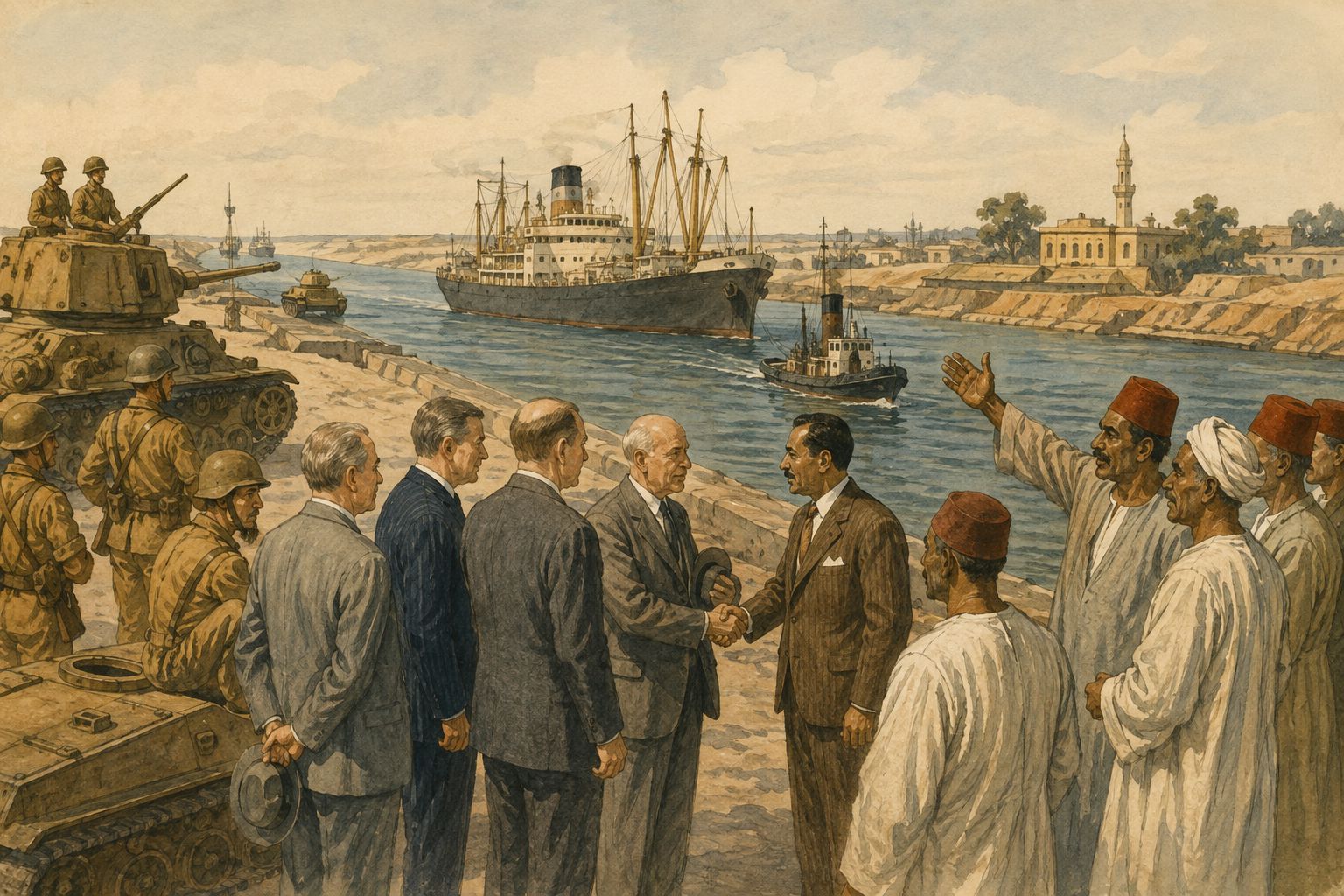
After the 1956 nationalization, Israel, Britain, and France invaded, but US, Soviet, and UN pressure drove the parties toward a ceasefire.
c. 1957
Ceasefire and withdrawal
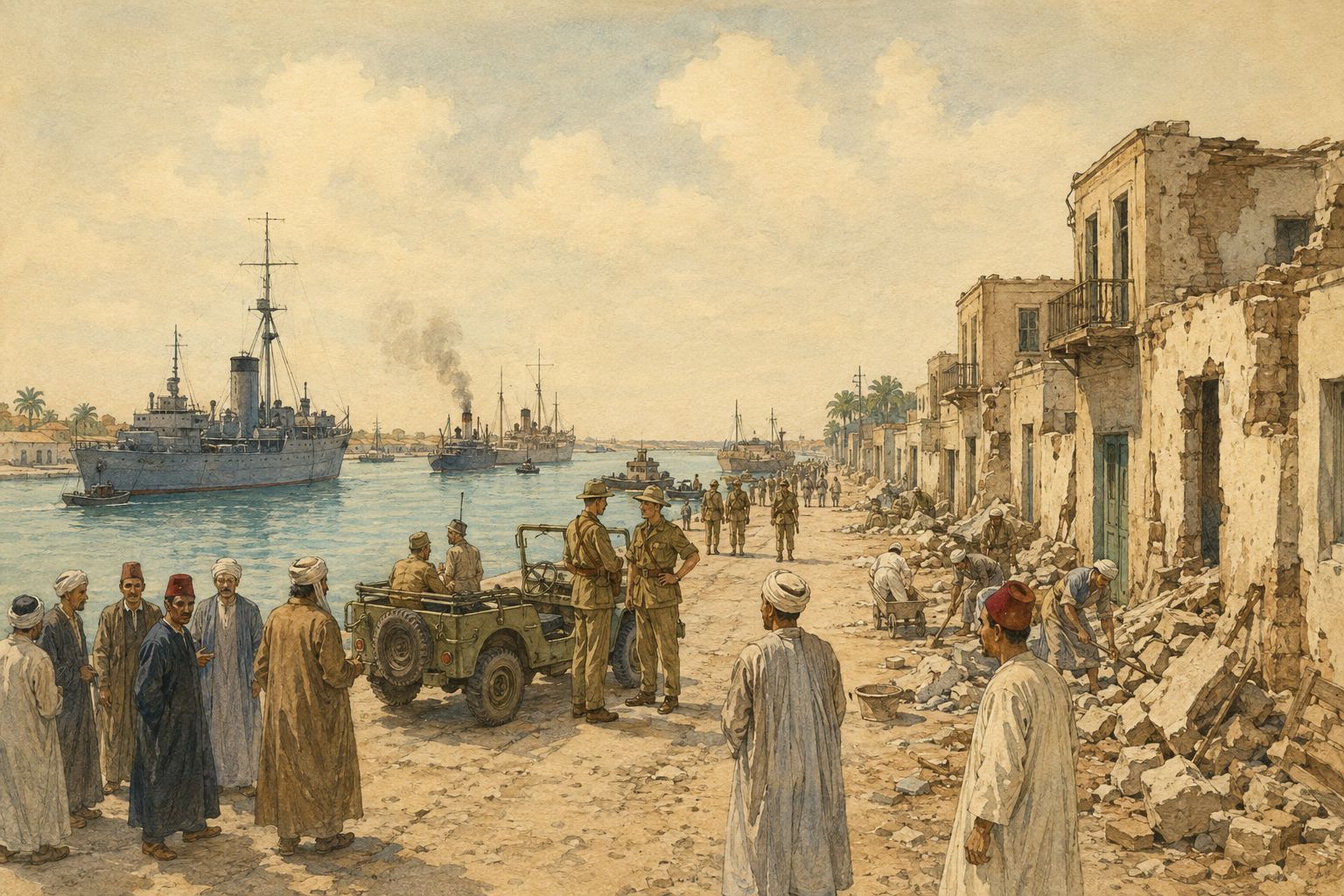
The invading forces withdrew from late 1956 into 1957; after the UNEF deployment, the canal reopened under Egyptian control.
c. 1967
A decolonization turning point
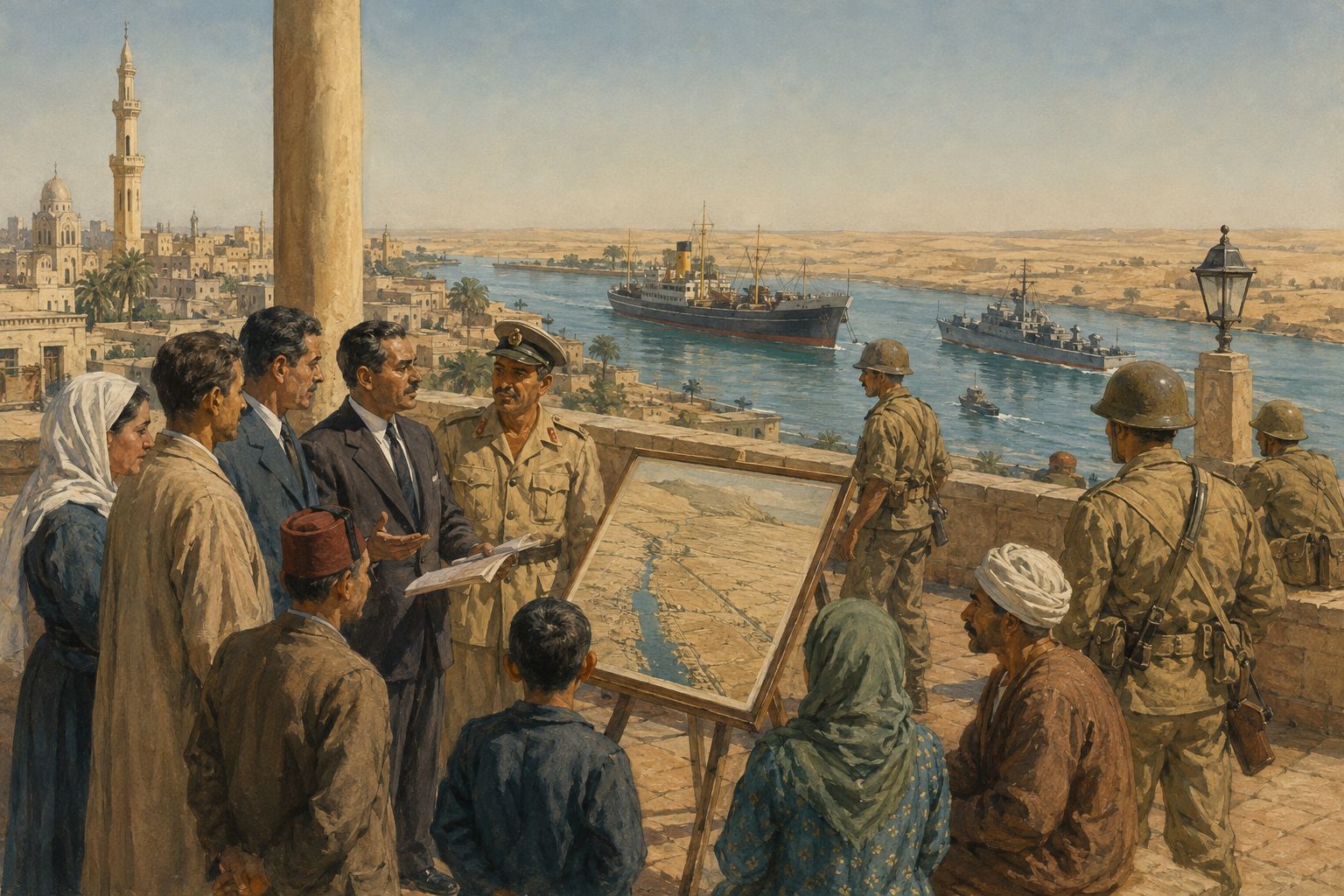
The crisis weakened British and French influence in the Middle East and became a symbol of decolonization and Egyptian sovereignty.


Sources
- Suez Crisis: chronology and settingwww.daiichi-g.co.jpUsed to cross-check the chronology and geographical setting of Suez Crisis.
- Suez Crisis: historical backgroundwww.britannica.comUsed to verify the actors, course, and consequences associated with Suez Crisis.
- Suez Crisis: identifier and related recordswww.wikidata.orgUsed to cross-check the identifier and related records for Suez Crisis.