
Jeremy Bentham

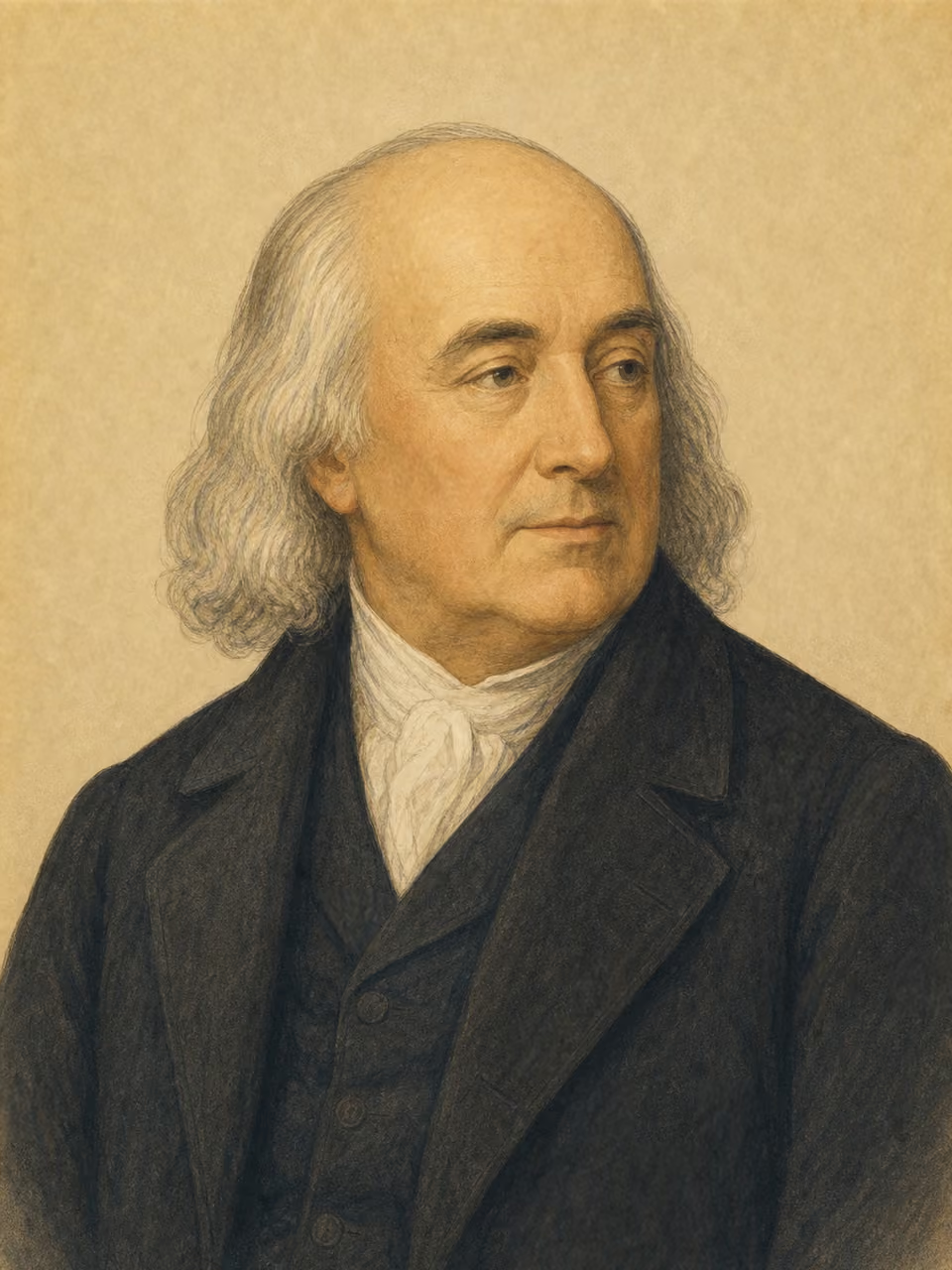
Portrait: AI-generated imagined likeness

Jeremy Bentham

Philosopher · Lawyer · Writer

Years
1748–1832
Birthplace
United Kingdom
Birth polity
Kingdom of Great Britain
Era
Early modern
Field
Philosophy
Occupations
Philosopher · Lawyer · Writer

British thinker who systematized utilitarianism. He tried to evaluate law, politics, punishment, and social reform based on the idea of ​​the greatest happiness for the greatest number. This is an entryway to understanding modern liberalism and reform ideas.

View in catalog

Historical context

Places

  • London

    Birth

  • University College London

    Work

Works & achievements

  • An Introduction to the Principles of Morals and Legislation

    1789

    Book

Events

  • Utilitarianism

    Movement · Leader

Origins

Origins map
Birth country
Birth country
United Kingdom

Map: Natural Earth (PD)

Biography

Early life

Born in London, he studied law at an early age. In England in the latter half of the 18th century, problems with parliamentary politics, industrialization, and the penal system were widespread, and interest in rational institutional reform was growing.

Achievements

He proposed utilitarianism, which evaluates social systems based on calculations of pleasure and pain. He discussed many systems, including criminal law reform, prison reform, representative systems, and religious tolerance, from the perspective of practical welfare.

Character & anecdotes

Bentham is known to have made a will that his body be preserved and displayed after his death. Even seemingly eccentric acts reflect ideas that lead to doubting superstition, authority, and public education.

Historical Impact

If you study Bentham, you will see that in modern society the idea of designing laws and systems rationally based on the interests of society as a whole, rather than on tradition, has become stronger. Utilitarianism has long influenced debates about welfare, punishment, democratic politics, and economic policy.