
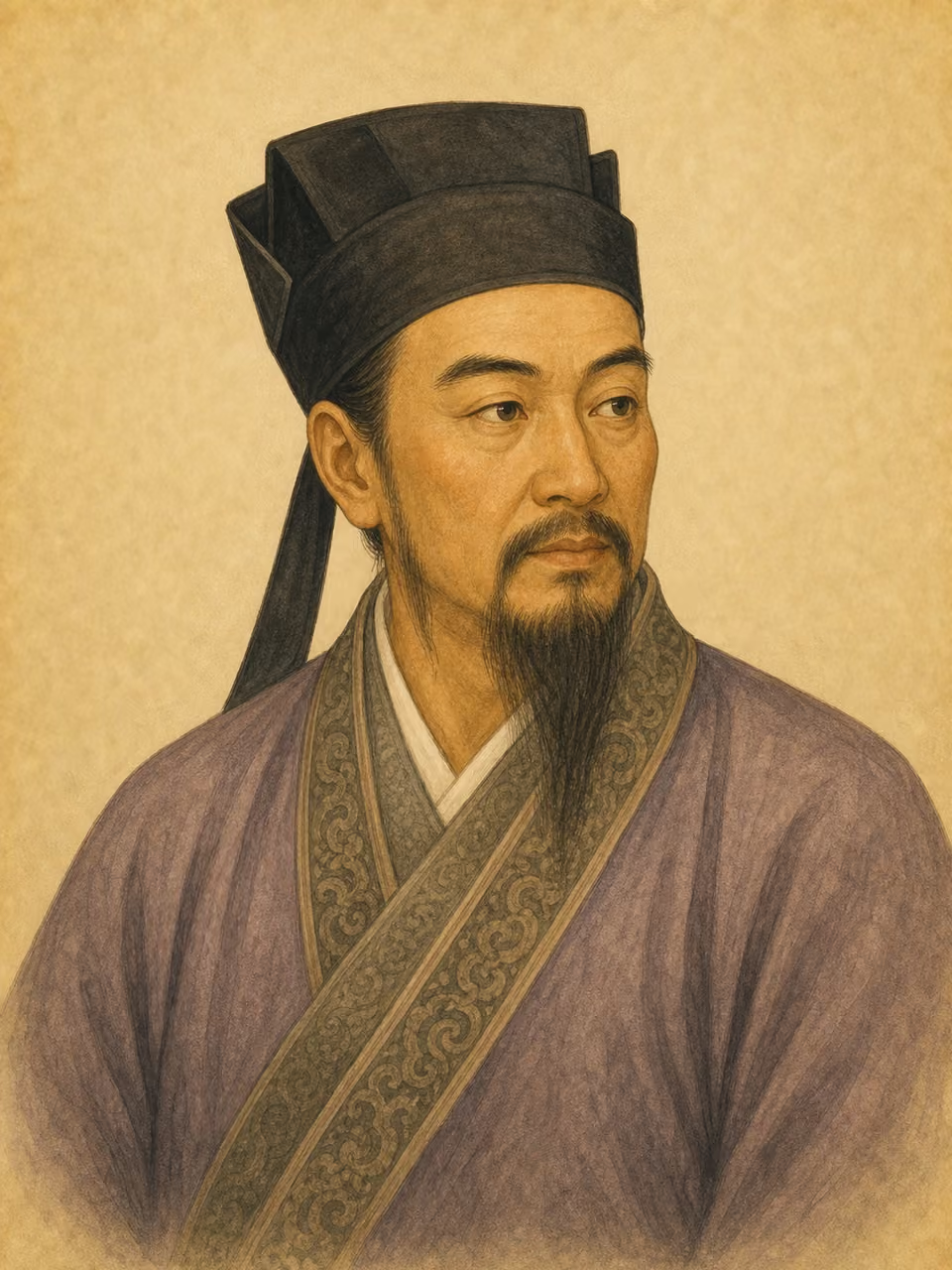
Kong Yingda

Portrait: AI-generated imagined likeness

Kong Yingda

Philosopher · Writer

Years
574–655
Birthplace
China
Birth polity
China from Sui to Tang
Era
Medieval
Field
Philosophy
Occupations
Philosopher · Writer

Confucian scholar of the Tang Dynasty. He was involved in the compilation of the ``Five Classics of Justice'' and supported the standardization of imperial examinations and the interpretation of Confucian scriptures. He is a person who understands the formation of the East Asian cultural sphere.

View in catalog

Historical context

Places

  • Hengshui

    Birth

  • Chang'an

    Work

Works & achievements

  • Correct Meaning of the Five Classics

    653

    Book

Events

  • Tang consolidation of the classical canon

    630–653

    Cultural event · Leader

Origins

Origins map
Birth country
Birth country
China

Map: Natural Earth (PD)

Biography

Early life

Born in China at the time of the transition from the Sui to the Tang Dynasty, he acquired the knowledge of Confucian scriptures. He was active during the era when the unified dynasty established its bureaucracy and incorporated classical interpretation into the national system.

Achievements

During the Taizong period, he organized the annotations of the Confucian scriptures and took the lead in compiling the ``Five Classics of Justice.'' This became the standard for imperial education and later influenced academic studies in China and East Asia.

Character & anecdotes

Kong Yingda's work was not a flashy political event, but the task of standardizing the reading of the classics nationally. This shows that institutionalized knowledge drives society for a long time.

Historical Impact

When we study Kong Yingda, we learn that state management in the Tang Dynasty was supported not only by the military and diplomacy, but also by the standardization of Confucian scriptures and bureaucratic education. This will also lead to understanding the formation of the East Asian cultural sphere, including Japan and Korea. It can also be used for comparison with surrounding areas from the same era.