
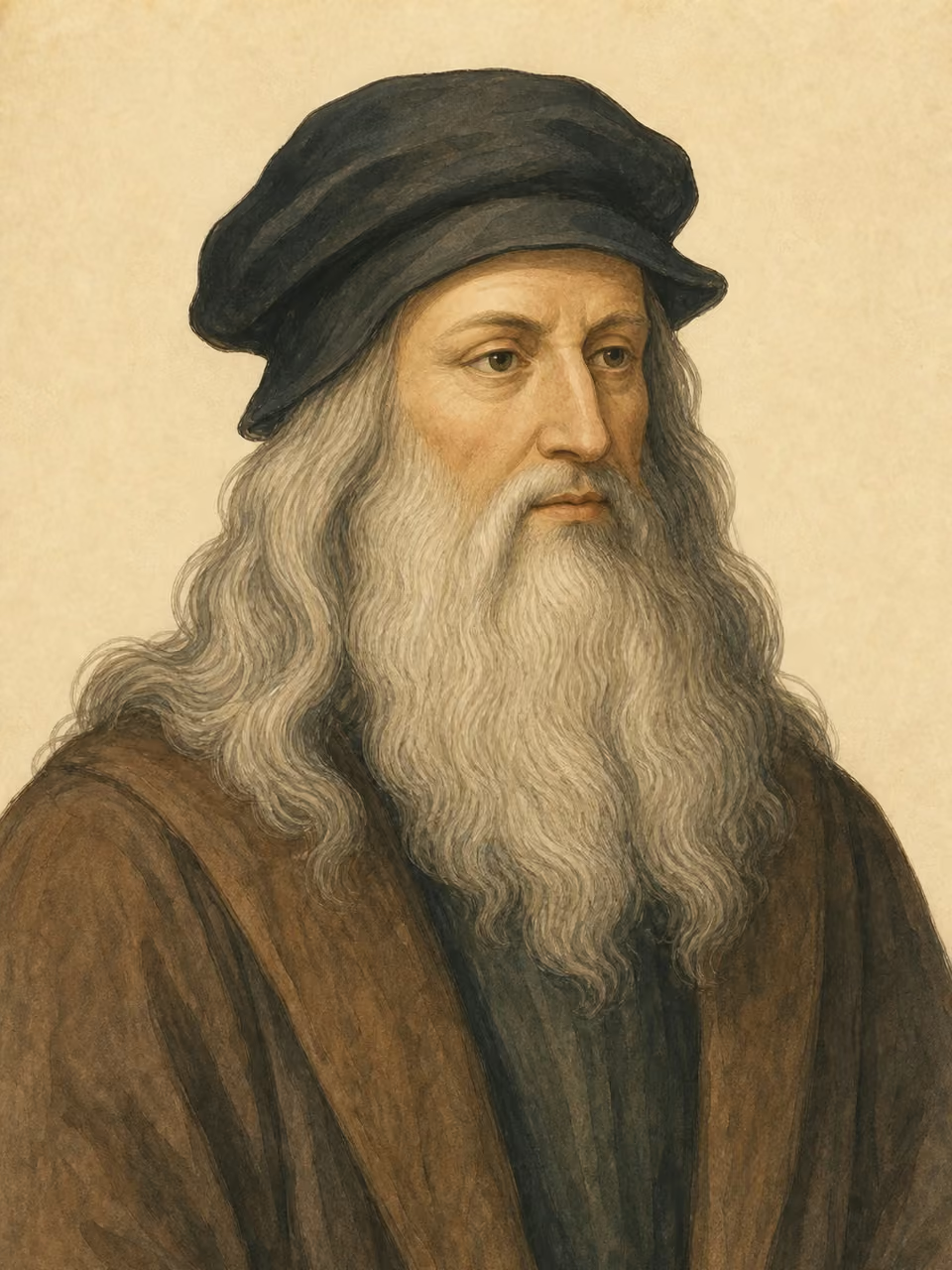
Leonardo da Vinci

Portrait: AI-generated imagined likeness

Leonardo da Vinci

Painter · Sculptor · Engineer · Anatomist · Inventor

Years
1452–1519
Birthplace
Italy
Birth polity
Republic of Florence
Era
Early modern
Field
Art
Occupations
Painter · Sculptor · Engineer · Anatomist · Inventor

Moving between court commissions in Milan, the mural project of The Last Supper, and his final years under Francis I in France, Leonardo treated painting, engineering, and natural inquiry as parts of one continuous practice. His notebooks turned workshops, dissecting rooms, and military design problems into episodes of investigation rather than separate careers.

View in catalog
Historical context

Places

  • Vinci

    Birth

  • Florence

    Work

  • Amboise

    Death

Works & achievements

  • Mona Lisa

    c. 1503–c. 1519

    Painting

  • The Last Supper

    1495–1498

    Painting

Events

  • Italian Wars

    1494–1559

    War · Context

Origins

Origins map
Birth countryAssociated countries
Birth country
Italy
Associated countries
France

Map: Natural Earth (PD)

Biography

Early life

Born in 1452 in the Tuscan village of Vinci, the illegitimate son of a notary. He received no formal higher education, but his talent for drawing earned him an apprenticeship in the Florentine workshop of the sculptor Verrocchio, where he studied painting, sculpture, and mechanics.

Achievements

He painted The Last Supper and the Mona Lisa, two of the most celebrated works in the history of art. He served Duke Ludovico Sforza of Milan as a military engineer and court artist, and spent his final years in France at the invitation of King Francis I. His thousands of notebook pages contain designs for flying machines, anatomical studies of striking precision, and city plans centuries ahead of their time.

Character & anecdotes

He wrote his notes in mirror writing, legible only when reflected. By his own account he dissected more than thirty corpses to understand the human body. A perfectionist, he finished remarkably little — only about fifteen surviving paintings are attributed to him.

Historical Impact

Leonardo matters not simply because a few paintings became global icons, but because he offered a durable model of the artist as observer, experimenter, and designer at once. Later art academies, histories of science, and popular ideas of creative genius repeatedly used his life to imagine how knowledge could move across institutions that were later separated.

Notes

"Da Vinci" is not a family name — it simply means "from Vinci." He is said to have bought caged birds at markets just to set them free.

Related figures

View all in catalog