
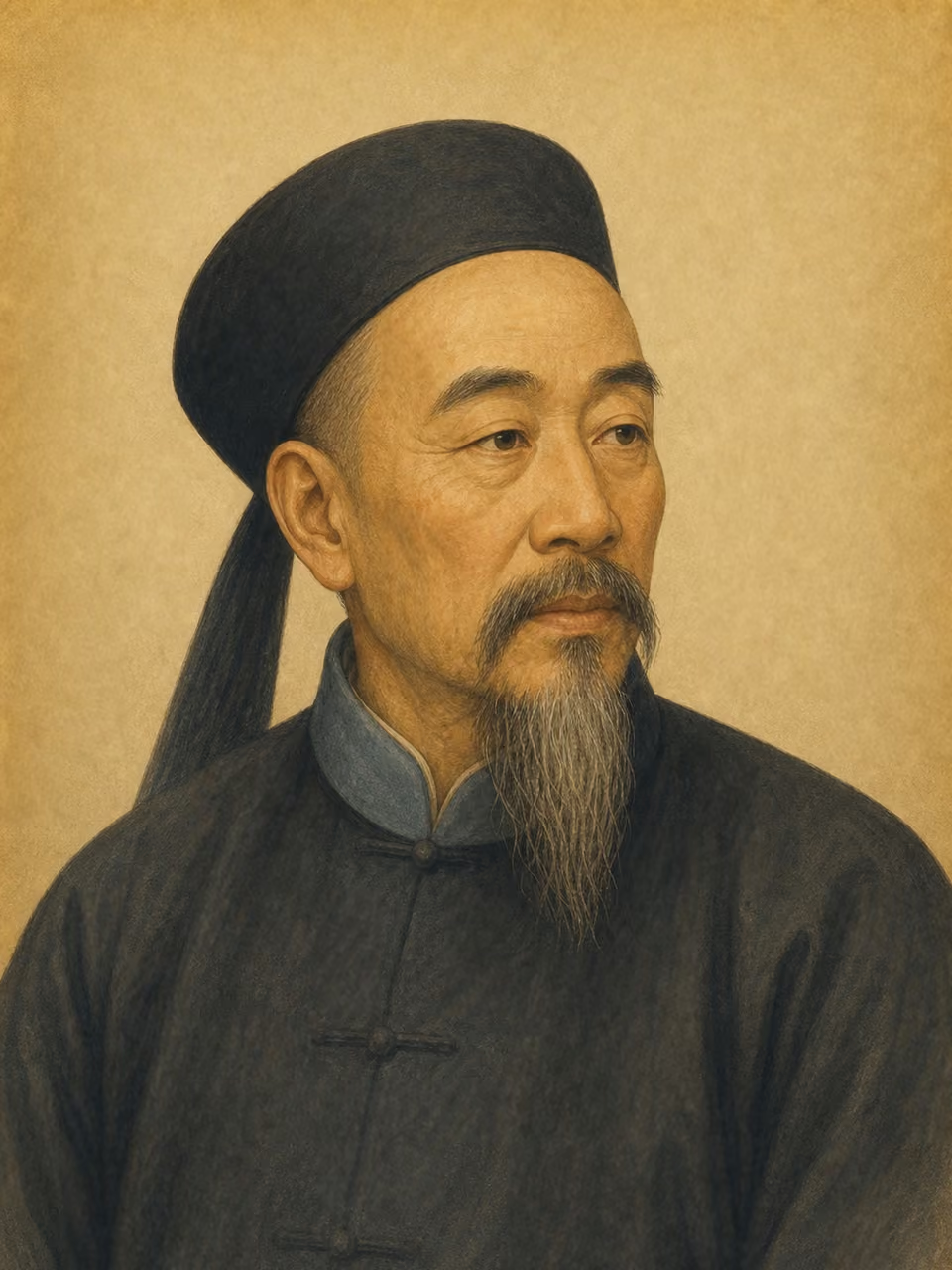
Li Hongzhang

Portrait: AI-generated imagined likeness

Li Hongzhang

Politician · Military leader · Writer

Years
1823–1901
Birthplace
China
Birth polity
Qing dynasty
Era
Modern
Field
Politics
Occupations
Politician · Military leader · Writer

A politician and military leader in the late Qing Dynasty who represented the Western Affairs Movement. He tried to rebuild the Qing Dynasty by incorporating Western technology, but he is also known for his diplomacy after the Sino-Japanese War. It marks a turning point in modern China.

View in catalog

Historical context

Places

  • Hefei

    Birth

  • Tianjin

    Work

Events

  • Self-Strengthening Movement

    1861–1895

    Movement · Leader

  • Treaty of Shimonoseki

    1895

    Political event · Participant

Origins

Origins map
Birth country
Birth country
China

Map: Natural Earth (PD)

Biography

Early life

Born in Anhui, he passed the imperial examination and became a Qing Dynasty bureaucrat. His military ability was recognized during civil wars such as the Taiping Rebellion, and he emerged as a powerful local figure.

Achievements

He led the Huai Army and promoted modernization of munitions industry, navy, communications, etc. through the Western Affairs Movement. After the Sino-Japanese War, it played a role in the negotiations for the Treaty of Shimonoseki, symbolizing the weakening of the Qing Dynasty.

Character & anecdotes

While Lee Hongzhang was a promoter of modernization, he was also criticized for being responsible for defeatist diplomacy. This shows that it is difficult to overcome the limits of the system as a whole based on individual ability alone.

Historical Impact

Studying Li Hongzhang shows that even though the Qing Dynasty introduced Western technology, it was unable to adequately respond to changes in the political system and international order. It will become an important comparative axis when considering the modernization competition in East Asia. It also provides material for thinking about the speed of reform and the limits of the national system.