
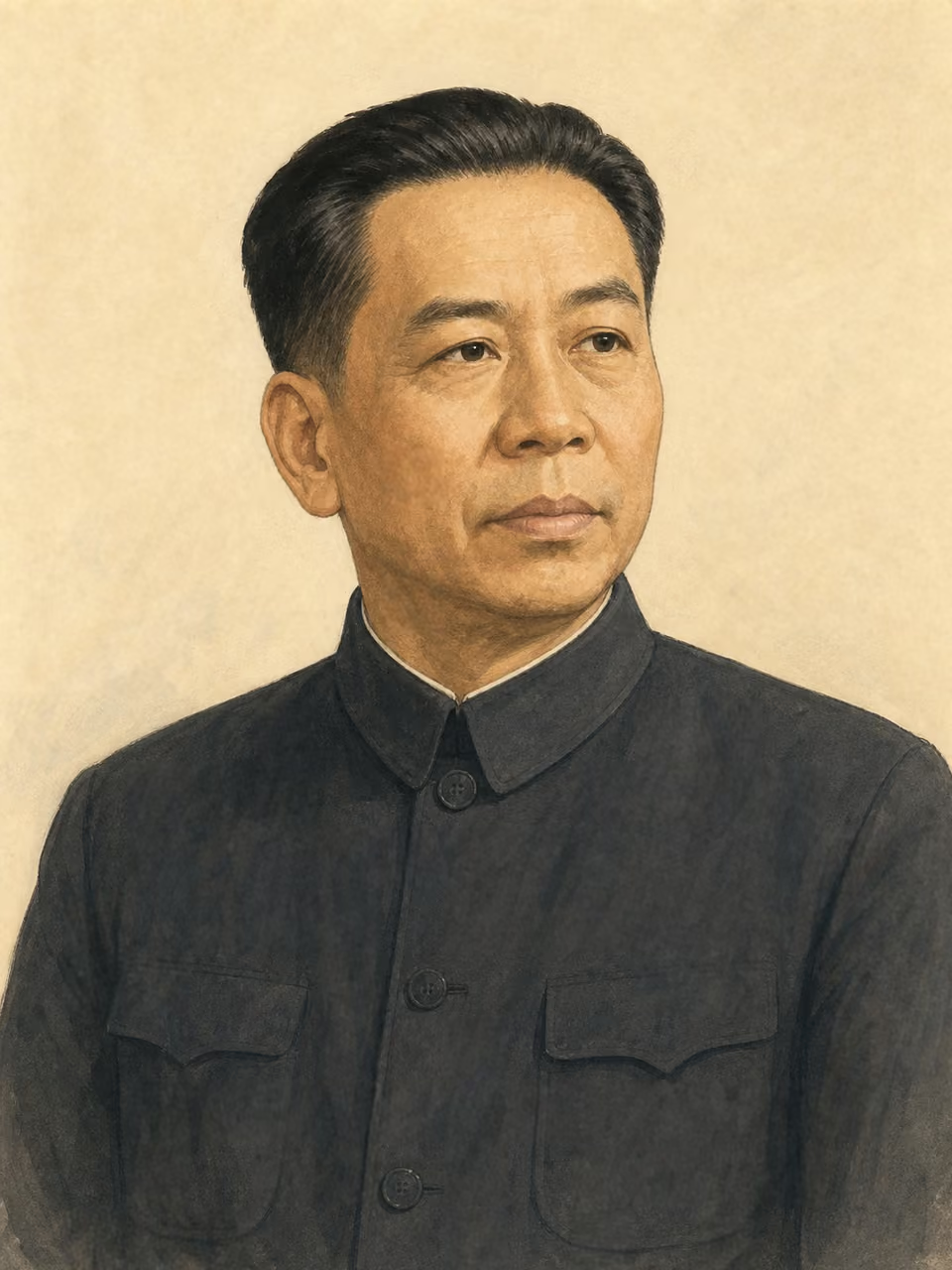
Liu Shaoqi

Portrait: AI-generated imagined likeness

Liu Shaoqi

Politician · revolutionary

Years
1898–1969
Birthplace
China
Birth polity
Qing dynasty
Era
Modern
Field
Politics
Occupations
Politician · revolutionary

A leader of the Chinese Communist Party and former president of the People's Republic of China. He supported the country's management and party organization, but was ousted during the Cultural Revolution. He is an important figure in understanding the power structure after the Chinese revolution.

View in catalog

Historical context

Places

  • Ningxiang

    Birth

  • Beijing

    Work

Events

  • Chinese Revolution

    1921–1949

    Revolution · Participant

  • Cultural Revolution

    1966–1969

    Movement · Subject

Origins

Origins map
Birth country
Birth country
China

Map: Natural Earth (PD)

Biography

Early life

Born in Hunan, he joined the labor and communist movements. In China in the first half of the 20th century, pressure from great powers, civil war, and revolutionary ideas drove young activists into politics.

Achievements

He played an important role in developing the labor movement, party organization, and state machinery, and served as president of the state from 1959. He was involved in the adjustment policy after the Great Leap Forward and was influential as a practical leader.

Character & anecdotes

As the conflict with Mao Zedong deepened, he was criticized as a ``fund-running faction'' during the Cultural Revolution, and died under severe persecution. It shows the intensity of the power struggle within the revolutionary regime.

Historical Impact

Studying Liu Shaoqi reveals that the Chinese Communist Party regime was not monolithic, but oscillated between revolutionary ideals, economic management, and cult of personality. He is one of the central figures when thinking about the Cultural Revolution. It is also possible that it will have an impact on the institutions and memories of later generations.