
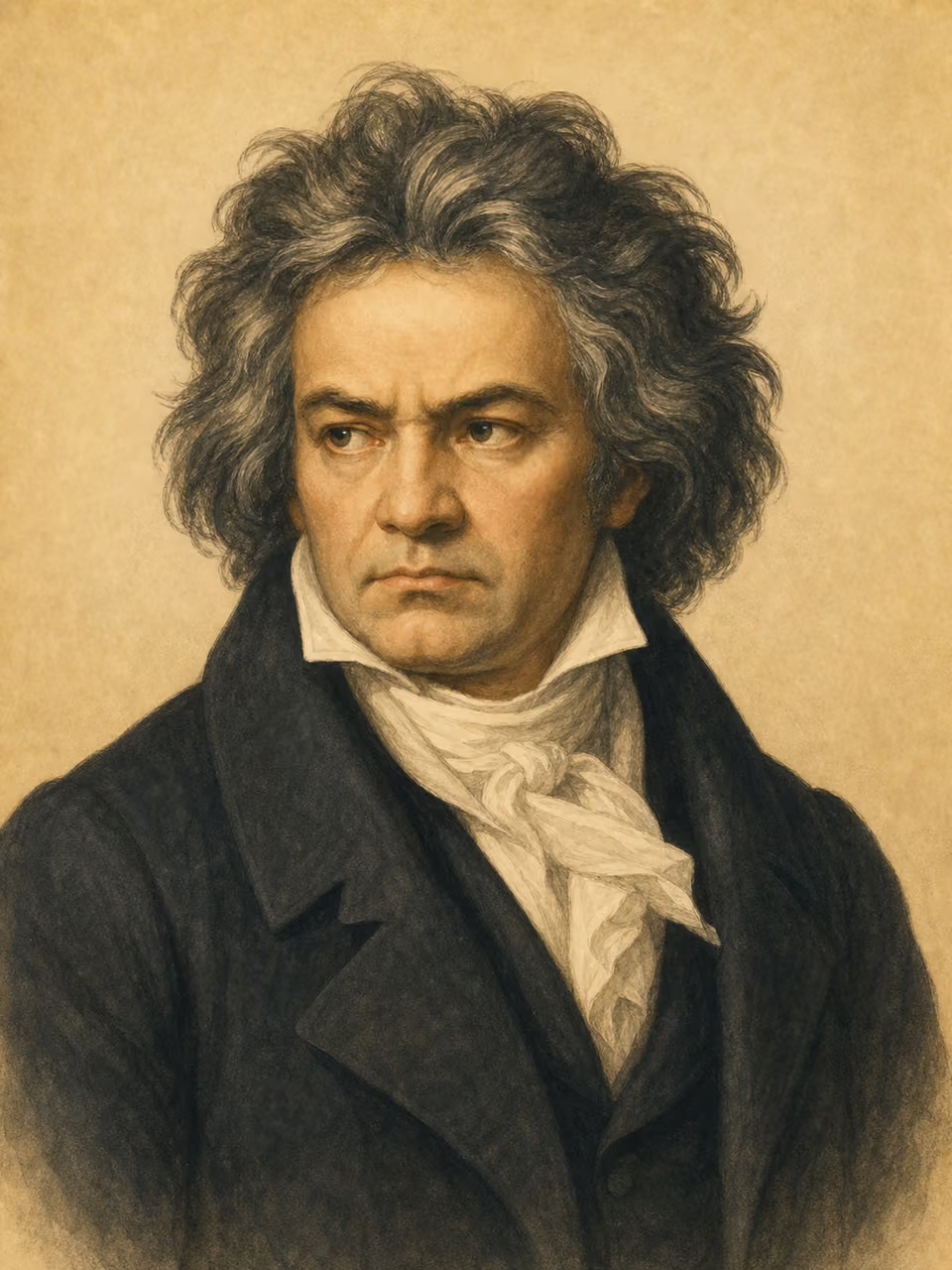
Ludwig van Beethoven

Portrait: AI-generated imagined likeness

Ludwig van Beethoven

Composer

Years
1770–1827
Birthplace
Germany
Birth polity
Electorate of Cologne
Era
Modern
Field
Music
Occupations
Composer

As Beethoven established himself in Vienna, the progressive loss of his hearing turned from personal catastrophe into the background for works such as the Eroica and the late quartets, where inherited forms were pushed toward unusual scale and intensity. He wrote within a changing world of public concerts and music publishing, and that setting helped turn private struggle into historical style.

View in catalog
Historical context

Places

  • Bonn

    Birth

  • Vienna

    Work

Works & achievements

  • Symphony No. 5

    1808

    Music

  • Symphony No. 9

    1824

    Music

Origins

Origins map
Birth countryAssociated countries
Birth country
Germany
Associated countries
Austria

Map: Natural Earth (PD)

Biography

Early life

Ludwig van Beethoven was born in Bonn in 1770 and grew up in a musical household. Recognized early for his gifts, he eventually moved to Vienna, where he absorbed the Classical tradition associated with Haydn and Mozart while quickly revealing a forceful artistic voice of his own.

Achievements

He produced major works in the symphony, piano sonata, string quartet, and concerto, with pieces such as the Eroica, the Fifth Symphony, and the Ninth Symphony standing as turning points in music history. Beethoven expanded formal expectations and fused structural rigor with an unprecedented sense of inner struggle and momentum.

Character & anecdotes

His progressive hearing loss became the central crisis of his life and is movingly reflected in the Heiligenstadt Testament. The late works puzzled many contemporaries, yet they are now heard as some of the boldest and most searching creations in the repertory.

Historical Impact

Beethoven altered musical culture because he made the composer appear as an autonomous creative force whose inner vision could reshape public art. Symphonic writing, chamber music, conservatory teaching, and concert life continued to measure themselves against possibilities he opened, which is why his influence reaches far beyond a few celebrated masterworks.

Related figures

View all in catalog