
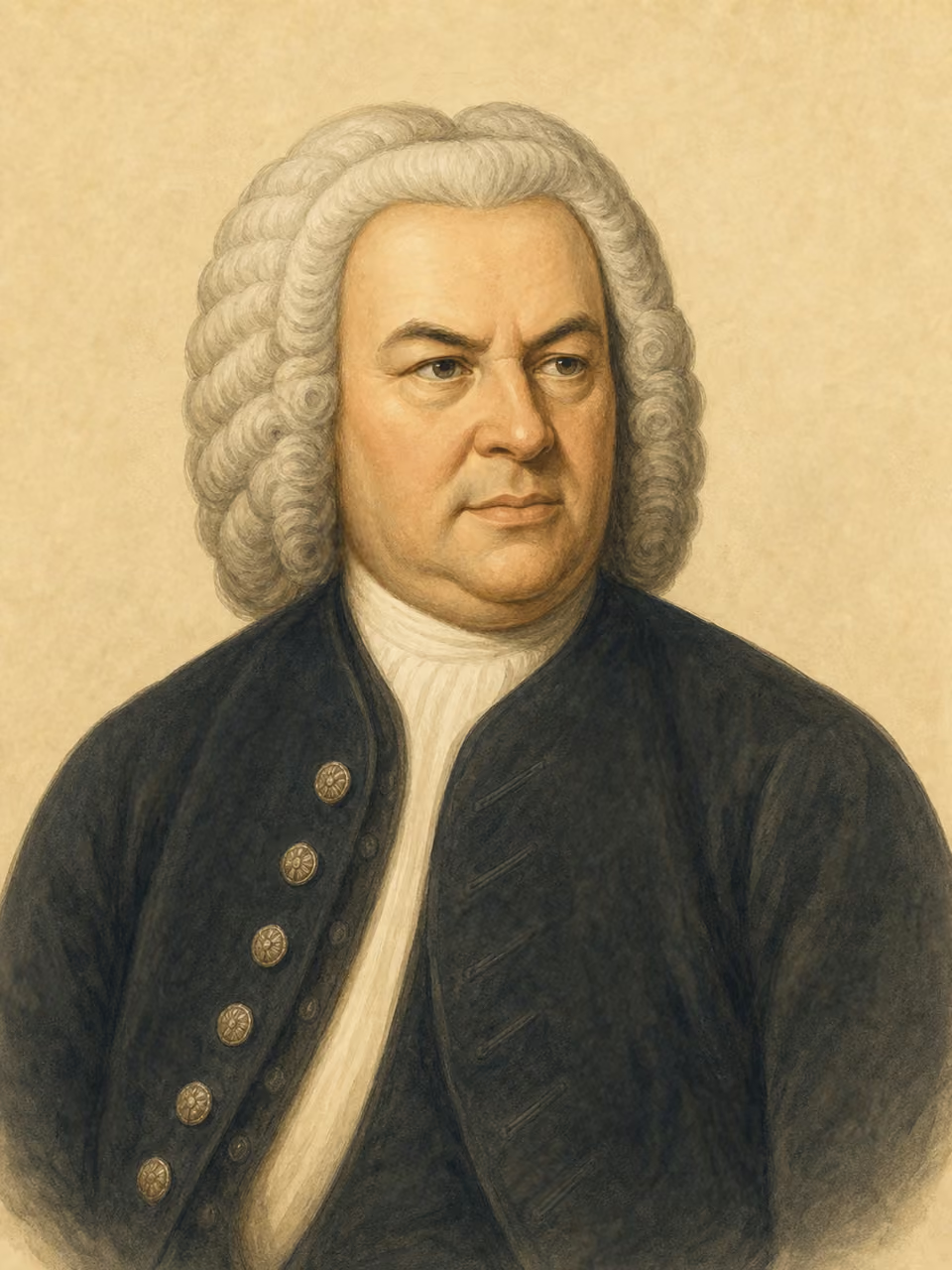
Johann Sebastian Bach

Portrait: AI-generated imagined likeness

Johann Sebastian Bach

Composer

Years
1685–1750
Birthplace
Germany
Birth polity
Holy Roman Empire
Era
Early modern
Field
Music
Occupations
Composer

Working in church and court posts and later under the weekly demands of Leipzig's sacred music system, Bach turned practical labor into compositions of exceptional range, including the St Matthew Passion and the Well-Tempered Clavier. The episodes of choir training, liturgical deadlines, organ expertise, and keyboard writing were not side conditions to his art; they were the workshop out of which it grew.

View in catalog
Historical context

Places

  • Eisenach

    Birth

  • Leipzig

    Work

Works & achievements

  • Brandenburg Concertos

    1721

    Music

  • Mass in B minor

    c. 1749

    Music

Origins

Origins map
Birth country
Birth country
Germany

Map: Natural Earth (PD)

Biography

Early life

Johann Sebastian Bach was born in 1685 into a large family of musicians and was trained through both household inheritance and professional necessity. Serving churches and courts in different German cities, he developed as a composer, keyboard player, teacher, and practical musical organizer.

Achievements

His output includes cantatas, passions, keyboard cycles, concertos, and fugues of extraordinary structural control, with works such as the Well-Tempered Clavier, the St Matthew Passion, and the Brandenburg Concertos standing at the center of the repertoire. He united contrapuntal complexity with clarity of design in a way later generations treated as exemplary.

Character & anecdotes

Bach was highly respected in his lifetime, but more as a specialist's specialist than as the universally iconic figure he later became. His reputation for keyboard mastery and his work inspecting organs remind us that his career was grounded in concrete musical labor as much as abstract genius.

Historical Impact

Bach became central to modern musical culture because later conservatories, performers, and theorists used his works to teach counterpoint, harmony, form, and disciplined expression. The nineteenth-century revival did more than honor a forgotten master: it placed his music inside the institutional core of how the Western canon is studied, performed, and imagined.

Related figures

View all in catalog