
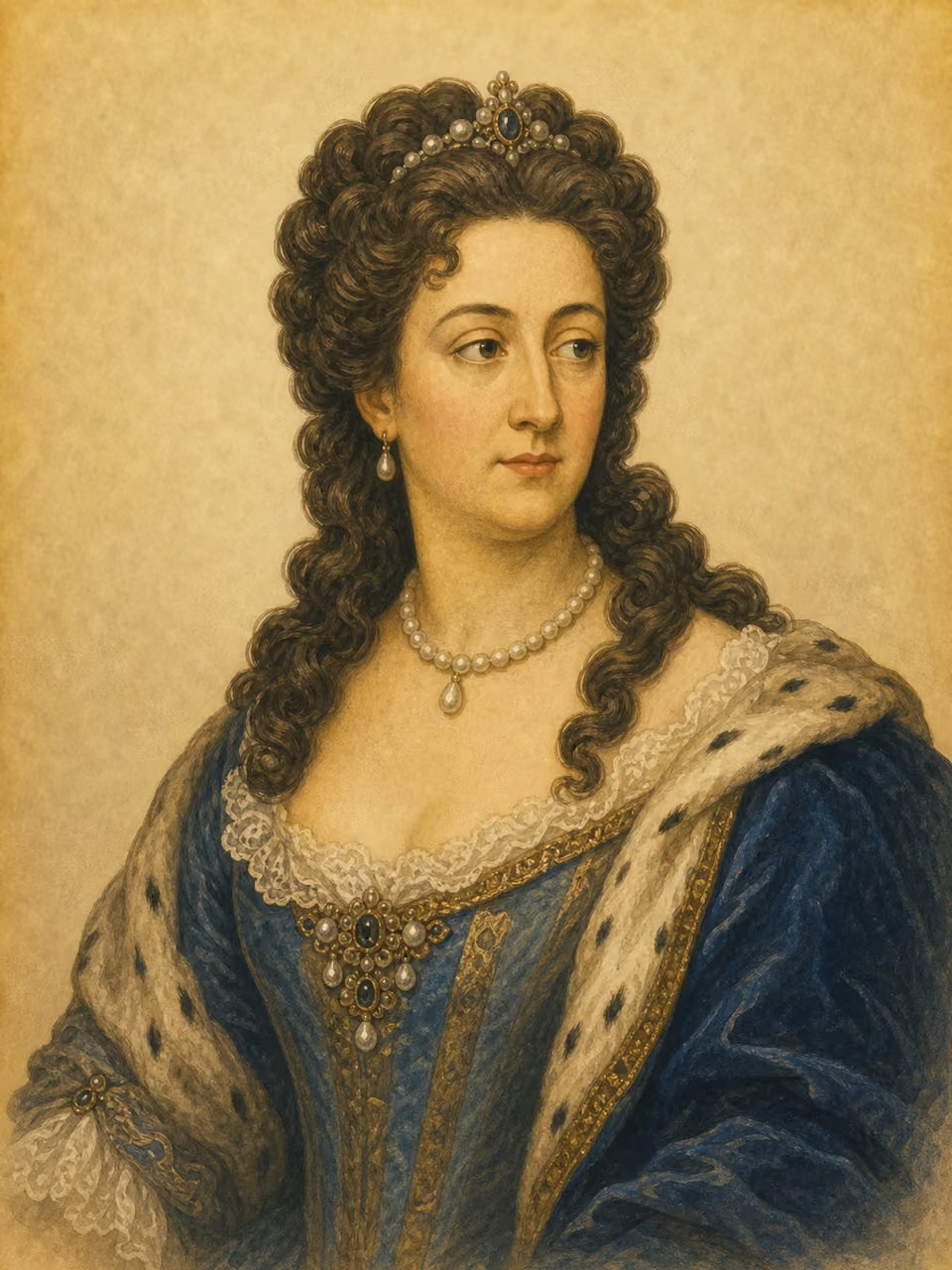
Mary II of England

Portrait: AI-generated imagined likeness

Mary II of England

Monarch · Politician

Years
1662–1695
Birthplace
United Kingdom
Birth polity
Kingdom of England
Era
Early modern
Field
Politics
Occupations
Monarch · Politician

Queen of England who co-ruled with her husband William III after the Glorious Revolution. He is a person who symbolizes an era in which the relationship between royal power and parliament changed dramatically. It connects local history and world history and provides clues for deciphering changes during the same era.

View in catalog

Historical context

Places

  • St James's Palace

    Birth

  • London

    Work

Events

  • Glorious Revolution

    1688

    Revolution · Participant

  • Bill of Rights 1689

    1689

    Political event · Subject

Origins

Origins map
Birth country
Birth country
United Kingdom

Map: Natural Earth (PD)

Biography

Early life

She was the daughter of James II and married William, Governor of the Netherlands. As opposition to his father's Catholic policies grew stronger, he was placed at the center of the question of succession to the throne.

Achievements

He became co-ruler in 1689 and accepted the Bill of Rights. As a result, the king's powers were restricted by parliament and the law, solidifying the foundations of a constitutional monarchy.

Character & anecdotes

Mary II had taken the throne over her father, and was in a difficult position between personal loyalty and political judgment. Although the Glorious Revolution is called a bloodless revolution, it also included conflicts within the royal family.

Historical Impact

Through Mary II, we can see that sovereignty, religion, and parliamentary politics were intertwined and changed in early modern England. This will provide clues to understanding the political system after the Citizen's Revolution. When you look at the people's activities and works together, it becomes easier to understand the terms in textbooks as concrete historical trends.