
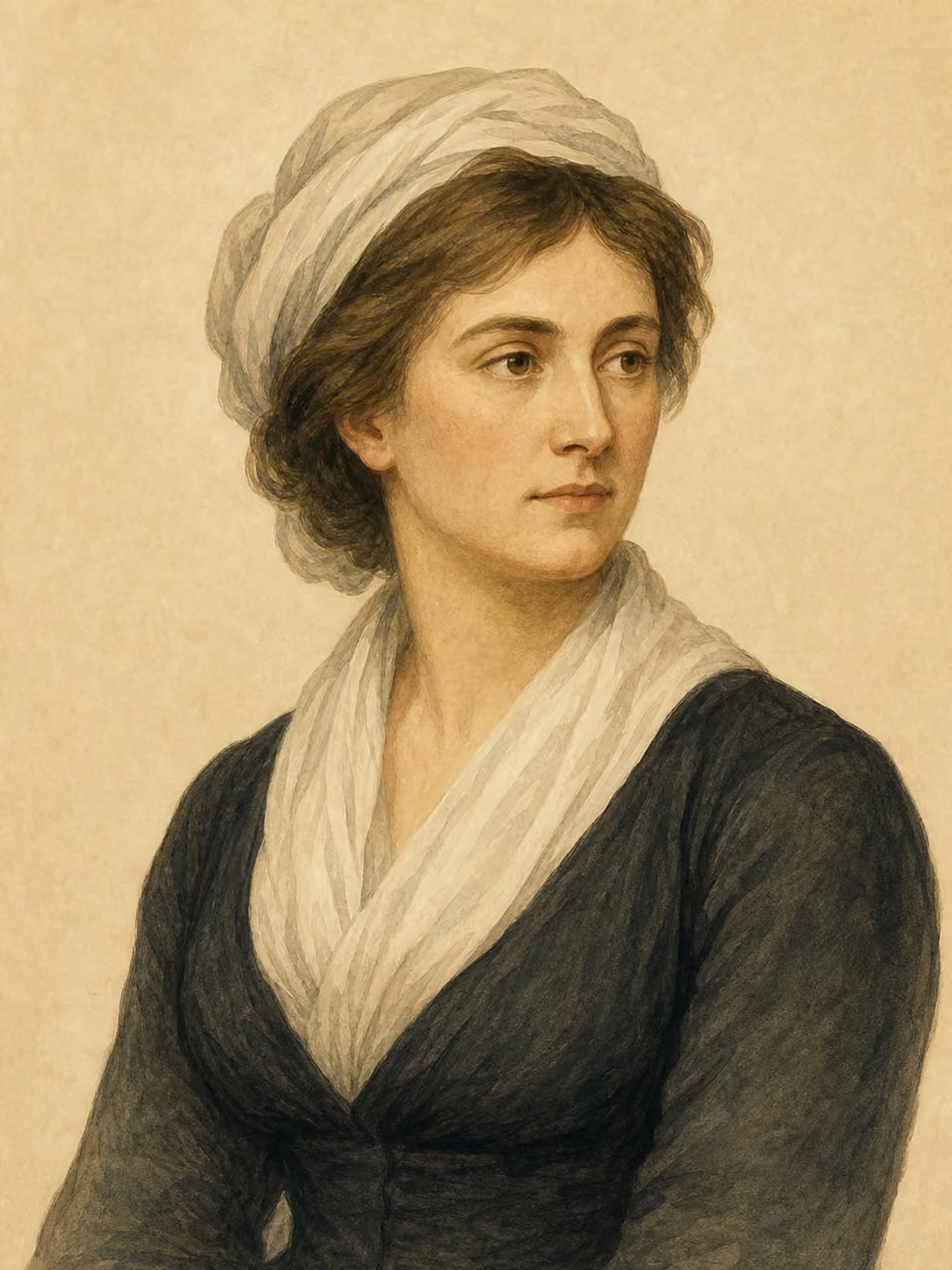
Mary Wollstonecraft

Portrait: AI-generated imagined likeness

Mary Wollstonecraft

Writer · Philosopher · Feminist

Years
1759–1797
Birthplace
United Kingdom
Birth polity
Kingdom of Great Britain
Era
Early modern
Field
Philosophy
Occupations
Writer · Philosopher · Feminist

After working as a teacher, school founder, reviewer, and political writer in revolutionary-era London, Wollstonecraft used A Vindication of the Rights of Woman in 1792 to force women's education into the center of political argument. Her interventions in debates over the French Revolution and in travel writing made domestic subordination visible as a public defect in modern society rather than a private fate.

View in catalog

Historical context

Places

  • Spitalfields

    Birth

  • London

    Work

Works & achievements

  • A Vindication of the Rights of Woman

    1792

    Book

Origins

Origins map
Birth country
Birth country
United Kingdom

Map: Natural Earth (PD)

Biography

Early life

Mary Wollstonecraft was born in 1759 into a financially unstable and often troubled family environment. Her early adult life included work as a companion, teacher, and school founder, and those experiences sharpened her awareness of how dependence and limited education constrained women's lives.

Achievements

In A Vindication of the Rights of Woman she argued that women were denied the disciplined education necessary for full moral and civic development. Across political writings, reviews, and travel narrative, she connected debates about liberty, virtue, and revolution to the social treatment of women.

Character & anecdotes

Wollstonecraft's life repeatedly crossed the boundaries of what her society treated as respectable female conduct, and later readers have often fixated on those choices as much as on her books. She died in 1797 after giving birth to the daughter who would later become Mary Shelley.

Historical Impact

Wollstonecraft helped found feminist political thought because she reframed women's dependence as a structural problem involving education, citizenship, and moral formation. For a long time biographical scandal distorted her reception, but modern scholarship keeps returning to her as a crucial link between Enlightenment philosophy, revolutionary politics, and gender critique.