
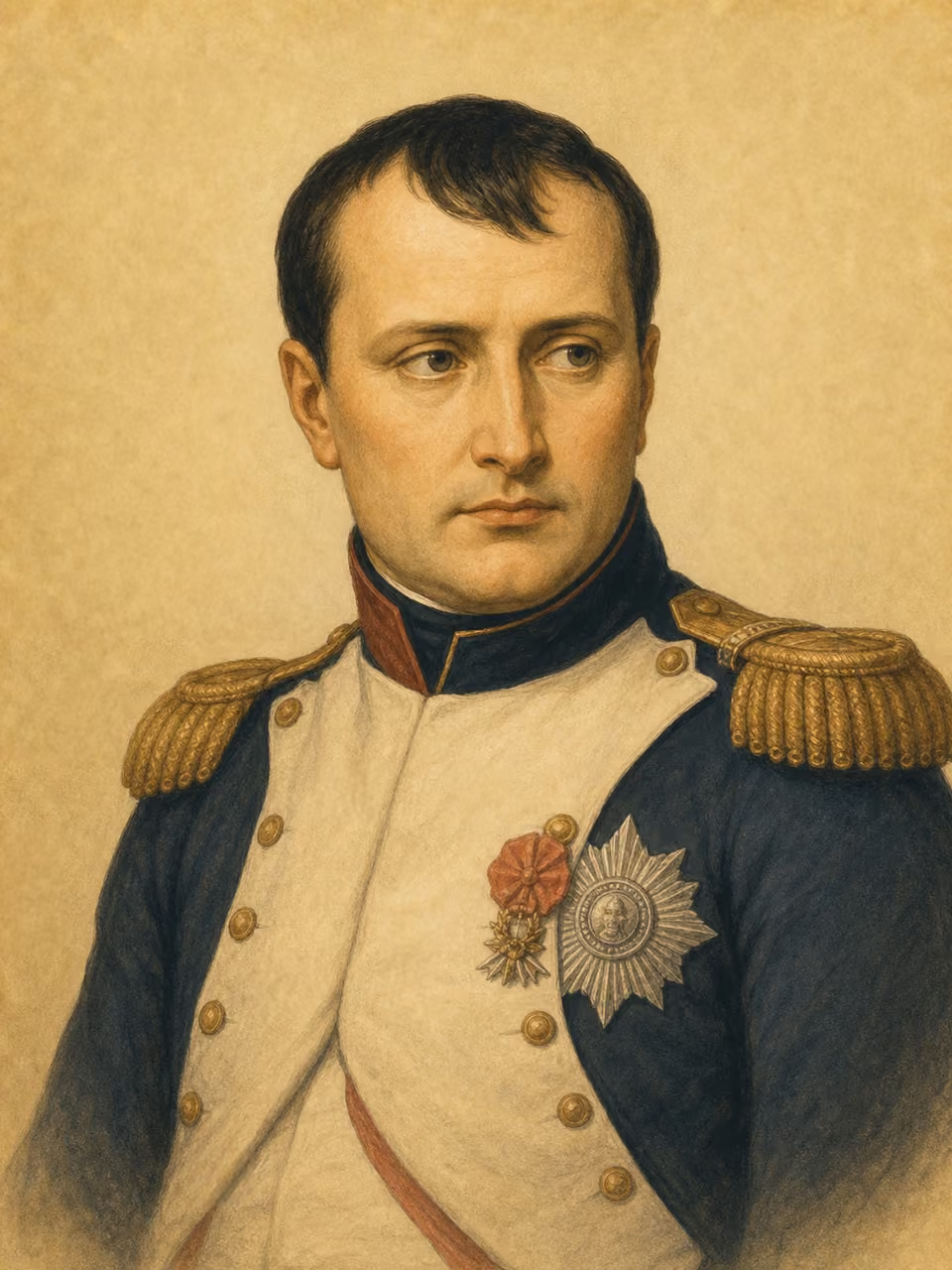
Napoleon Bonaparte

Portrait: AI-generated imagined likeness

Napoleon Bonaparte

Emperor · Military leader · Politician

Years
1769–1821
Birthplace
France
Birth polity
Corsica under the Kingdom of France
Era
Modern
Field
Military
Occupations
Emperor · Military leader · Politician

Rising fast through the turmoil of the French Revolution, Napoleon turned the Italian campaigns, Austerlitz, and the coup of 1799 into a path from general to emperor. While war and conquest drove his fame, he also recast legal codes, education, and administration, making his rule decisive both on the battlefield and inside the machinery of the state.

View in catalog

Historical context

Places

  • Ajaccio

    Birth

  • Saint Helena

    Exile

Works & achievements

  • Napoleonic Code

    1804

    Law

Events

  • Napoleonic Wars

    1803–1815

    War · Commander

Origins

Origins map
Birth countryAssociated countries
Birth country
France
Associated countries
St. Helena

Map: Natural Earth (PD)

Biography

Early life

Napoleon Bonaparte was born in 1769 on Corsica shortly after the island passed under French control. Trained in mainland military schools as an artillery officer, he benefited enormously from the upheaval of the French Revolution, which opened rapid paths of advancement.

Achievements

Victories in Italy and at Austerlitz made him the dominant military figure of his age, and after the coup of 1799 he became First Consul and then Emperor in 1804. His importance also rests on administrative centralization, educational reform, and especially the Napoleonic Code, which influenced legal systems far beyond France.

Character & anecdotes

The Egyptian campaign, the exile to Elba, the Hundred Days, and the final confinement on Saint Helena all fed the legend surrounding him. Popular images often reduce him to a dramatic conqueror, but he was also a highly modern ruler who fused propaganda, bureaucracy, and military command.

Historical Impact

Napoleon's regime spread destruction across Europe and provoked fierce reaction, yet it also helped diffuse durable changes in law, conscription, administration, and the language of modern state power. He remains contested because liberation and domination, meritocratic opportunity and dictatorship, revolutionary inheritance and imperial ambition all coexisted within his career.

Notes

The Napoleonic Code became one of the most influential legal models of the modern era.