
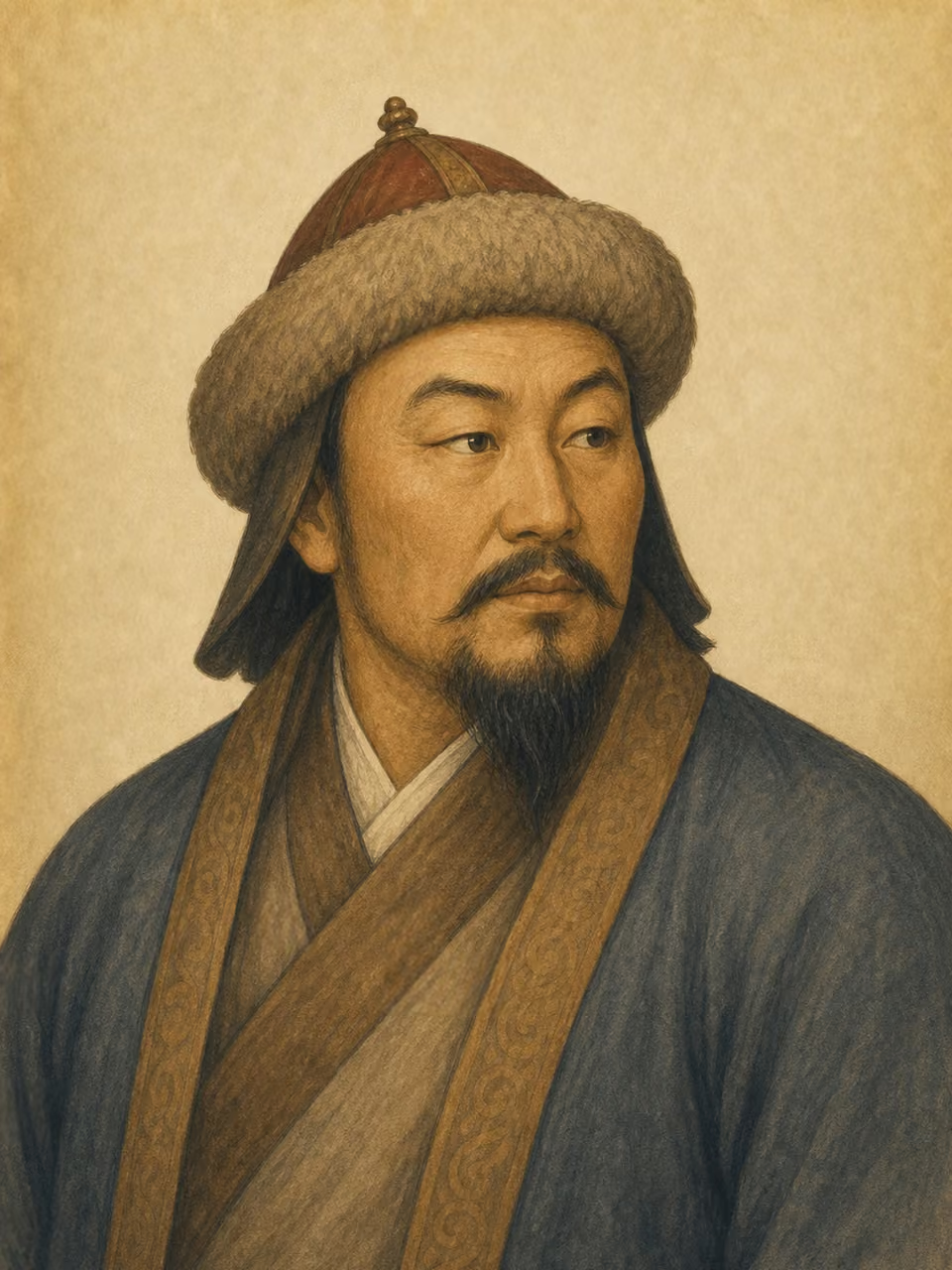
Ögedei Khan

Portrait: AI-generated imagined likeness

Ögedei Khan

Monarch · Military leader

Years
1186–1241
Birthplace
Mongolia
Birth polity
nomadic world of the Mongolian Plateau
Era
Medieval
Field
Politics
Occupations
Monarch · Military leader

He was the successor of Genghis Khan and became the second emperor of the Mongol Empire. He continued his expeditions and established an administrative base for the empire. He was an important figure in the expansion and governance of the Mongol Empire. You can also see the management of the empire after the succession.

View in catalog

Historical context

Places

  • Mongolian Plateau

    Birth

  • Karakorum

    Residence

Events

  • kurultai of 1229

    1229

    Political event · Subject

  • expansion of the Mongol Empire

    1229–1241

    War · Leader

Origins

Origins map
Birth countryAssociated countries
Birth country
Mongolia
Associated countries
China

Map: Natural Earth (PD)

Biography

Early life

As the son of Genghis Khan, he grew up in the politics and military of a nomadic society. After his father's death, he was chosen as Great Khan by the Kuriltai, which decided on a successor.

Achievements

He continued to conquer the Jin Dynasty and also conducted expeditions to Europe and West Asia. He established the Karakorum and expanded the systems of imperial governance such as the relay race system and financial management.

Character & anecdotes

Ogotai is said to have been a man who loved drinking, but he was also the coordinator of the entire empire. A balance between strong personal rule and clan council was a characteristic of Mongol politics.

Historical Impact

When you study Ogotai, you realize that the Mongol Empire did not end with the conquests of Genghis Khan, but expanded while establishing a system of wide-area domination. You will gain a perspective that connects transportation, war, and governance in Eurasia. It can also be seen that the lifespan of an empire is determined by the rule of its successor.