
Formation and Early Expansion of the Mongol Empire
1206–1259
In 1206, Temujin was acclaimed as Chinggis Khan, and the political and military reorganization of steppe peoples became the core of an empire. Through Möngke's death in 1259, successors and princely armies extended conquest across northern China, Central and West Asia, Rus', and into central Europe.

- Period
- 1206–1259
- Kind
- War
- Regions
- Central Asia, East Asia, Middle East, Europe
- Keywords
- Chinggis Khan · steppe unification · conquest · relay system · Eurasian exchange
Follow the story · Four stages
Background
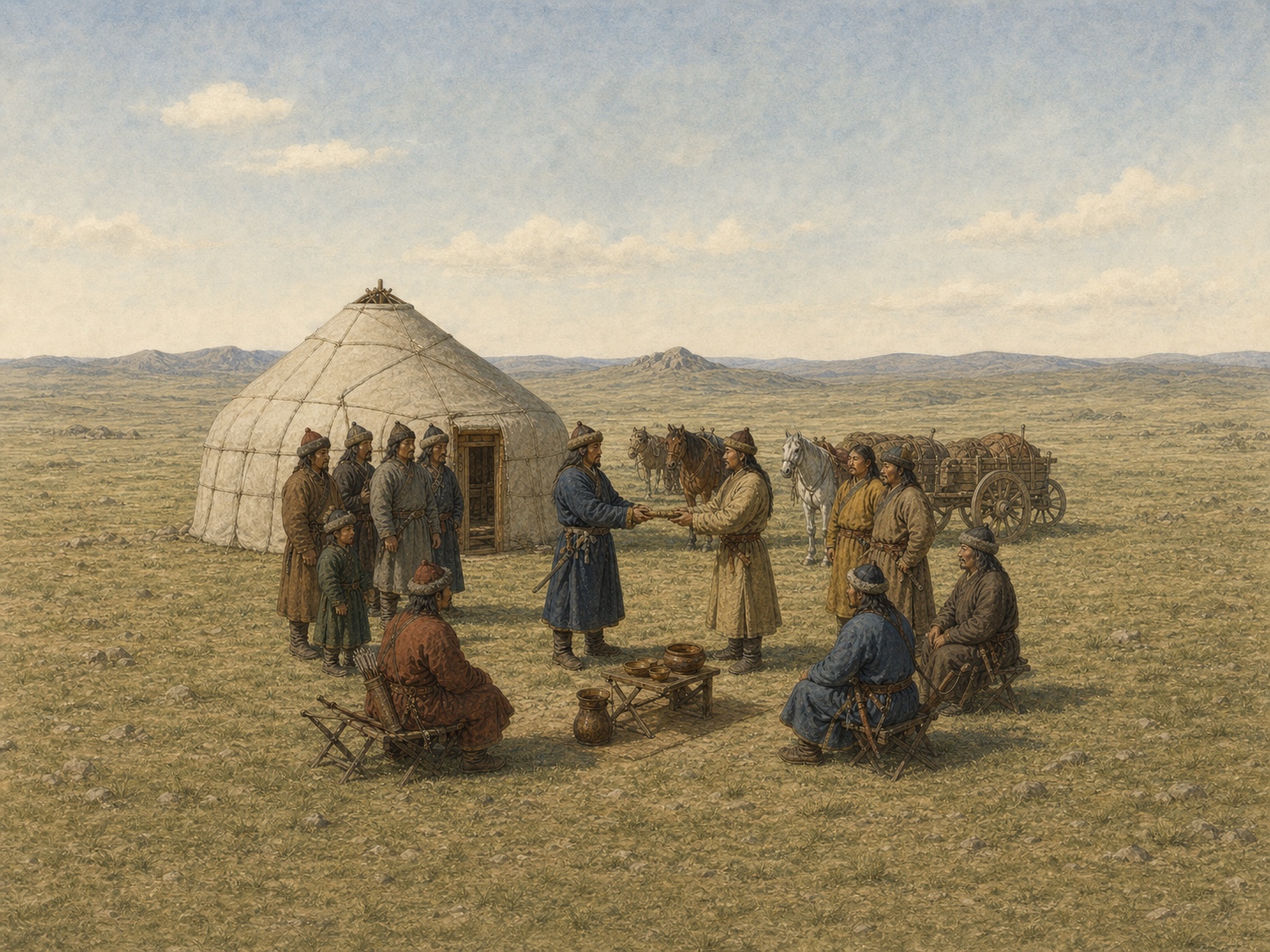
Temujin combined marriage ties, alliances, personal loyalties, and military victories to defeat rivals including the Kereit and Naiman confederations. After consolidation that included the defeat of the Naimans in 1204, the kurultai of 1206 acknowledged his wider rule.
- Temujin reshaped alliances, marriage ties, and personal loyalties
- Competition with steppe powers including the Kereit and Naiman confederations
- Military victories and social reorganization before 1206
Course
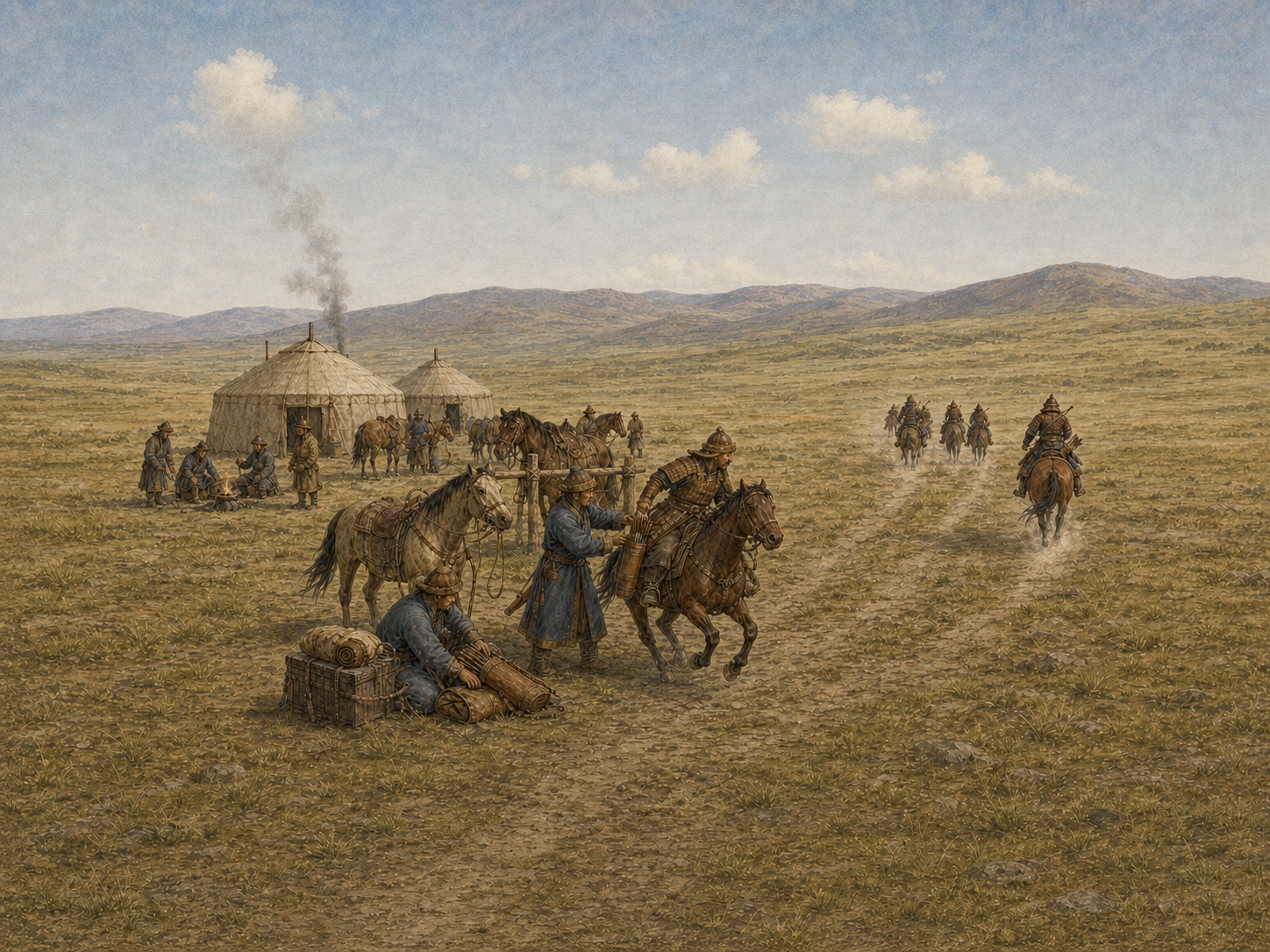
Chinggis Khan campaigned against the Western Xia, Jin, and Khwarazmian states. Under Ögödei, elected in 1229, the Jin fell and expansion reached Rus', the Caucasus, and West Asia. Batu commanded the western advance, while advisers including Yelü Chucai worked in conquered-territory administration and finance. Under Möngke, Hülegü subdued Iran and took Baghdad in 1258.
- The 1206 acclamation and a political-military order built around decimal units
- Conquests stretching from Jin and Khwarazm to Rus' and West Asia
- Relay networks, taxation, and administrators drawn from conquered societies
Outcome
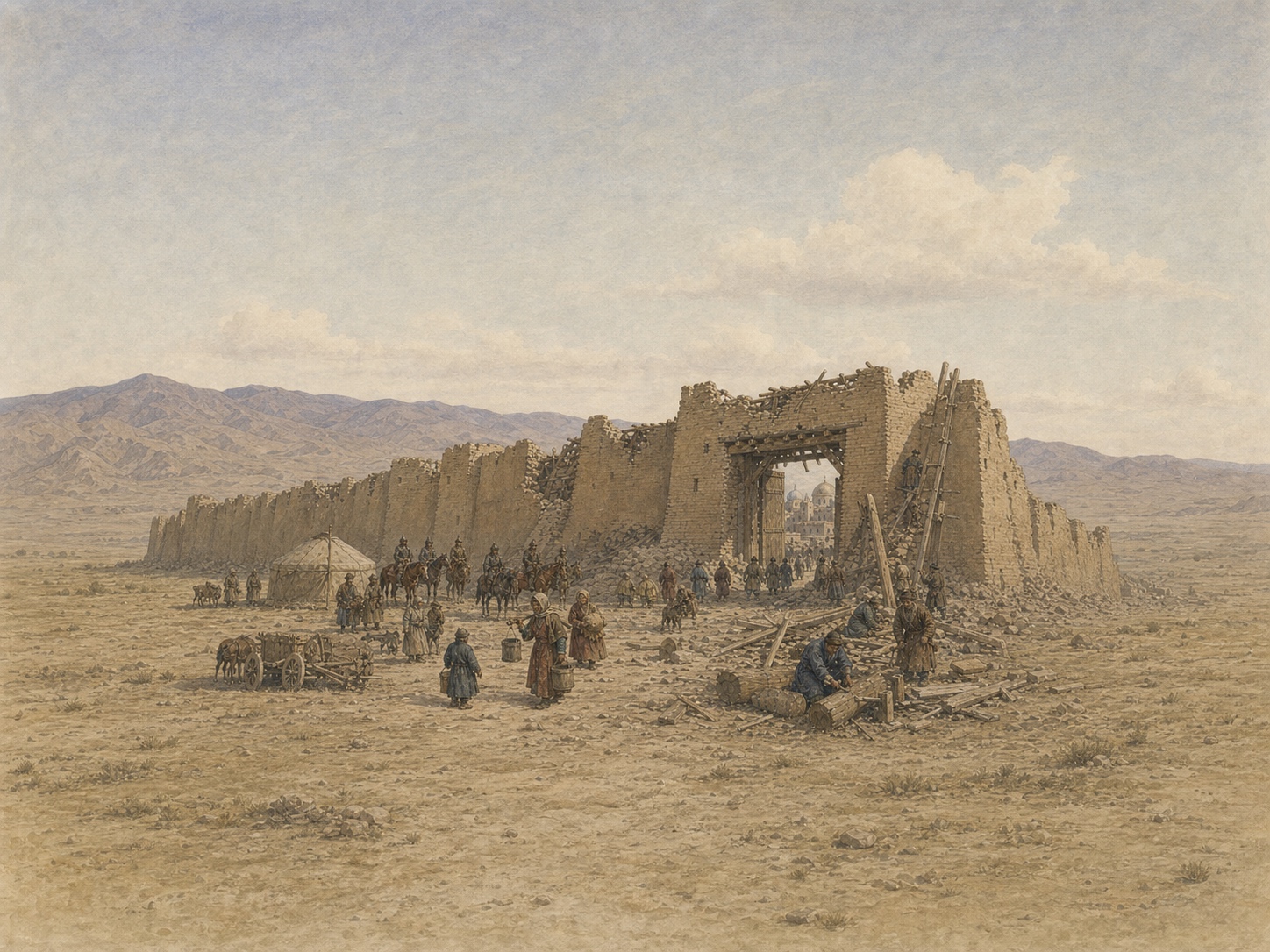
By the mid-thirteenth century, the empire controlled the largest contiguous territory of its age and supported relay communication, trade, and movement of expertise and people. Conquest also brought urban destruction, killing, and forced displacement. Möngke's death in 1259 opened a succession struggle and political fragmentation.
- A vast contiguous sphere of rule across Eurasia
- Military expansion marked by urban destruction, killing, and forced movement
- A succession crisis exposed by Möngke's death in 1259
Historical significance
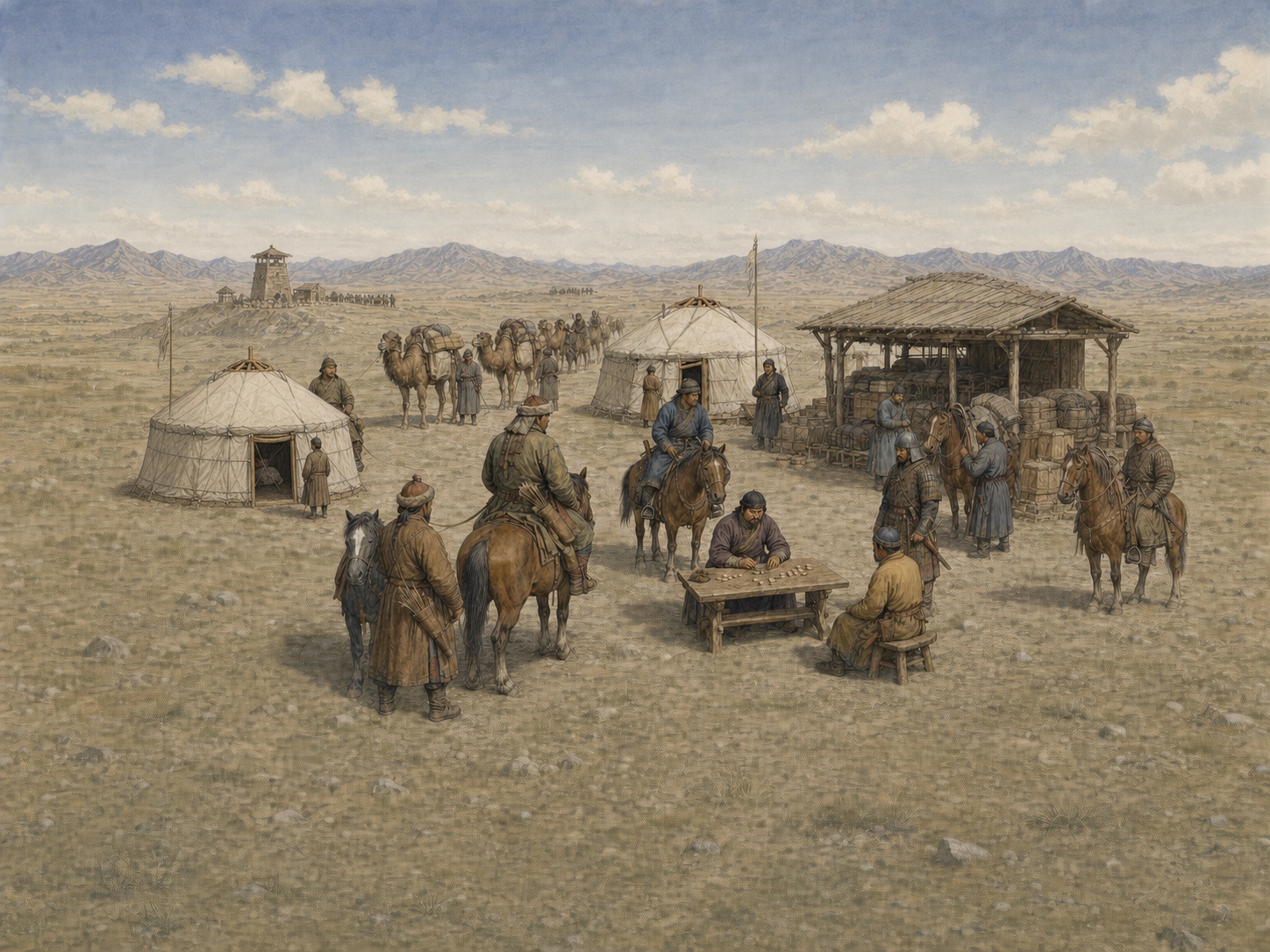
The early Mongol empire combined pastoral military organization with administrators and technologies from conquered societies, linking distant regions through communications and trade. That integration was inseparable from large-scale violence and political restructuring and formed the basis for the later Yuan, Jochid, Chagatai, and Ilkhanid regimes.
- An imperial network for communication, trade, technology, and expertise
- Pastoral military organization joined to administrative practices from many regions
- Foundations for the Yuan, Jochid, Chagatai, and Ilkhanid regimes


Related figures
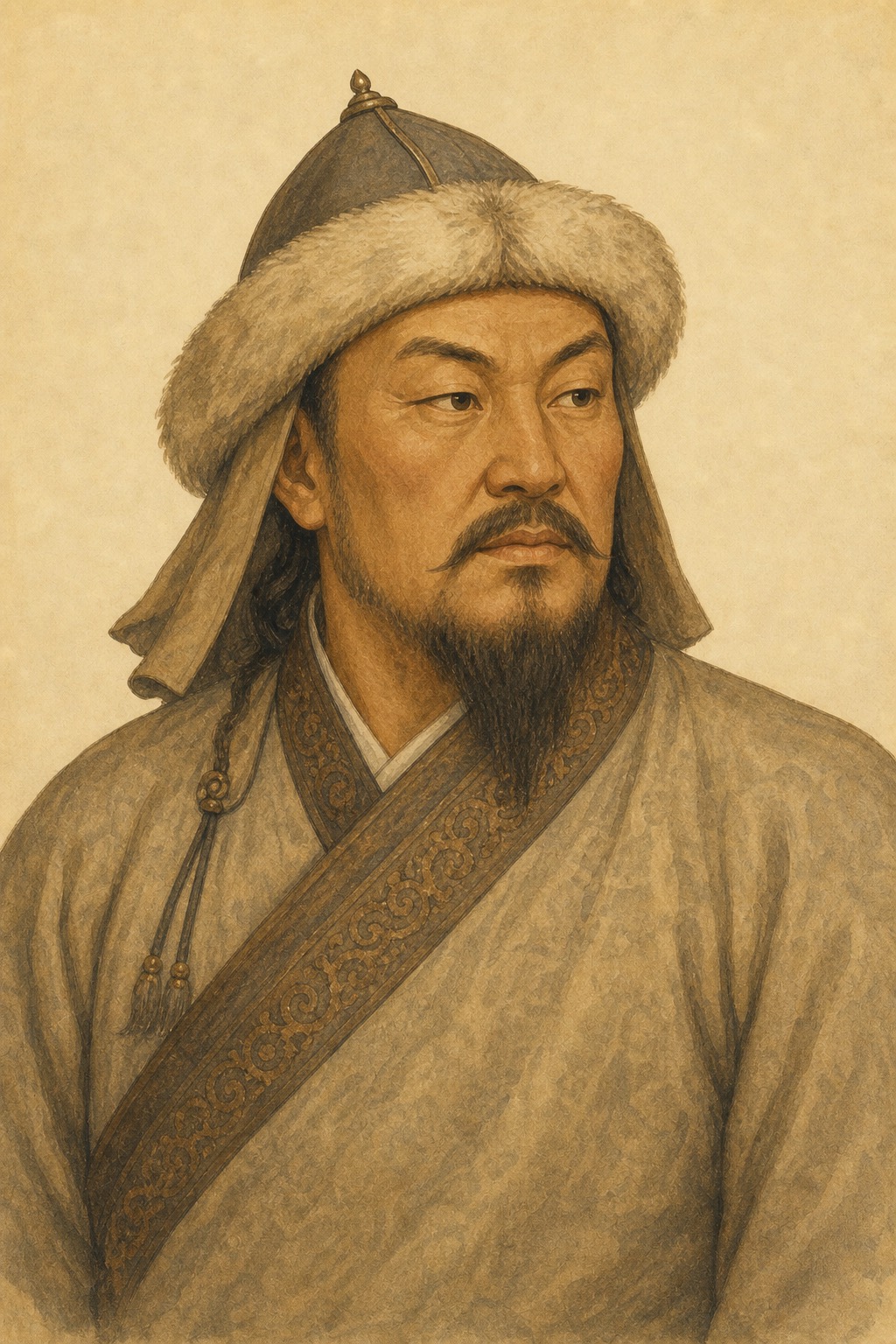
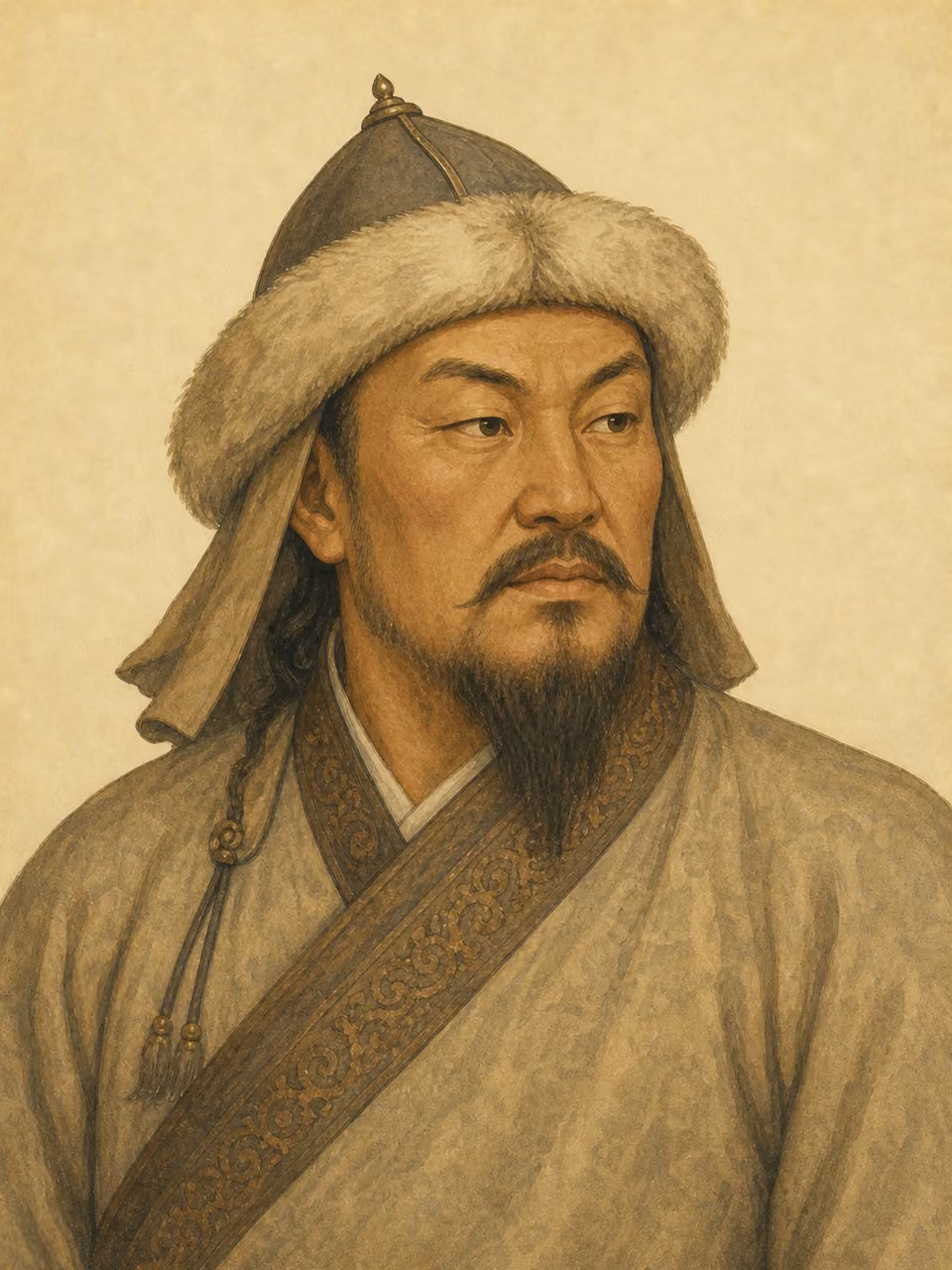
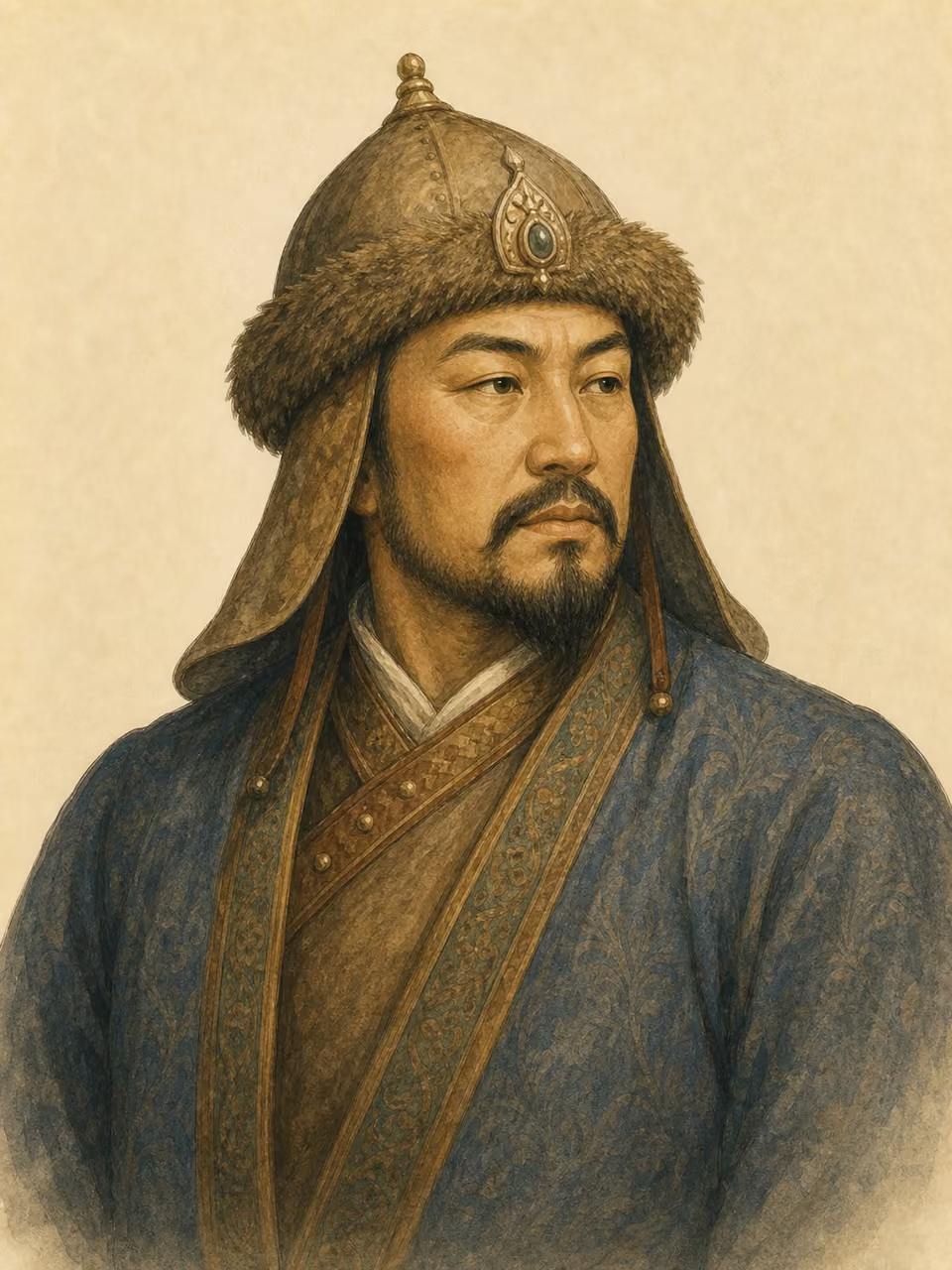
Genghis Khan
Leader of imperial formation
Acclaimed as Chinggis Khan in 1206, he reorganized political and military institutions and directed the early conquests.
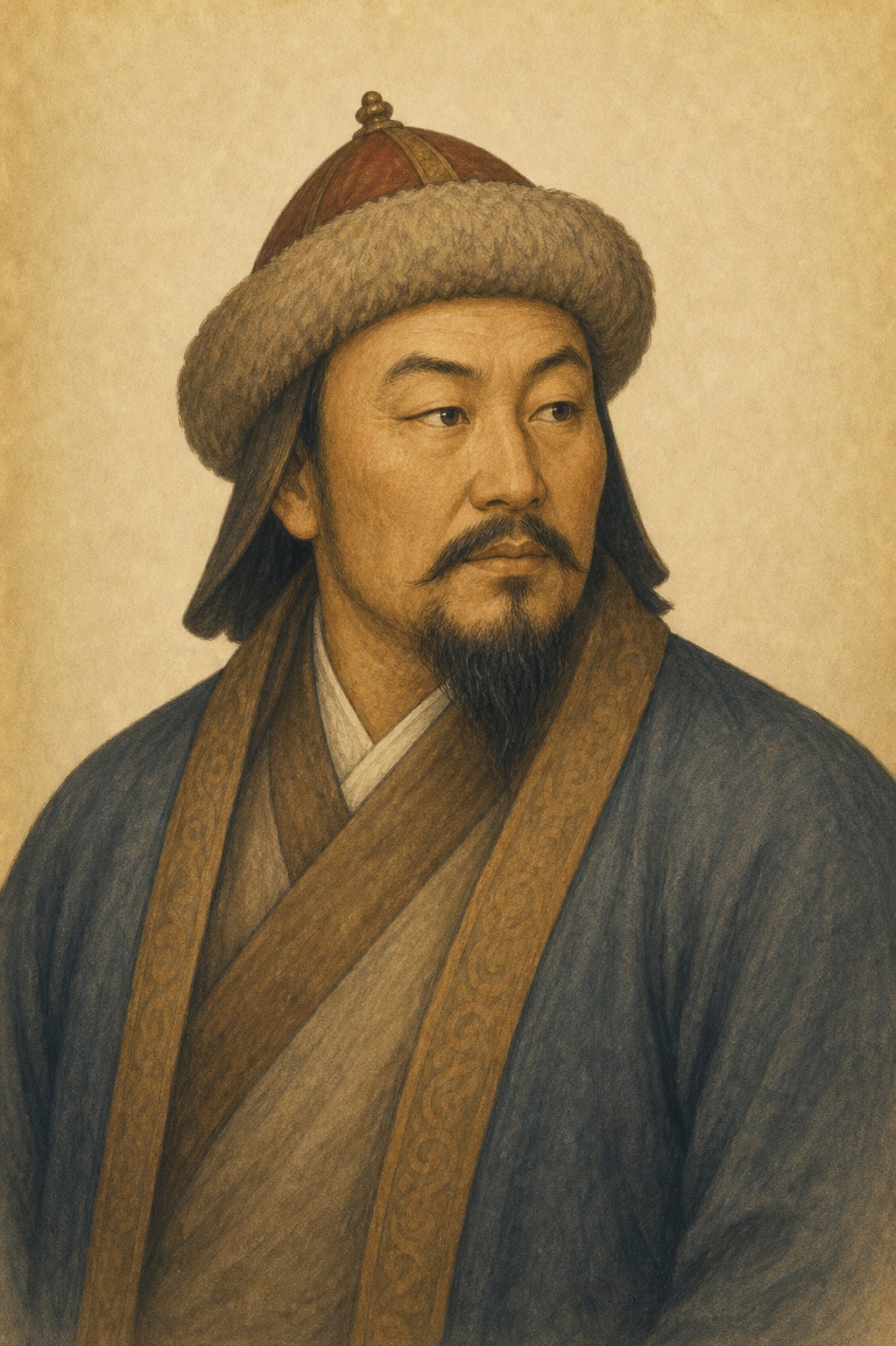
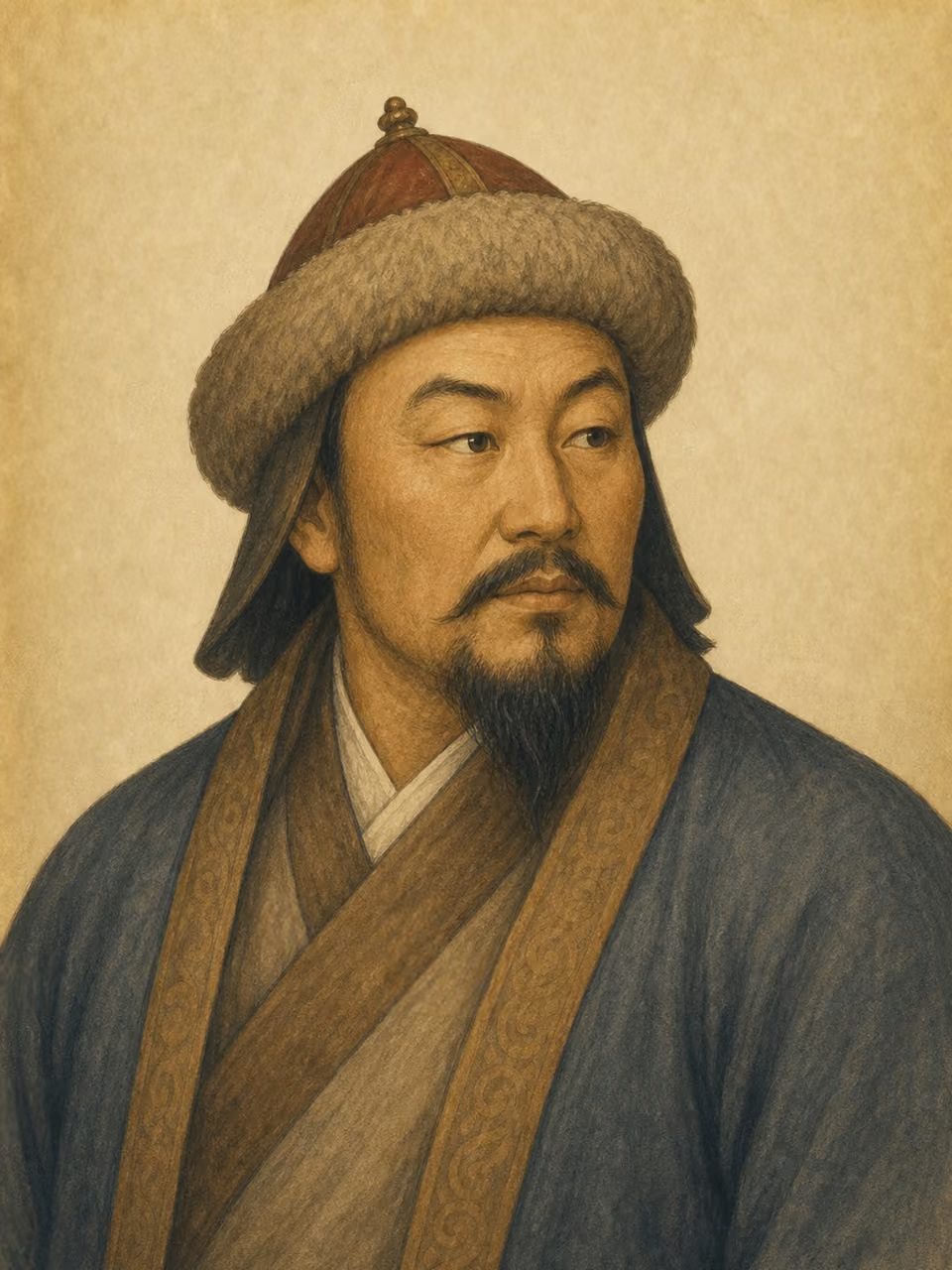
Ögedei Khan
Great khan of expansion
Elected in 1229, he ruled as expansion reached Jin territory, Rus', the Caucasus, and West Asia.
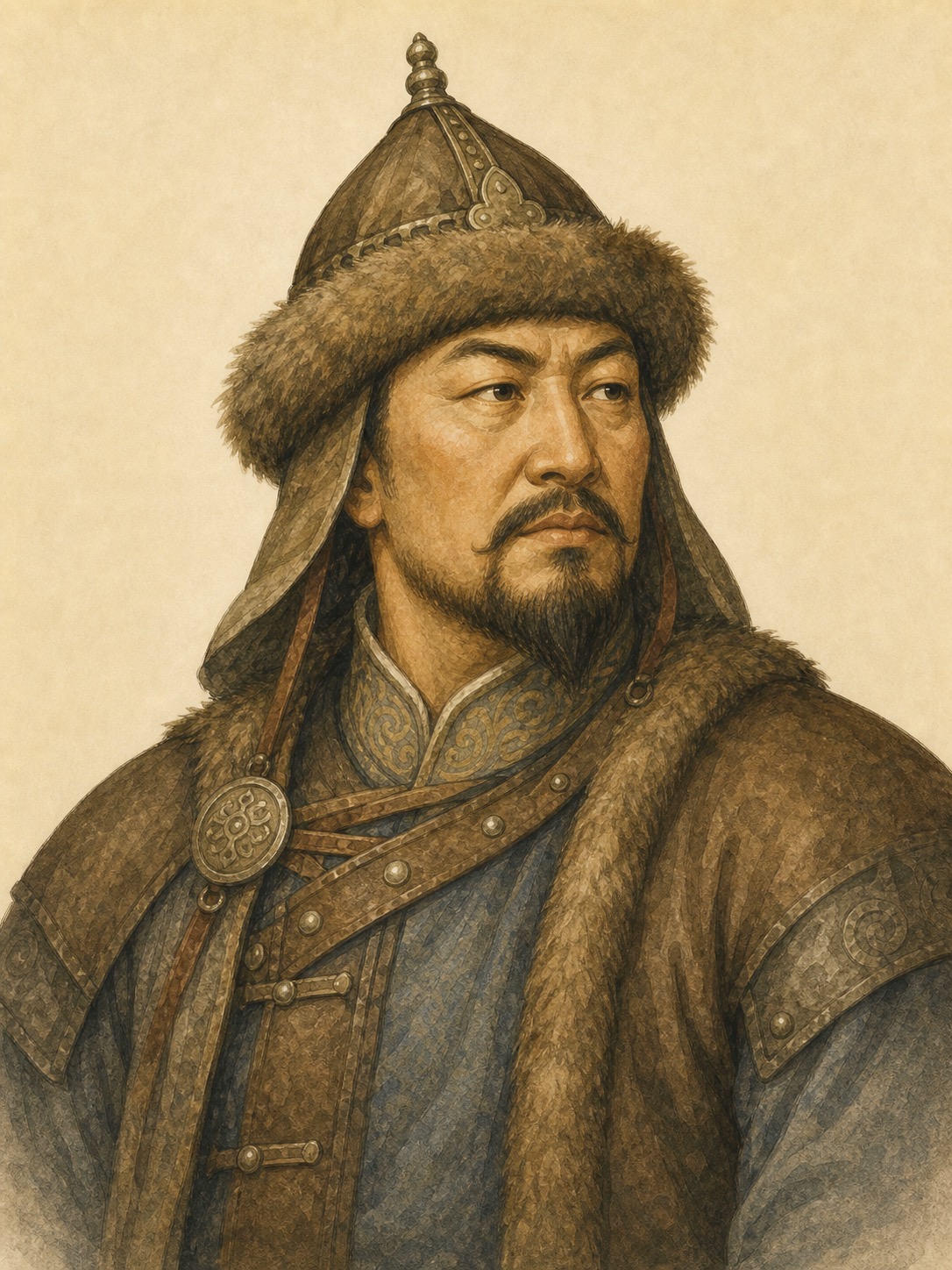
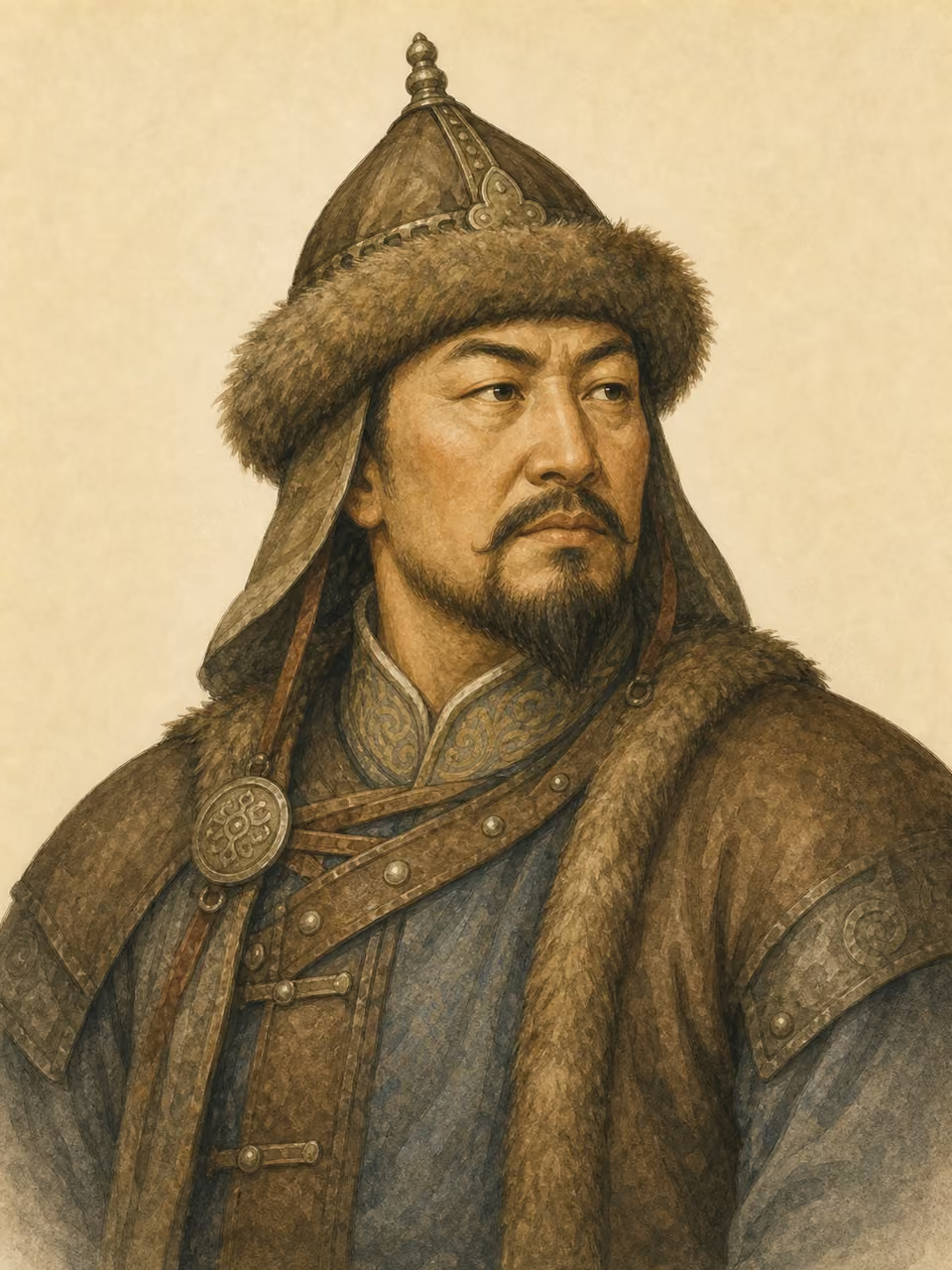
Batu Khan
Commander of the western advance
He led princely armies through the conquest of Rus' and into Poland and Hungary.
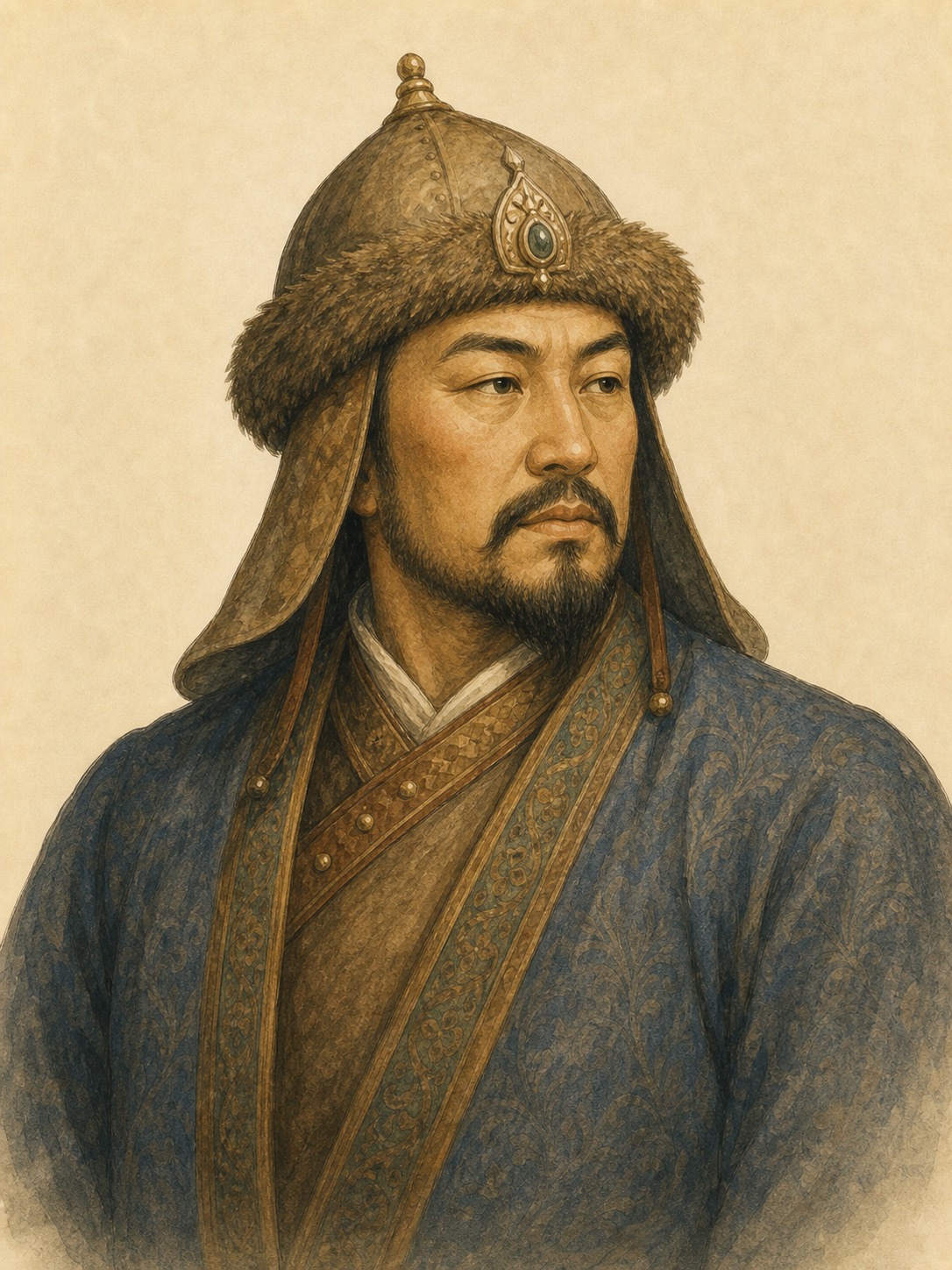
Hulegu Khan
Commander in West Asia
Acting under Möngke's mandate, he advanced into Iran and took Baghdad in 1258.
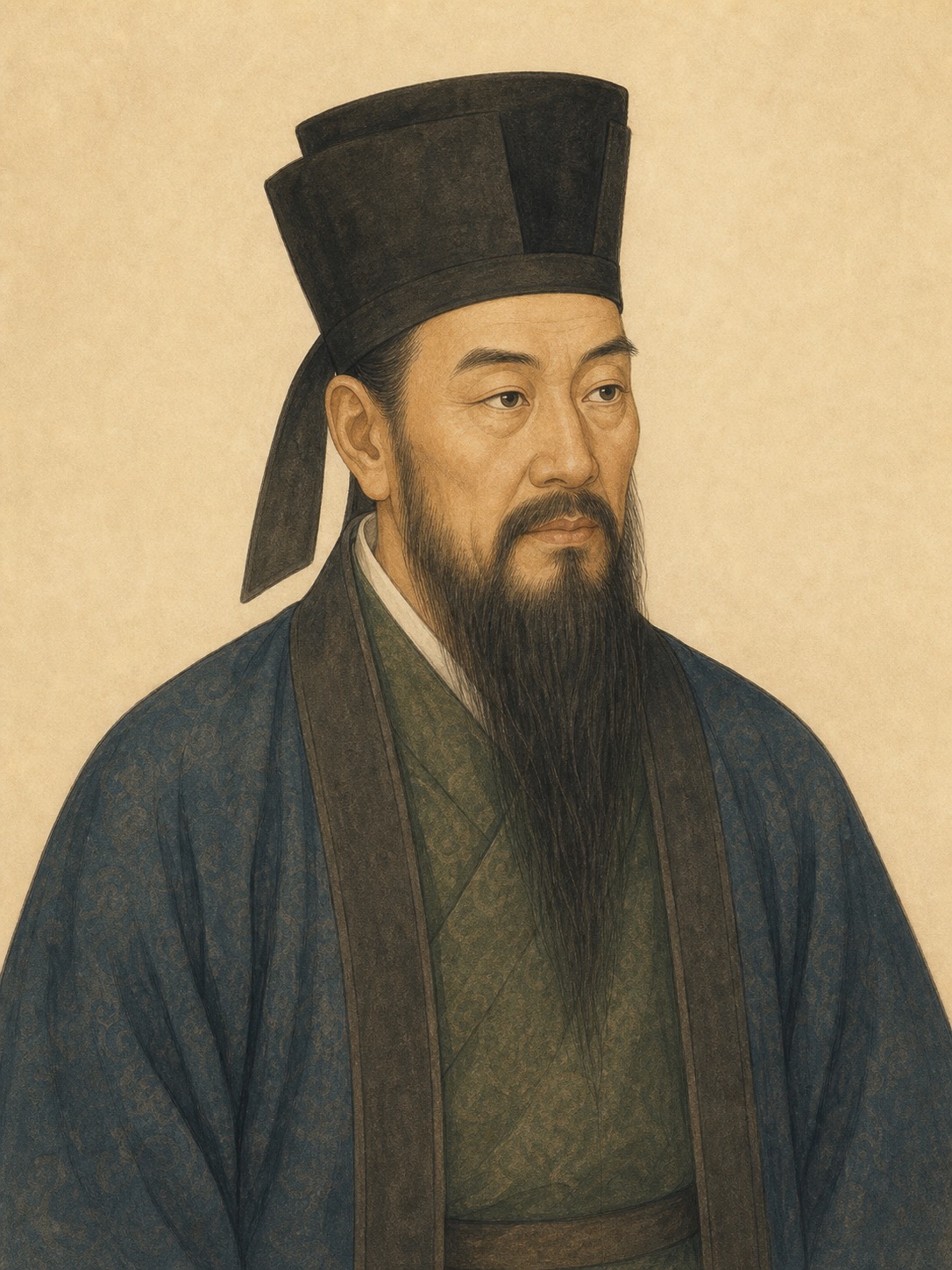
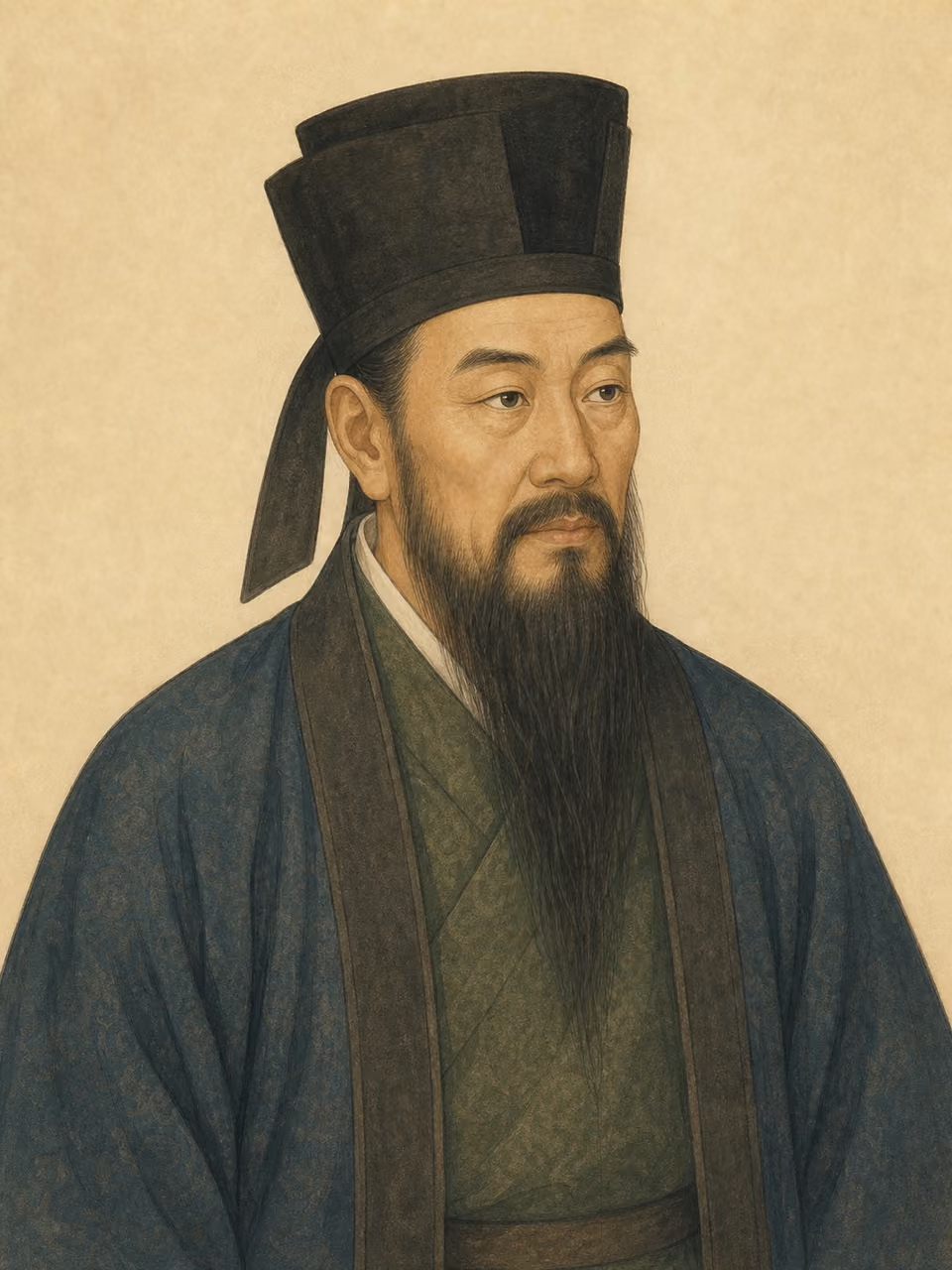
Yelü Chucai
Fiscal and administrative adviser
He advised Chinggis Khan and Ögödei and participated in taxation and administration in conquered North China.
Related events
c. 1196–c. 1203
Temujin's alliance building
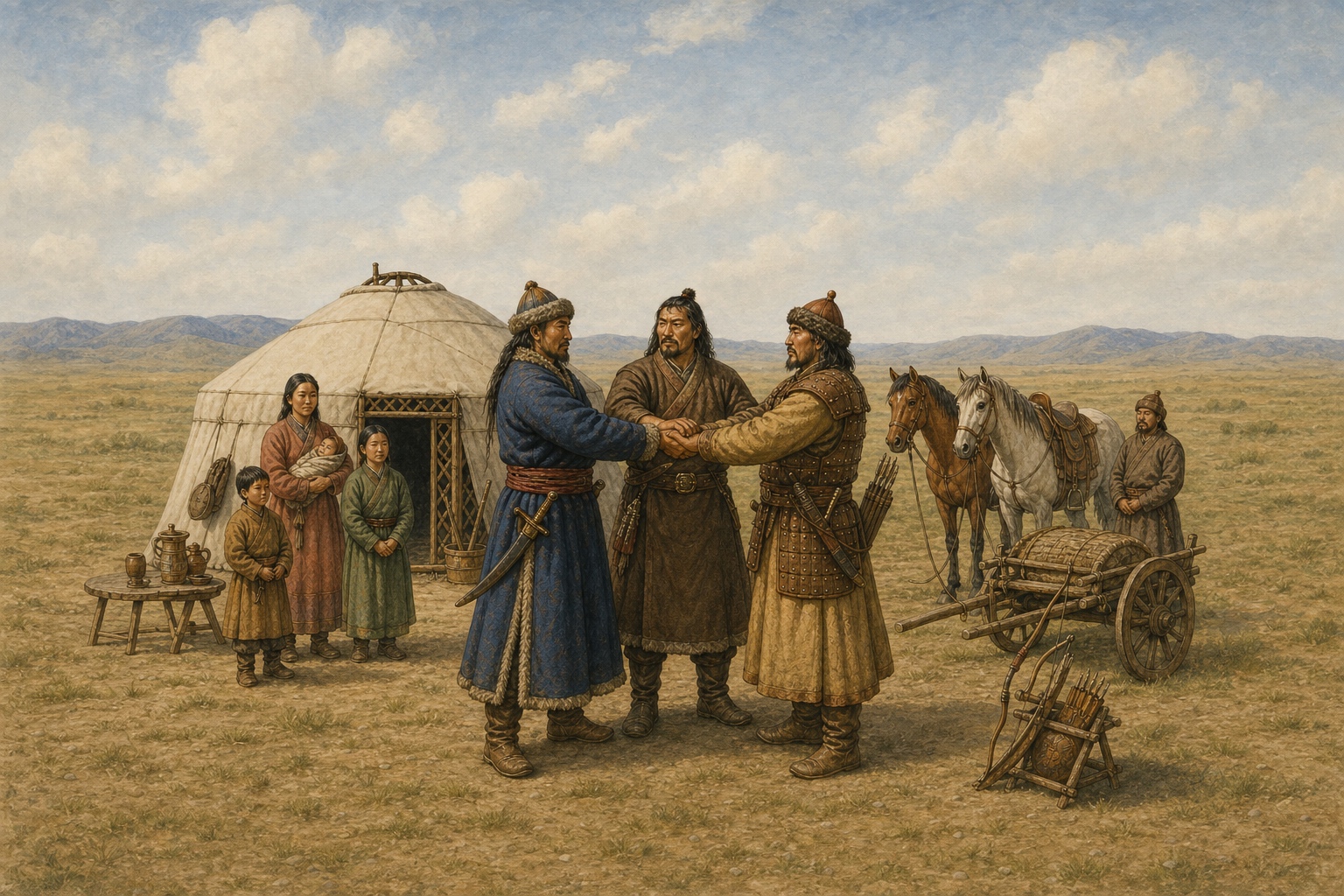
He expanded support on the steppe through alliances, marriage ties, personal loyalties, military reorganization, and victory over rivals.
1204
Defeat of the Naiman confederation
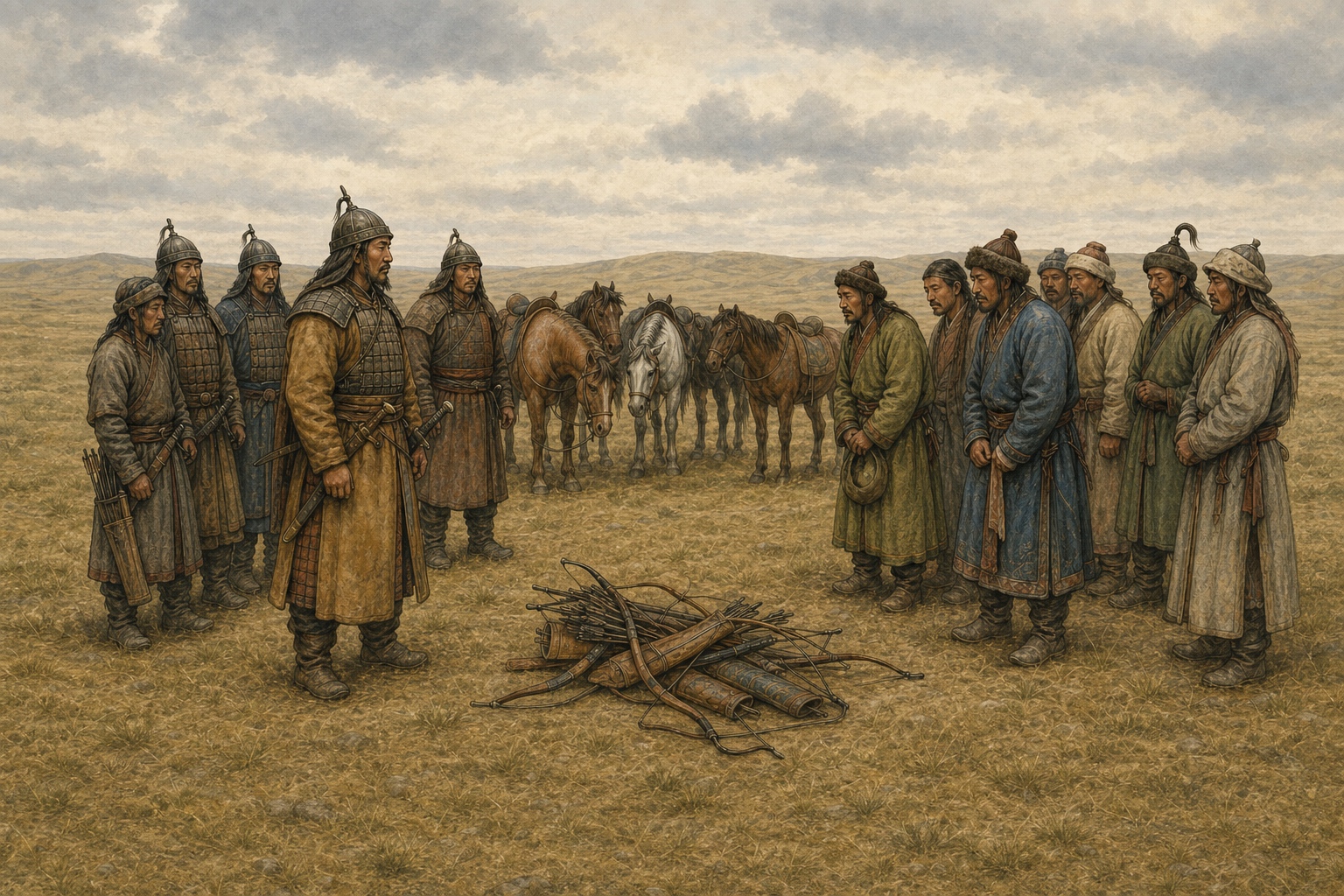
The defeat in 1204 of forces centered on the Naimans was a turning point before the wider unification of 1206.
1206–1259
Imperial formation and early expansion
Current event
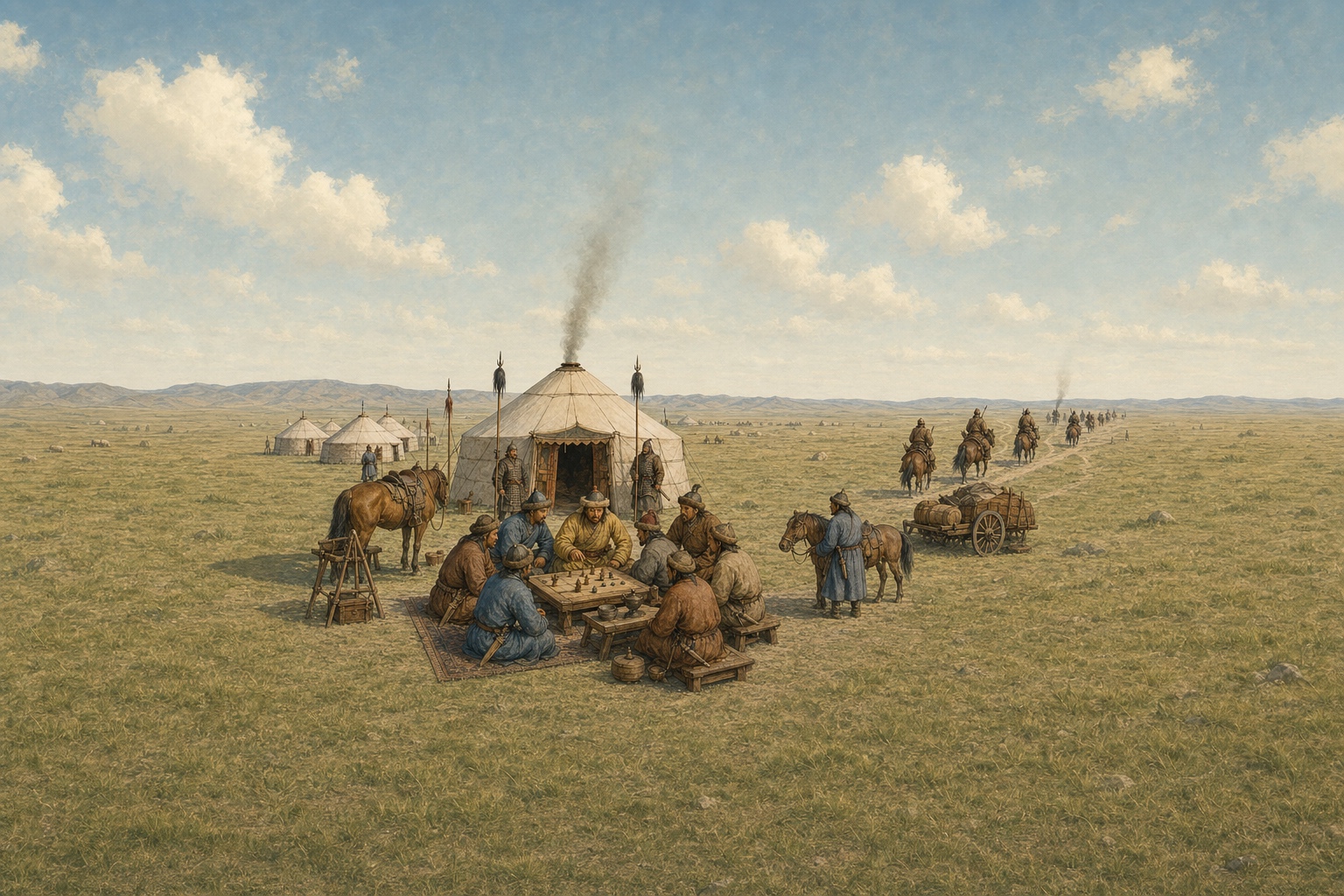
From the acclamation of 1206 through 1259, successors and princely armies extended rule across Eurasia.
1259–1264
Succession crisis after Möngke
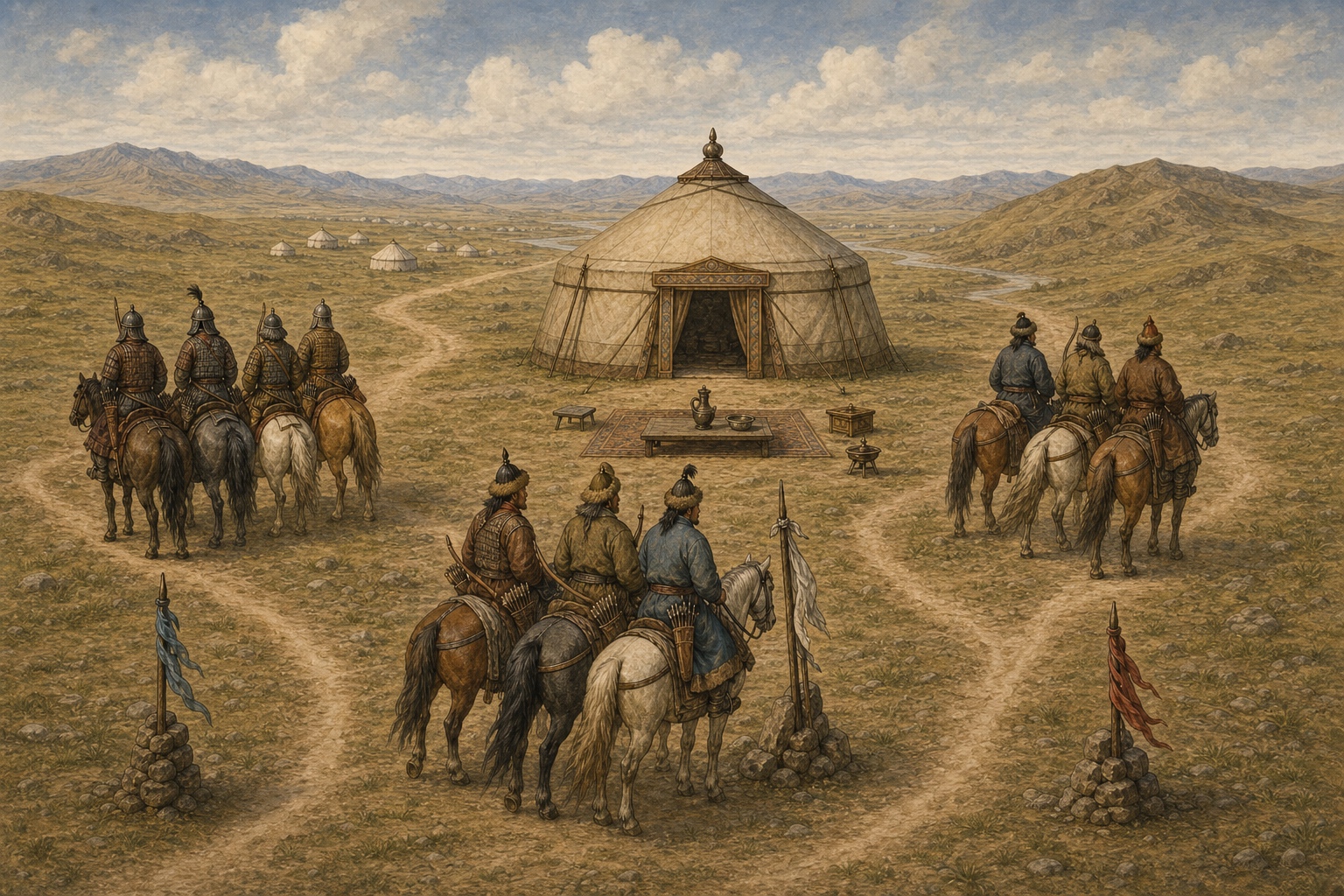
After Möngke died in 1259, no unitary succession was secured and armed rivalry among princes began.
c. 1260–c. 1294
Division into successor khanates
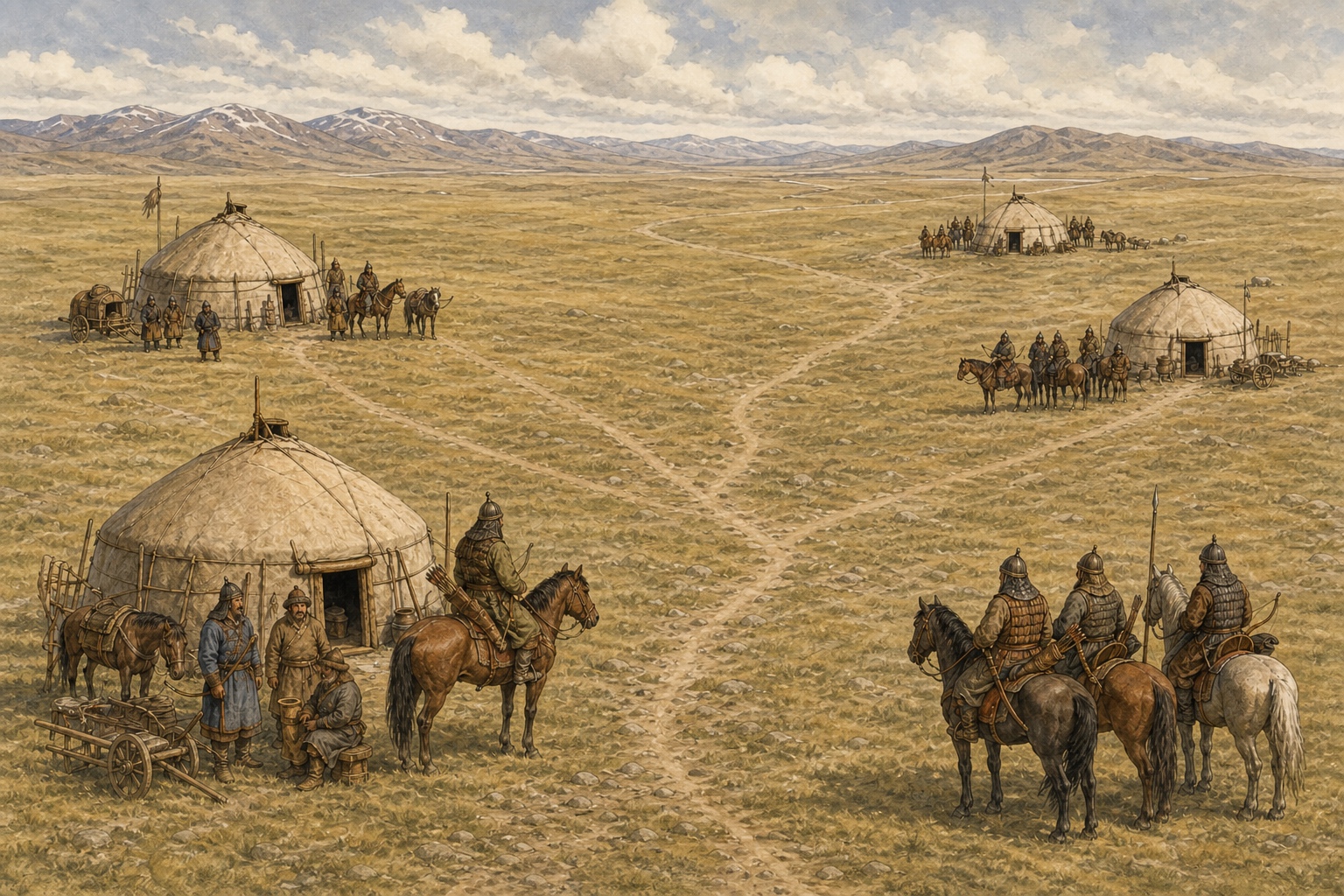
The Yuan, Jochid, Chagatai, and Ilkhanid realms developed increasingly separate political trajectories.


Sources
- The Mongols in World HistoryAsia for Educators, Columbia UniversityAn educational synthesis of the 1206 unification, military organization, successor conquests, trade, administration, and cultural exchange.
- The Legacy of Genghis KhanThe Metropolitan Museum of ArtA curatorial overview of imperial scale, relay and administrative networks, trade, and Hülegü's campaigns in Iran and Baghdad.
- The Mongols: A Pastoral EmpireJohn Masson Smith Jr. / Columbia UniversityA scholarly article with an explicit passage on Möngke's death in 1259 and the turn toward succession rivalry and fragmentation.
- Portrait of Yelü ChucaiThe Metropolitan Museum of ArtA collection record describing Yelü Chucai's service to Chinggis and Ögödei and his fiscal role in North China.