
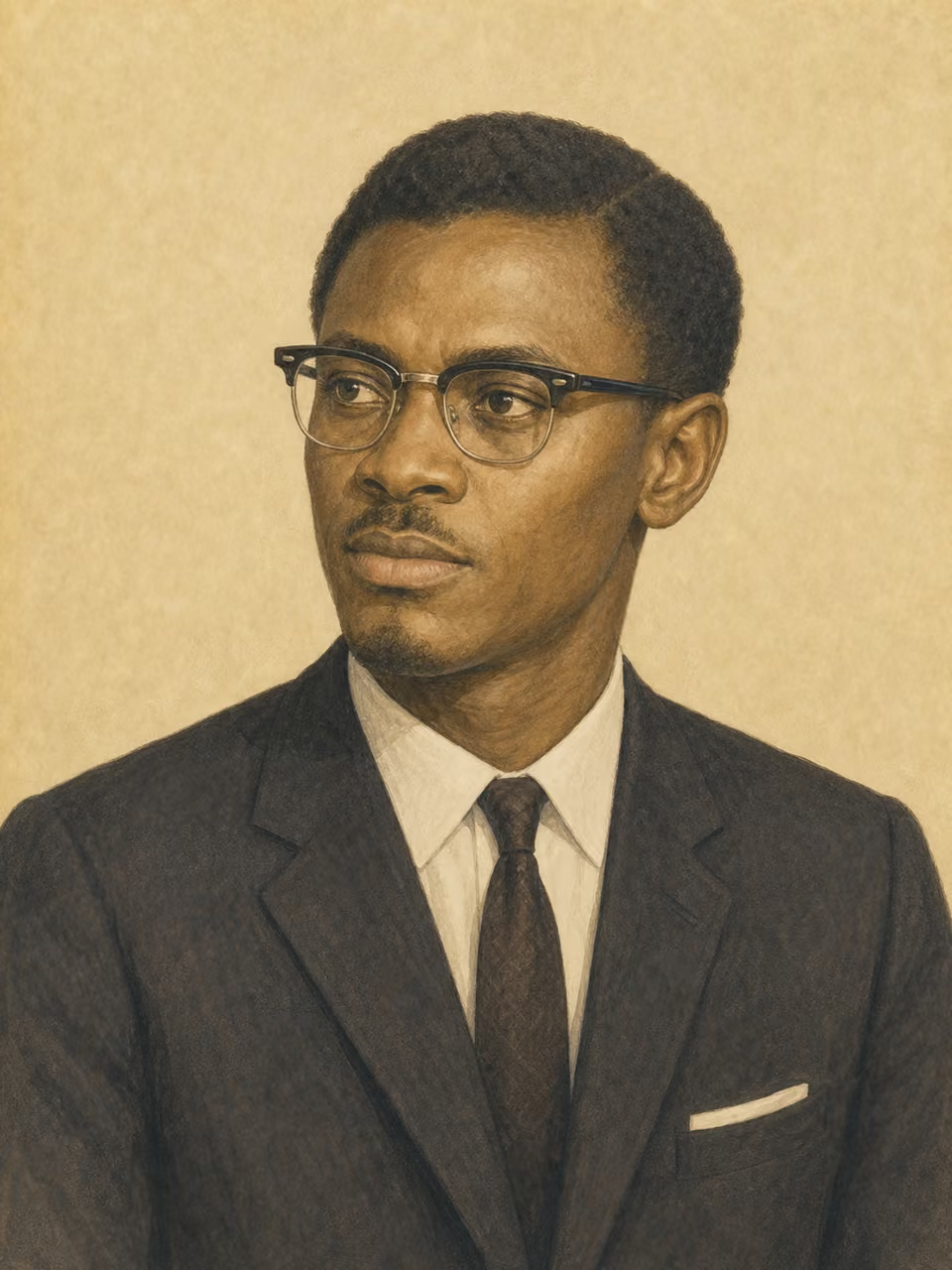
Patrice Lumumba

Portrait: AI-generated imagined likeness

Patrice Lumumba

Politician · revolutionary · Political activist

Years
1925–1961
Birthplace
Congo - Kinshasa
Birth polity
Belgian Congo
Era
Contemporary
Field
Politics
Occupations
Politician · revolutionary · Political activist

He was a political leader during the independence period of the Congo and became the first prime minister. He appealed for independence from Belgian colonial rule, but was defeated and killed during the Congolese uprising. He is a figure who represents the intersection of African independence and the Cold War.

View in catalog

Historical context

Places

  • Onalua

    Birth

  • Leopoldville

    Work

Events

  • Congolese independence

    1960

    Political event · Leader

  • Congo Crisis

    1960–1961

    Political event · Participant

Origins

Origins map
Birth country
Birth country
Congo - Kinshasa

Map: Natural Earth (PD)

Biography

Early life

Born in the Belgian Congo, he became politically aware while working as a postal worker and sales clerk. Urbanization and the growth of an educated African population formed the basis of the independence movement.

Achievements

He led the Congolese national movement and became prime minister after independence in 1960. At the independence ceremony, he openly criticized the violence of colonial rule and strongly appealed for sovereignty and national unity.

Character & anecdotes

Immediately after independence, Congo experienced a combination of military rebellion, Katanga secession, and foreign intervention. Lumumba's rapid fall from power symbolizes that the newly independent country was at the mercy of the Cold War and resource interests.

Historical Impact

Studying Lumumba reveals that Africa's independence did not end with the establishment of a national flag and constitution, but was influenced by resources, armies, former colonial powers, and Cold War politics. He was widely remembered as a martyr of anti-colonialism. He is an indispensable figure when considering the formation of the modern Congolese nation.