
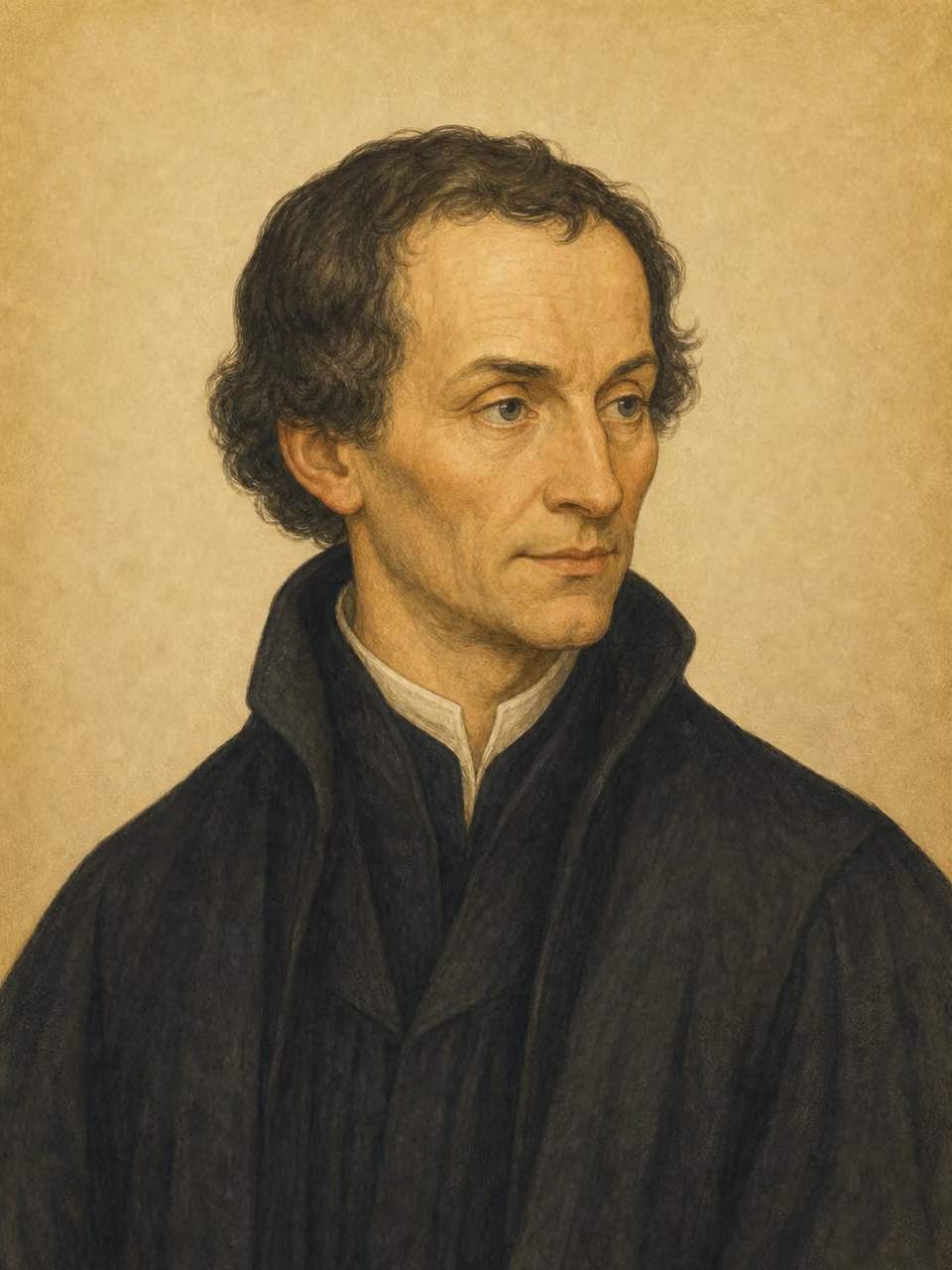
Philipp Melanchthon

Portrait: AI-generated imagined likeness

Philipp Melanchthon

theologian · Philosopher · Writer · Teacher

Years
1497–1560
Birthplace
Germany
Birth polity
Holy Roman Empire
Era
Early modern
Field
Religion
Occupations
theologian · Philosopher · Writer · Teacher

A theologian of the German Reformation and known as a collaborator of Luther. He demonstrated his power in educational reform and the organization of doctrine, and systematized Protestant thought. Showing the intellectual aspects of the Reformation.

View in catalog

Historical context

Places

  • Bretten

    Birth

  • Wittenberg

    Work

Works & achievements

  • Augsburg Confession

    1530

    Book

Events

  • Protestant Reformation

    1517–1560

    Movement · Supporter

Origins

Origins map
Birth country
Birth country
Germany

Map: Natural Earth (PD)

Biography

Early life

Born in southwest Germany, he received a classical language and humanist education. At a young age, he was invited to Wittenberg University and became associated with Luther's reform movement.

Achievements

He played a central role in the creation of the Augsburg Confession of Faith, which organized the doctrines of the Lutheran church. He was involved in the school system and university education, passing on his reform ideas to the next generation.

Character & anecdotes

Compared to Luther, who favored heated debates, Melanchthon was more conciliatory and academic. The Reformation was supported not only by preachers but also by teachers and philologists.

Historical Impact

When we study Melanchthon, we understand that the Reformation was not only a movement that disrupted the church system, but also involved education, humanism, and the development of doctrinal documents. It also influenced school culture in early modern Europe. We can also see the importance of practical work that transforms ideas into systems.