
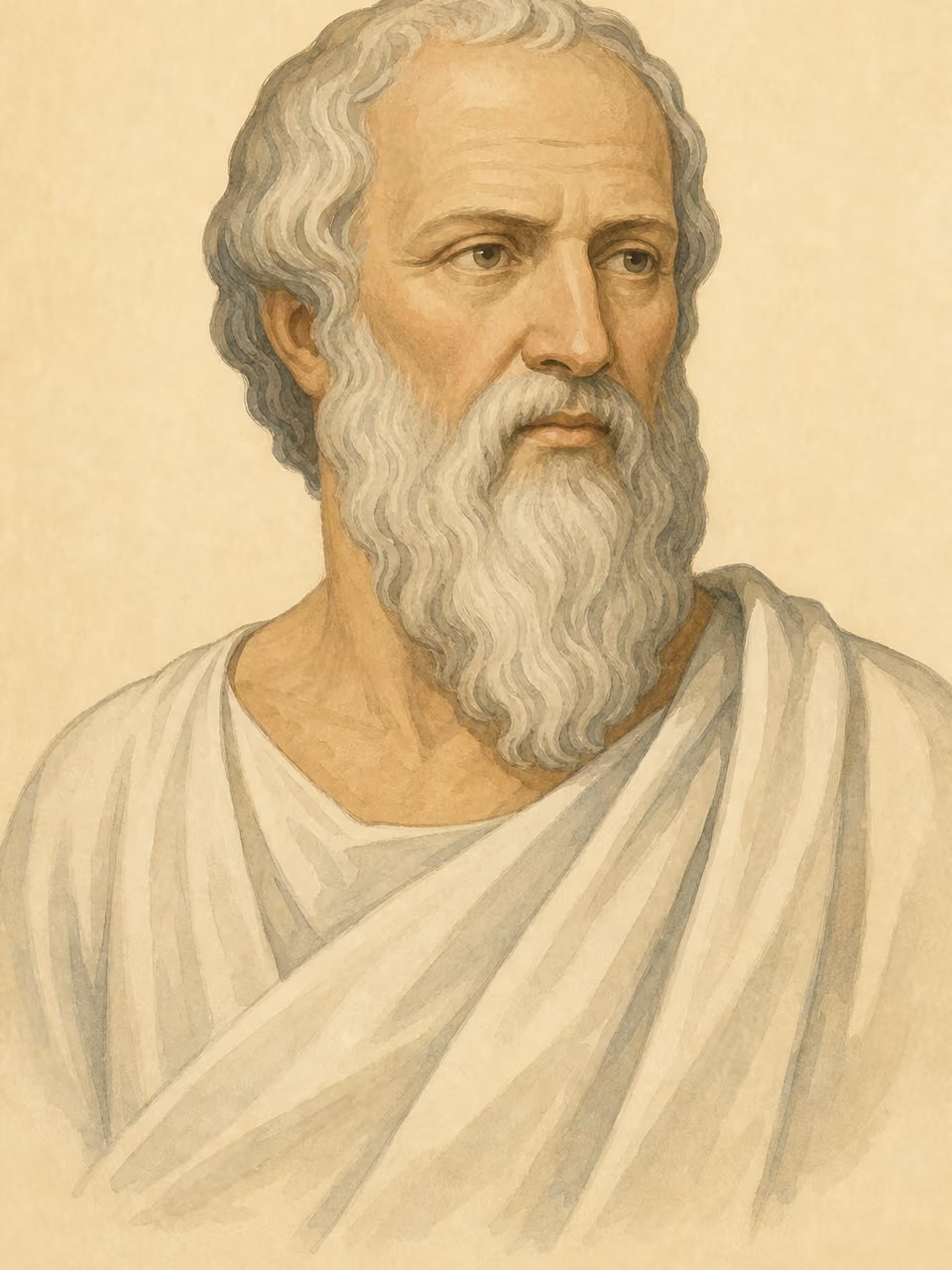
Plato

Portrait: AI-generated imagined likeness

Plato

Philosopher · Writer

Years
c. 427 BC–c. 347 BC
Birthplace
Greece
Birth polity
Athens
Era
Ancient
Field
Philosophy
Occupations
Philosopher · Writer

After witnessing the trial and execution of Socrates, Plato turned the drama of conversation into a literary and educational project, composing dialogues that asked how justice, knowledge, and the soul should be understood. By founding the Academy, he helped move philosophy from scattered debate into an institution that could train later generations.

View in catalog
Historical context

Places

  • Athens

    Work

  • Academy

    Education

Works & achievements

  • Republic

    c. 375 BC

    Book

Events

  • Founding of the Academy

    c. 387 BC

    Cultural event · Leader

Origins

Origins map
Birth country
Birth country
Greece

Map: Natural Earth (PD)

Biography

Early life

Plato was born around 427 BCE into an influential Athenian family. His encounter with Socrates, and especially Socrates' trial and execution in 399 BCE, became decisive for his philosophical career. After a period of travel, he returned to Athens and gathered students around him.

Achievements

He wrote philosophical dialogues including the Apology, Symposium, and Republic, exploring justice, knowledge, education, the soul, and the theory of Forms. His school, the Academy, made sustained philosophical discussion and mathematical training part of an enduring intellectual program.

Character & anecdotes

Many of Plato's works place Socrates at the center of the discussion. Because of this literary form, separating the historical Socrates from Plato's philosophical portrait remains one of the lasting problems in classical scholarship.

Historical Impact

The Academy became one of the clearest ancient precedents for a durable community of higher learning, and Plato's writings remained central wherever educated traditions argued about reality, politics, or education. Christian theology, Islamic philosophy, Renaissance humanism, and modern metaphysics all returned again and again to Platonic problems, categories, and methods.

Notes

The modern word academy ultimately traces back to the Athenian place associated with Plato's school.

Related figures

View all in catalog