
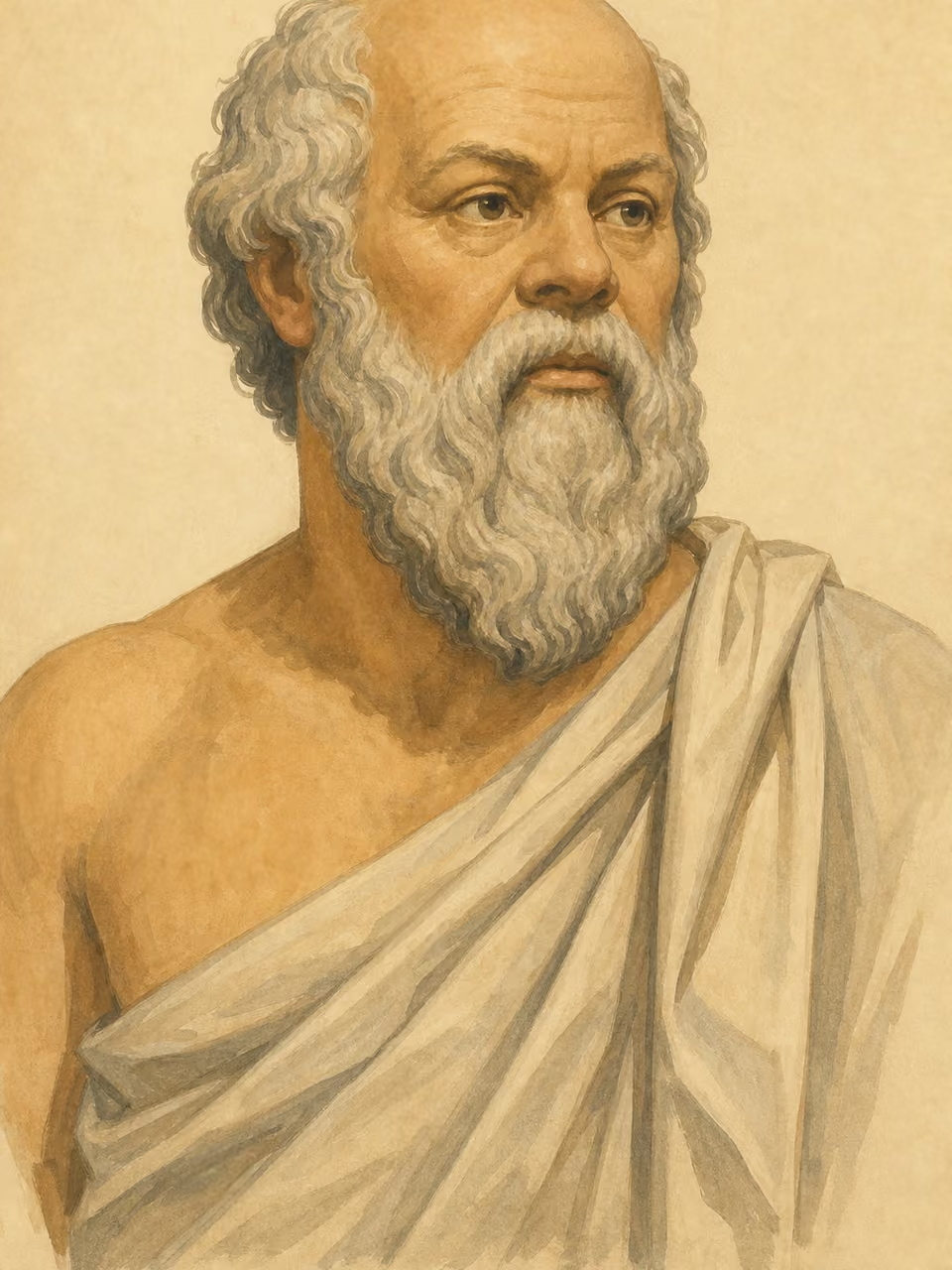
Socrates

Portrait: AI-generated imagined likeness

Socrates

Philosopher · Teacher · Ethicist

Years
c. 469 BC–399 BC
Birthplace
Greece
Birth polity
Athens
Era
Ancient
Field
Philosophy
Occupations
Philosopher · Teacher · Ethicist

In the marketplaces and dinner parties of Athens, Socrates kept pressing people to explain what they meant by justice, courage, or knowledge, turning conversation into a philosophical test. Even when condemned in 399 BCE, he remained memorable as a thinker who carried that discipline of examination to the point of death.

View in catalog
Historical context

Places

  • Athens

    Work

Events

  • Trial of Socrates

    399 BC

    Trial · Subject

Origins

Origins map
Birth country
Birth country
Greece

Map: Natural Earth (PD)

Biography

Early life

Socrates was born around 469 BCE in or near Athens, traditionally in the deme of Alopece. Ancient accounts describe his father as a stonemason or sculptor and his mother as a midwife, but the details of his life are known only through other writers because he left no writings of his own.

Achievements

He made dialogue and cross-examination the center of philosophical inquiry, pressing Athenians to examine what they meant by knowledge, virtue, justice, and the good life. The method associated with him survived through the works of Plato, Xenophon, and other Socratic writers.

Character & anecdotes

Socrates presented himself not as a possessor of wisdom but as someone who tested claims to wisdom. In 399 BCE he was tried in Athens on charges including corrupting the youth and impiety, convicted, and put to death by drinking hemlock.

Historical Impact

The Socratic method survived because Plato, Xenophon, and later writers made his questioning style a model for inquiry rather than a private habit of one teacher. Ethics, epistemology, political theory, and even modern classroom discussion in philosophy and law still inherit the idea that argument should expose assumptions instead of merely repeating doctrine.

Notes

There is no single uncontested historical Socrates; scholars compare Plato, Xenophon, Aristophanes, and later testimony to reconstruct his life and thought.

Related figures

View all in catalog