
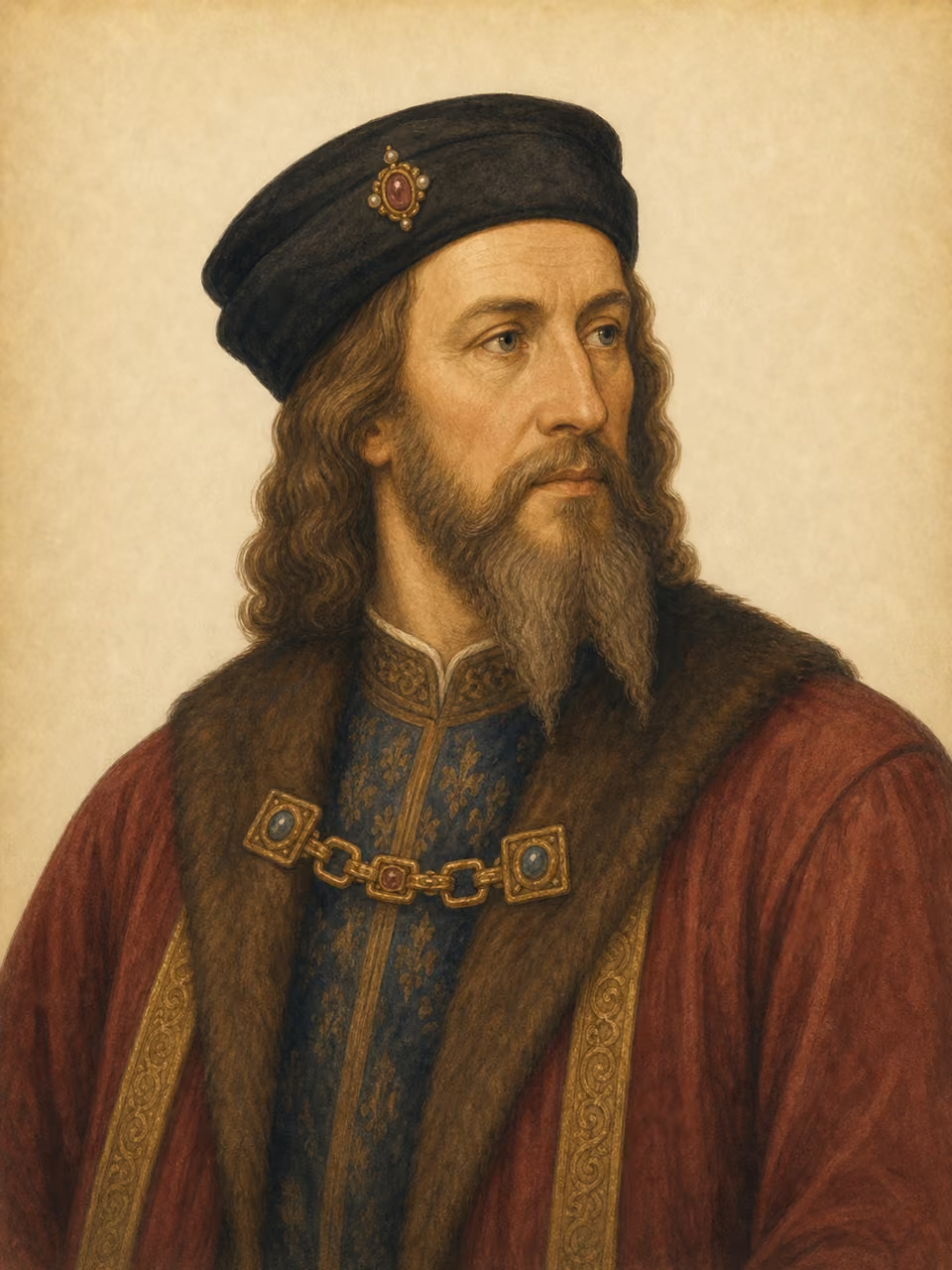
Sigismund

Portrait: AI-generated imagined likeness

Sigismund

Monarch

Years
1368–1437
Birthplace
Germany
Birth polity
Holy Roman Empire
Era
Medieval
Field
Politics
Occupations
Monarch

A monarch who was Holy Roman Emperor and also served as King of Hungary and Bohemia. He was involved in the Council of Constance, and was deeply involved in the resolution of the Great Schism of the Church and the politics of Central Europe. This will be an entryway to reading the relationship between the empire and the church.

View in catalog

Historical context

Places

  • Nuremberg

    Birth

  • Constance

    Work

Events

  • Council of Constance

    1414–1418

    Political event · Leader

Origins

Origins map
Birth countryAssociated countries
Birth country
Germany
Associated countries
Hungary · Czechia

Map: Natural Earth (PD)

Biography

Early life

Born into the Luxembourg family, he was associated with several kingdoms in central Europe through marriage and succession. They expanded their power as dynastic politics and imperial order overlapped.

Achievements

He supported the Council of Constance and was involved in resolving the Great Schism of the Western Church. On the other hand, it also faced the Hussite problem, embodying the tensions between church and empire on the eve of the Reformation.

Character & anecdotes

Sigismund was not so much a king as a medieval European monarch with multiple crowns. His policies thus span the German, Hungarian, and Bohemian contexts.

Historical Impact

When you study Sigismund, you can see that the Holy Roman Empire at the end of the Middle Ages was a place where church politics, the central European throne, and the interests of cities and feudal lords were coordinated. We can also understand the history leading up to the religious reform. The historical background of conciliarism can also be seen.