
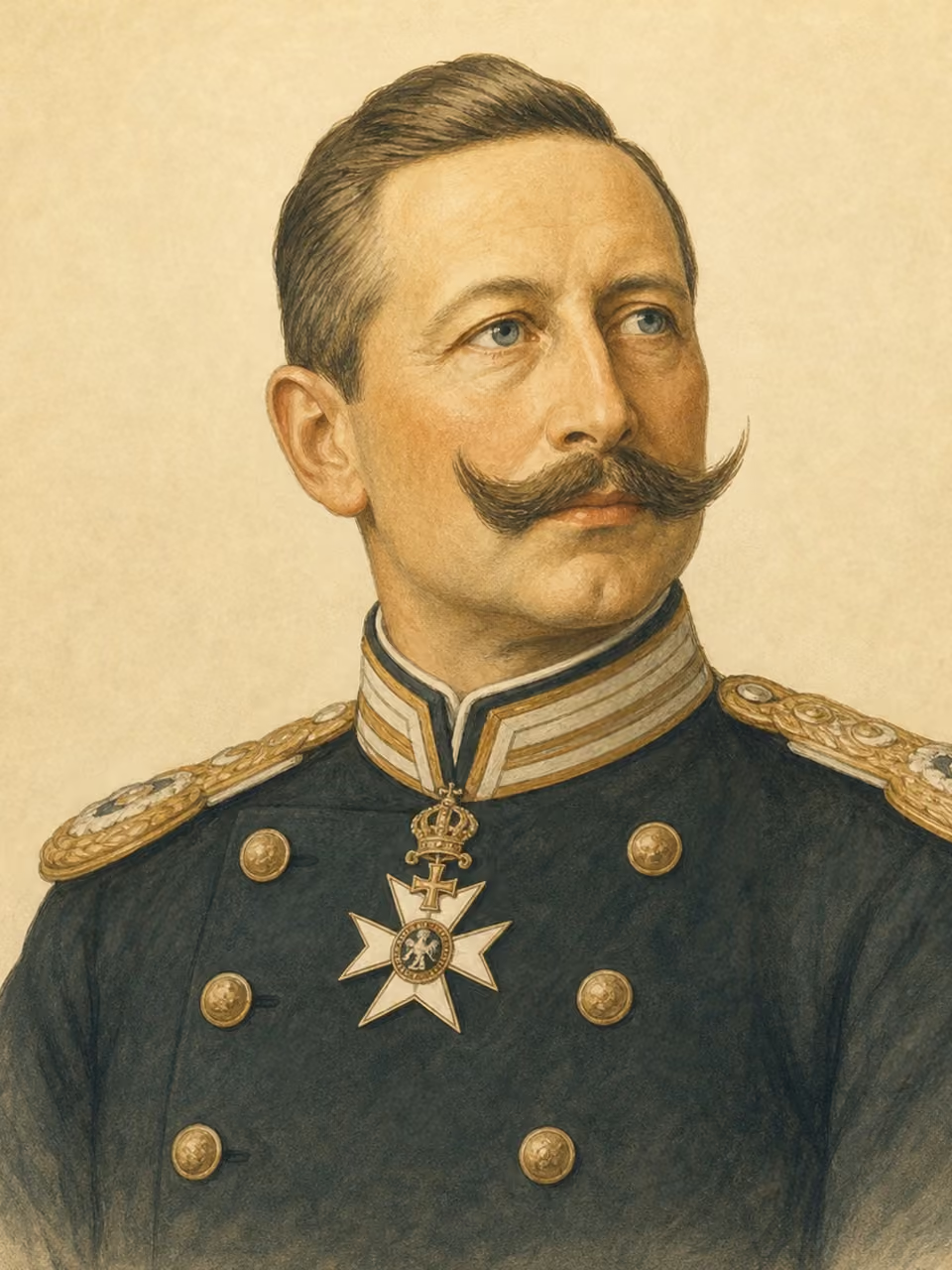
Wilhelm II

Portrait: AI-generated imagined likeness

Wilhelm II

Monarch · Politician

Years
1859–1941
Birthplace
Germany
Birth polity
Kingdom of Prussia
Era
Modern
Field
Politics
Occupations
Monarch · Politician

Last emperor of the German Empire. He pursued world policy, naval expansion, and colonial competition, then abdicated during the First World War. He reflects European diplomacy in the age of imperialism.

View in catalog

Historical context

Places

  • Berlin

    Work

Events

  • First World War

    1914–1918

    War · Leader

Origins

Origins map
Birth country
Birth country
Germany

Map: Natural Earth (PD)

Biography

Early life

Born into the Prussian royal family, he grew up in an environment that emphasized military affairs and dynastic diplomacy. His family ties to the British royal house shaped his political sensibility within Europe's network of monarchs.

Achievements

After dismissing Bismarck, he pushed German foreign policy in a more assertive direction. Fleet construction and a hard diplomatic posture became one cause of growing distrust among the great powers.

Character & anecdotes

He favored spectacular uniforms and speeches and strongly staged the prestige of the emperor as an individual. Actual politics, however, were constrained by military leaders, officials, parliament, and alliances rather than moved by personal will alone.

Historical Impact

Wilhelm II's abdication symbolizes how the First World War ended the age of dynastic empires. Through him, one can understand modern Europe, where arms races, public opinion, alliance diplomacy, and the limits of monarchy overlapped. He is also a guide to thinking about the relationship between institutions and individuals.