First World War
1914–1918
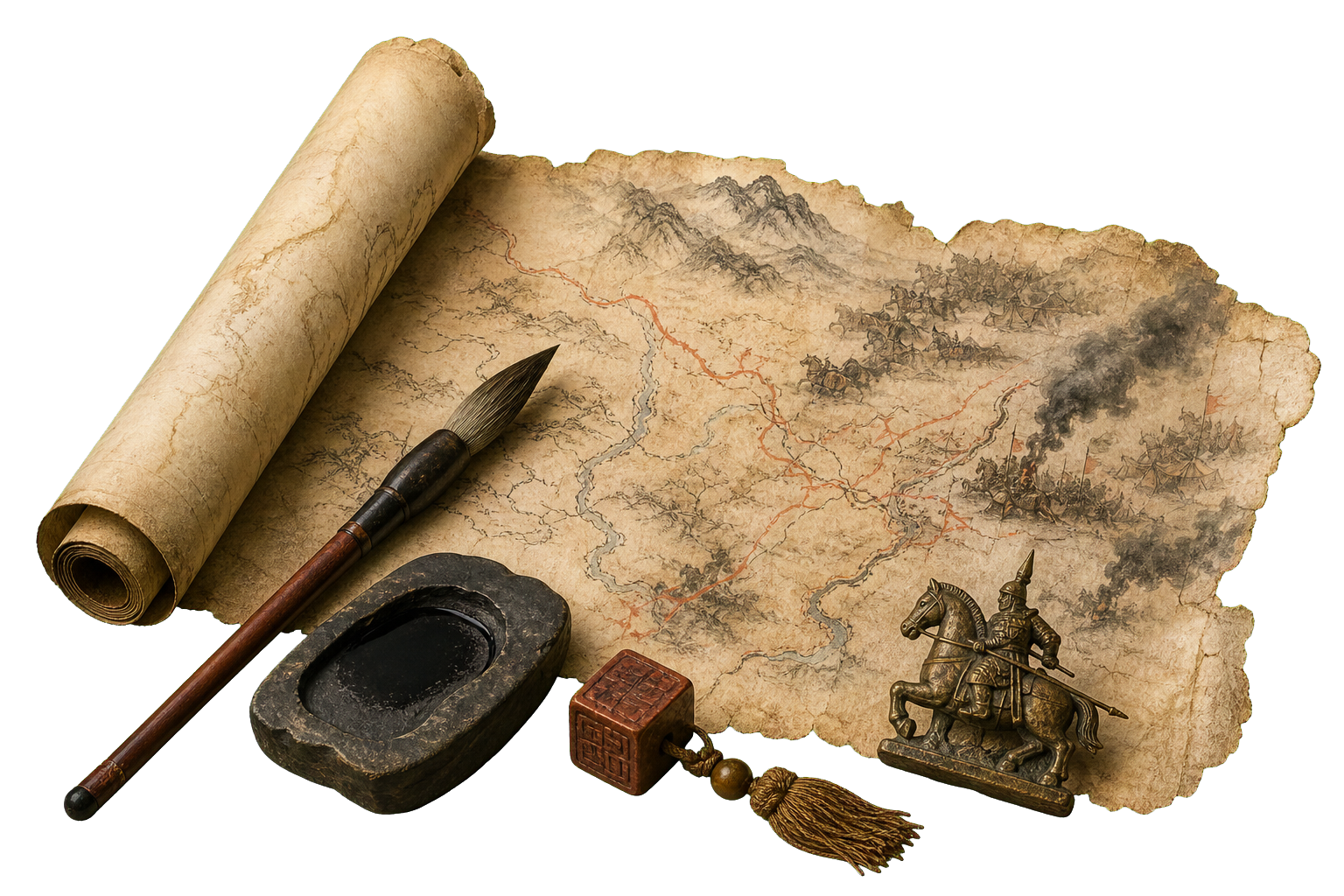
The 1914–1918 global war in which the Allied and Central Powers mobilized empires, states, and societies across Europe, Africa, Asia, the Middle East, the Pacific, and the Atlantic.

- Period
- 1914–1918
- Kind
- War
- Regions
- Europe, Africa, Middle East, South Asia, East Asia, Oceania, North America
- Keywords
- First World War · background · course · outcome
Follow the story · Four stages
Background
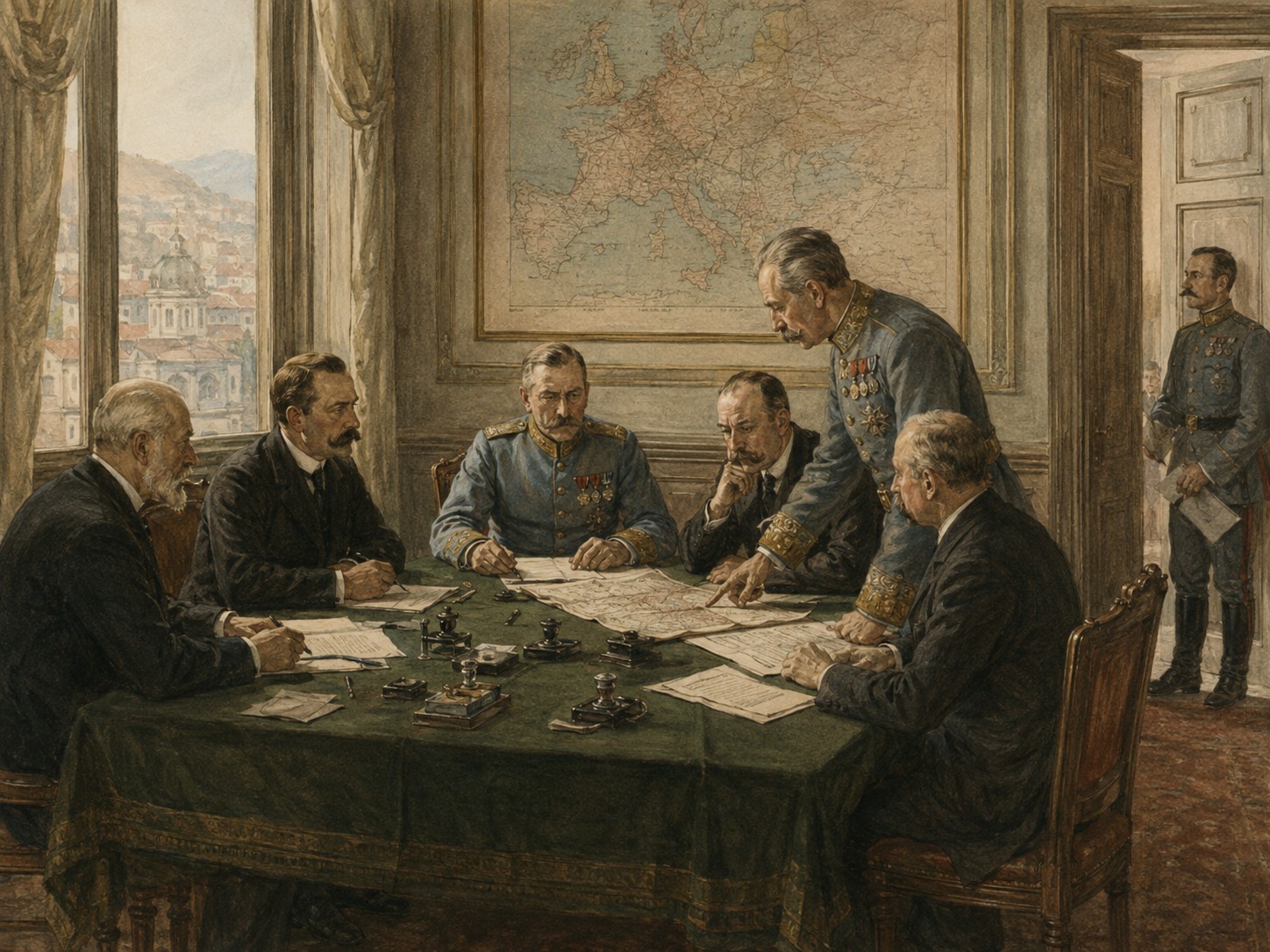
The assassination of Archduke Franz Ferdinand triggered the July Crisis, but war resulted from decisions by governments acting amid rival alliances, militarization, nationalism, imperial competition, and insecurity. Austria-Hungary attacked Serbia; Russian, German, French, and British choices widened the conflict, and the entry of European empires drew colonies and dominions into it.
- The assassination of Archduke Franz Ferdinand triggered the July Crisis, but war resulted from decisions by governments acting amid rival alliances, militarization, nationalism, imperial competition, and insecurity.
- Austria-Hungary attacked Serbia; Russian, German, French, and British choices widened the conflict, and the entry of European empires drew colonies and dominions into it.
- The source record helps place this stage in context.
Course
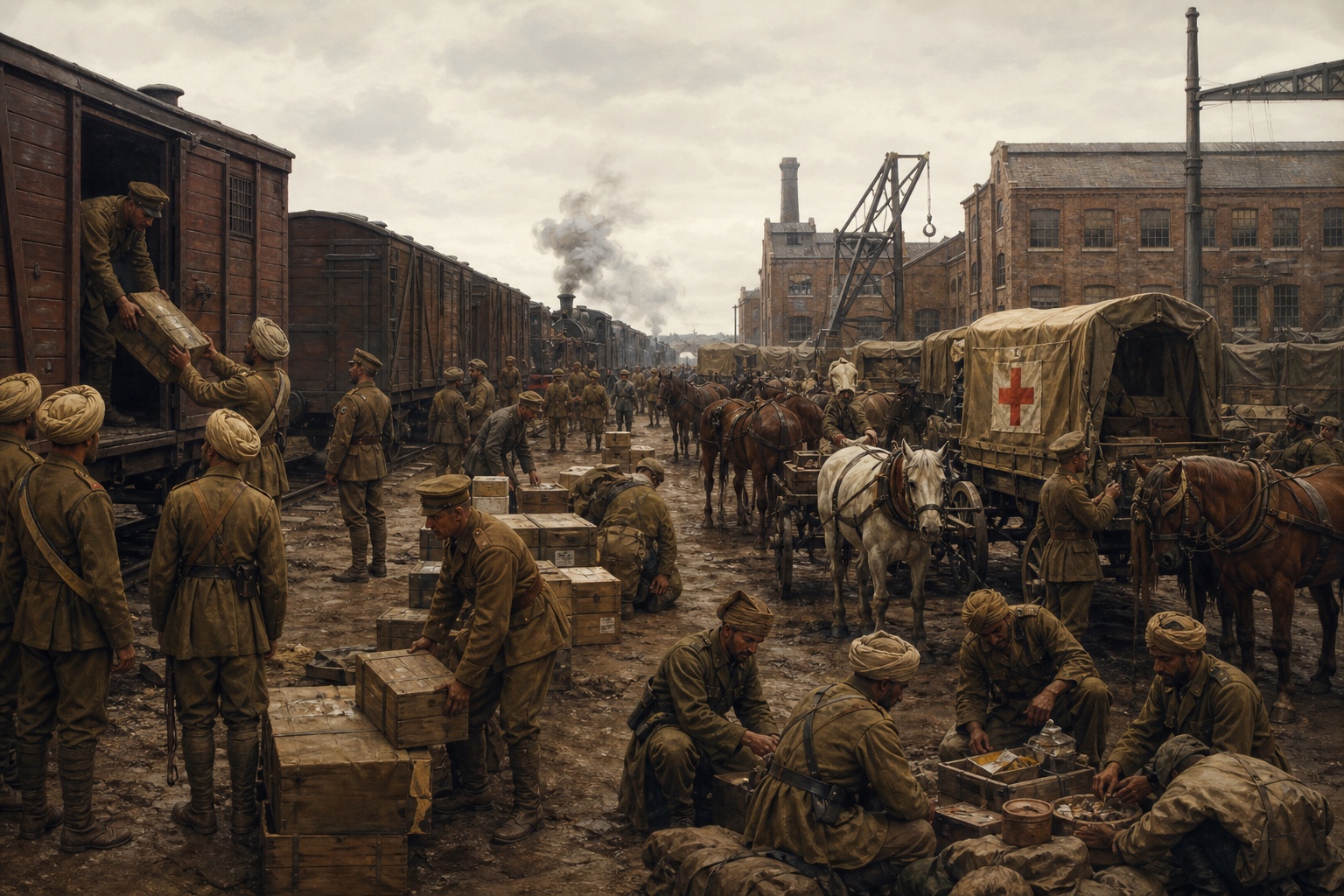
Industrialized mass armies fought on the Western and Eastern Fronts, while campaigns also spread through the Balkans, the Ottoman lands, Africa, East Asia, and the oceans. Gallipoli, Mesopotamia, East Africa, and the seizure of German colonies involved soldiers and laborers recruited across empires—including more than a million from British India—under conditions ranging from volunteering to coercion. Blockade, submarine warfare, occupation, genocide against Ottoman Armenians and other Christians, and civilian mobilization made the war far more than battlefield combat.
- Industrialized mass armies fought on the Western and Eastern Fronts, while campaigns also spread through the Balkans, the Ottoman lands, Africa, East Asia, and the oceans.
- Gallipoli, Mesopotamia, East Africa, and the seizure of German colonies involved soldiers and laborers recruited across empires—including more than a million from British India—under conditions ranging from volunteering to coercion.
- Blockade, submarine warfare, occupation, genocide against Ottoman Armenians and other Christians, and civilian mobilization made the war far more than battlefield combat.
Outcome
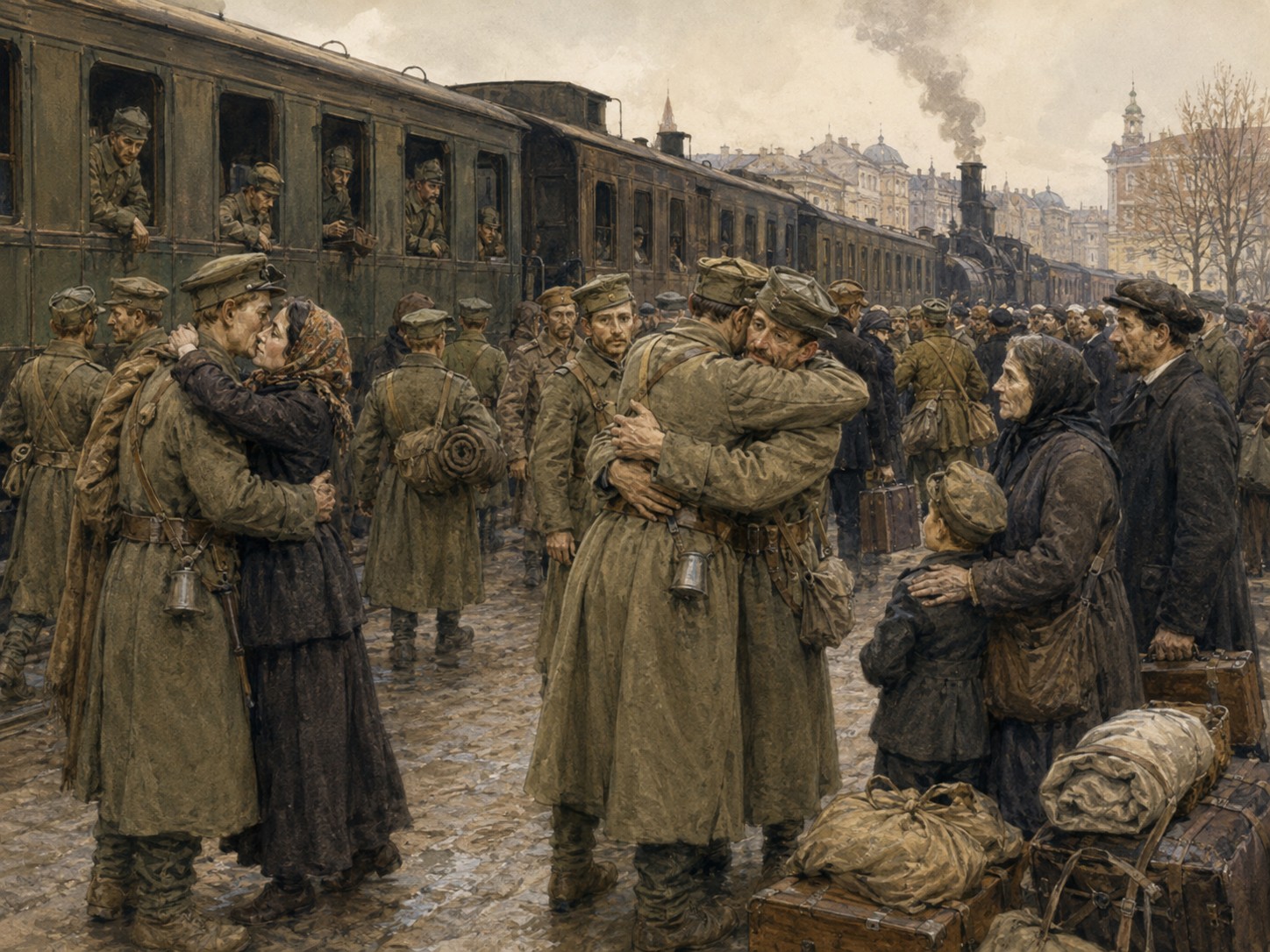
Russia left the war after the 1917 revolutions and the Treaty of Brest-Litovsk. The United States entered in 1917; Allied offensives and the exhaustion of the Central Powers produced armistices in 1918. The Russian, German, Austro-Hungarian, and Ottoman empires collapsed, while postwar treaties redrew borders and converted some former Ottoman and German territories into mandates rather than granting equal self-determination.
- Russia left the war after the 1917 revolutions and the Treaty of Brest-Litovsk.
- The United States entered in 1917; Allied offensives and the exhaustion of the Central Powers produced armistices in 1918.
- The Russian, German, Austro-Hungarian, and Ottoman empires collapsed, while postwar treaties redrew borders and converted some former Ottoman and German territories into mandates rather than granting equal self-determination.
Historical significance
The war caused mass death, displacement, disability, and economic disruption on a global scale. Military breakdown and hardship helped make Russia's 1917 revolutions possible. The postwar order, reparations disputes, minority conflicts, colonial disappointments, and fascist politics formed part of the background to the Second World War, but that later war was not an automatic or inevitable result of 1918.
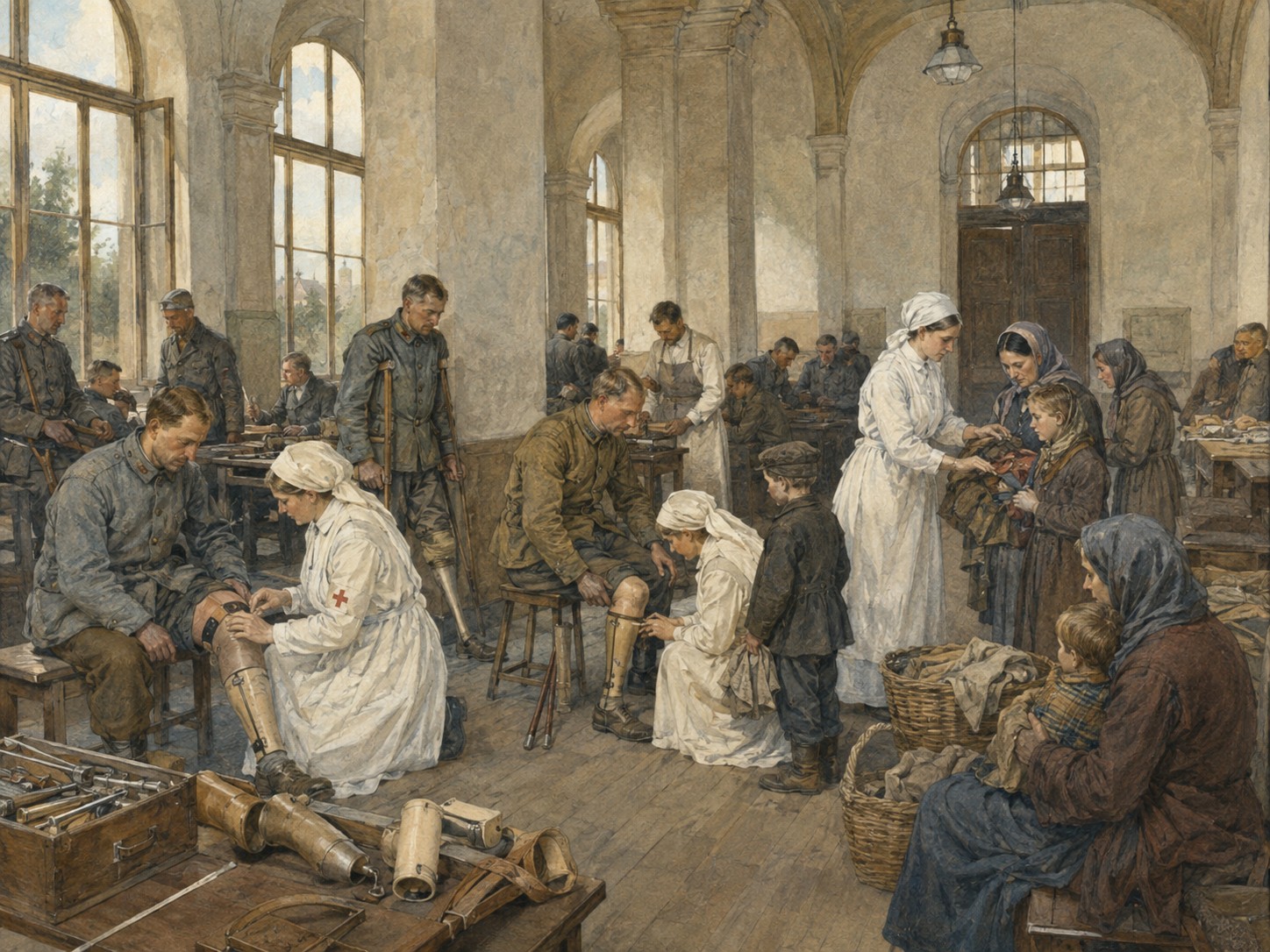
- The war caused mass death, displacement, disability, and economic disruption on a global scale.
- Military breakdown and hardship helped make Russia's 1917 revolutions possible.
- The postwar order, reparations disputes, minority conflicts, colonial disappointments, and fascist politics formed part of the background to the Second World War, but that later war was not an automatic or inevitable result of 1918.


Related figures
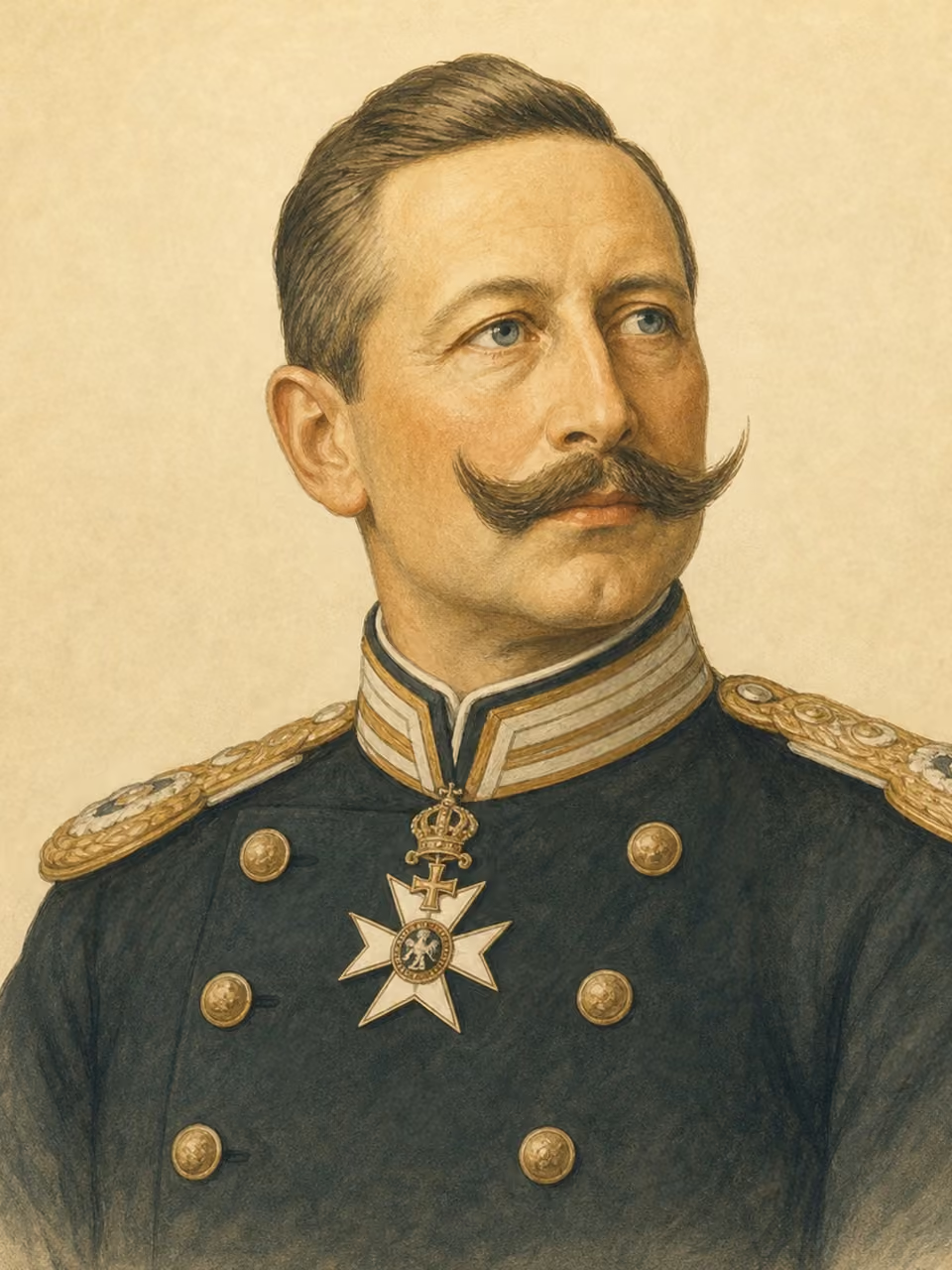
Wilhelm II
historical figure in context
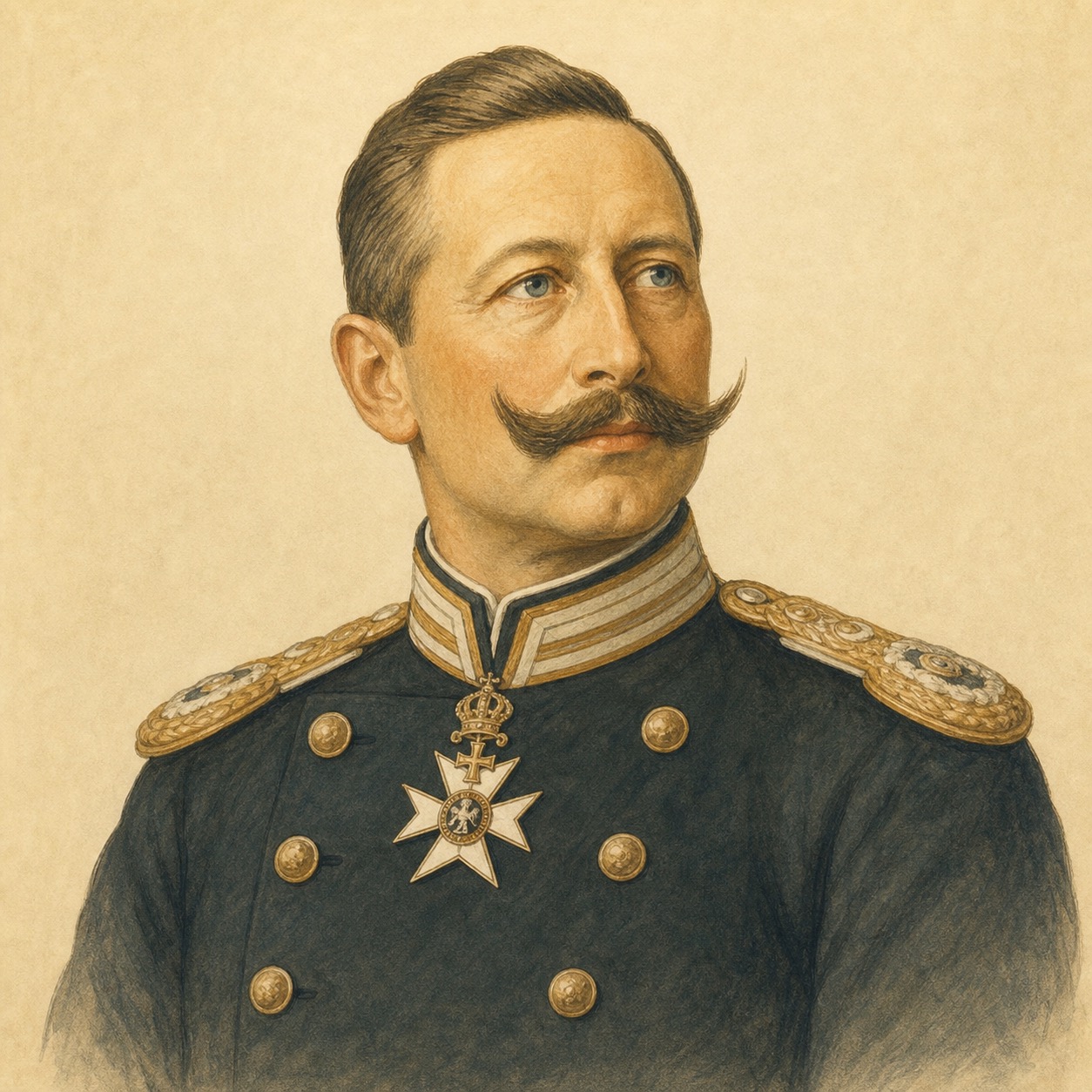
Last emperor of the German Empire. He pursued world policy, naval expansion, and colonial competition, then abdicated during the First World War. He reflects European diplomacy in the age of imperialism.
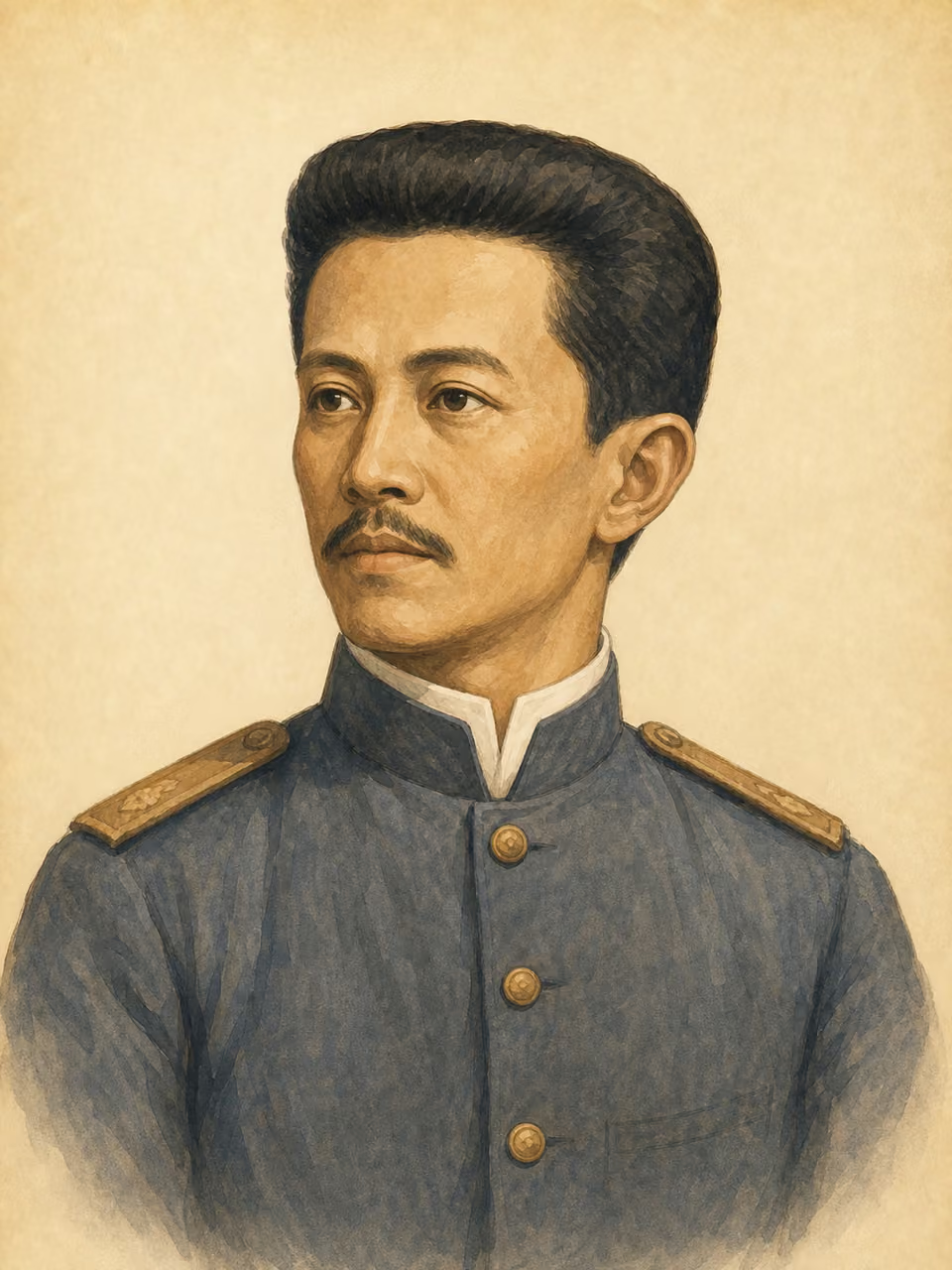
Emilio Aguinaldo
historical figure in context
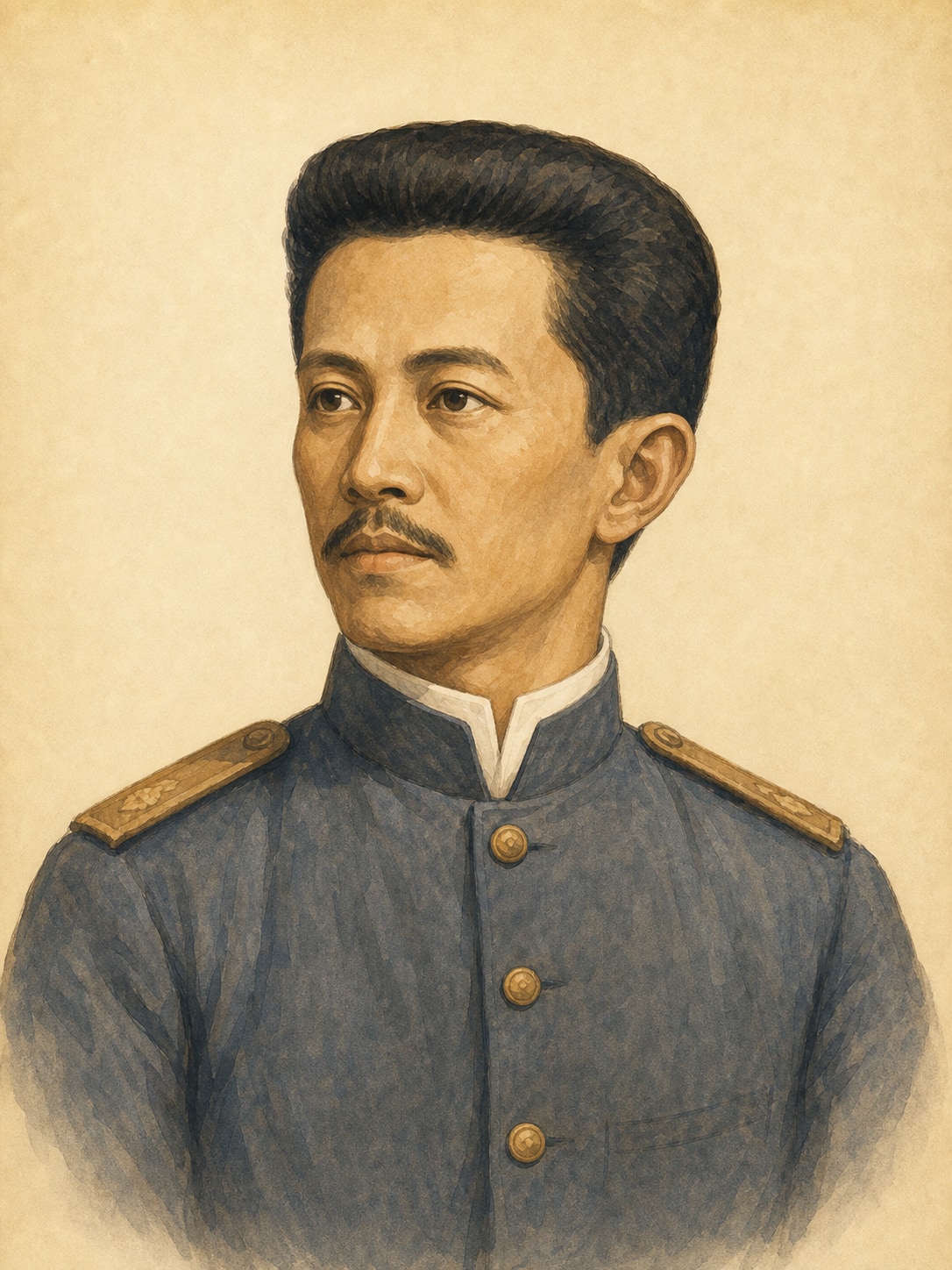
A leader of the Philippine independence movement and president of the First Republic. He is an important figure in the transition period between Spanish rule and American rule. It connects local history and world history and provides clues for deciphering changes during the same era.
Ibn Battuta
historical figure in context
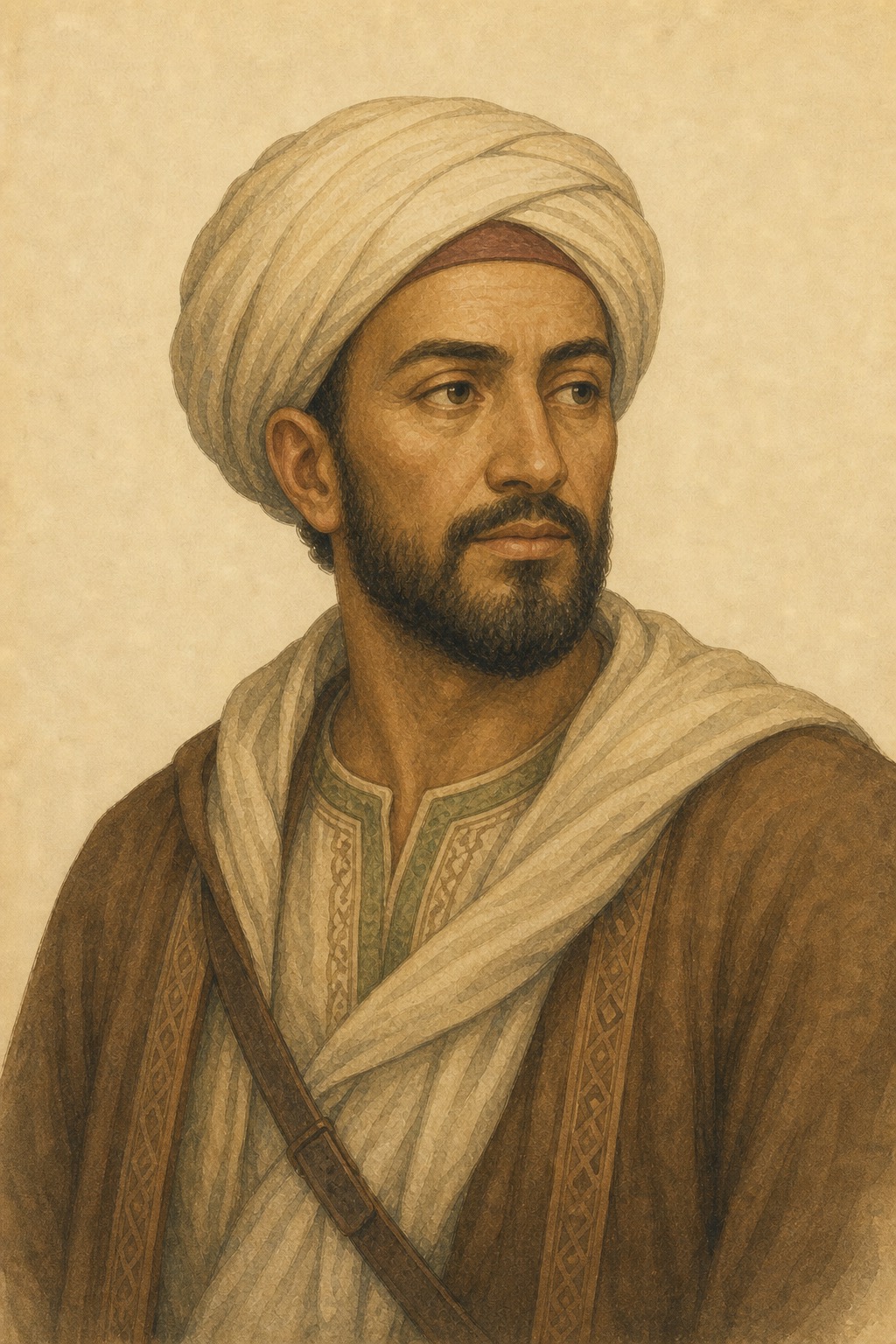
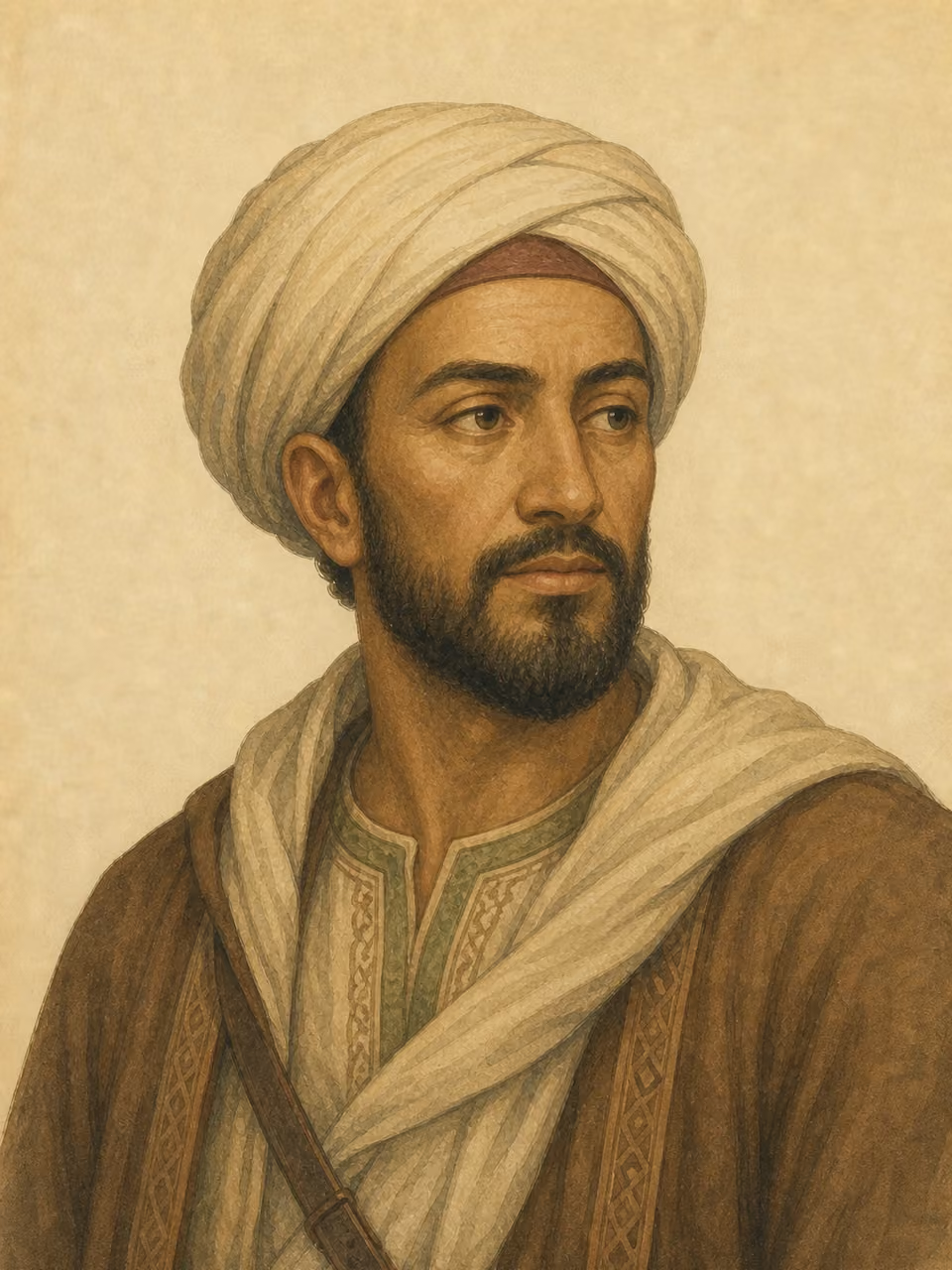
Ibn Battuta set out as a young jurist intending to make the pilgrimage to Mecca, then kept going for decades through ports, courts, commercial routes, and centers of learning across Afro-Eurasia. The Rihla preserves that motion in scenes of shipwreck, patronage, frustration, and opportunity, making travel feel like a social skill rather than mere adventure.
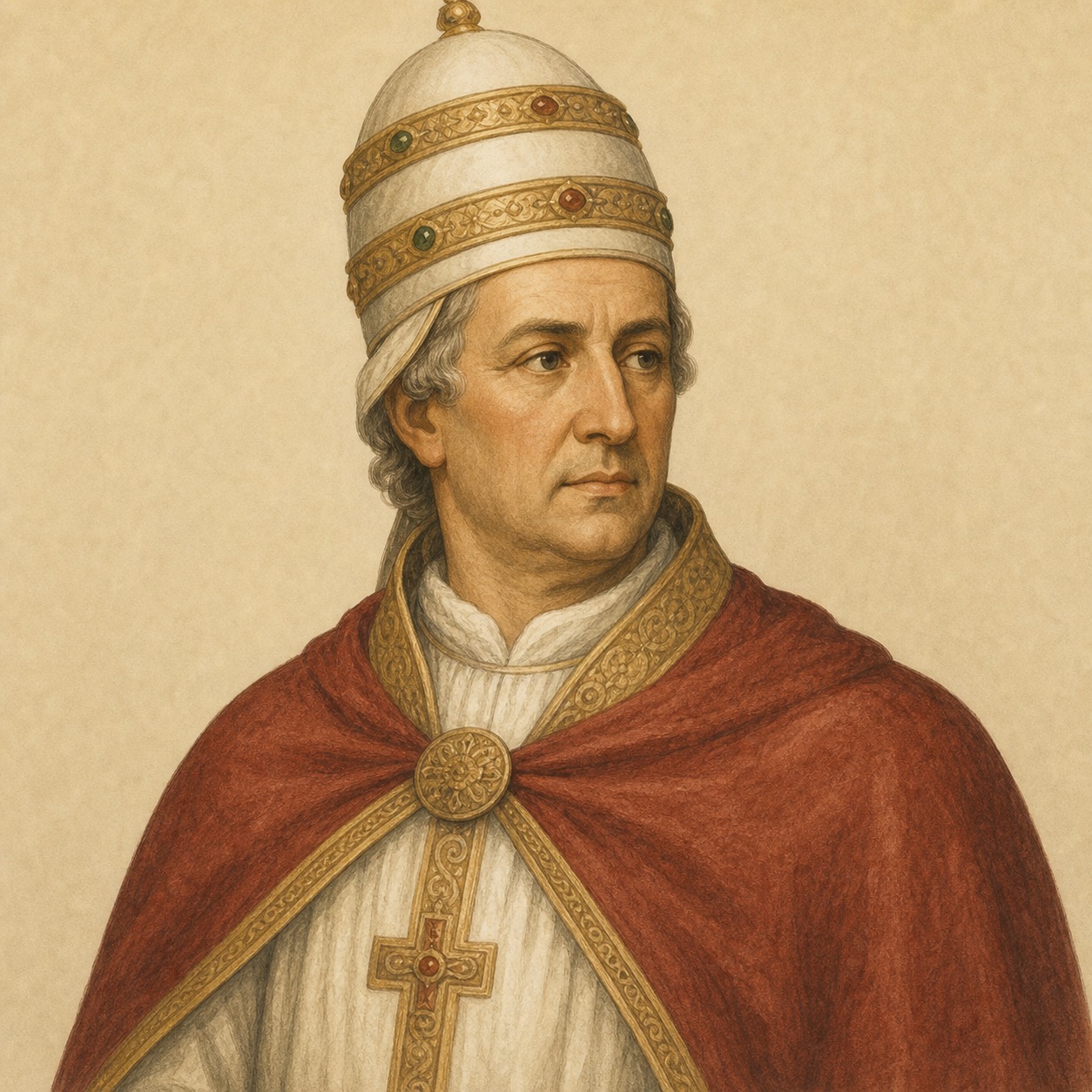
Urban II
historical figure in context
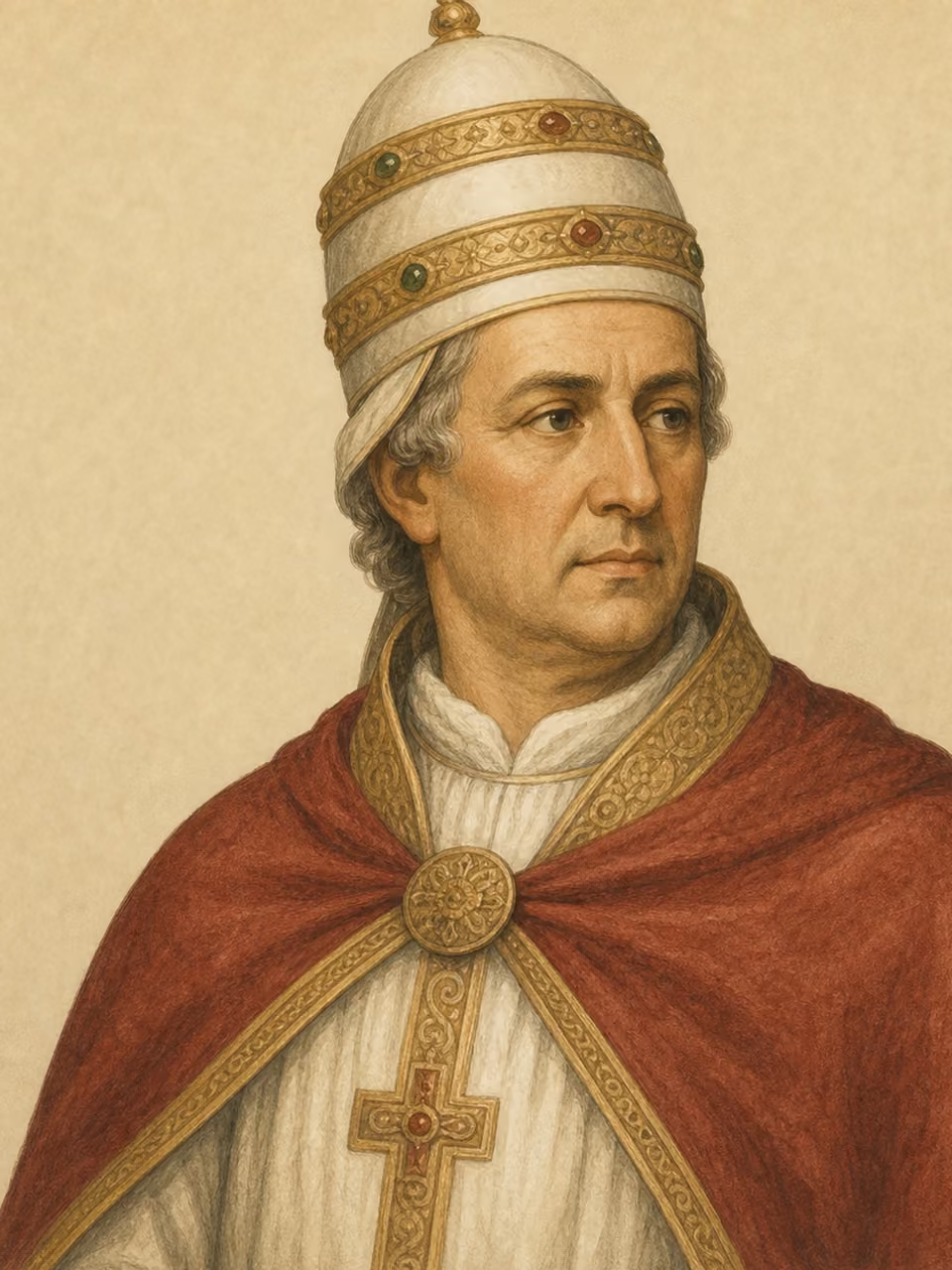
Medieval Roman Pope. The Council of Clermont in 1095 called for a crusade, creating the starting point for the First Crusade. He is an important figure in thinking about papal power and Western European knightly society.
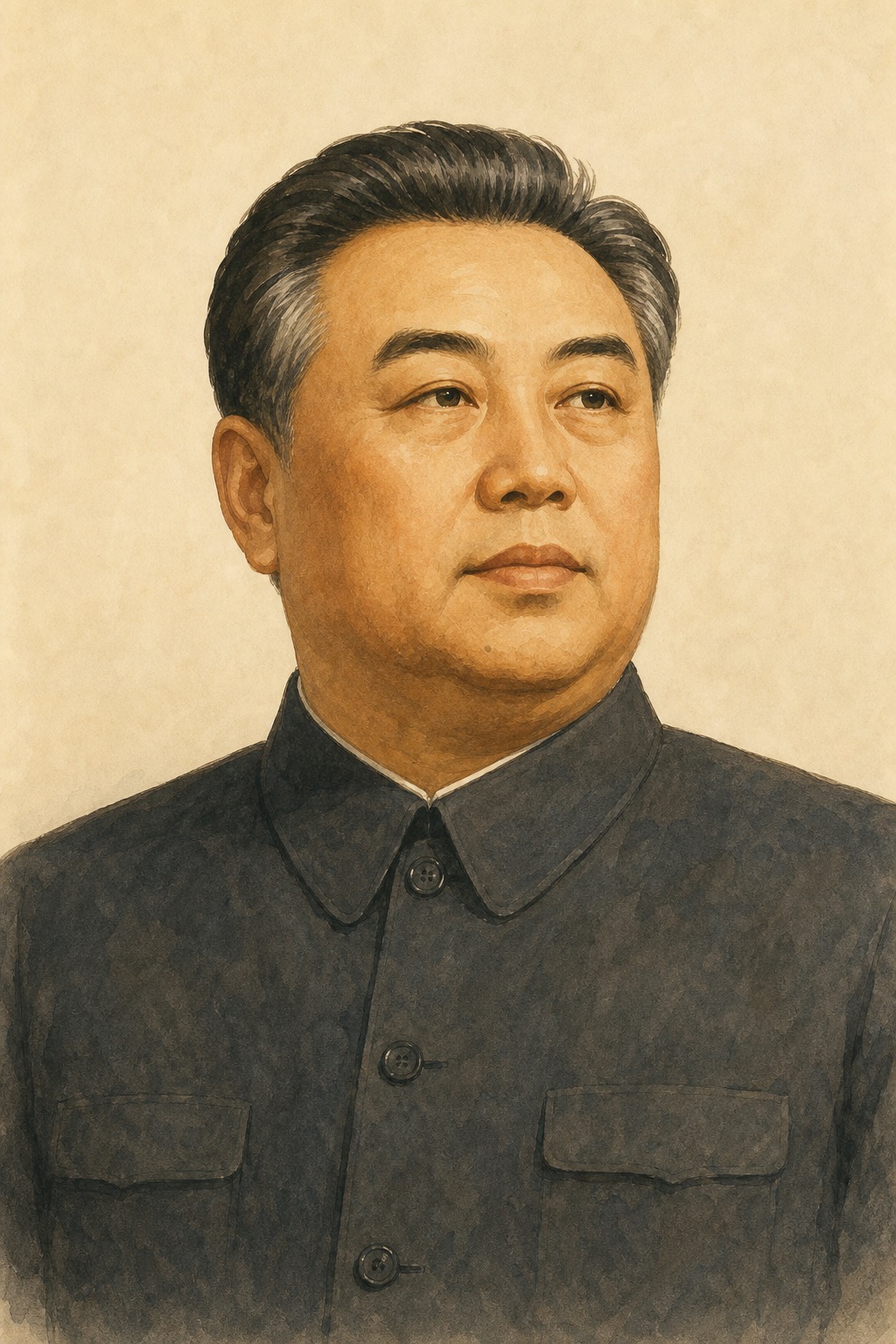
Kim Il-sung
historical figure in context
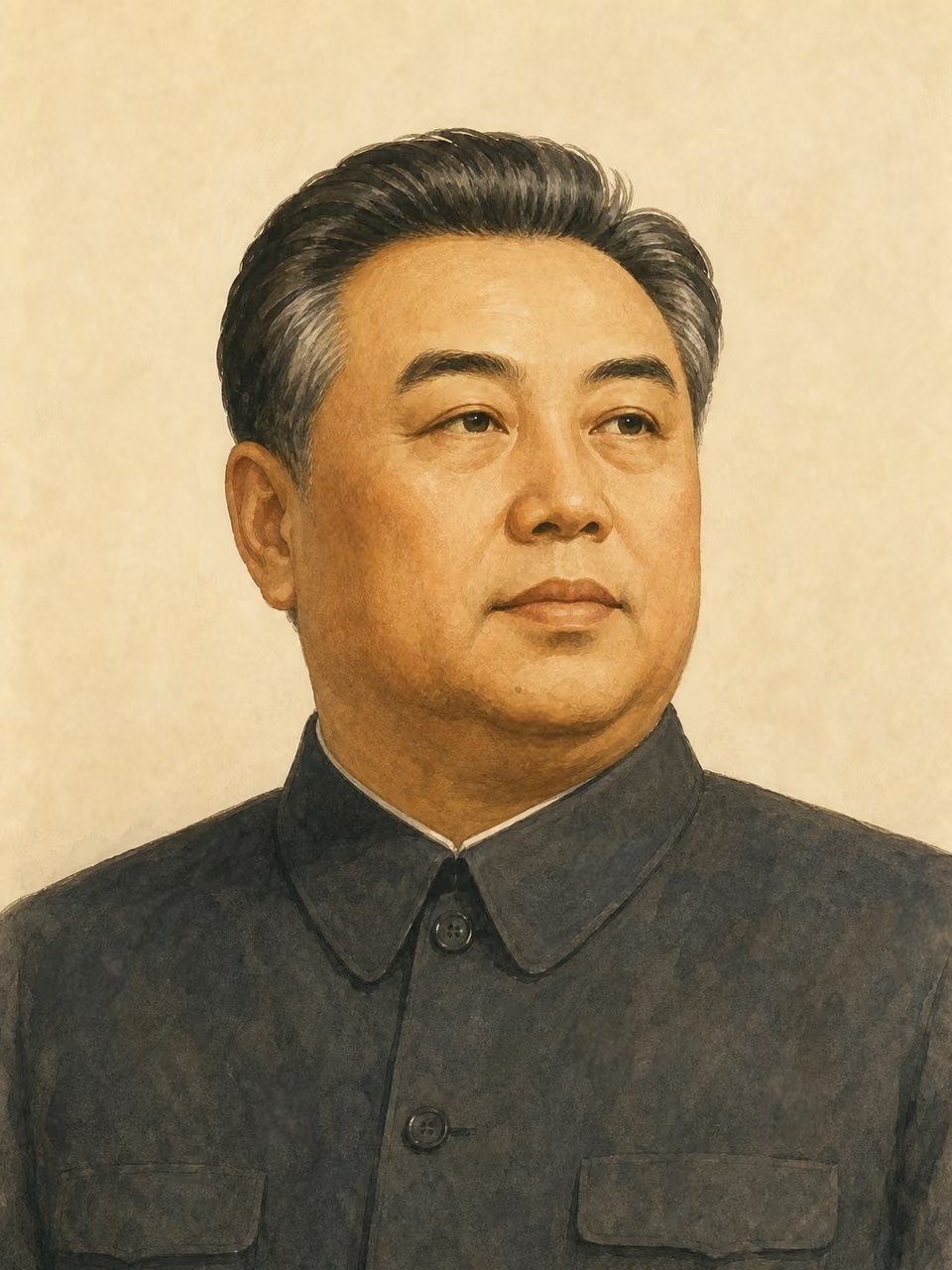
Kim Il-sung was the first supreme leader of North Korea, ruling from the state’s founding in 1948 until his death in 1994. He tied claims of anti-Japanese struggle to regime legitimacy and built a one-party state marked by leader worship and dynastic succession.
Related events
1894
Prelude
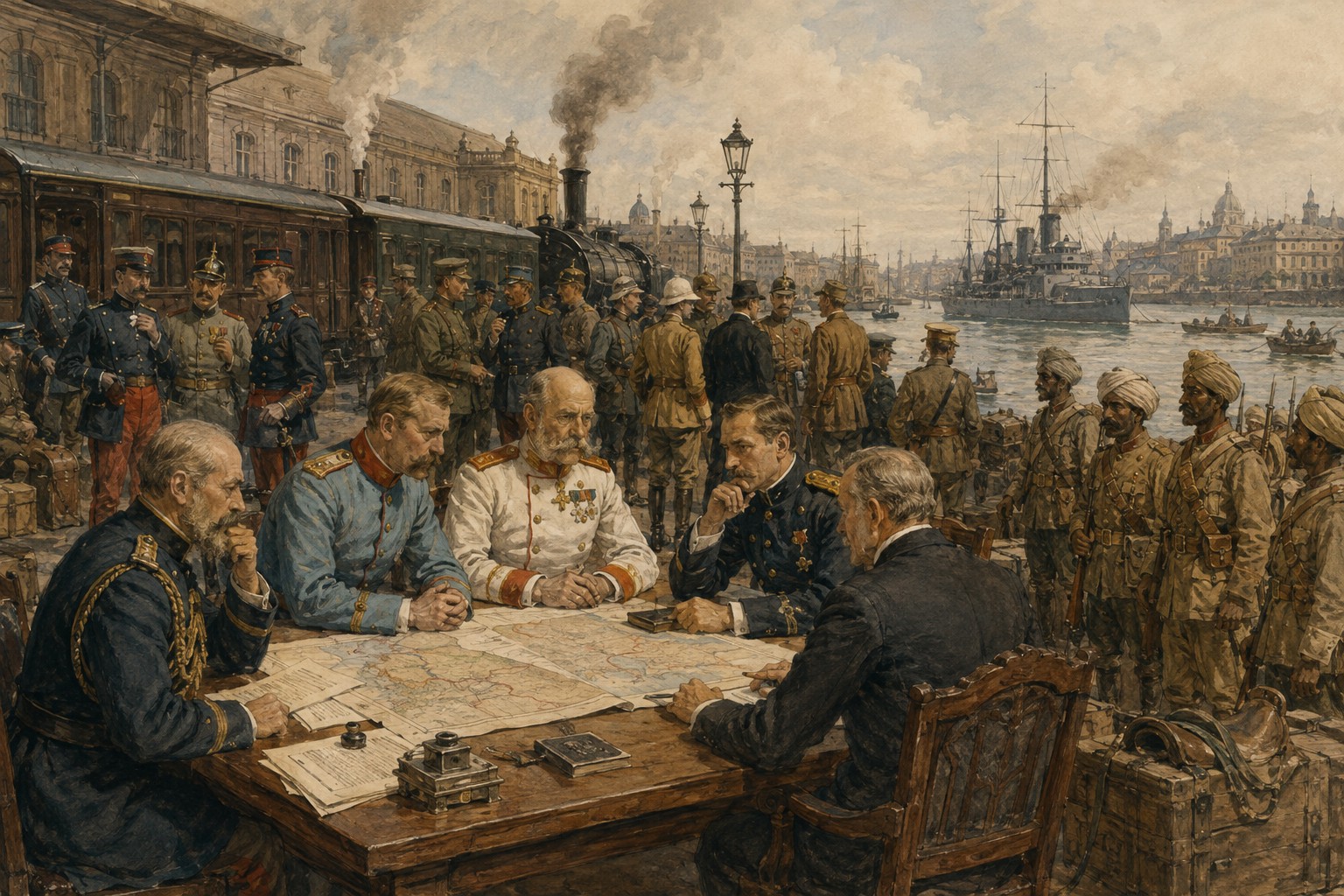
Prelude — Background: The assassination of Archduke Franz Ferdinand triggered the July Crisis, but war resulted from decisions by governments acting amid rival alliances, militarization, nationalism, imperial competition, and insecurity. Austria-Hungary attacked Serbia; Russian, German, French, and British choices widened the conflict, and the entry of European empires drew colonies and dominions into it.
c. 1913
Rising tension
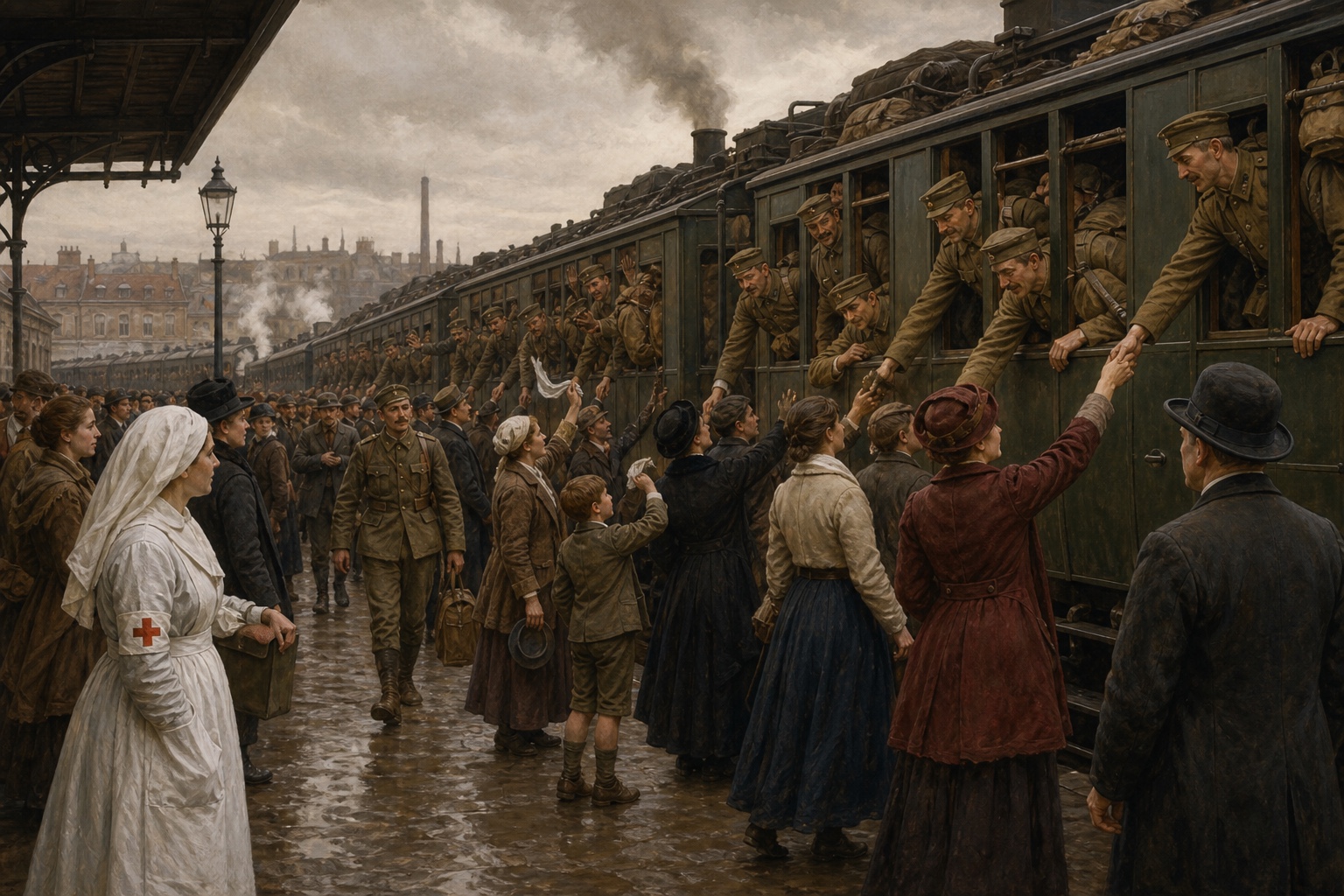
Rising tension — Build-up: Industrialized mass armies fought on the Western and Eastern Fronts, while campaigns also spread through the Balkans, the Ottoman lands, Africa, East Asia, and the oceans. Gallipoli, Mesopotamia, East Africa, and the seizure of German colonies involved soldiers and laborers recruited across empires—including more than a million from British India—under conditions ranging from volunteering to coercion. Blockade, submarine warfare, occupation, genocide against Ottoman Armenians and other Christians, and civilian mobilization made the war far more than battlefield combat.
1914–1918
First World War
Current event
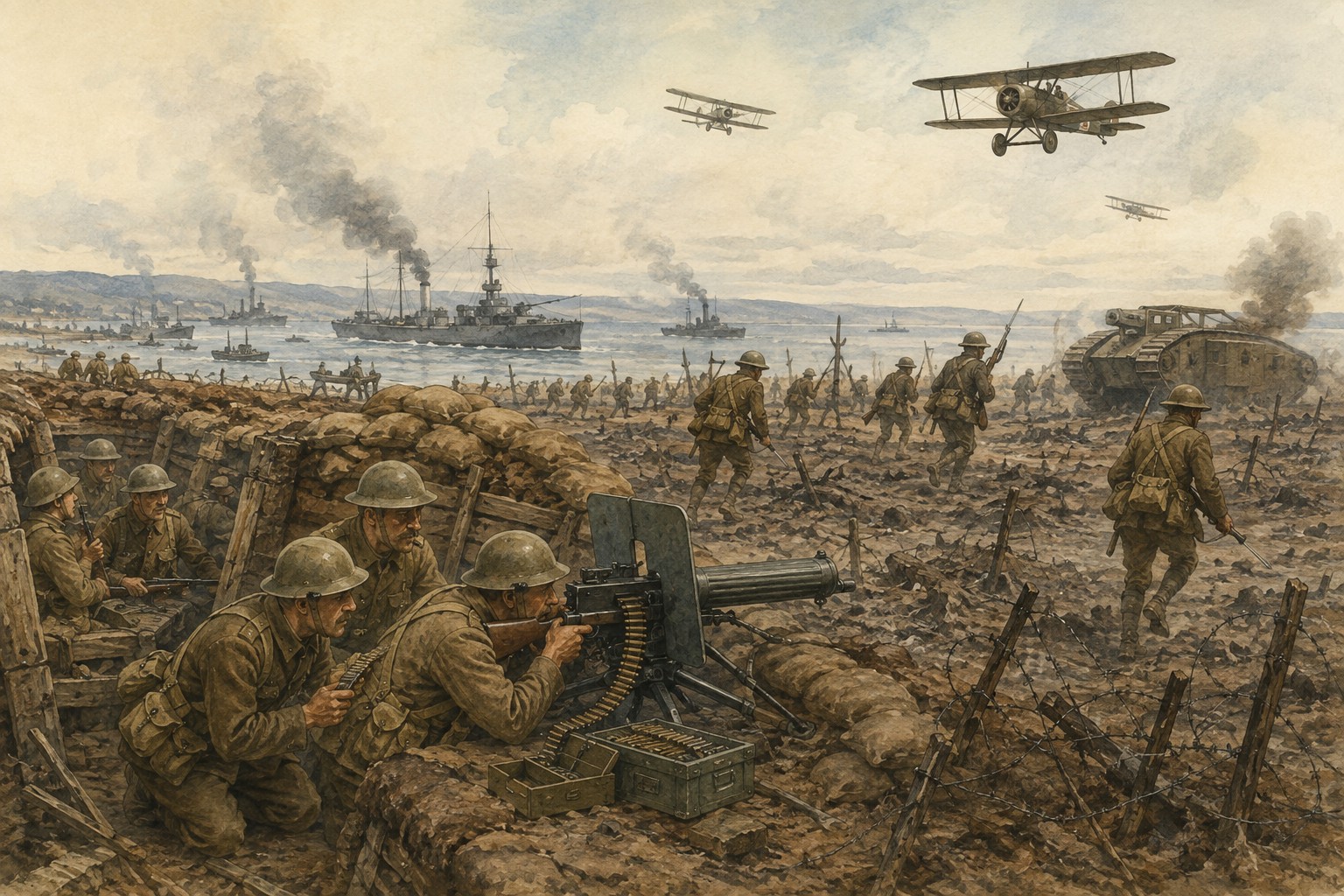
First World War — Central transition: The 1914–1918 global war in which the Allied and Central Powers mobilized empires, states, and societies across Europe, Africa, Asia, the Middle East, the Pacific, and the Atlantic.
c. 1919
Immediate aftermath
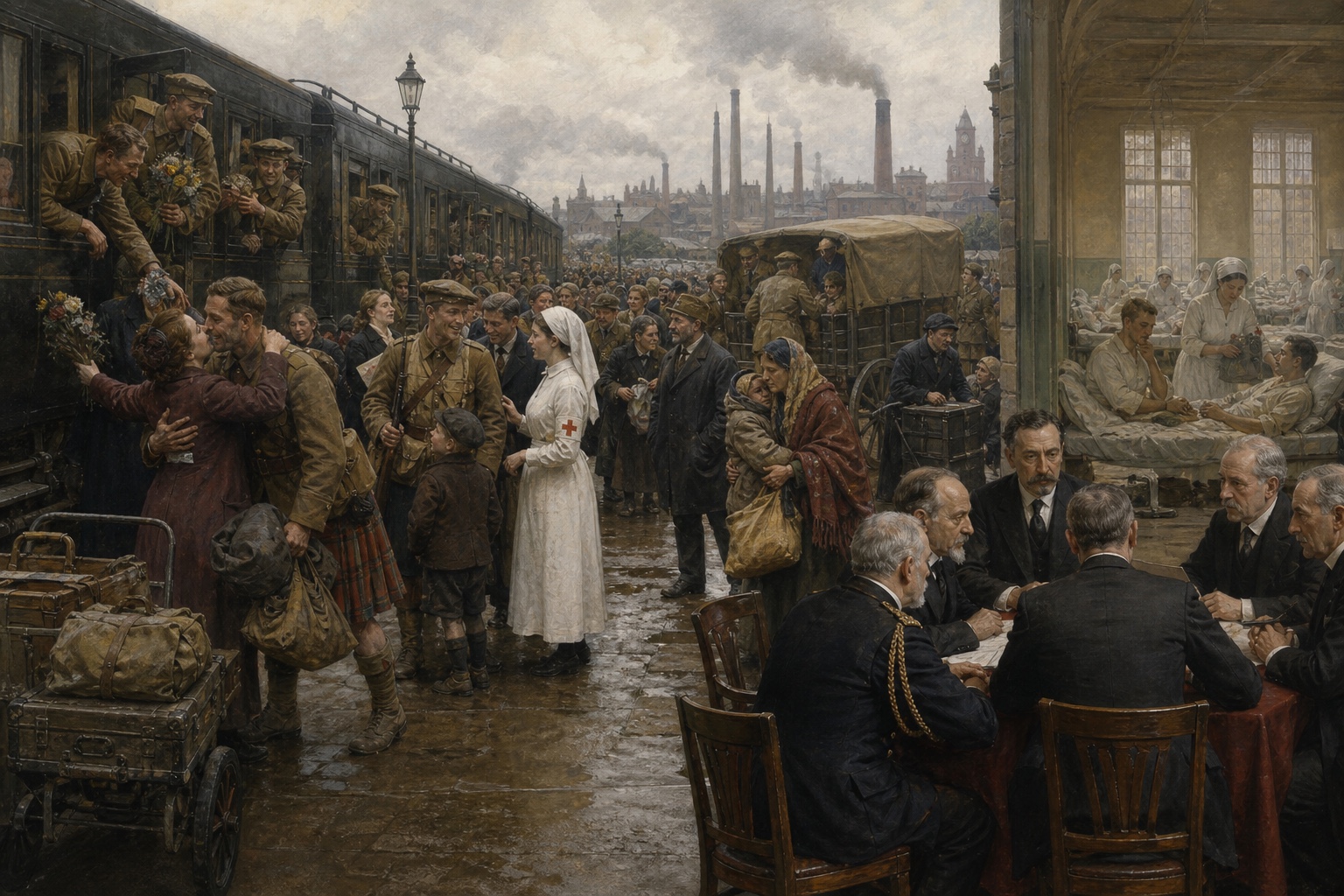
Immediate aftermath — Immediate result: Russia left the war after the 1917 revolutions and the Treaty of Brest-Litovsk. The United States entered in 1917; Allied offensives and the exhaustion of the Central Powers produced armistices in 1918. The Russian, German, Austro-Hungarian, and Ottoman empires collapsed, while postwar treaties redrew borders and converted some former Ottoman and German territories into mandates rather than granting equal self-determination.
c. 1928
Long-term significance
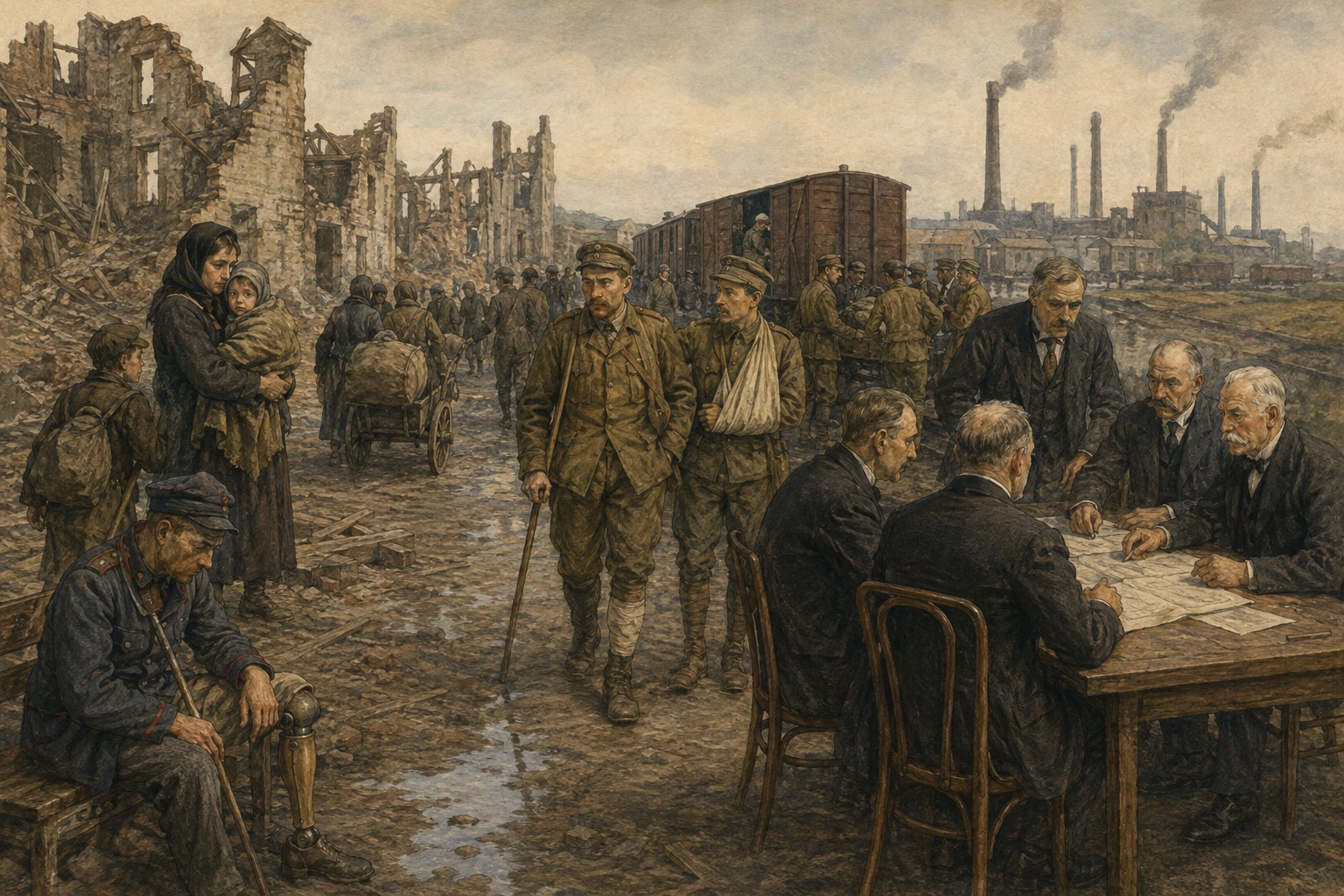
Long-term significance — Long-term significance: The war caused mass death, displacement, disability, and economic disruption on a global scale. Military breakdown and hardship helped make Russia's 1917 revolutions possible. The postwar order, reparations disputes, minority conflicts, colonial disappointments, and fascist politics formed part of the background to the Second World War, but that later war was not an automatic or inevitable result of 1918.


Sources
- First World War — 5 Things You Need To Know About The First World War (Iwm)iwm.org.ukThis Iwm resource supports the chronology, setting, and course of First World War.
- First World War — Why The First World War Was Truly A World War (Iwm)iwm.org.ukThis Iwm resource supports the chronology, setting, and course of First World War.
- First World War — India (The National Archives)nationalarchives.gov.ukThis The National Archives resource supports the chronology, setting, and course of First World War.