
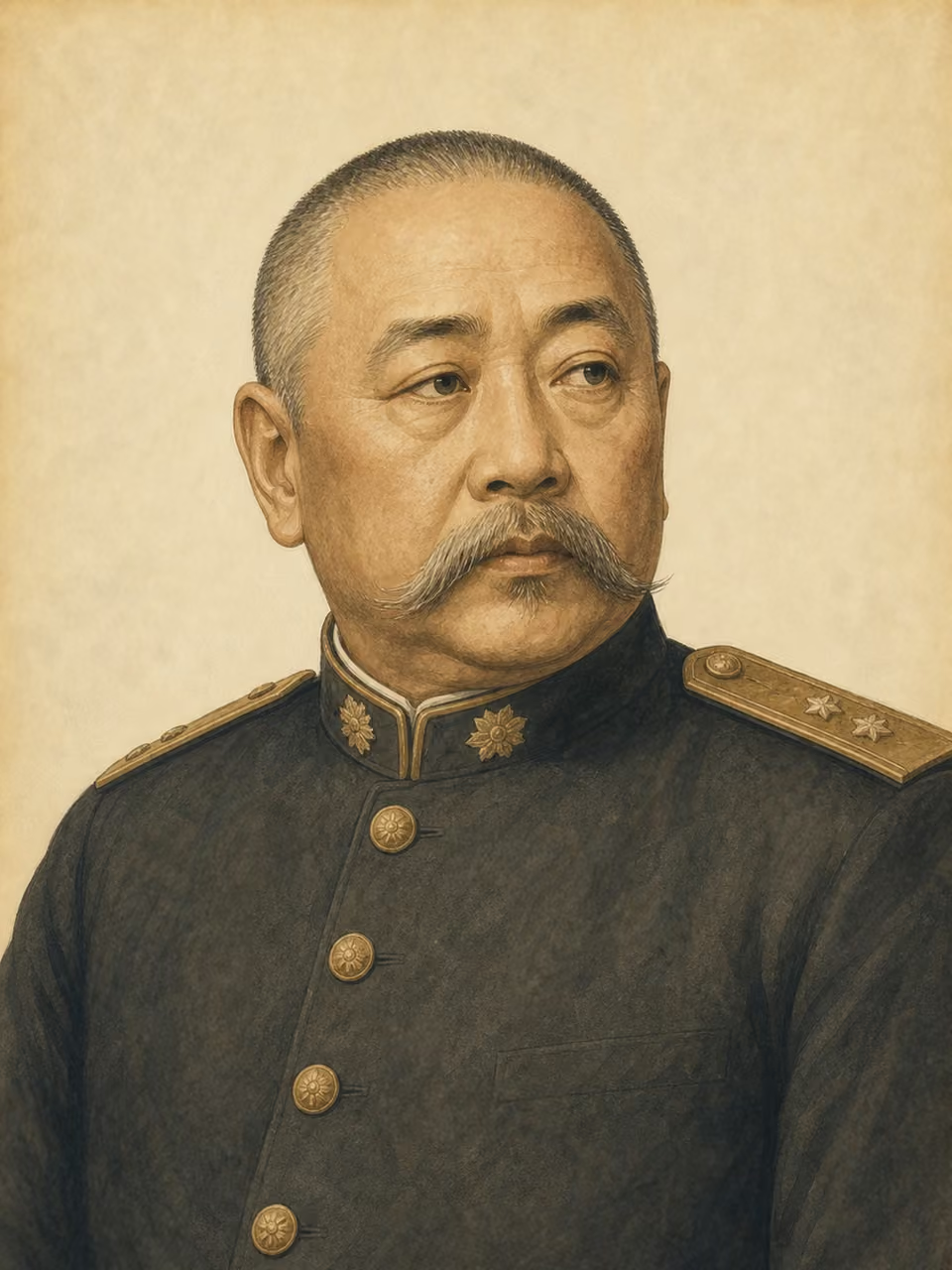
Yuan Shikai

Portrait: AI-generated imagined likeness

Yuan Shikai

Politician · Military leader

Years
1859–1916
Birthplace
China
Birth polity
Qing dynasty
Era
Modern
Field
Politics
Occupations
Politician · Military leader

The first military and politician of the late Qing Dynasty. Based on the Beiyang Army, he became the president of the Republic of China after the Xinhai Revolution and attempted to restore imperial rule. He is a person who thinks about the instability of the modern Chinese state.

View in catalog

Historical context

Places

  • Beijing

    Work

Events

  • Xinhai Revolution

    1911

    Revolution · Participant

  • Yuan Shikai monarchy attempt

    1915–1916

    Political event · Leader

Origins

Origins map
Birth country
Birth country
China

Map: Natural Earth (PD)

Biography

Early life

Born in Hanam, he rose through the military and practical fields rather than the imperial examinations. At the end of the Qing Dynasty, developing a Western-style army became important, and Yuan Shikai gained control of the Beiyang Army and strengthened his political influence.

Achievements

After the Xinhai Revolution, he orchestrated the abdication of the Qing Dynasty and became the president of the Republic of China. However, he suppressed parliamentary politics and in 1915 declared himself emperor, which provoked strong opposition.

Character & anecdotes

Yuan Shikai was a practical man who mediated between the revolutionaries and the Qing dynasty, but he also undermined the republican government by centralizing power. It symbolizes an era in which politics is controlled by those who control the modern military.

Historical Impact

Studying Yuan Shikai reveals how the republic, warlords, central government, and local power were intertwined in China after the collapse of the Qing Dynasty. He is an important figure who understands the issues after the Xinhai Revolution. It can also be used for comparison with surrounding areas from the same era.