
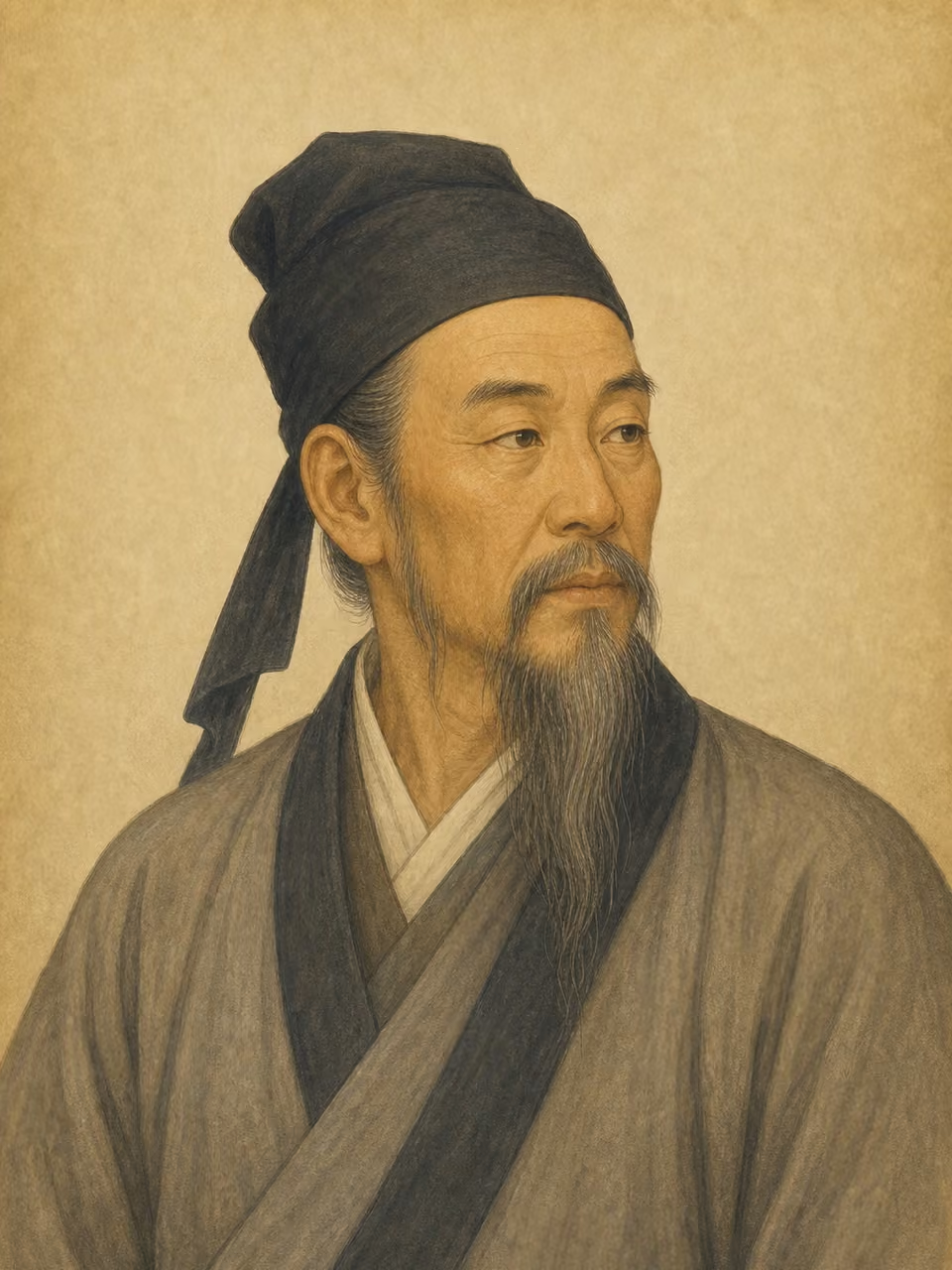
Zou Yan

Portrait: AI-generated imagined likeness

Zou Yan

Philosopher · Writer

Years
c. 305 BC–c. 240 BC
Birthplace
China
Birth polity
State of Qi in the Warring States period
Era
Ancient
Field
Philosophy
Occupations
Philosopher · Writer

A thinker during the Warring States period in China who is said to have systematized the theory of Yin-Yang and the Five Elements. He tried to explain nature, politics, and history in a circular manner. He is an important figure who knows the cosmology of Chinese thought. You can also see the background of the dynasty view.

View in catalog

Historical context

Places

  • Qi

    Birth

  • Jixia Academy

    Work

Works & achievements

  • Five Phases theory

    Theory

Events

  • Hundred Schools of Thought

    c. 305 BC–c. 240 BC

    Cultural event · Participant

Origins

Origins map
Birth country
Birth country
China

Map: Natural Earth (PD)

Biography

Early life

He is said to have been active in the academic environment of Qi, and lived in an era when hundreds of schools competed with each other. Monarchs during the Sengoku period sought new theories to explain their governance and legitimacy.

Achievements

By linking yin-yang and the five elements, he spread a framework for explaining dynasty changes and natural phenomena. He strengthened his cosmological ideas, which were later related to Confucianism, medicine, the calendar, and political thought.

Character & anecdotes

Most of Zou Yun's writings have been lost, and we can only learn about his thoughts from the records of later generations. However, the reason why his name remains is because the theory of five elements has long taken root in the Chinese intellectual world.

Historical Impact

When we study Zou Yan, we learn that in ancient China, politics and views of nature were not separated, and theories that explained the world order were also used for governance. Yin-Yang influences a wide range of East Asian cultures. This led to the classification of later knowledge such as medicine, calendars, and divination.