
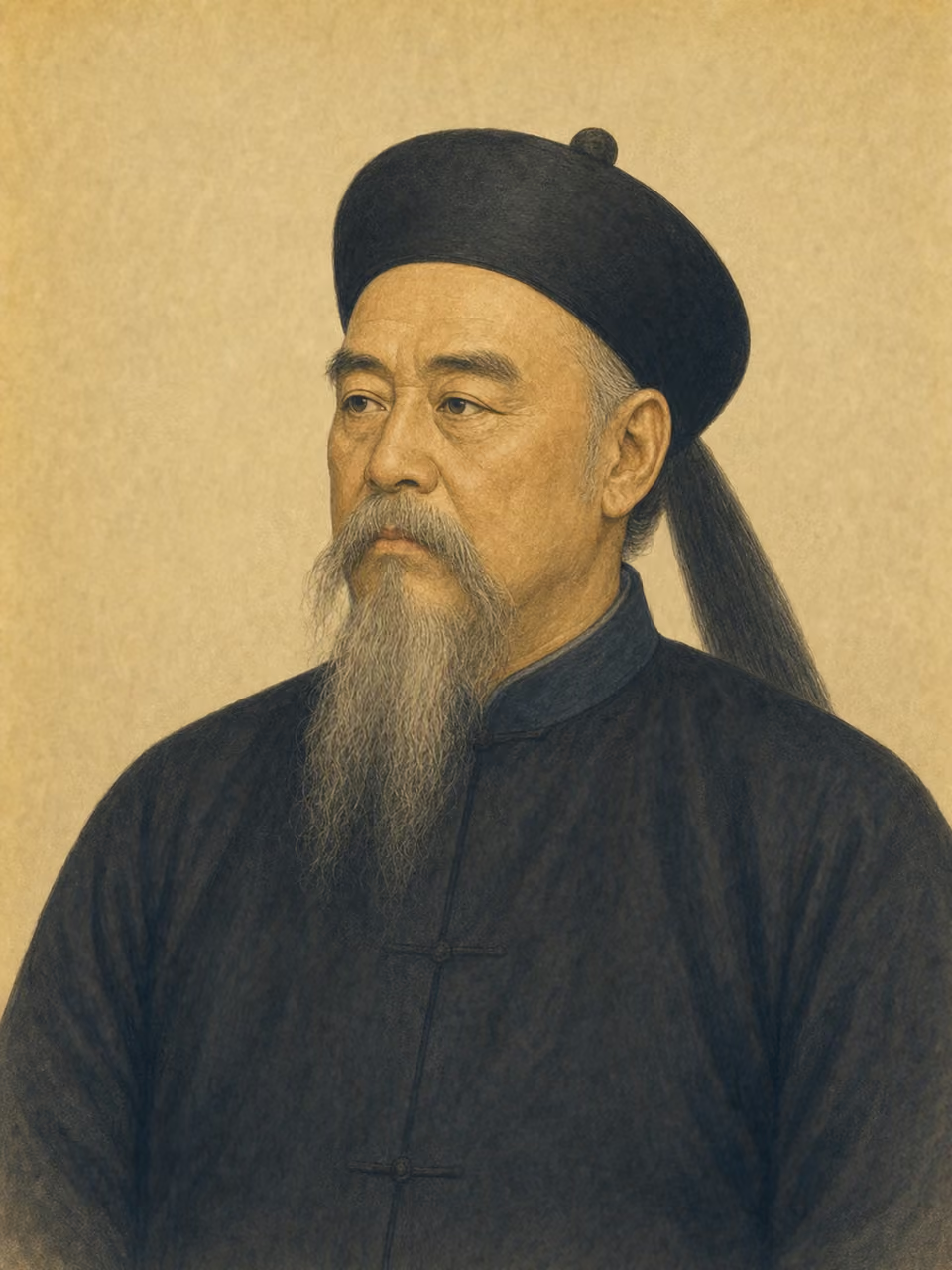
Zuo Zongtang

Portrait: AI-generated imagined likeness

Zuo Zongtang

Politician · Military leader

Years
1812–1885
Birthplace
China
Birth polity
Qing dynasty
Era
Modern
Field
Military
Occupations
Politician · Military leader

A bureaucrat and military leader in the late Qing Dynasty who was involved in the Taiping Rebellion and suppression of rebellions in the northwest. He led the reconquest of Xinjiang and restored the Qing Dynasty's control over the frontiers. He is a person involved in the formation of the boundaries of the modern Chinese state.

View in catalog

Historical context

Places

  • Xiangyin

    Birth

  • Xinjiang

    Campaign

Events

  • Taiping Rebellion

    1851–1864

    War · Commander

  • Qing reconquest of Xinjiang

    1876–1878

    War · Commander

Origins

Origins map
Birth country
Birth country
China

Map: Natural Earth (PD)

Biography

Early life

Born in Konan, he completed his academic studies, but his path to success in the imperial examinations was delayed. During the Taiping Rebellion, he was involved in local military affairs, and his practical ability was praised and he became an important bureaucrat of the Qing Dynasty.

Achievements

He participated in the suppression of the Taiping Rebellion, and later moved to the northwest and was in charge of military affairs in the Shaangan and Xinjiang areas. He played a central role in defeating the Yaqub Bek regime and returning Xinjiang to the Qing Dynasty.

Character & anecdotes

Zuo Zongtang's expedition to Xinjiang was a huge burden on the Qing Dynasty, which was in financial trouble. Still, he opposed the idea of ​​abandoning Xinjiang, arguing that preserving the frontier was necessary for national defense.

Historical Impact

If you study Zuozongtang, you will understand that the rebuilding of the nation at the end of the Qing Dynasty was not only linked to the modernization of coastal areas, but also to the maintenance of control over inland Asia. It created a trend toward the establishment of a province in Xinjiang, and had a great influence on the territorial consciousness of the Qing Dynasty. He is an important figure in thinking about the formation of the boundaries of the modern Chinese state.