
Industrial Revolution
c. 1760–c. 1840
A long transformation, conventionally framed here as about 1760–1840, in which Britain became the first economy reshaped by mechanized production, fossil energy, factories, and rapidly growing industrial towns.

- Period
- c. 1760–c. 1840
- Kind
- Cultural event
- Regions
- Europe
- Keywords
- Industrial Revolution · background · course · outcome
Follow the story · Four stages
Background
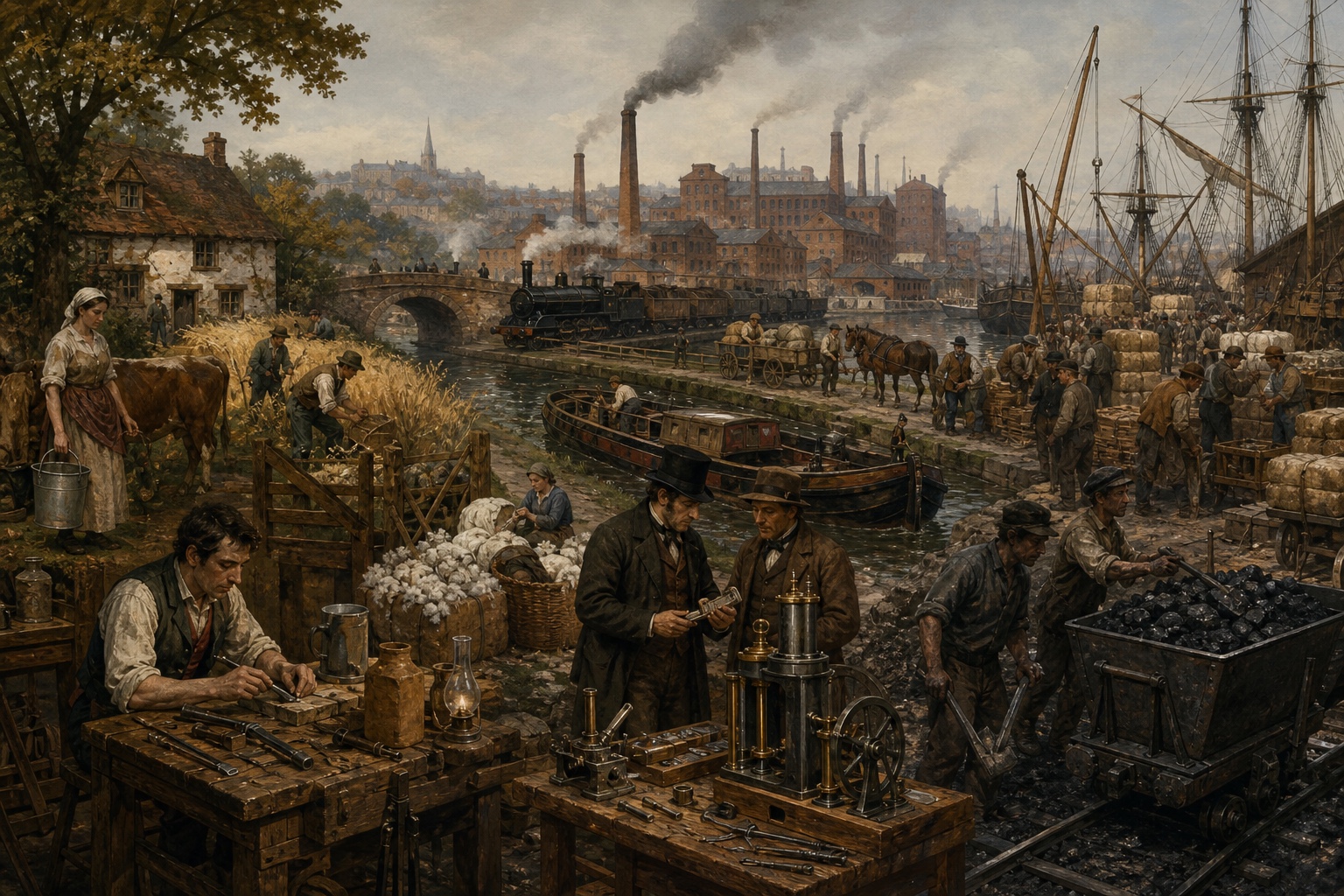
Expanding domestic and overseas trade, agricultural change, skilled craft knowledge, capital, transport, and accessible coal created favorable but contested conditions. British industry also drew on global inputs: cotton grown by enslaved people in the Americas supplied mechanized mills, while empire and unequal exchange shaped markets and access to resources.
- Expanding domestic and overseas trade, agricultural change, skilled craft knowledge, capital, transport, and accessible coal created favorable but contested conditions.
- British industry also drew on global inputs: cotton grown by enslaved people in the Americas supplied mechanized mills, while empire and unequal exchange shaped markets and access to resources.
- Core event: A long transformation, conventionally framed here as about 1760–1840, in which Britain became the first economy reshaped by mechanized production, fossil energy, factories, and rapidly growing industrial towns.
Course
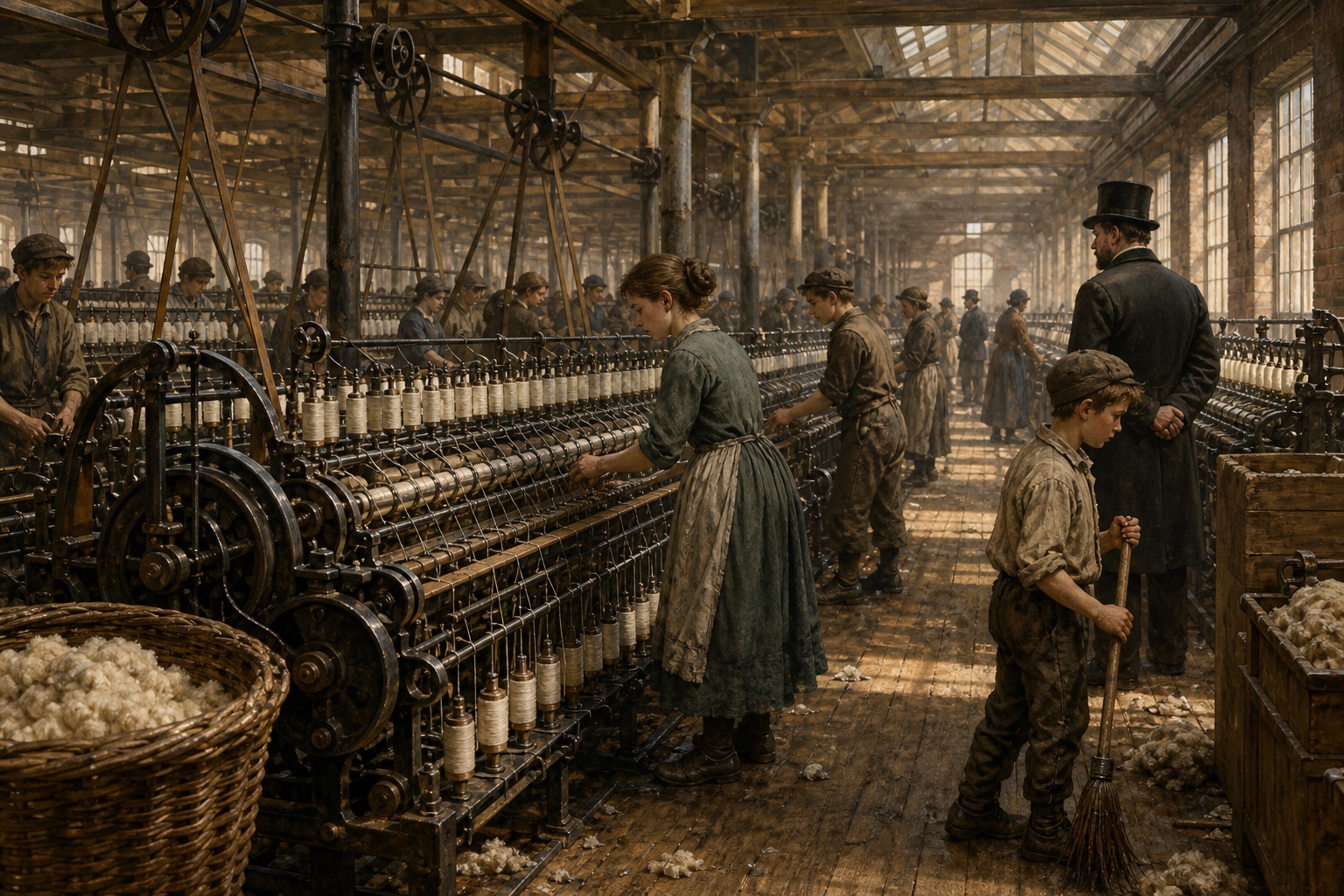
Water- and steam-powered machinery increased output in textiles, coal, iron, and transport, and production became concentrated in mills and factories. Innovation accumulated through many inventors, workers, investors, and workshops rather than one breakthrough, while migration drove Manchester and other industrial towns to expand quickly.
- Water- and steam-powered machinery increased output in textiles, coal, iron, and transport, and production became concentrated in mills and factories.
- Innovation accumulated through many inventors, workers, investors, and workshops rather than one breakthrough, while migration drove Manchester and other industrial towns to expand quickly.
- Conditions behind the action: Expanding domestic and overseas trade, agricultural change, skilled craft knowledge, capital, transport, and accessible coal created favorable but contested conditions. British industry also drew on global inputs: cotton grown by enslaved people in the Americas supplied mechanized mills, while empire and unequal exchange shaped markets and access to resources.
Outcome
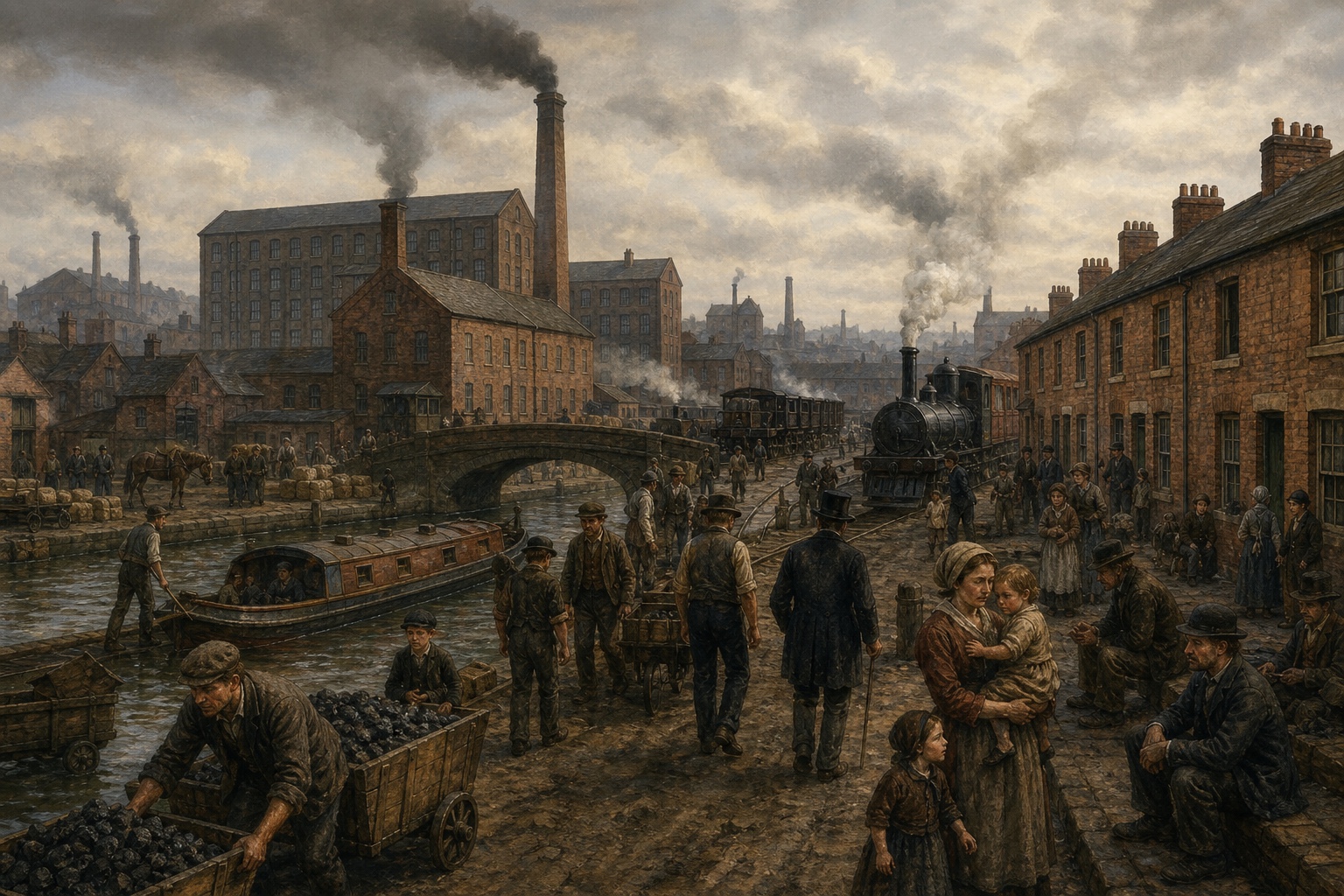
Manufacturing output and transport capacity rose, wage labor and factory discipline spread, and Britain became the first industrial nation. The gains were uneven: dangerous work, child labor, crowded housing, pollution, and recurring insecurity prompted worker organization, investigation, and factory reform.
- Manufacturing output and transport capacity rose, wage labor and factory discipline spread, and Britain became the first industrial nation.
- The gains were uneven: dangerous work, child labor, crowded housing, pollution, and recurring insecurity prompted worker organization, investigation, and factory reform.
- Process producing the result: Water- and steam-powered machinery increased output in textiles, coal, iron, and transport, and production became concentrated in mills and factories. Innovation accumulated through many inventors, workers, investors, and workshops rather than one breakthrough, while migration drove Manchester and other industrial towns to expand quickly.
Historical significance
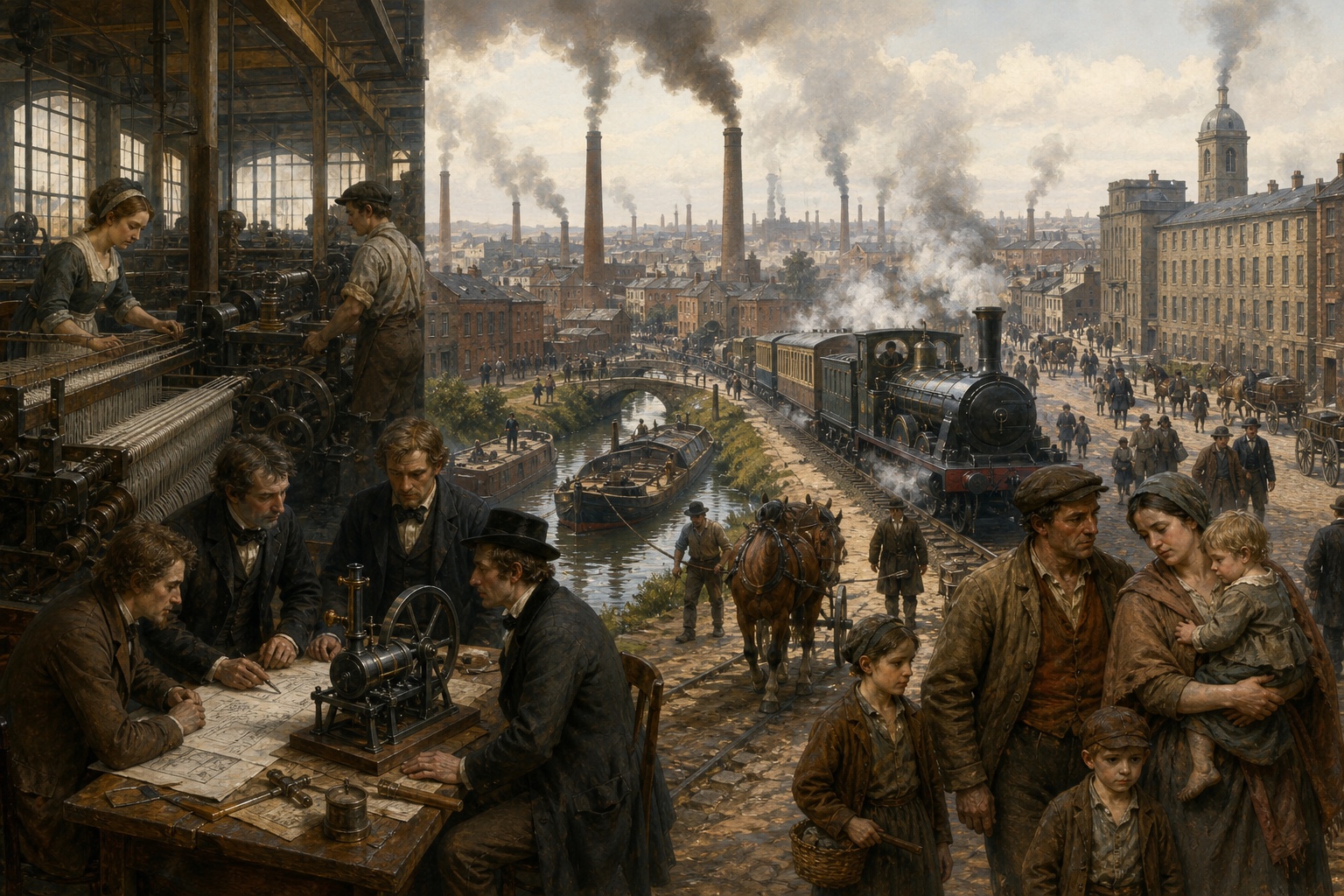
Industrialization changed energy use, technology, labor, urban life, and the global economy and later spread far beyond Britain. The dates are editorial boundaries for an uneven process, not a single invention, and its history includes both rising productive power and the coercive labor and colonial networks that supplied it.
- Industrialization changed energy use, technology, labor, urban life, and the global economy and later spread far beyond Britain.
- The dates are editorial boundaries for an uneven process, not a single invention, and its history includes both rising productive power and the coercive labor and colonial networks that supplied it.
- Immediate consequence: Manufacturing output and transport capacity rose, wage labor and factory discipline spread, and Britain became the first industrial nation. The gains were uneven: dangerous work, child labor, crowded housing, pollution, and recurring insecurity prompted worker organization, investigation, and factory reform.


Related figures
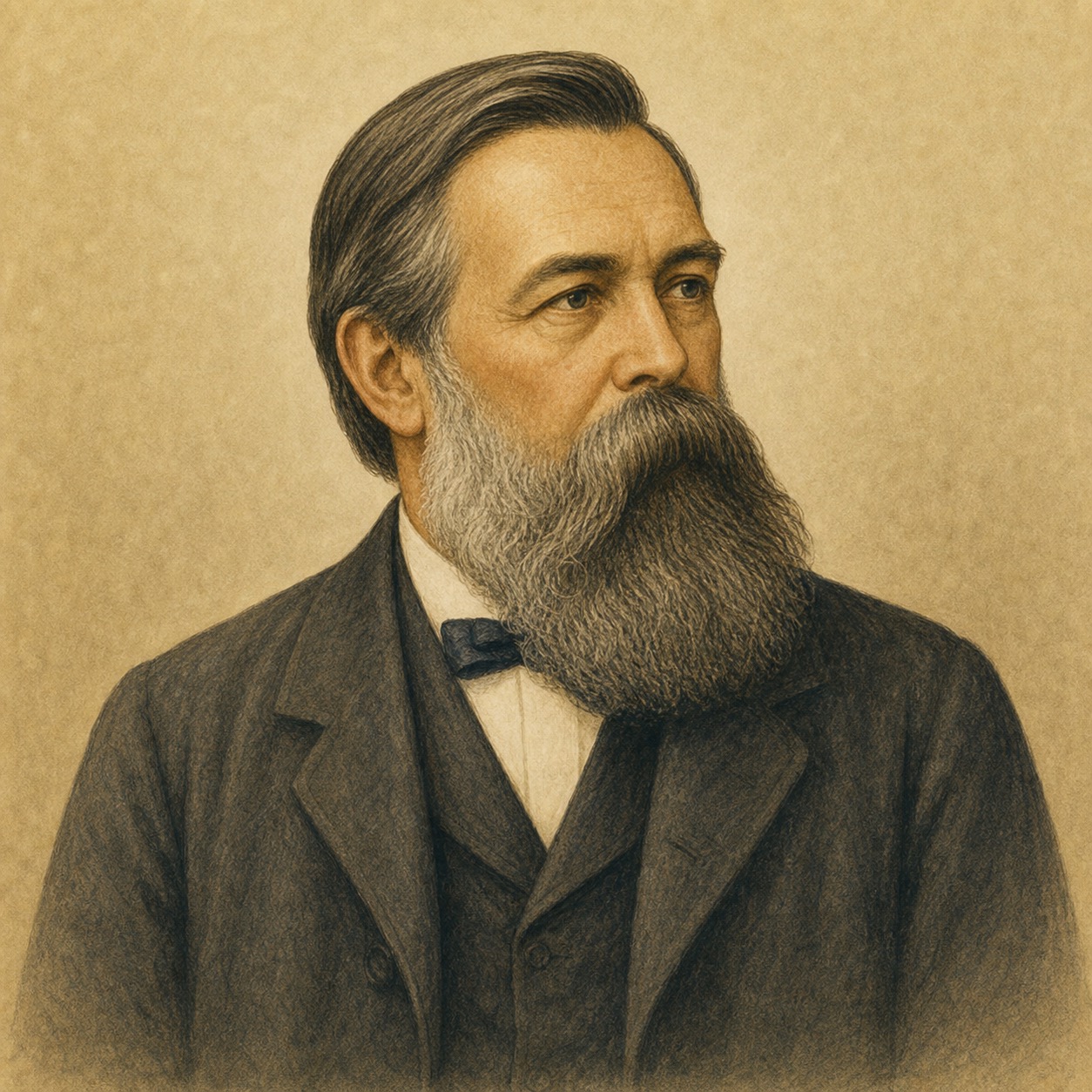
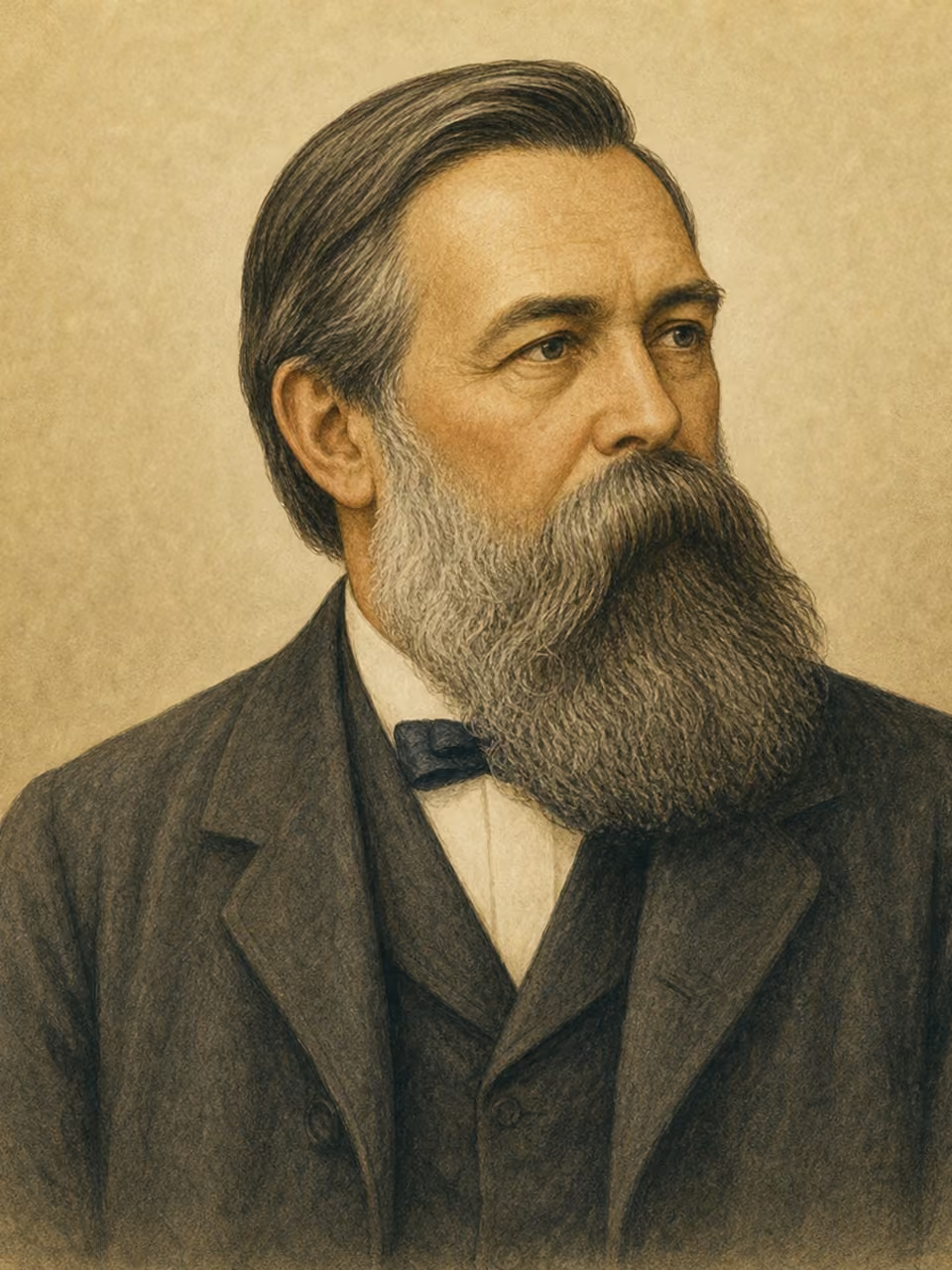
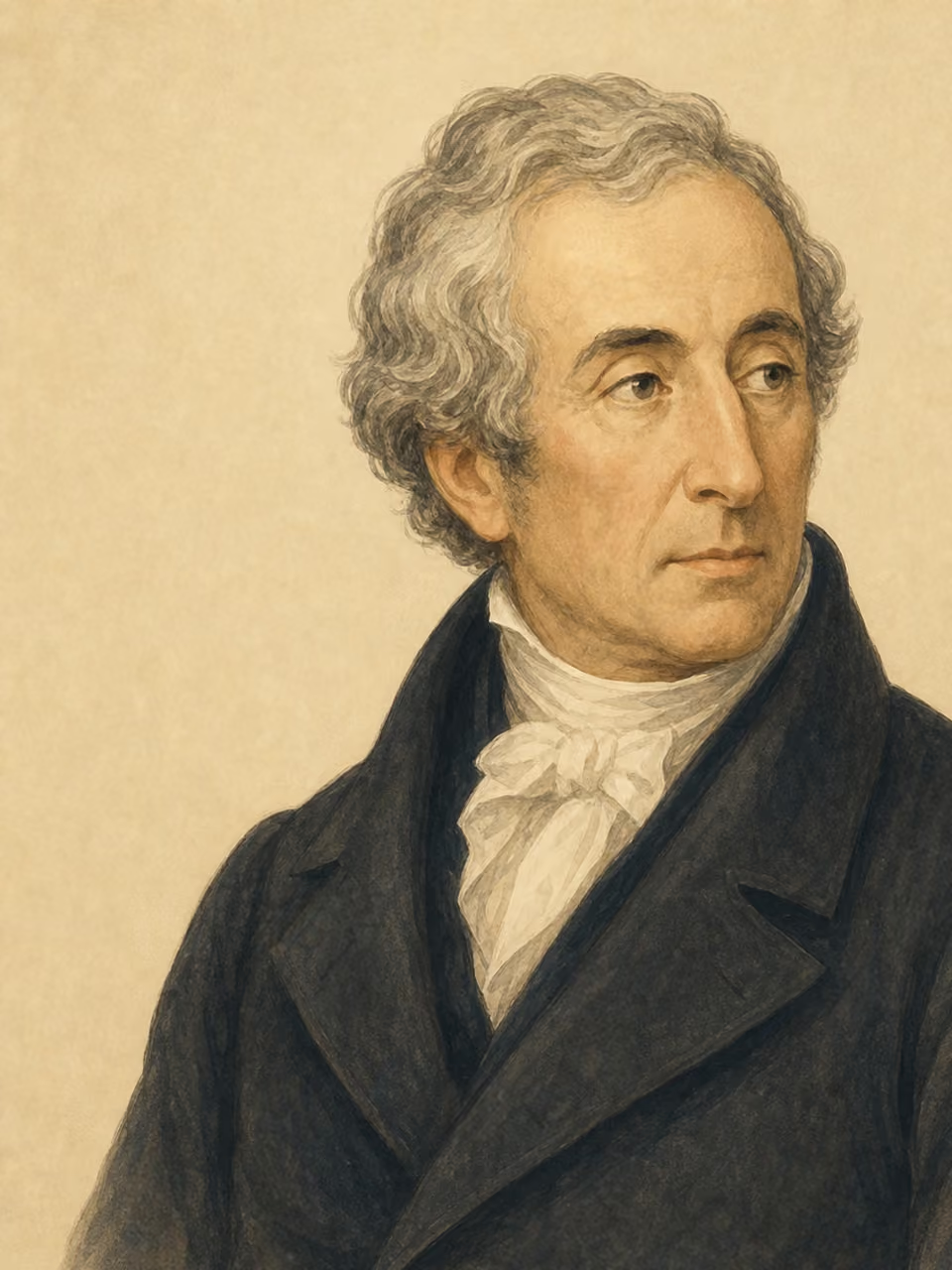
Friedrich Engels
historical figure in context
A thinker and revolutionary from Germany. He collaborated with Marx to spread communist ideas and was heavily involved in analyzing capitalist society. He is a person who thinks about 19th century socialism.
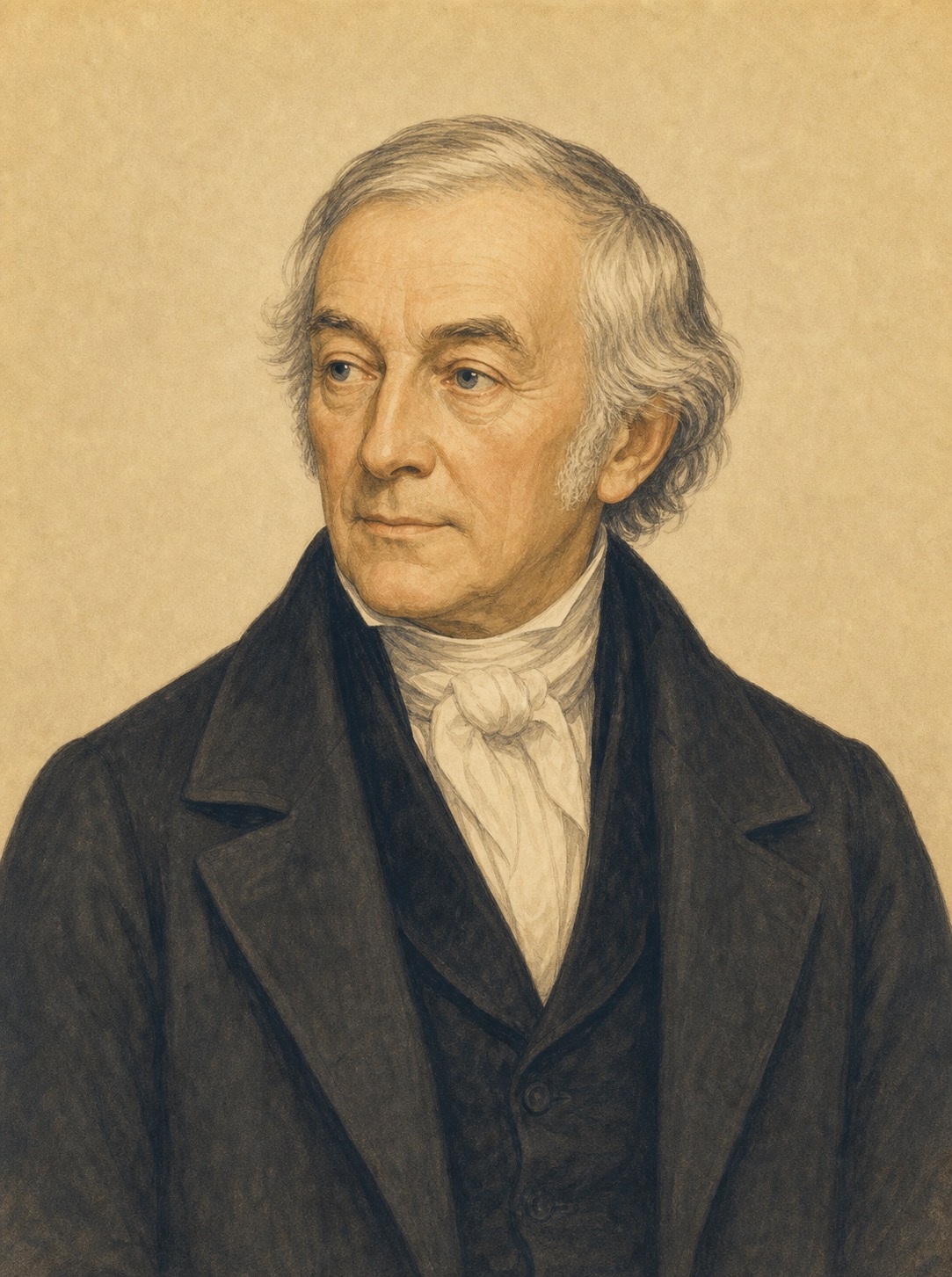
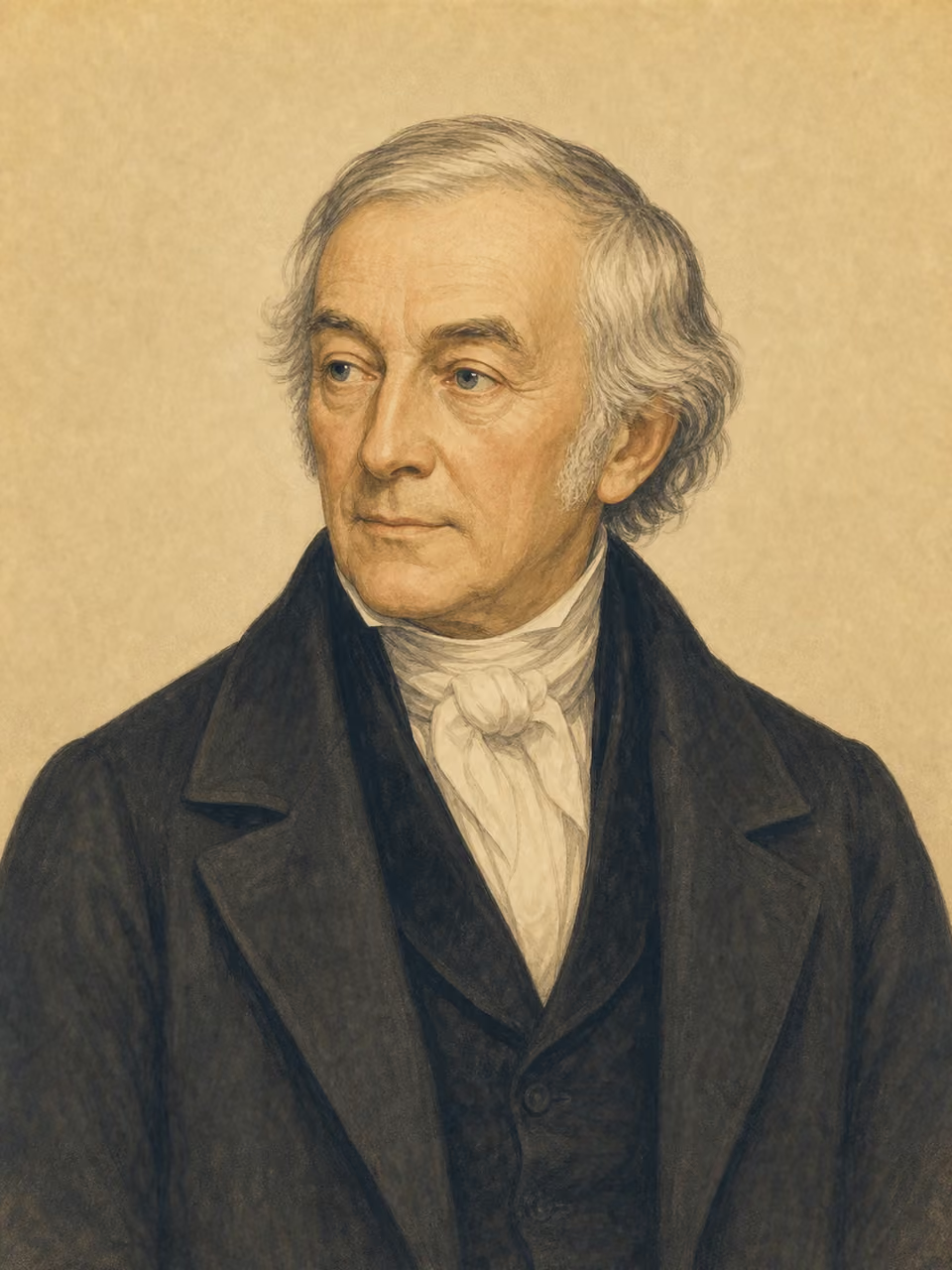
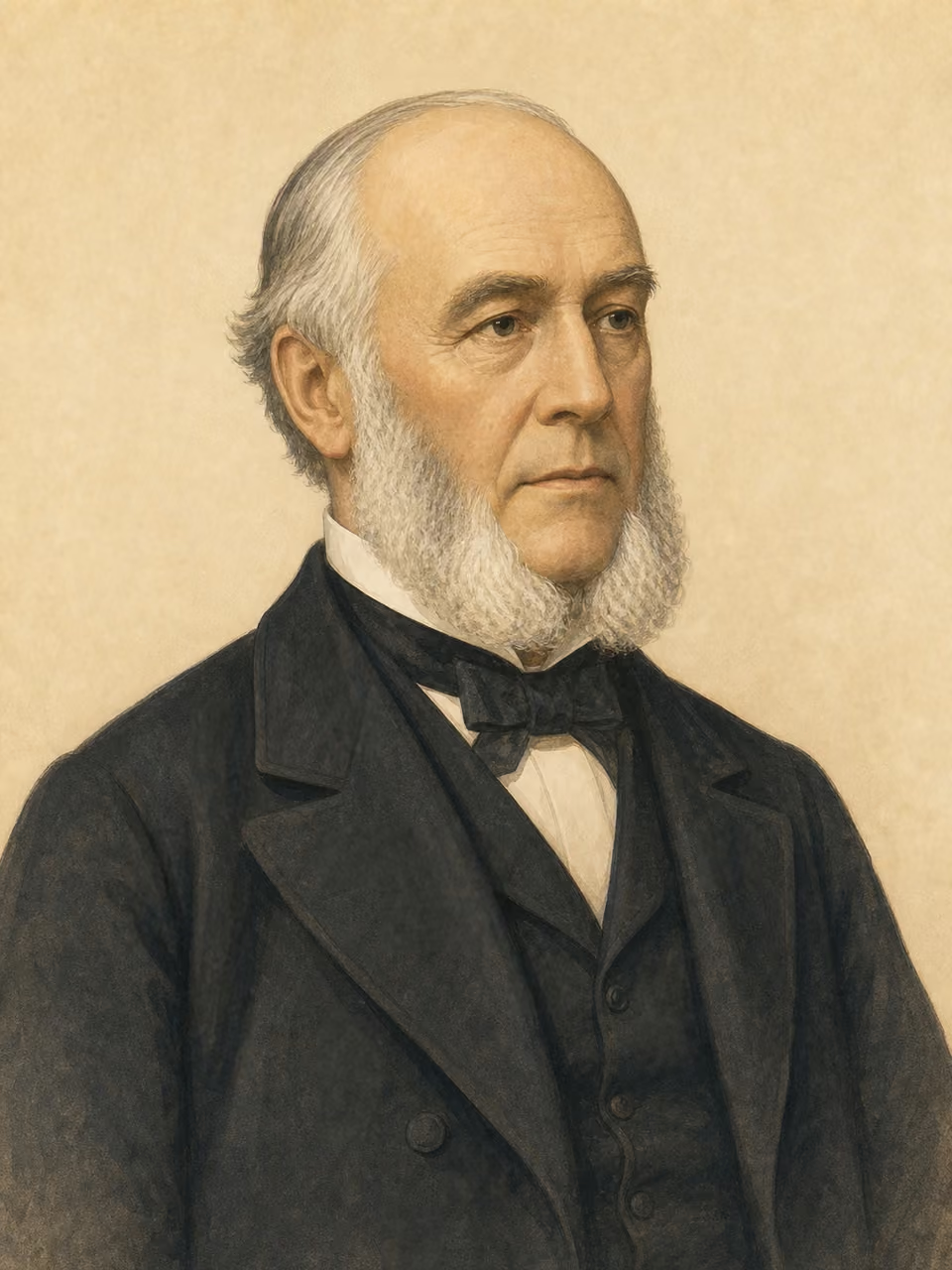
Robert Owen
historical figure in context
British businessman and social reform thinker, representative of utopian socialism. He attempted to improve working conditions in New Lanark and promoted co-operative and community ideas. He is an important figure who considers the social problems of the industrial revolution.
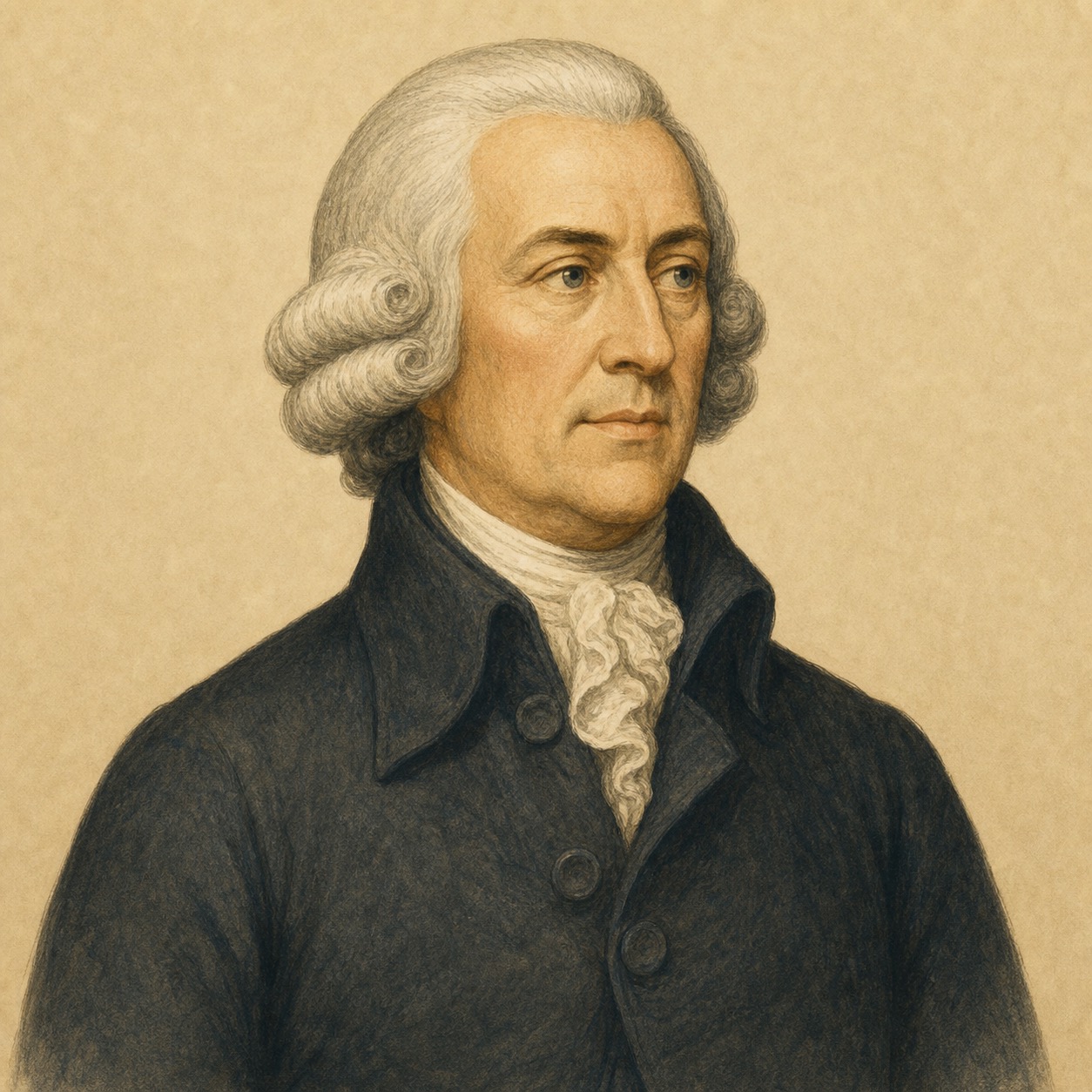
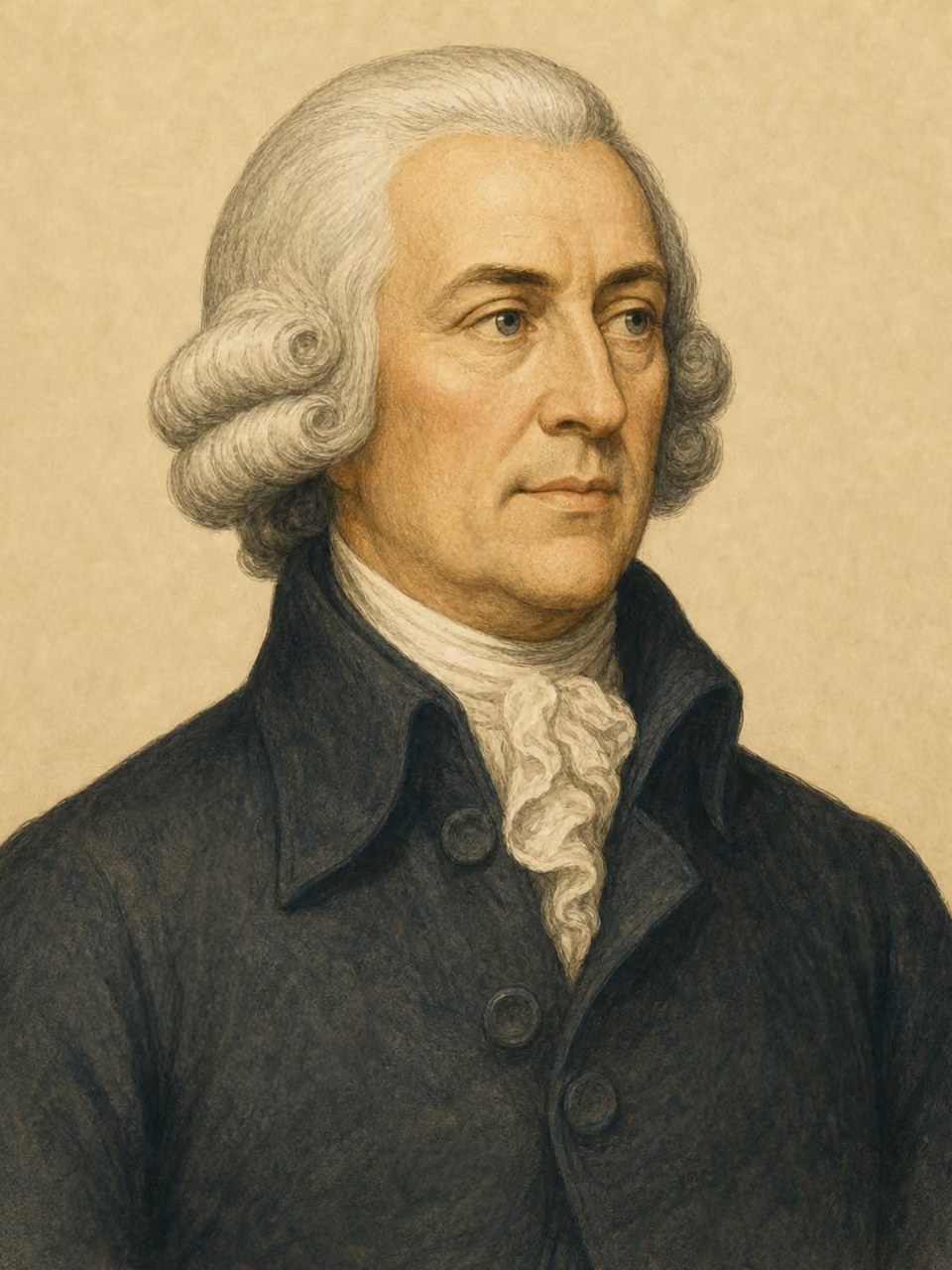
Adam Smith
historical figure in context
Scottish Enlightenment thinker. In The Wealth of Nations, he discussed the division of labor, markets, and free competition, creating the starting point for modern economics. He is a person who thinks about the structure of modern society.
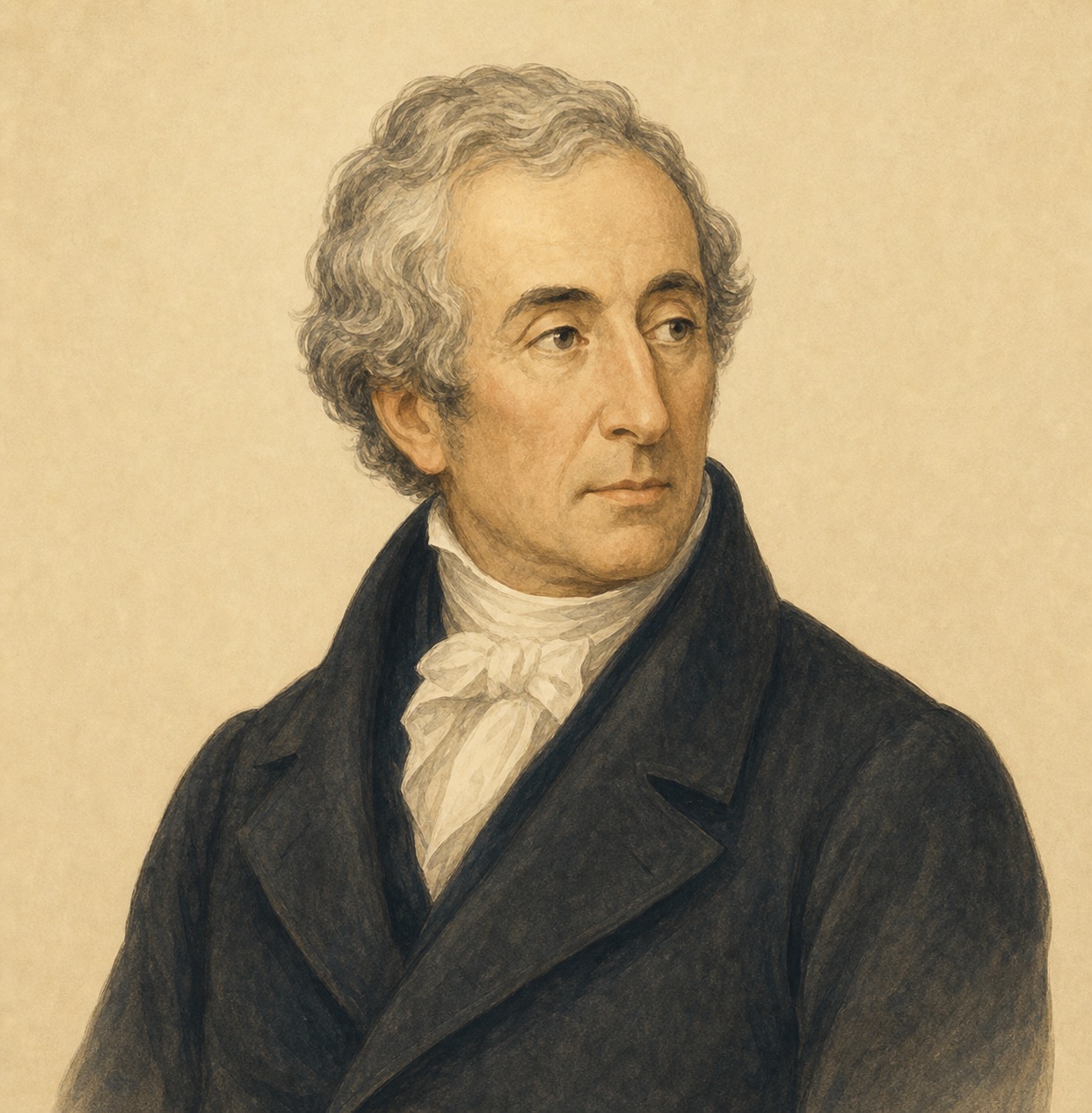
Henri de Saint-Simon
historical figure in context
A French thinker who advocated a social reform theory that placed emphasis on producers and scientists who were responsible for industrial society. It influenced later socialist ideas. This is important when considering the new social order after the French Revolution.
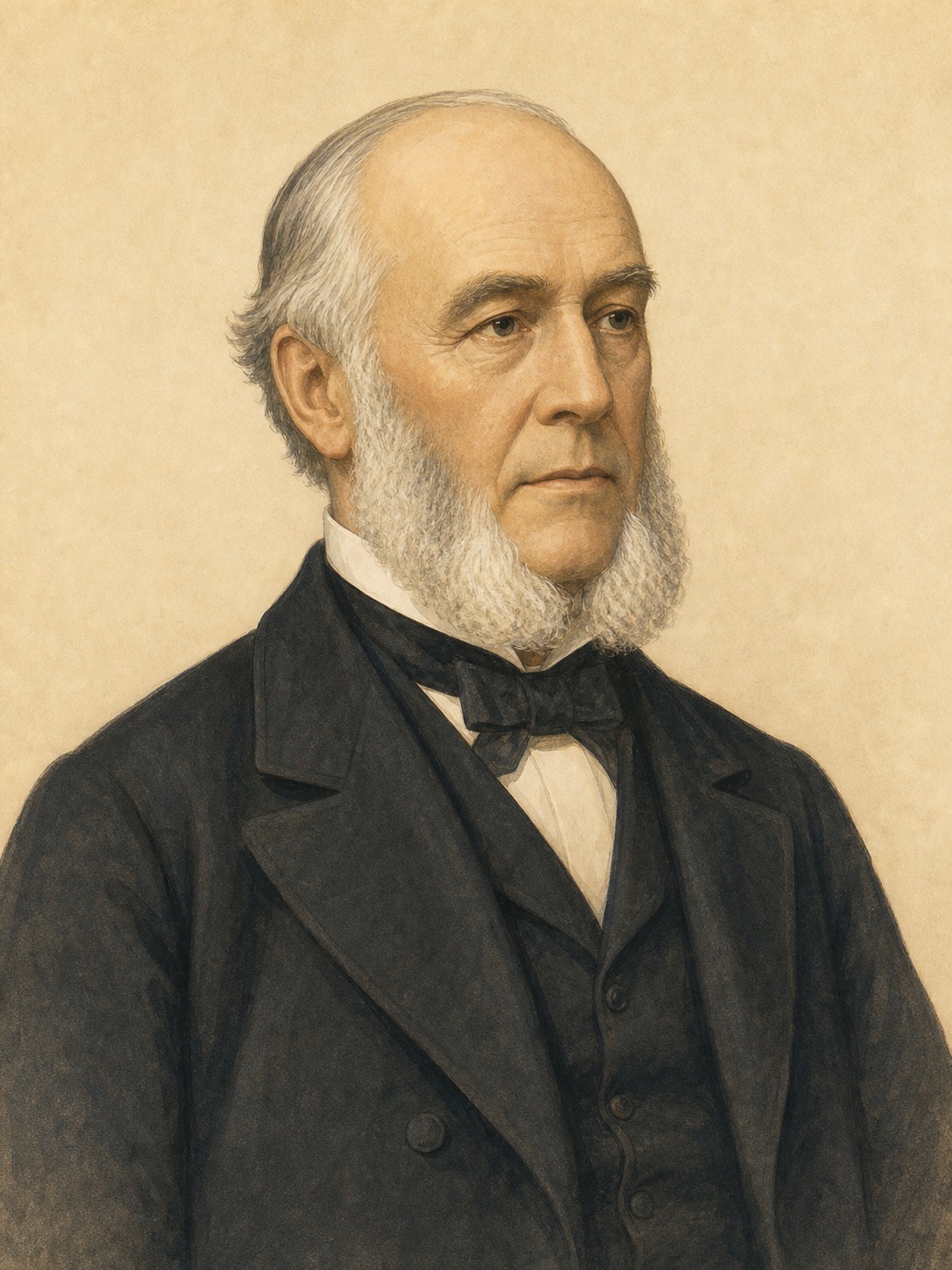
Thomas Cook
historical figure in context
British businessman who developed the modern group travel industry. It linked railways, tourism, and consumer society. It shows the trend of popularization of travel in 19th century Western culture. You can also see the changes in the times.
Related events
1740
Prelude
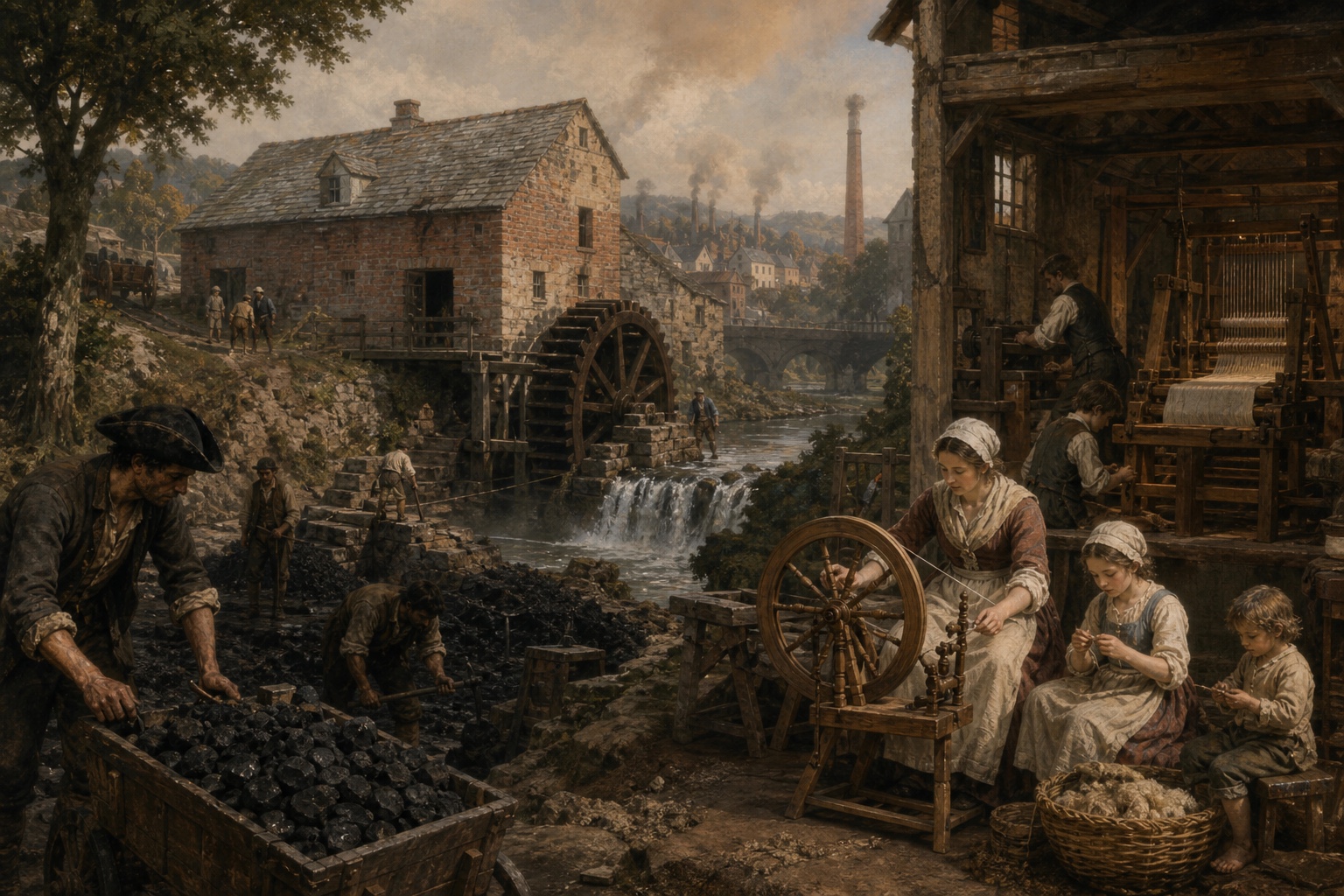
Prelude — Background: Expanding domestic and overseas trade, agricultural change, skilled craft knowledge, capital, transport, and accessible coal created favorable but contested conditions. British industry also drew on global inputs: cotton grown by enslaved people in the Americas supplied mechanized mills, while empire and unequal exchange shaped markets and access to resources.
c. 1759
Rising tension
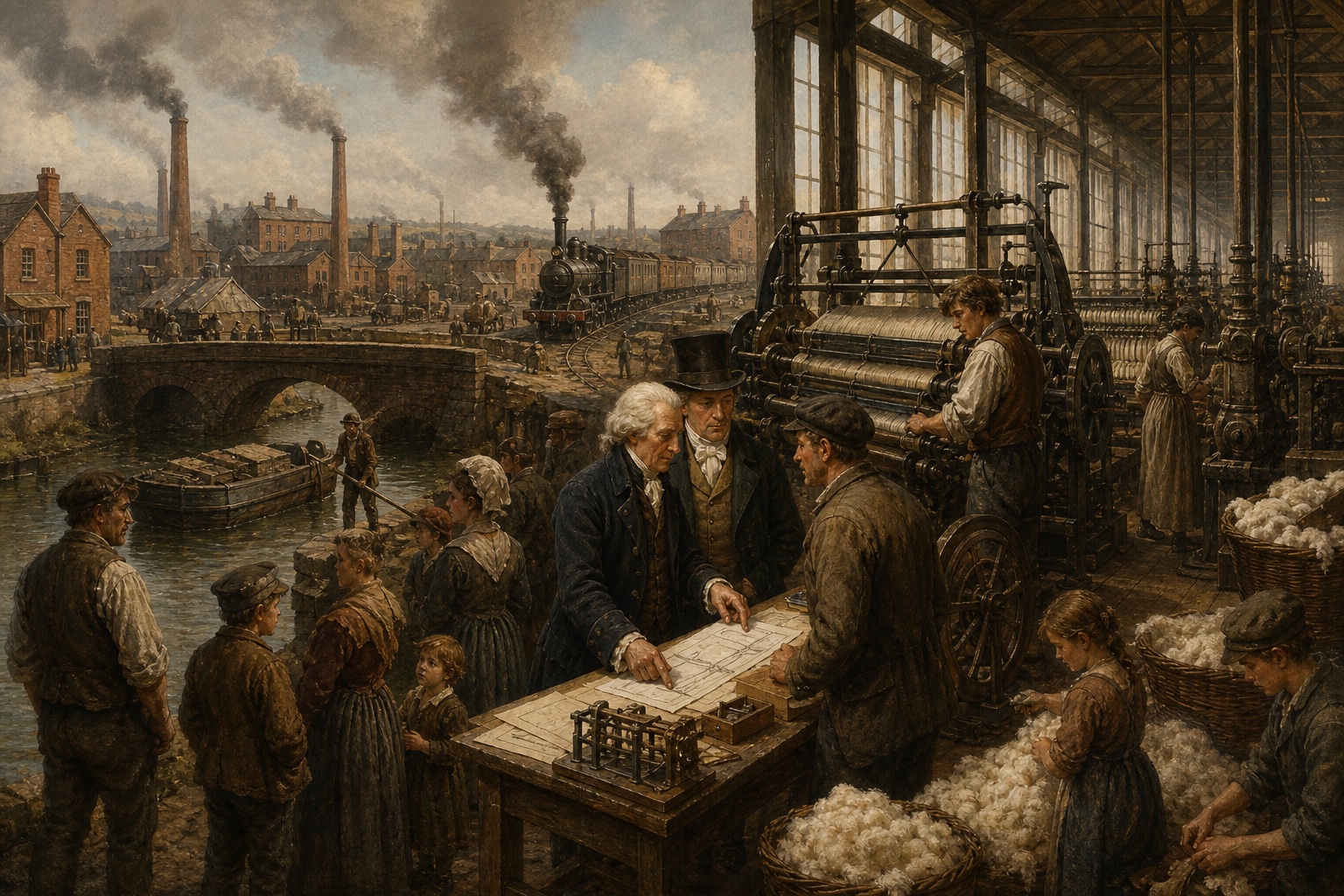
Rising tension — Build-up: Water- and steam-powered machinery increased output in textiles, coal, iron, and transport, and production became concentrated in mills and factories. Innovation accumulated through many inventors, workers, investors, and workshops rather than one breakthrough, while migration drove Manchester and other industrial towns to expand quickly.
c. 1760–c. 1840
Industrial Revolution
Current event
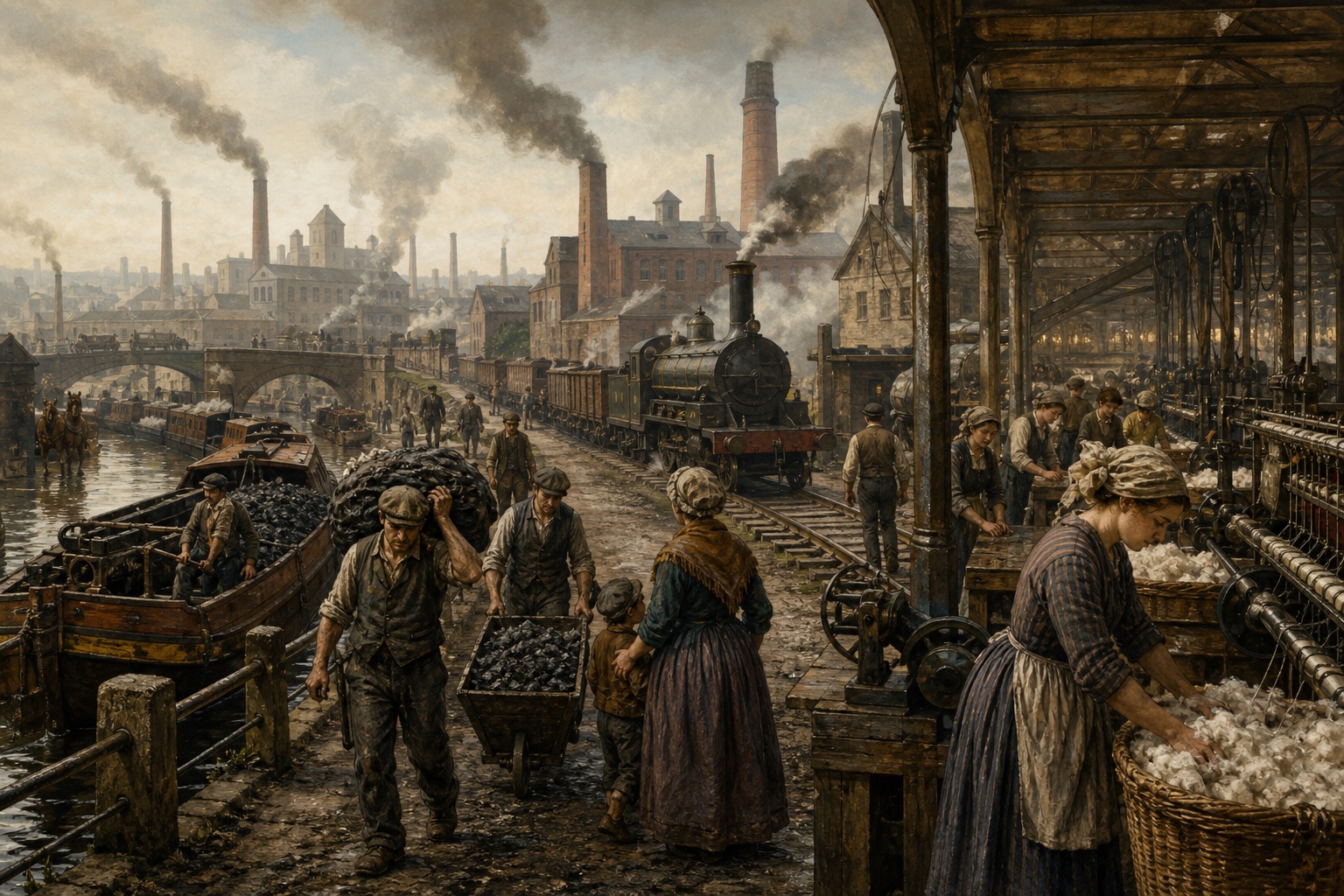
Industrial Revolution — Central transition: A long transformation, conventionally framed here as about 1760–1840, in which Britain became the first economy reshaped by mechanized production, fossil energy, factories, and rapidly growing industrial towns.
c. 1841
Immediate aftermath
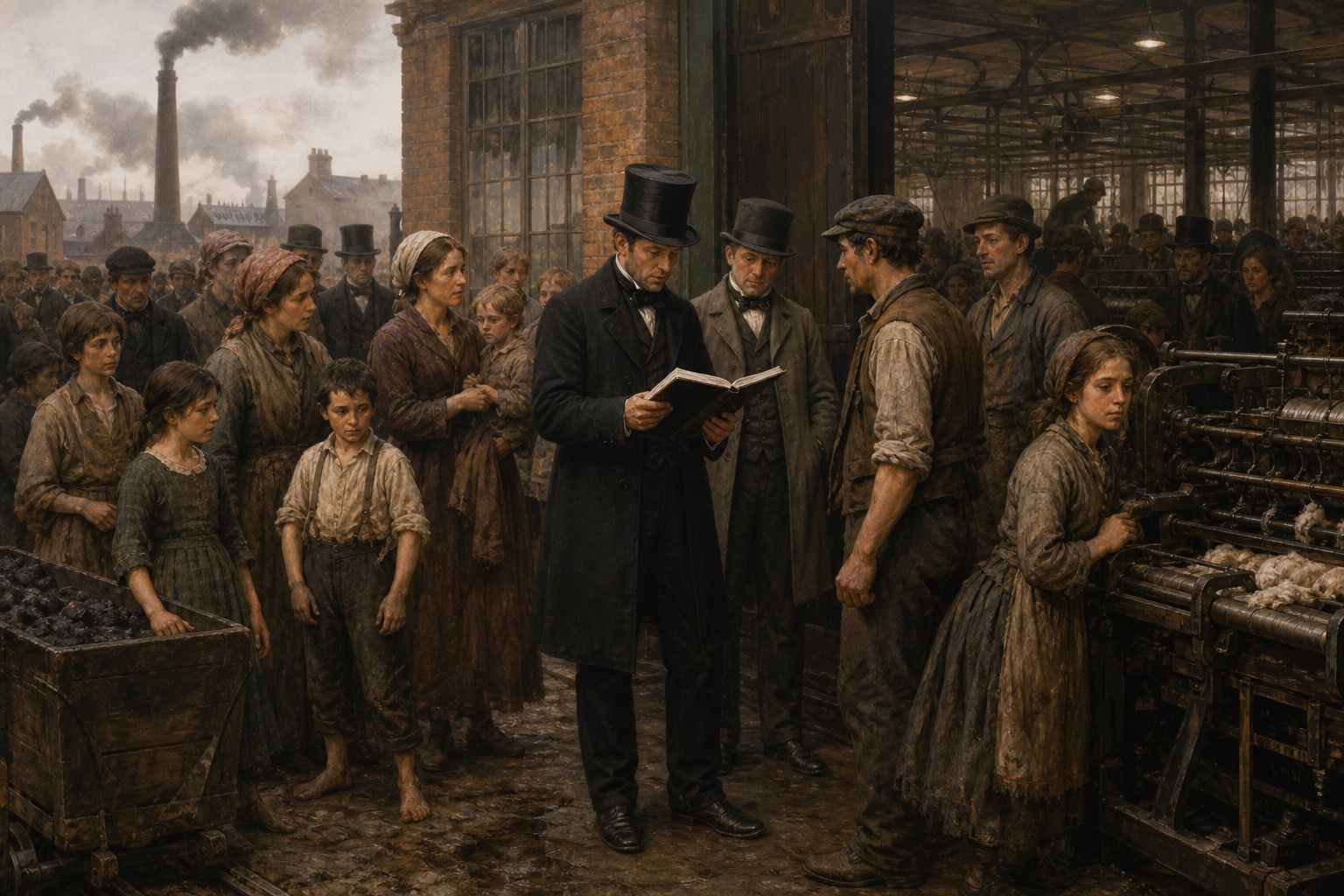
Immediate aftermath — Immediate result: Manufacturing output and transport capacity rose, wage labor and factory discipline spread, and Britain became the first industrial nation. The gains were uneven: dangerous work, child labor, crowded housing, pollution, and recurring insecurity prompted worker organization, investigation, and factory reform.
c. 1850
Long-term significance
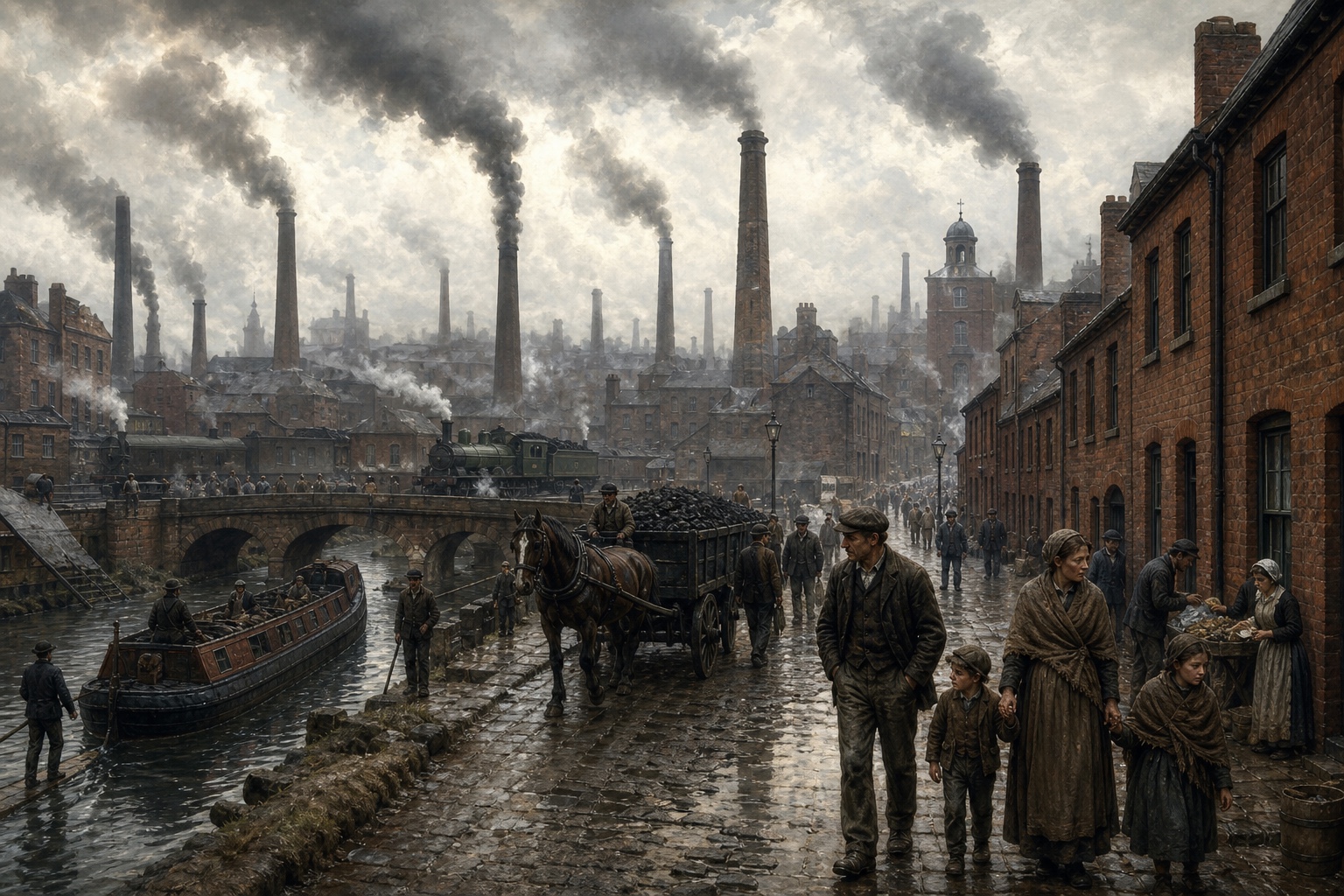
Long-term significance — Long-term significance: Industrialization changed energy use, technology, labor, urban life, and the global economy and later spread far beyond Britain. The dates are editorial boundaries for an uneven process, not a single invention, and its history includes both rising productive power and the coercive labor and colonial networks that supplied it.


Sources
- Industrial Revolution — Earlyindustry (UK Parliament)parliament.ukThis UK Parliament resource supports the chronology, setting, and course of Industrial Revolution.
- Industrial Revolution — Energy Hall (Sciencemuseum)sciencemuseum.org.ukThis Sciencemuseum resource supports the chronology, setting, and course of Industrial Revolution.
- Industrial Revolution — Manchester Cotton And Slavery (Scienceandindustrymuseum)scienceandindustrymuseum.org.ukThis Scienceandindustrymuseum resource supports the chronology, setting, and course of Industrial Revolution.