
Meiji Restoration
1868
The 1868 political restoration that replaced Tokugawa rule with a government acting in the emperor's name and opened a much longer transformation of the Japanese state.

- Period
- 1868
- Kind
- Political event
- Regions
- East Asia
- Keywords
- Meiji Restoration · background · course · outcome
Follow the story · Four stages
Background
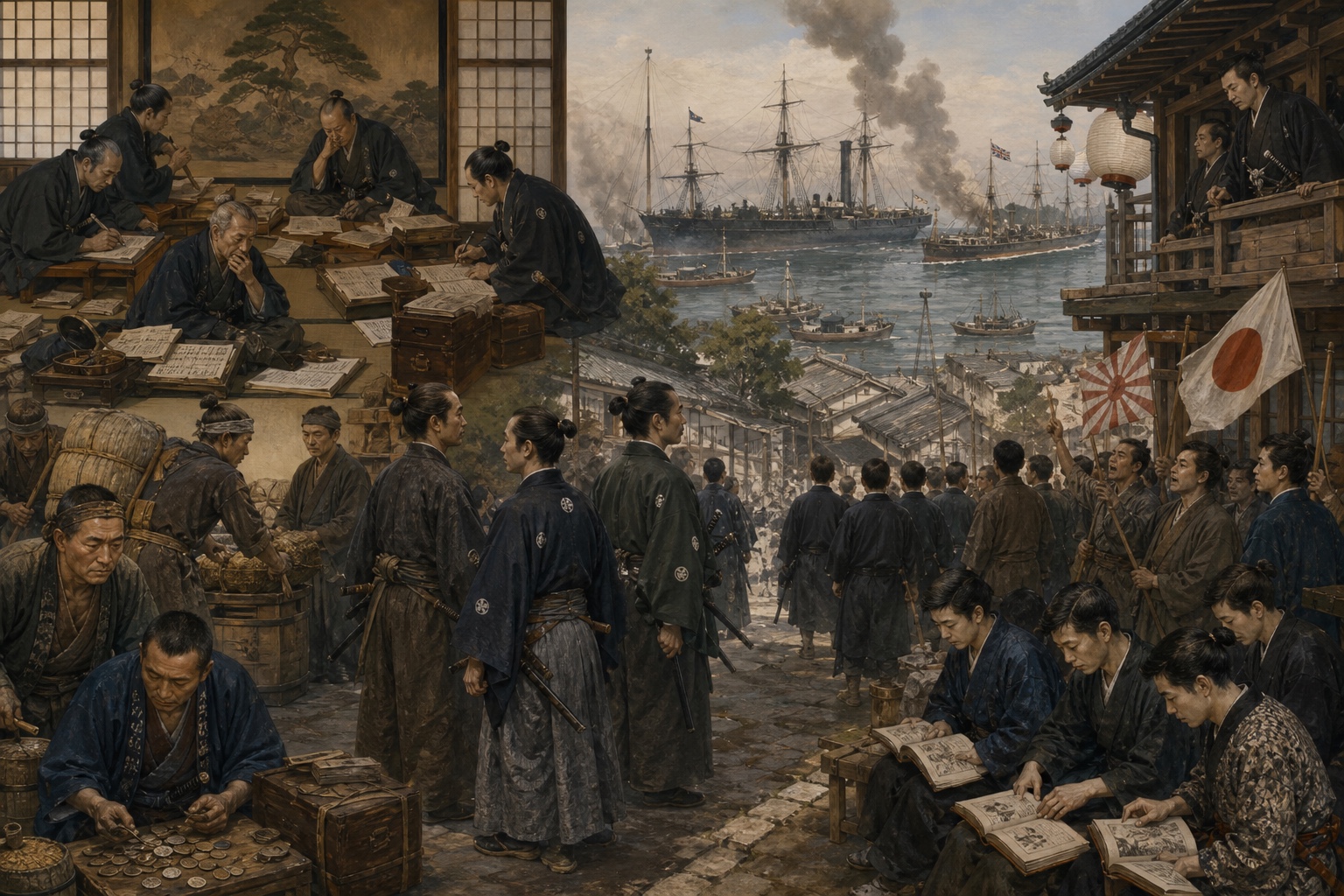
The shogunate faced domestic fiscal and social change alongside military and commercial pressure from Western powers in an East Asia reshaped by the Opium War and unequal treaties. Anti-shogunate domains, court nobles, other domains, and popular groups did not share a single program, and conflict continued after the shogun relinquished office.
- The shogunate faced domestic fiscal and social change alongside military and commercial pressure from Western powers in an East Asia reshaped by the Opium War and unequal treaties.
- Anti-shogunate domains, court nobles, other domains, and popular groups did not share a single program, and conflict continued after the shogun relinquished office.
- The source record helps place this stage in context.
Course
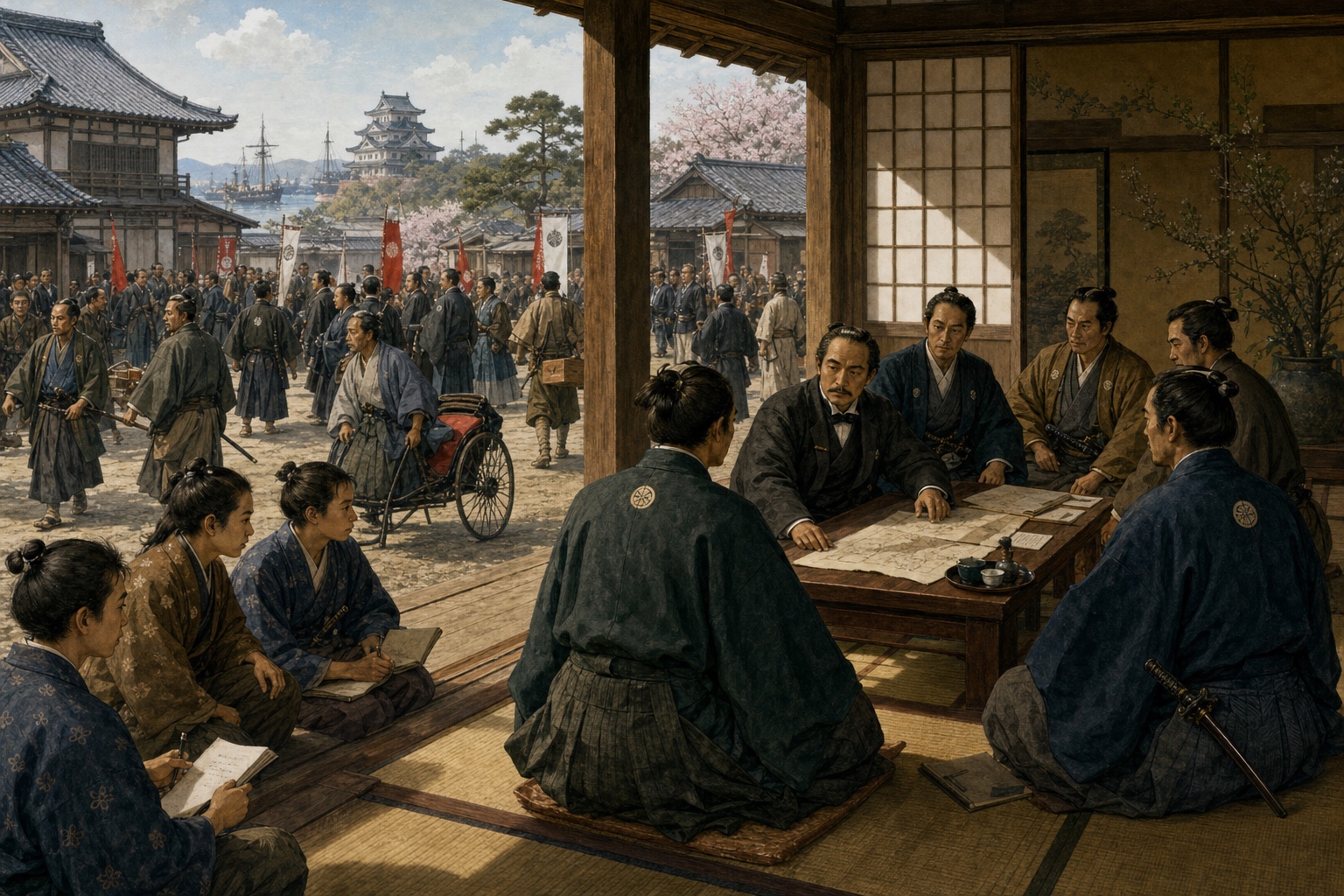
The January 1868 restoration decree asserted a new government, which defeated Tokugawa-aligned forces in the Boshin War. The Charter Oath promised deliberation and the pursuit of knowledge. Return and abolition of domains, land-tax reform, conscription, schools, industry and transport, and later constitution and parliament followed in stages; they were not one event completed in 1868.
- The January 1868 restoration decree asserted a new government, which defeated Tokugawa-aligned forces in the Boshin War.
- The Charter Oath promised deliberation and the pursuit of knowledge.
- Return and abolition of domains, land-tax reform, conscription, schools, industry and transport, and later constitution and parliament followed in stages; they were not one event completed in 1868.
Outcome
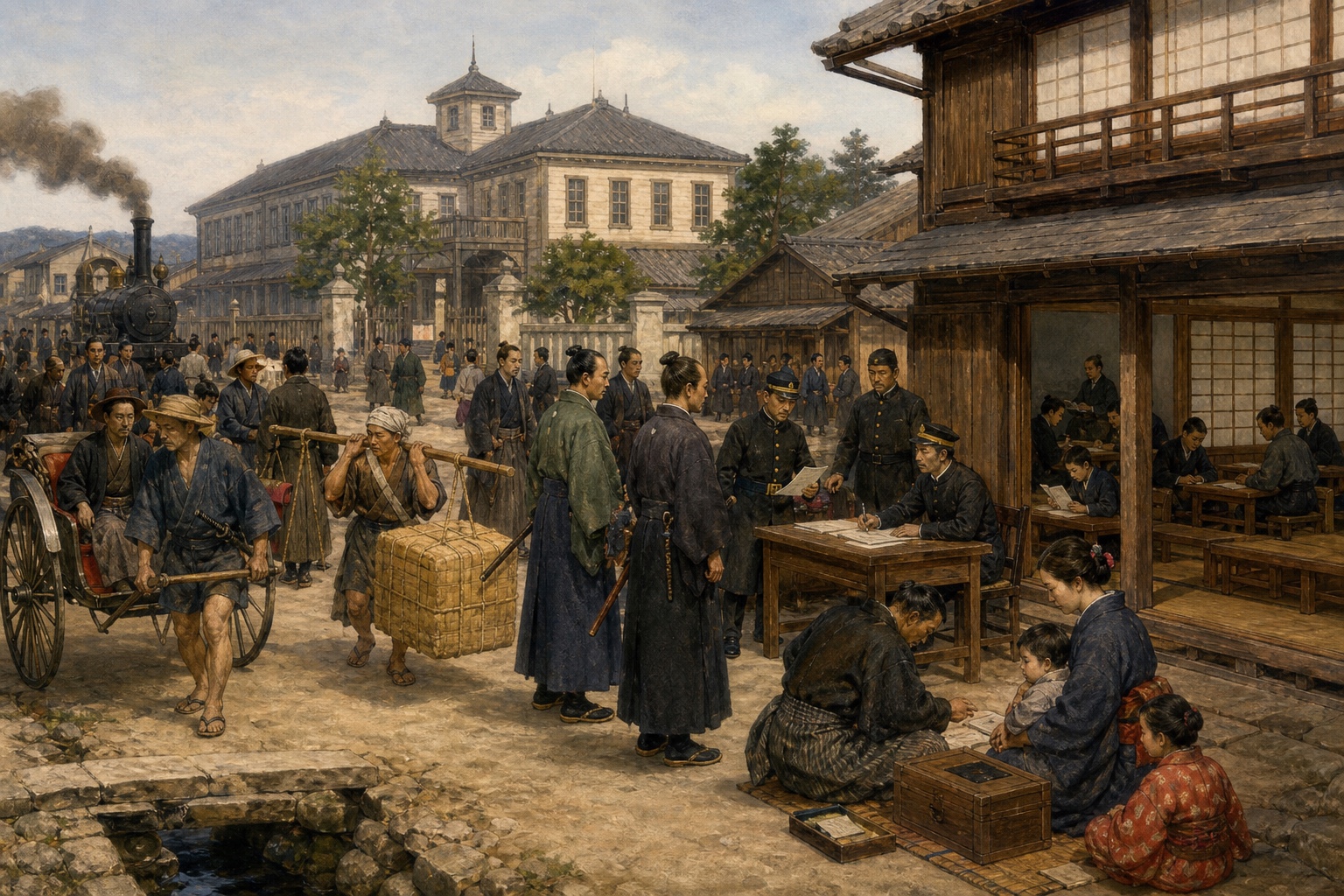
The government replaced domains with centralized taxation, armed forces, and administration while remaking status and former samurai privilege. Resistance to conscription and taxes and samurai revolts met coercion. Ainu assimilation in Hokkaido, the incorporation of Ryukyu, and later expansion into Taiwan and Korea show state-building developing with internal coercion and empire.
- The government replaced domains with centralized taxation, armed forces, and administration while remaking status and former samurai privilege.
- Resistance to conscription and taxes and samurai revolts met coercion.
- Ainu assimilation in Hokkaido, the incorporation of Ryukyu, and later expansion into Taiwan and Korea show state-building developing with internal coercion and empire.
Historical significance
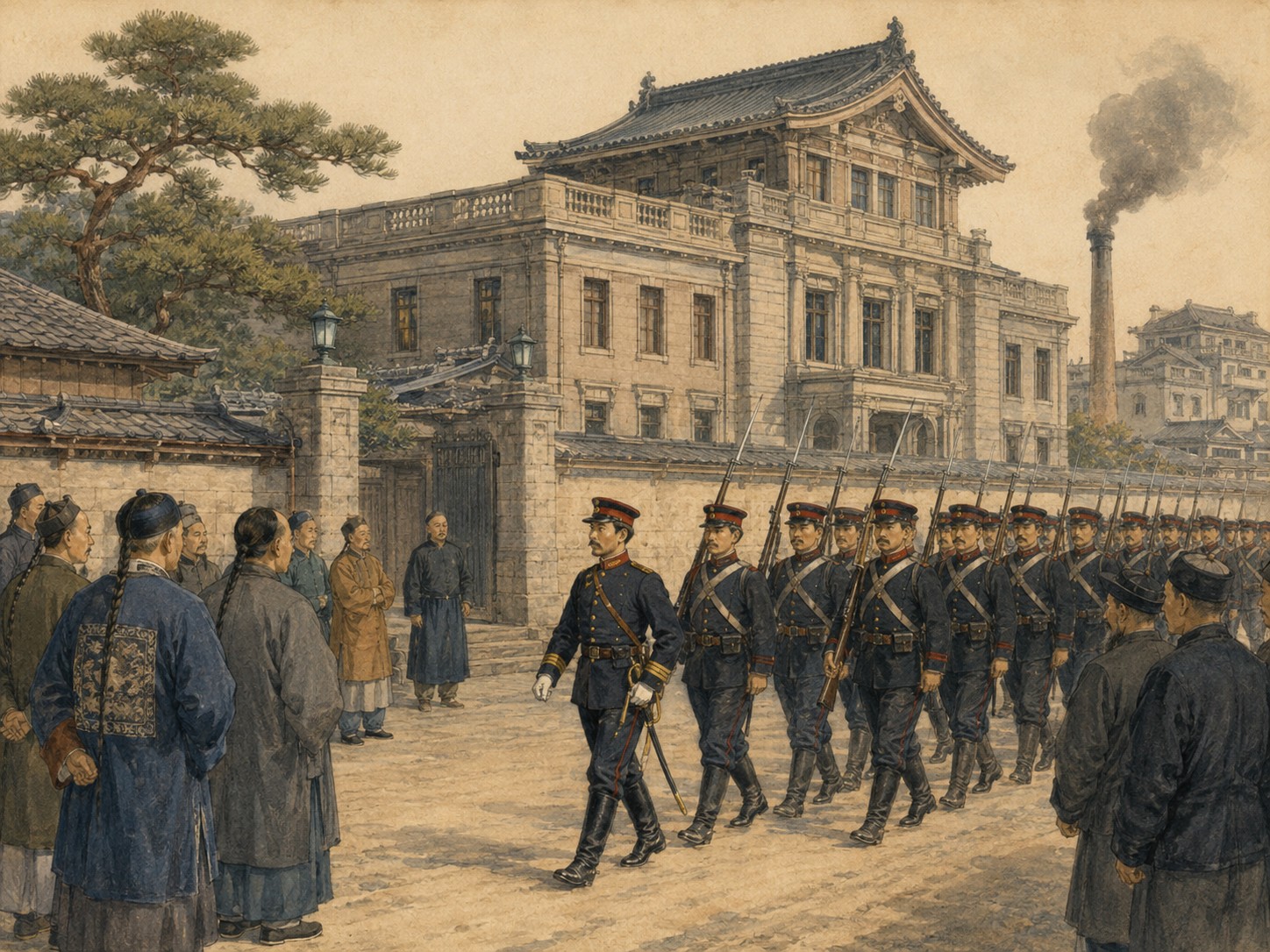
The political transfer of 1868 must be distinguished from the decades of reform that followed. A state built partly in response to the coercive order exposed by the Opium War later exercised imperial pressure itself. Its institutions and power served as both reference and threat to late-Qing reformers and revolutionaries on the road to the Xinhai Revolution.
- The political transfer of 1868 must be distinguished from the decades of reform that followed.
- A state built partly in response to the coercive order exposed by the Opium War later exercised imperial pressure itself.
- Its institutions and power served as both reference and threat to late-Qing reformers and revolutionaries on the road to the Xinhai Revolution.


Related figures
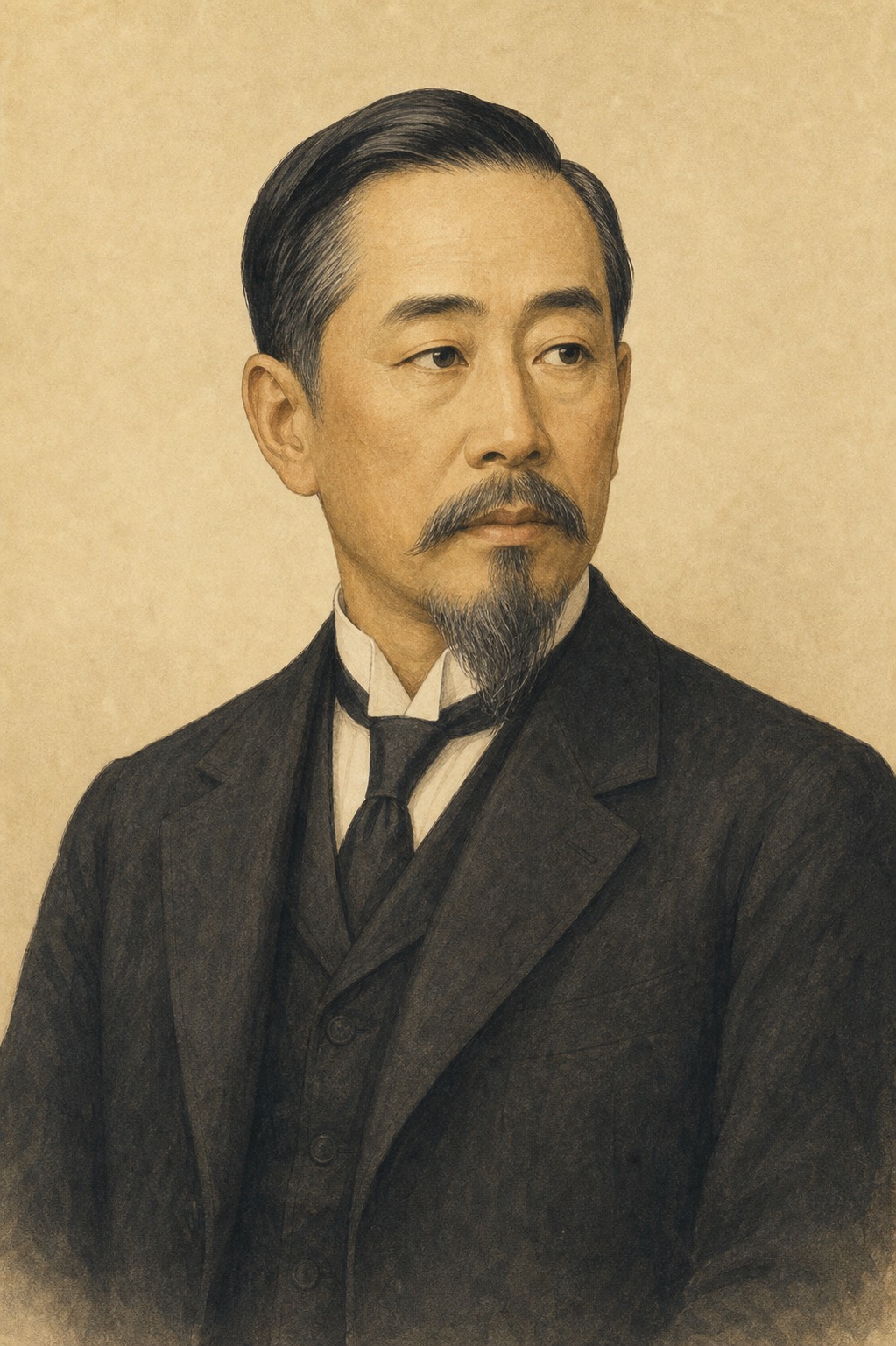
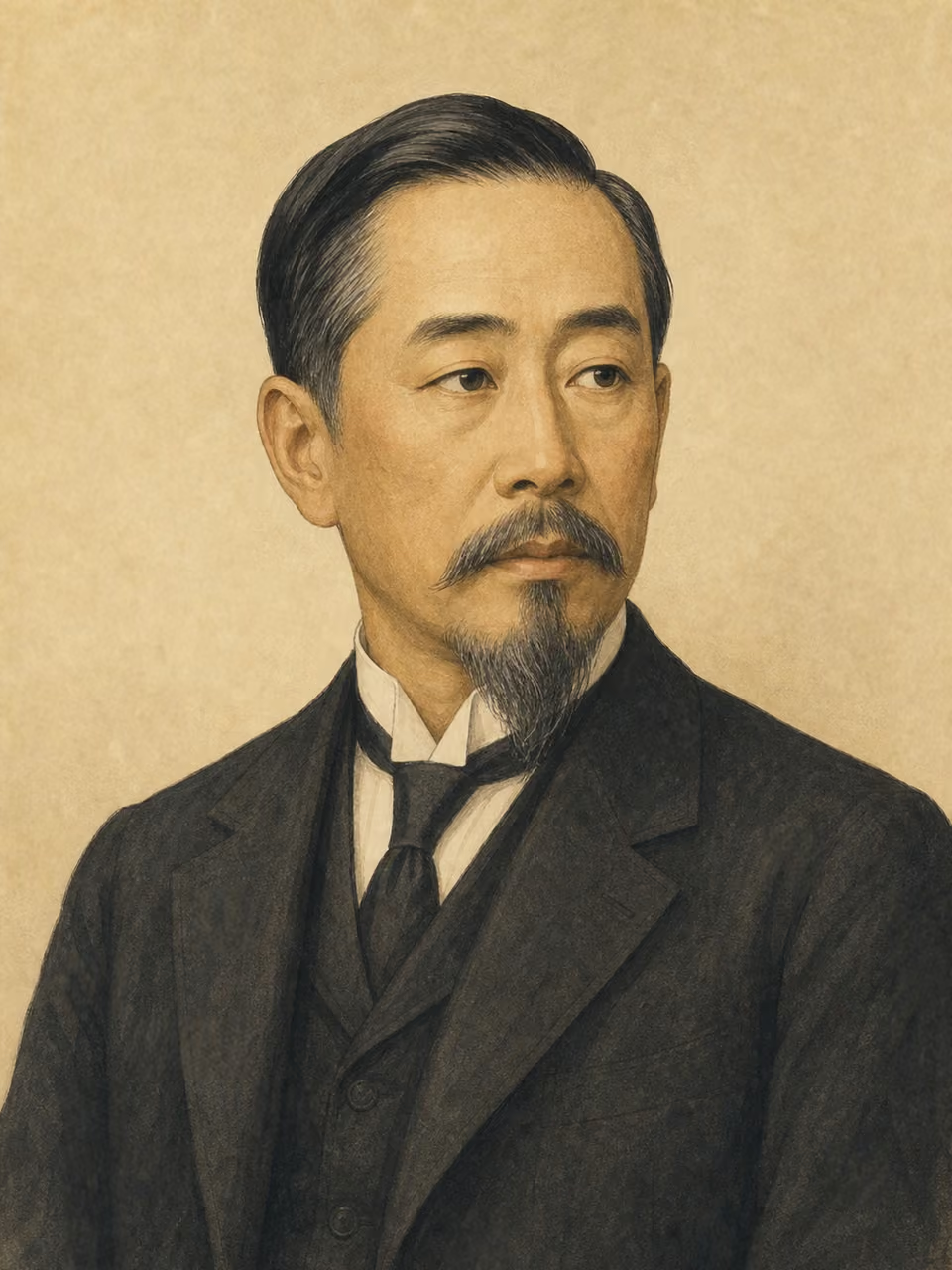
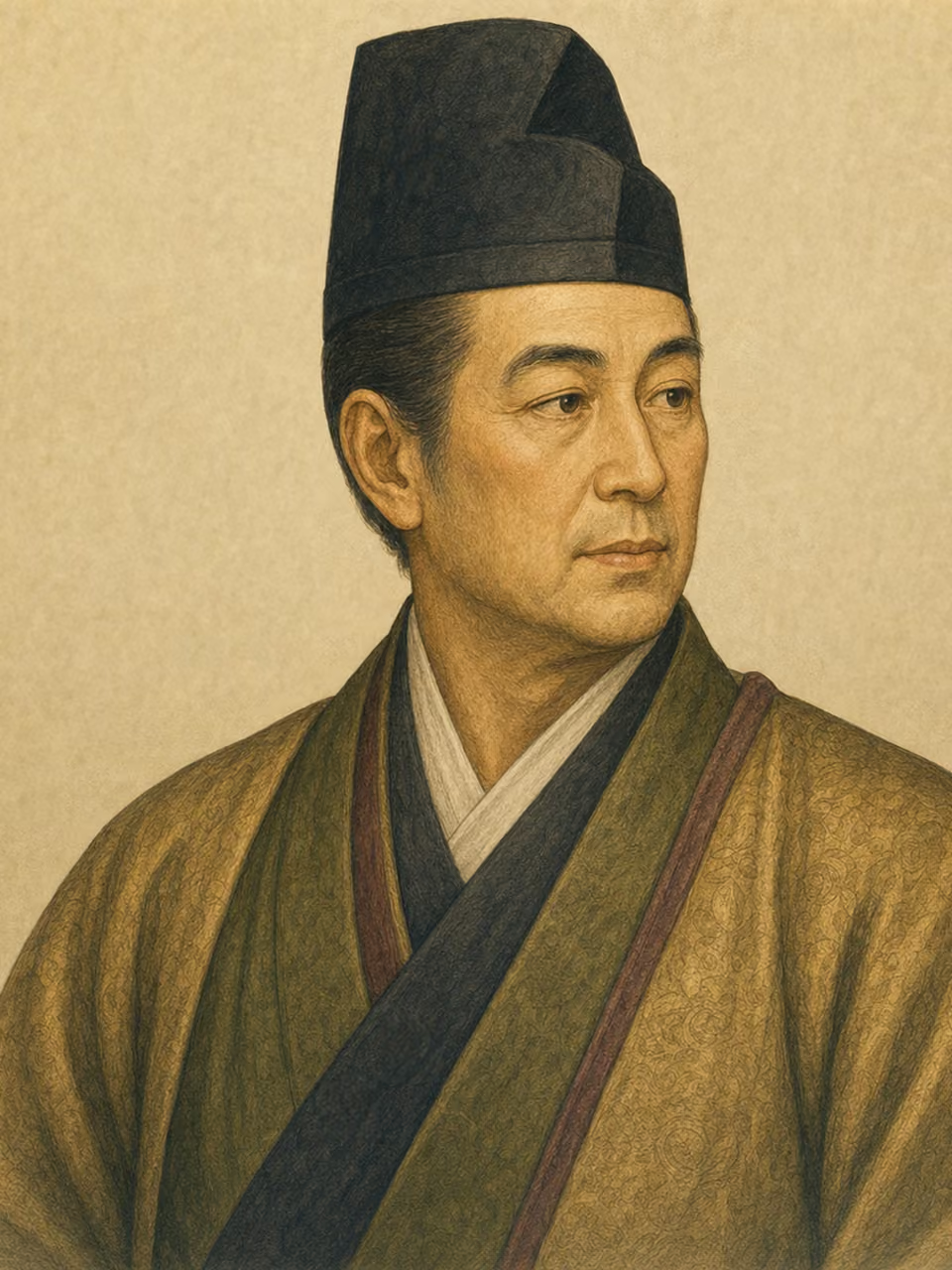
Ito Hirobumi
historical figure in context
A politician from Meiji Japan who became the first Prime Minister. He was involved in the establishment of the Constitution of the Empire of Japan and the development of the modern national system. At the same time, he was deeply involved in imperialist policy as the Superintendent of Korea.
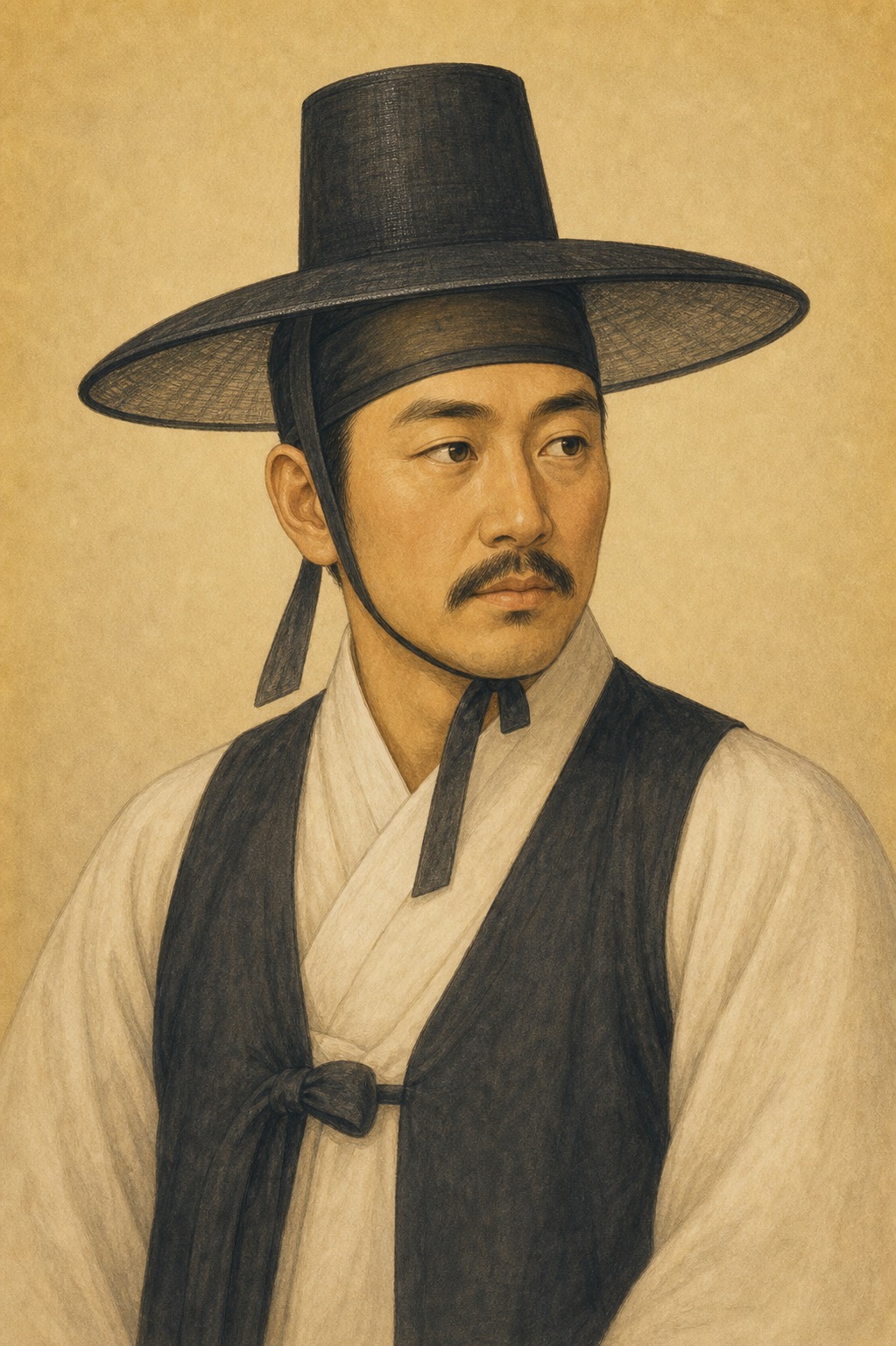
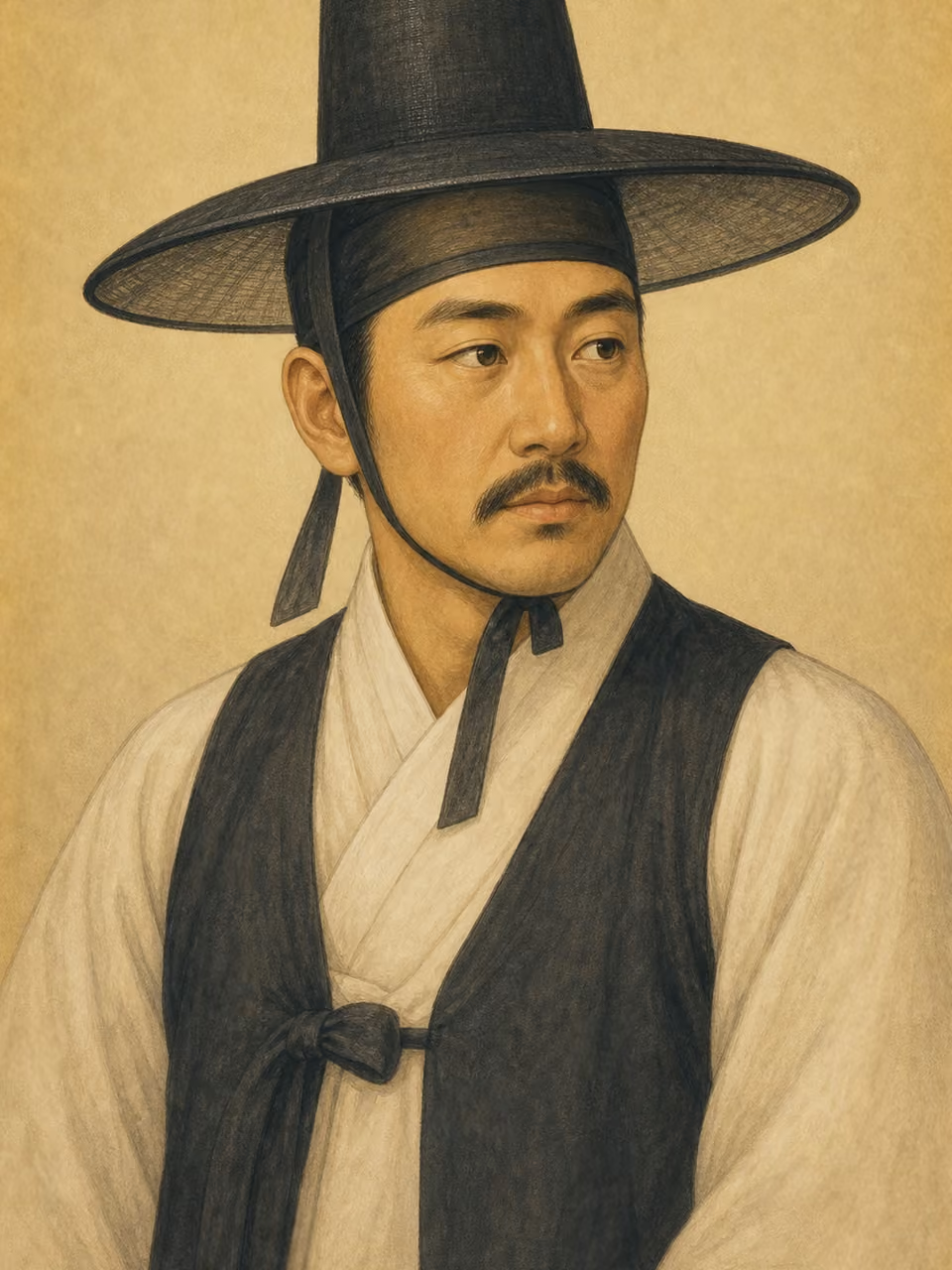
Kim Ok-gyun
historical figure in context
A reformist politician in the late Joseon Dynasty who led the Gashin Coup. Influenced by Japan's Meiji Restoration, it sought to radically modernize and maintain independence. He is a figure who shows the tension in modern East Asia.
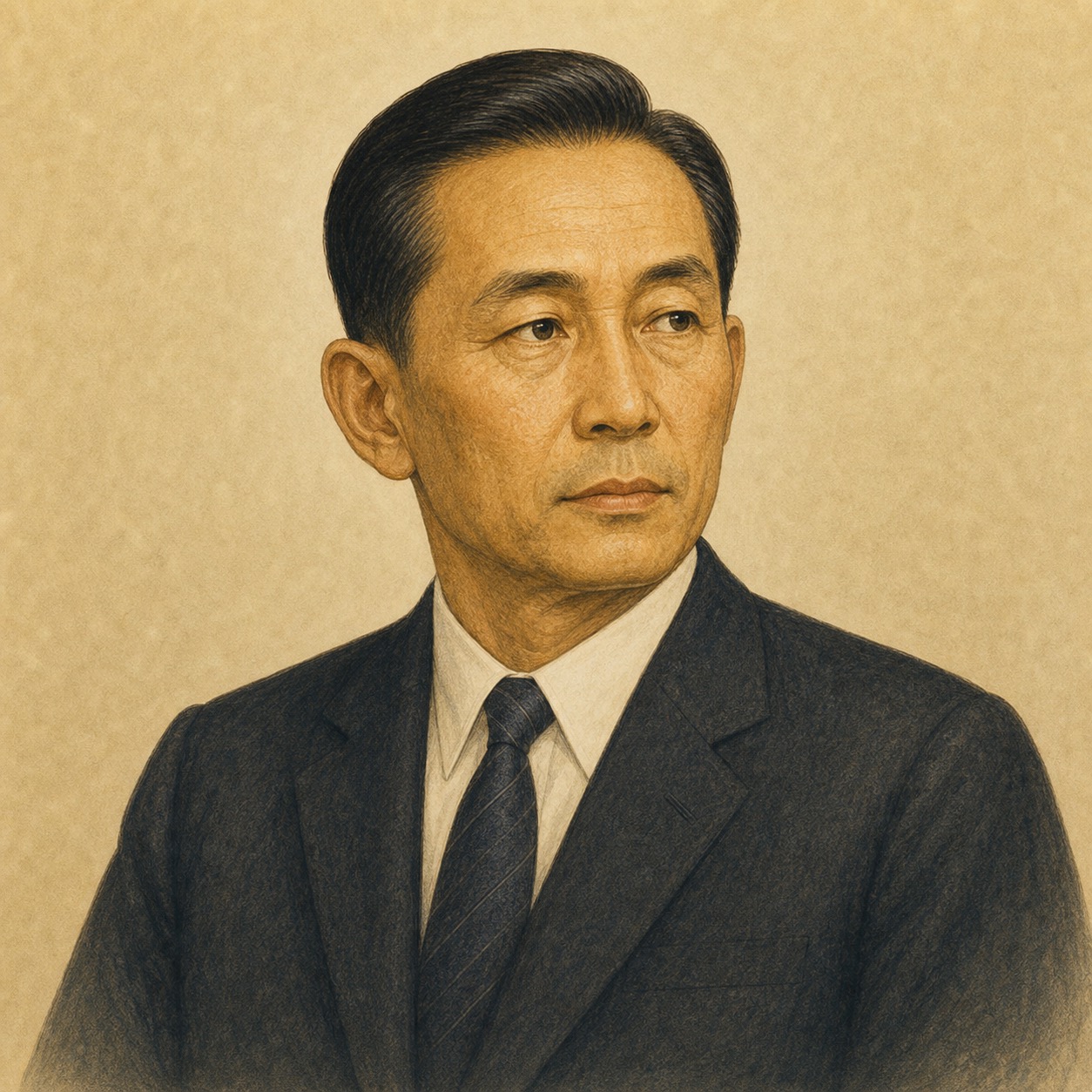
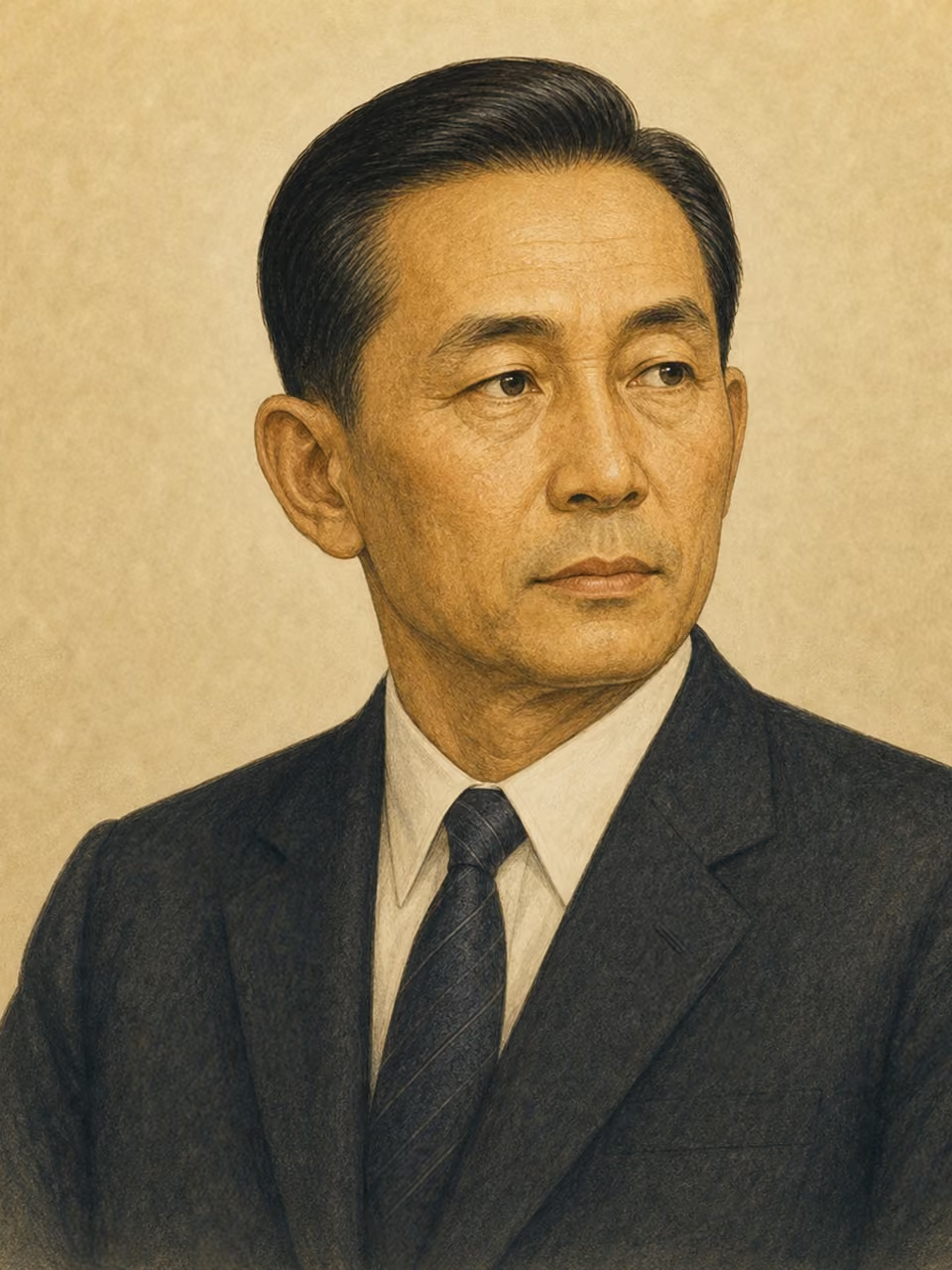
Park Chung-hee
historical figure in context
Korean military officer and politician. After a military coup, the country established a long-term government and strengthened its authoritarian regime while promoting economic growth. He is a person who thinks about development dictatorship in East Asia during the Cold War.
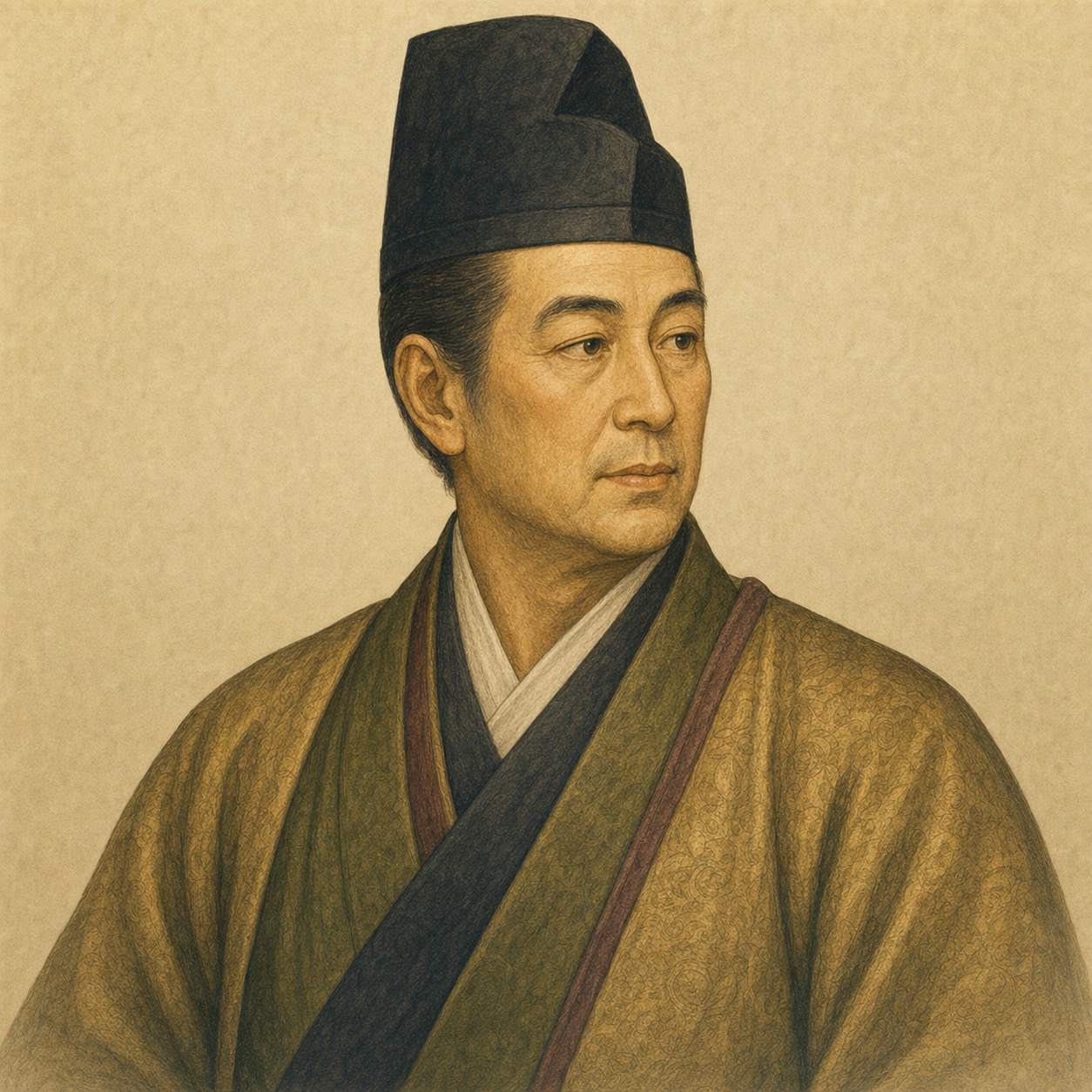
Ashikaga Yoshimitsu
historical figure in context
The third shogun of the Muromachi shogunate. He promoted the unification of the Northern and Southern Courts, started trade between Japan and Ming Dynasty, and supported Kitayama culture. He is a person who thinks about medieval Japan and the international order in East Asia.
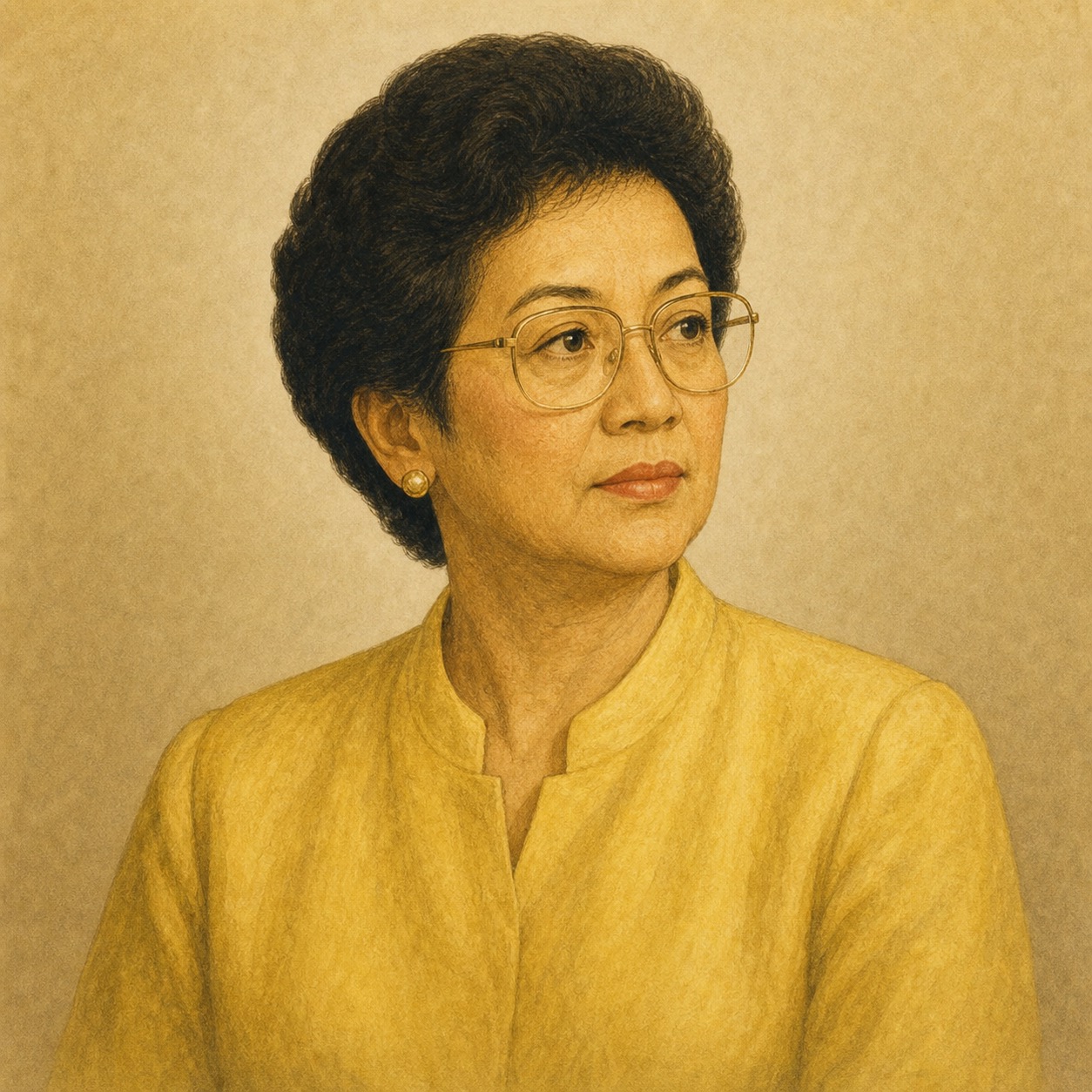
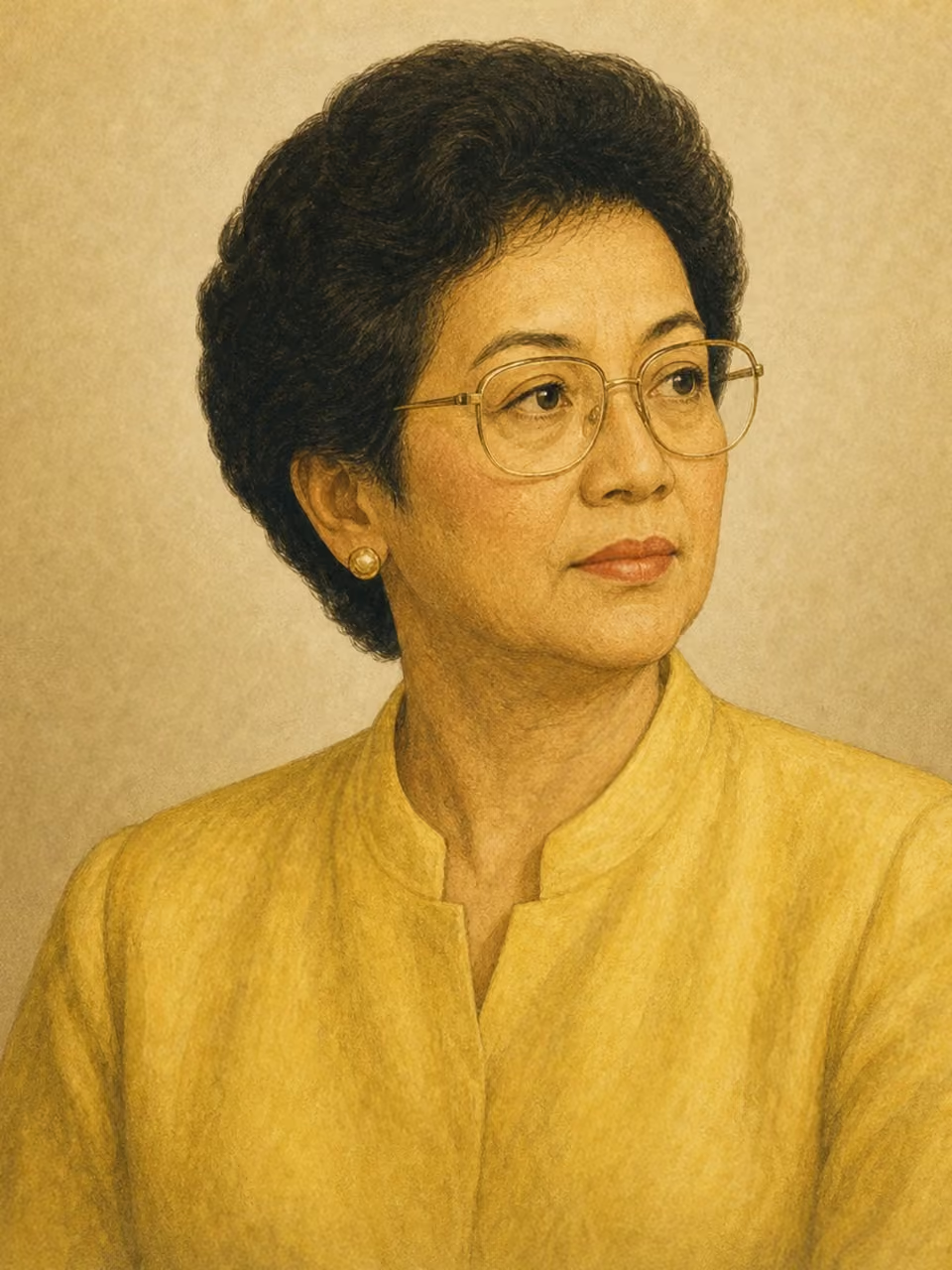
Corazon Aquino
historical figure in context
Filipino politician. He became president after the People Power Revolution that overthrew the Marcos dictatorship and became a symbol of democracy. He is a person who thinks about the democratization of Southeast Asia.
Related events
1848
Prelude
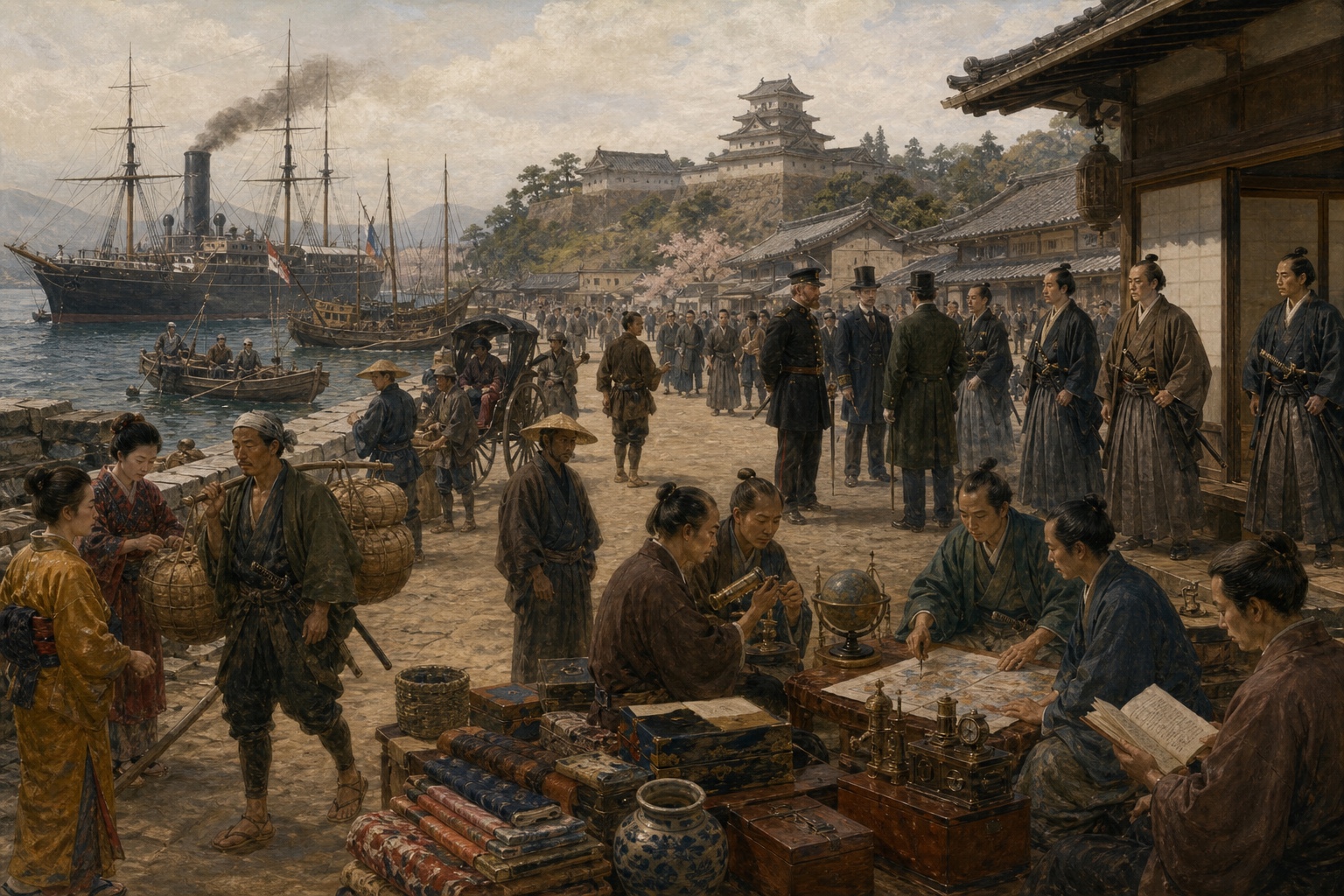
Prelude — Background: The shogunate faced domestic fiscal and social change alongside military and commercial pressure from Western powers in an East Asia reshaped by the Opium War and unequal treaties. Anti-shogunate domains, court nobles, other domains, and popular groups did not share a single program, and conflict continued after the shogun relinquished office.
c. 1867
Rising tension
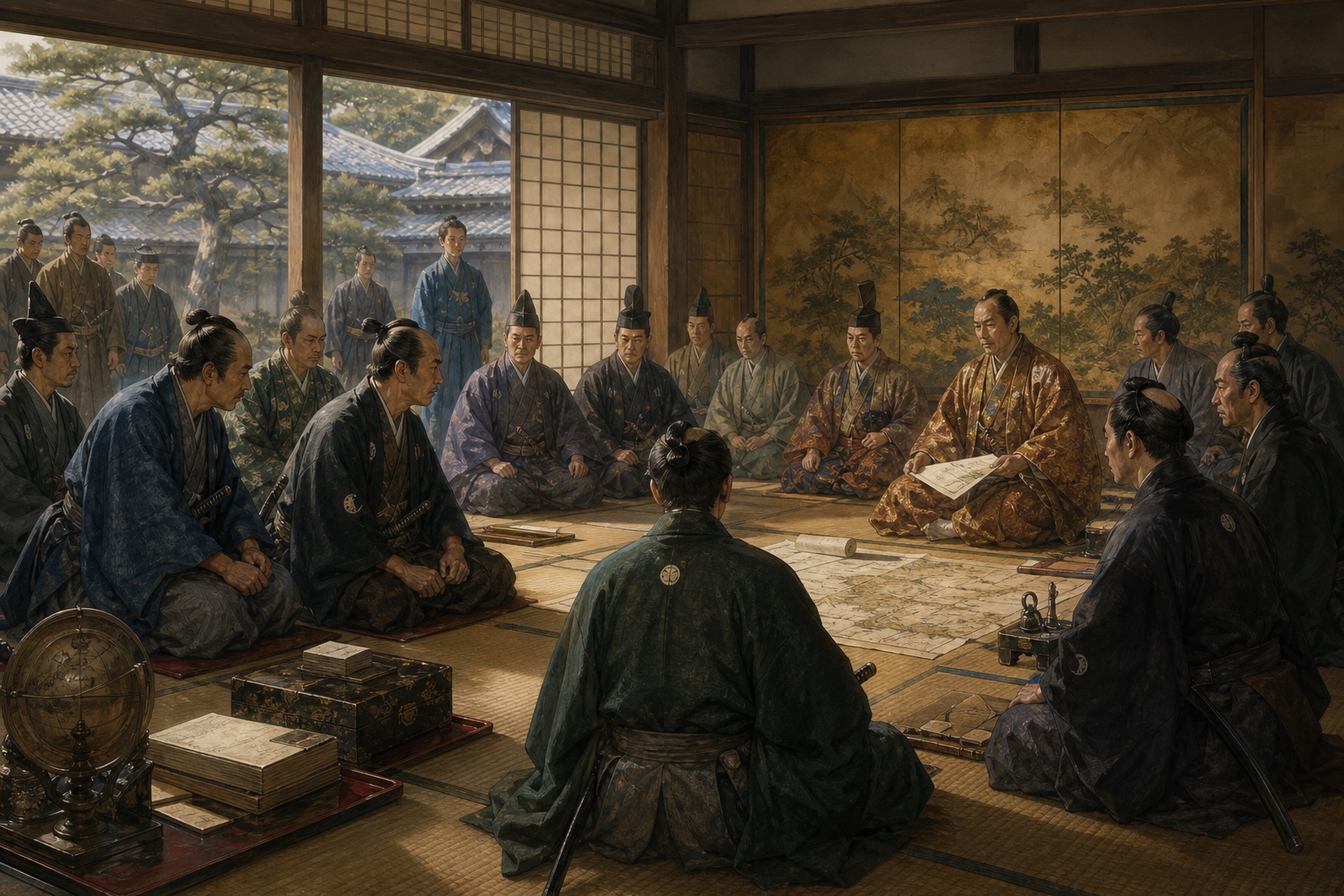
Rising tension — Build-up: The January 1868 restoration decree asserted a new government, which defeated Tokugawa-aligned forces in the Boshin War. The Charter Oath promised deliberation and the pursuit of knowledge. Return and abolition of domains, land-tax reform, conscription, schools, industry and transport, and later constitution and parliament followed in stages; they were not one event completed in 1868.
1868
Meiji Restoration
Current event
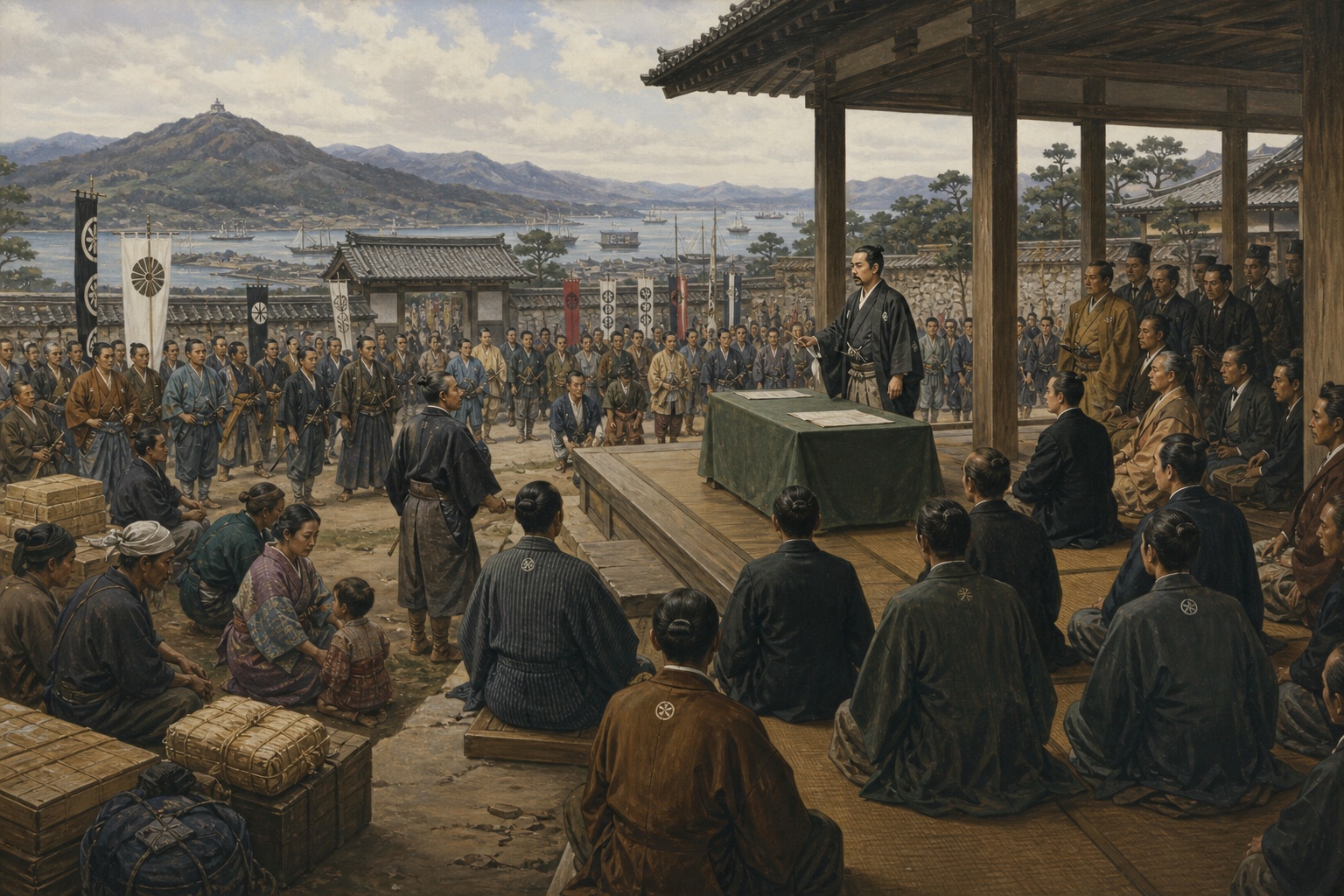
Meiji Restoration — Central transition: The 1868 political restoration that replaced Tokugawa rule with a government acting in the emperor's name and opened a much longer transformation of the Japanese state.
c. 1869
Immediate aftermath
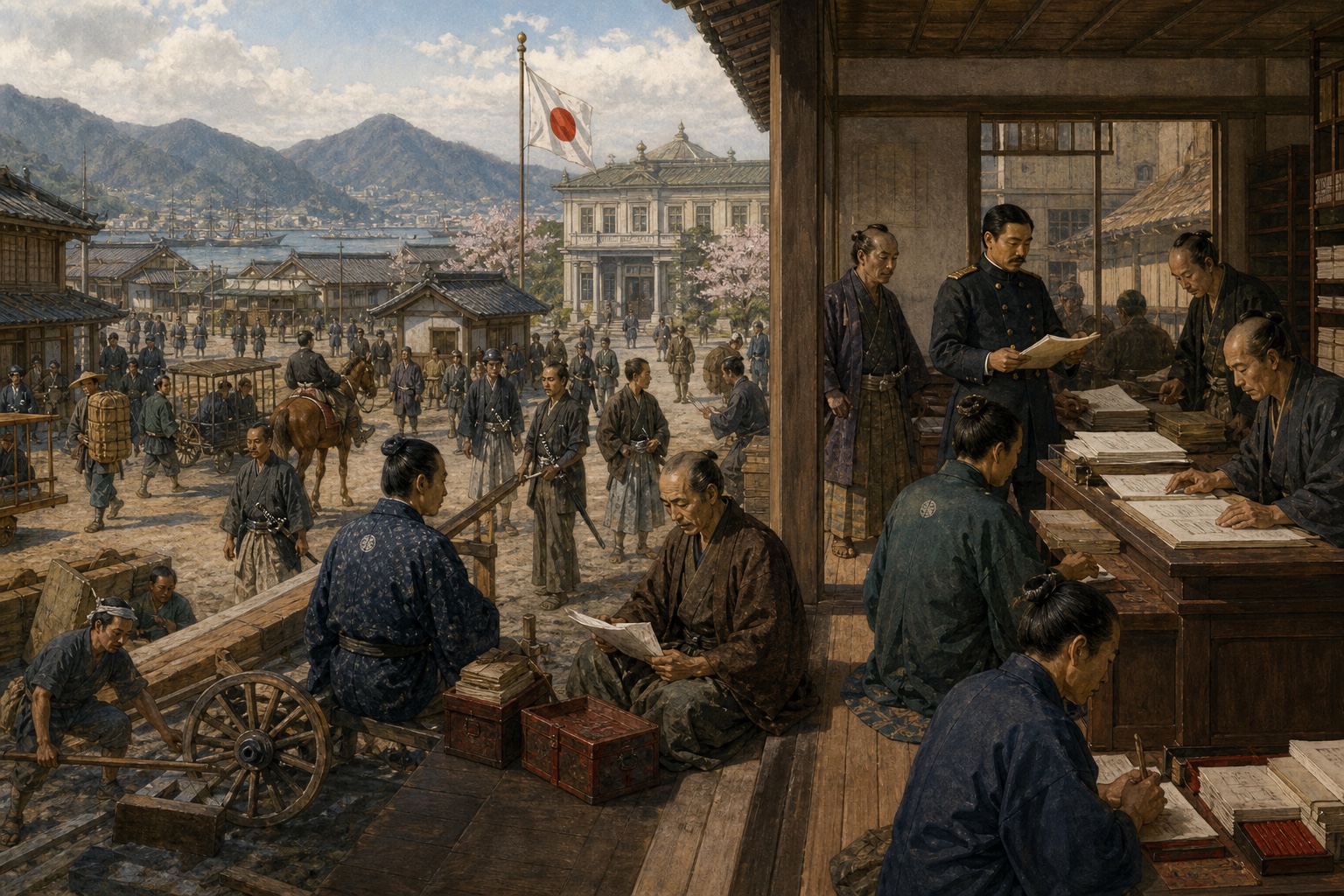
Immediate aftermath — Immediate result: The government replaced domains with centralized taxation, armed forces, and administration while remaking status and former samurai privilege. Resistance to conscription and taxes and samurai revolts met coercion. Ainu assimilation in Hokkaido, the incorporation of Ryukyu, and later expansion into Taiwan and Korea show state-building developing with internal coercion and empire.
c. 1878
Long-term significance
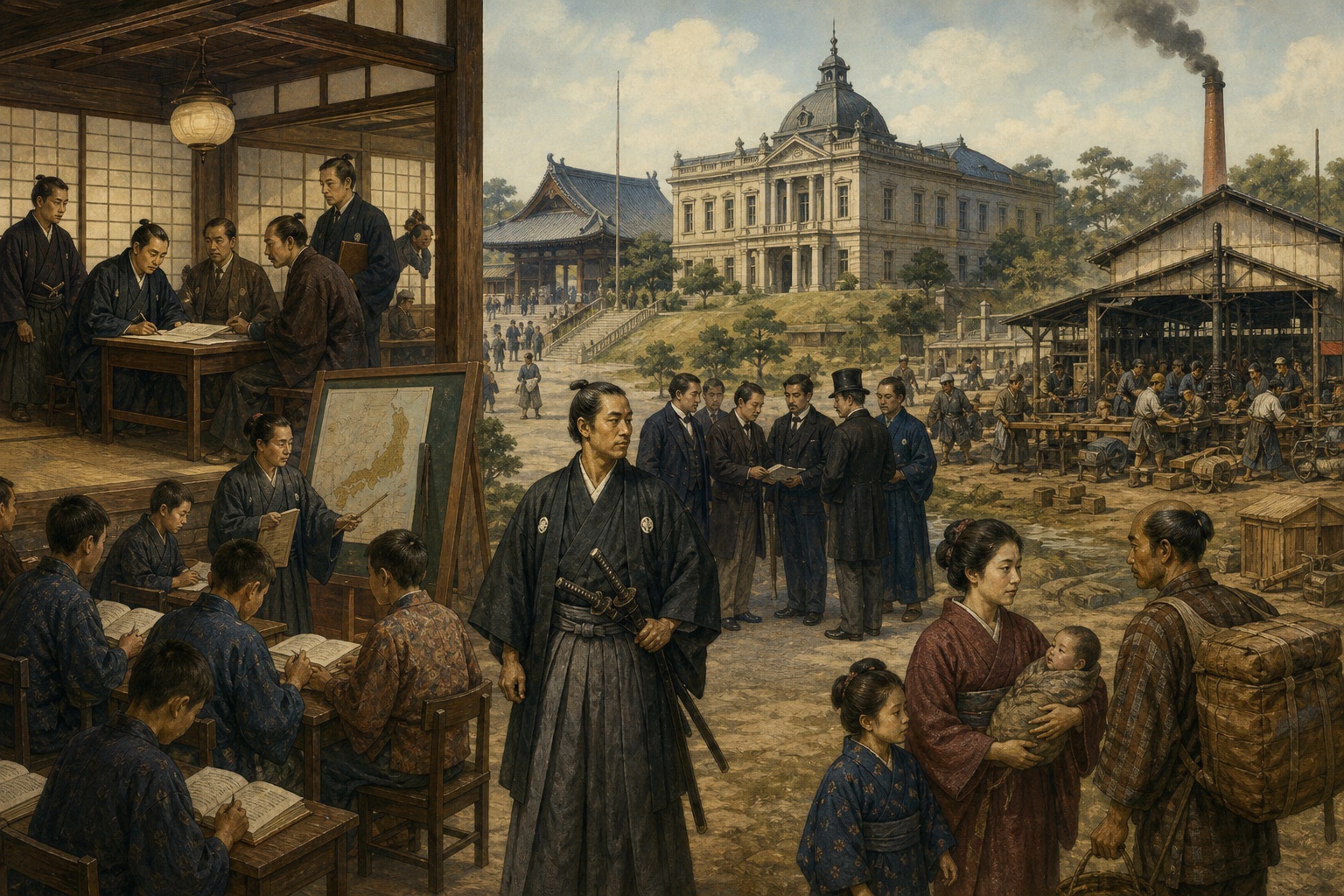
Long-term significance — Long-term significance: The political transfer of 1868 must be distinguished from the decades of reform that followed. A state built partly in response to the coercive order exposed by the Opium War later exercised imperial pressure itself. Its institutions and power served as both reference and threat to late-Qing reformers and revolutionaries on the road to the Xinhai Revolution.


Sources
- Meiji Restoration — Kp 1750 1919 (Afe)afe.easia.columbia.eduThis Afe resource supports the chronology, setting, and course of Meiji Restoration.
- Meiji Restoration — Charter Oath 1868 (Afe)afe.easia.columbia.eduThis Afe resource supports the chronology, setting, and course of Meiji Restoration.
- Meiji Restoration — E (Ndl)ndl.go.jpThis Ndl resource supports the chronology, setting, and course of Meiji Restoration.