Treaty of Tordesillas
1494
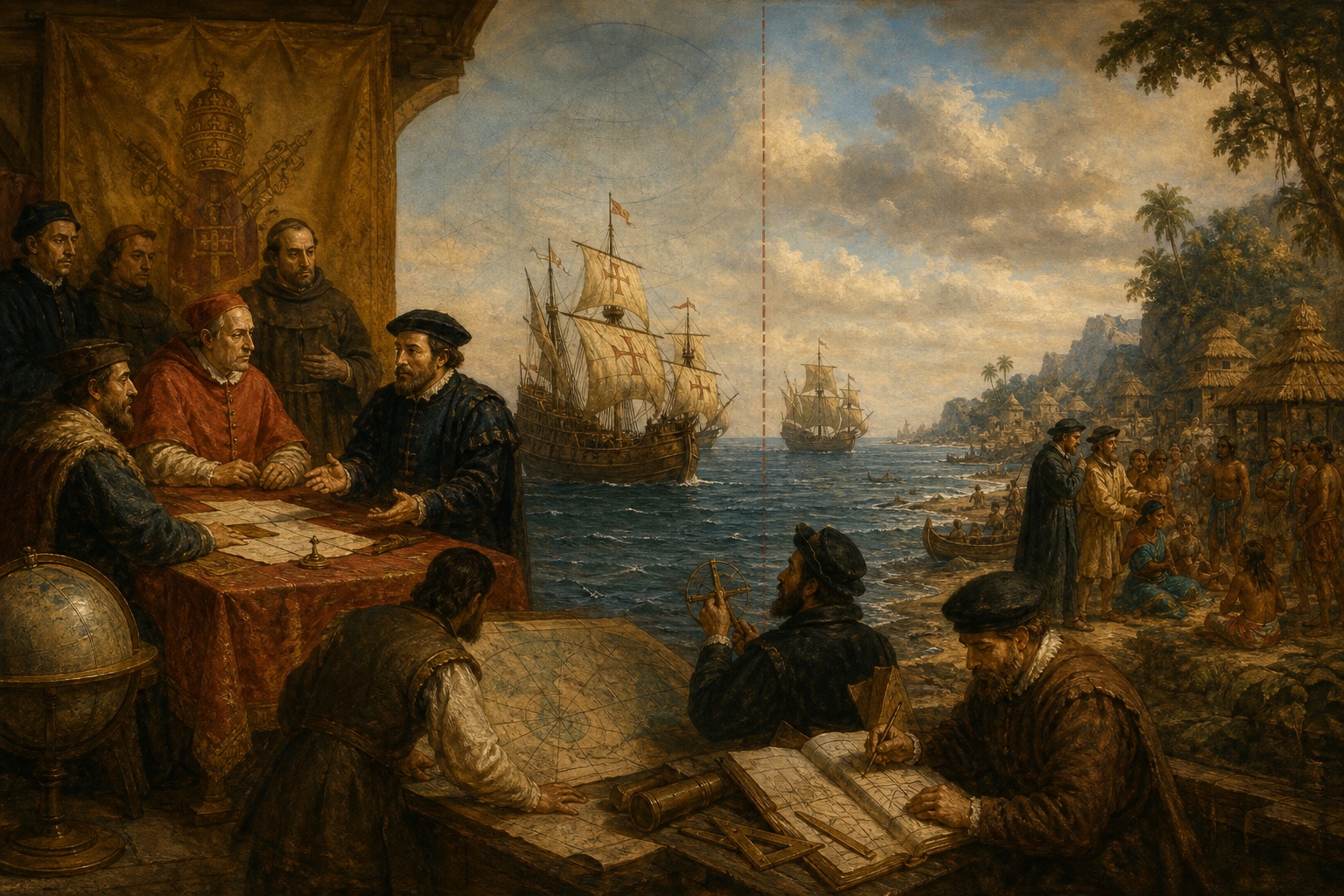
The 1494 diplomatic agreement by which the crowns of Castile and Portugal moved their Atlantic line of demarcation to 370 leagues west of the Cape Verde Islands.

- Period
- 1494
- Kind
- Treaty
- Regions
- Europe, Latin America
- Keywords
- Treaty of Tordesillas · background · course · outcome
Follow the story · Four stages
Background
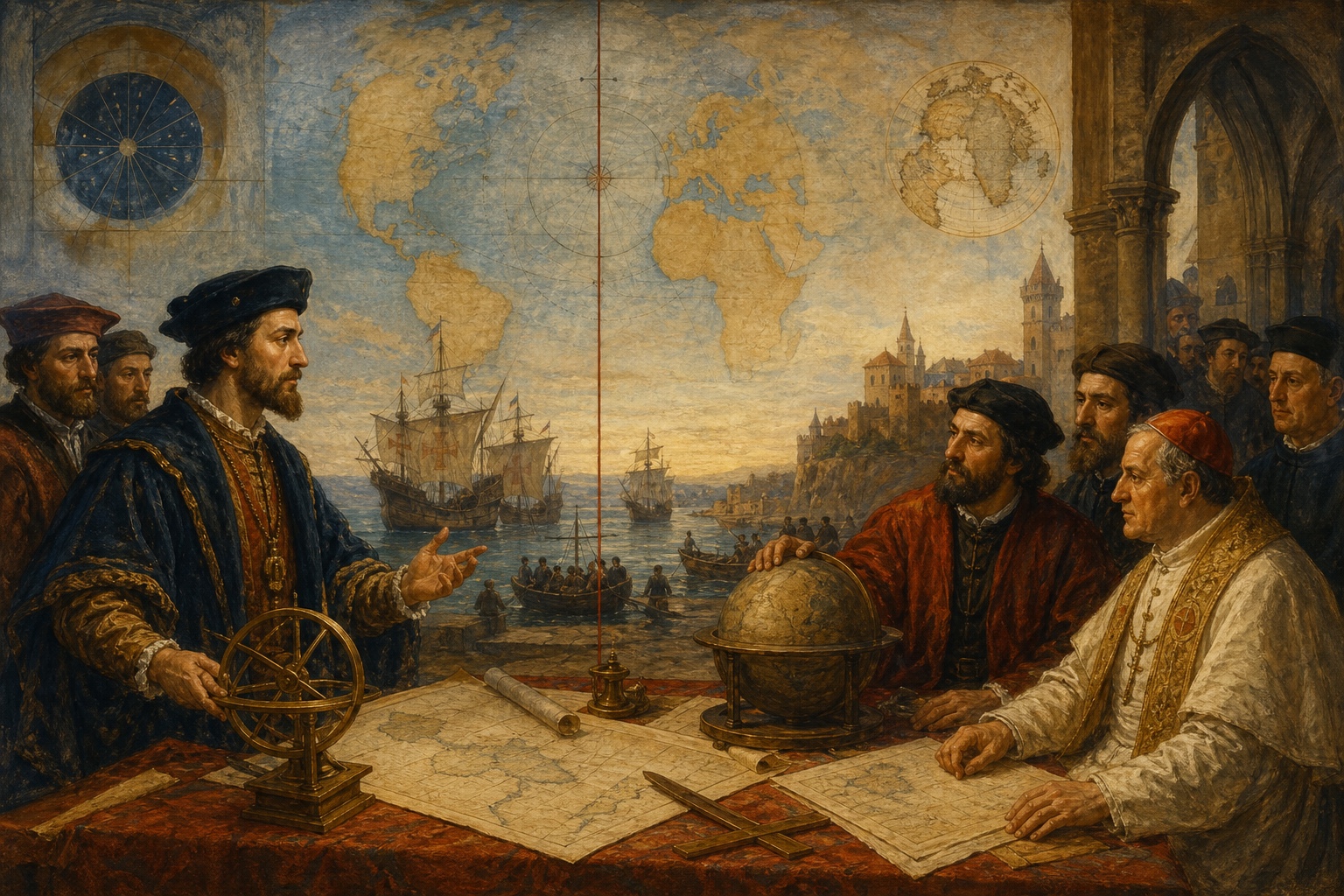
Portuguese Atlantic expansion and Columbus's 1492 voyage sharpened a dispute over navigation, trade, and claims to lands unknown to the two Iberian courts. After papal bulls favored Castile, Portuguese and Castilian envoys negotiated a new boundary at Tordesillas.
- Portuguese Atlantic expansion and Columbus's 1492 voyage sharpened a dispute over navigation, trade, and claims to lands unknown to the two Iberian courts.
- After papal bulls favored Castile, Portuguese and Castilian envoys negotiated a new boundary at Tordesillas.
- Core event: The 1494 diplomatic agreement by which the crowns of Castile and Portugal moved their Atlantic line of demarcation to 370 leagues west of the Cape Verde Islands.
Course
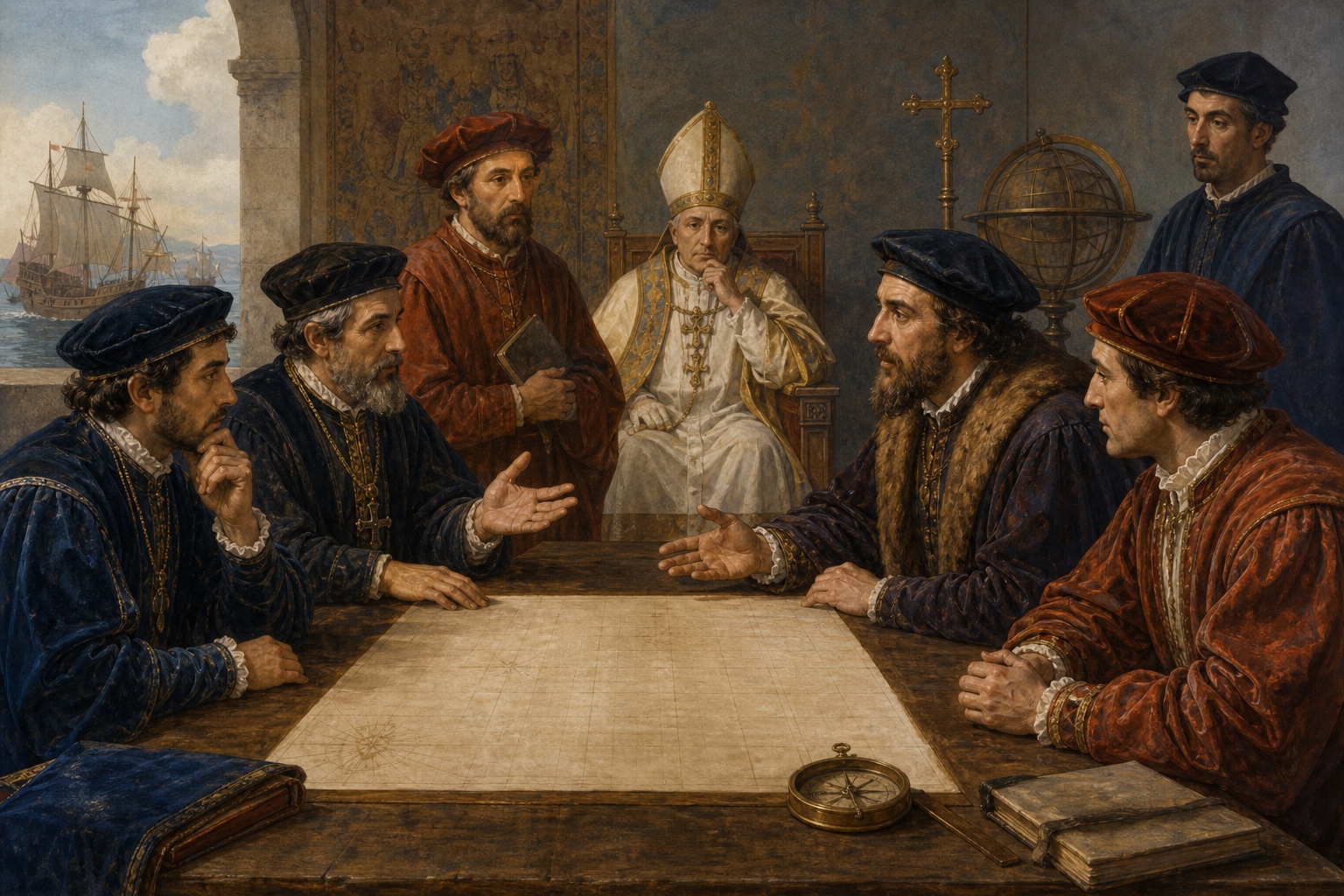
Representatives signed the treaty on 7 June 1494. It assigned newly claimed lands east of the line to Portugal and those west of it to Castile, although contemporary navigators could not fix the meridian precisely and the agreement did not settle an opposite line in Asia.
- Representatives signed the treaty on 7 June 1494.
- It assigned newly claimed lands east of the line to Portugal and those west of it to Castile, although contemporary navigators could not fix the meridian precisely and the agreement did not settle an opposite line in Asia.
- Conditions behind the action: Portuguese Atlantic expansion and Columbus's 1492 voyage sharpened a dispute over navigation, trade, and claims to lands unknown to the two Iberian courts. After papal bulls favored Castile, Portuguese and Castilian envoys negotiated a new boundary at Tordesillas.
Outcome
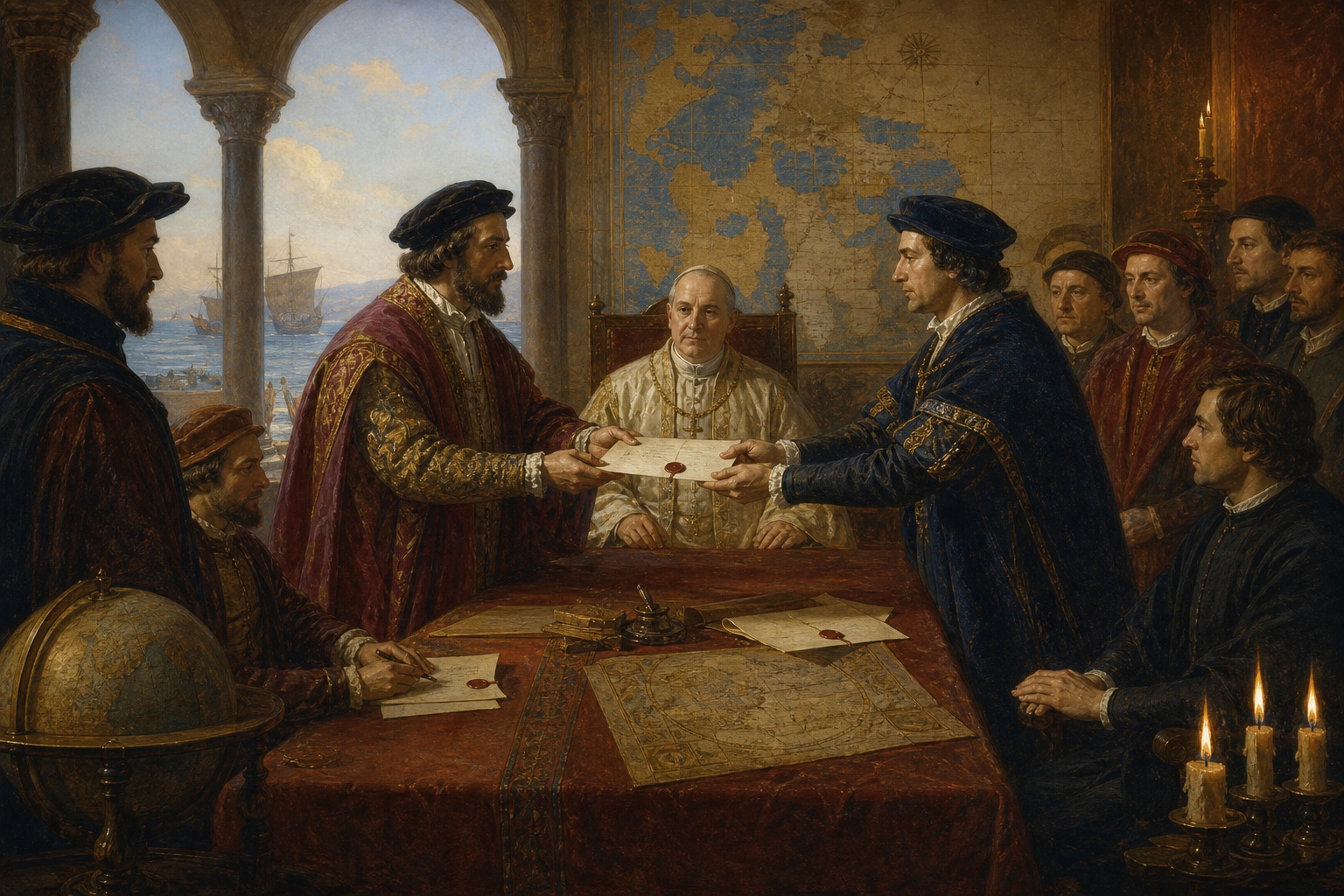
The settlement gave the two crowns a diplomatic framework for rivalry and helped place the eastern part of South America within Portugal's sphere, later associated with Brazil. Further disputes produced the Treaty of Zaragoza in 1529, and settlement and conquest repeatedly crossed the paper boundary.
- The settlement gave the two crowns a diplomatic framework for rivalry and helped place the eastern part of South America within Portugal's sphere, later associated with Brazil.
- Further disputes produced the Treaty of Zaragoza in 1529, and settlement and conquest repeatedly crossed the paper boundary.
- Process producing the result: Representatives signed the treaty on 7 June 1494. It assigned newly claimed lands east of the line to Portugal and those west of it to Castile, although contemporary navigators could not fix the meridian precisely and the agreement did not settle an opposite line in Asia.
Historical significance
Tordesillas divided Spanish and Portuguese claims; it did not allocate French Saint-Domingue. French possession of western Hispaniola followed the 1697 Treaty of Ryswick. Its link to the Haitian Revolution is structural rather than direct: Haiti ruptured the longer Atlantic colonial order by defeating French colonial slavery.
- Tordesillas divided Spanish and Portuguese claims; it did not allocate French Saint-Domingue.
- French possession of western Hispaniola followed the 1697 Treaty of Ryswick.
- Its link to the Haitian Revolution is structural rather than direct: Haiti ruptured the longer Atlantic colonial order by defeating French colonial slavery.


Related figures
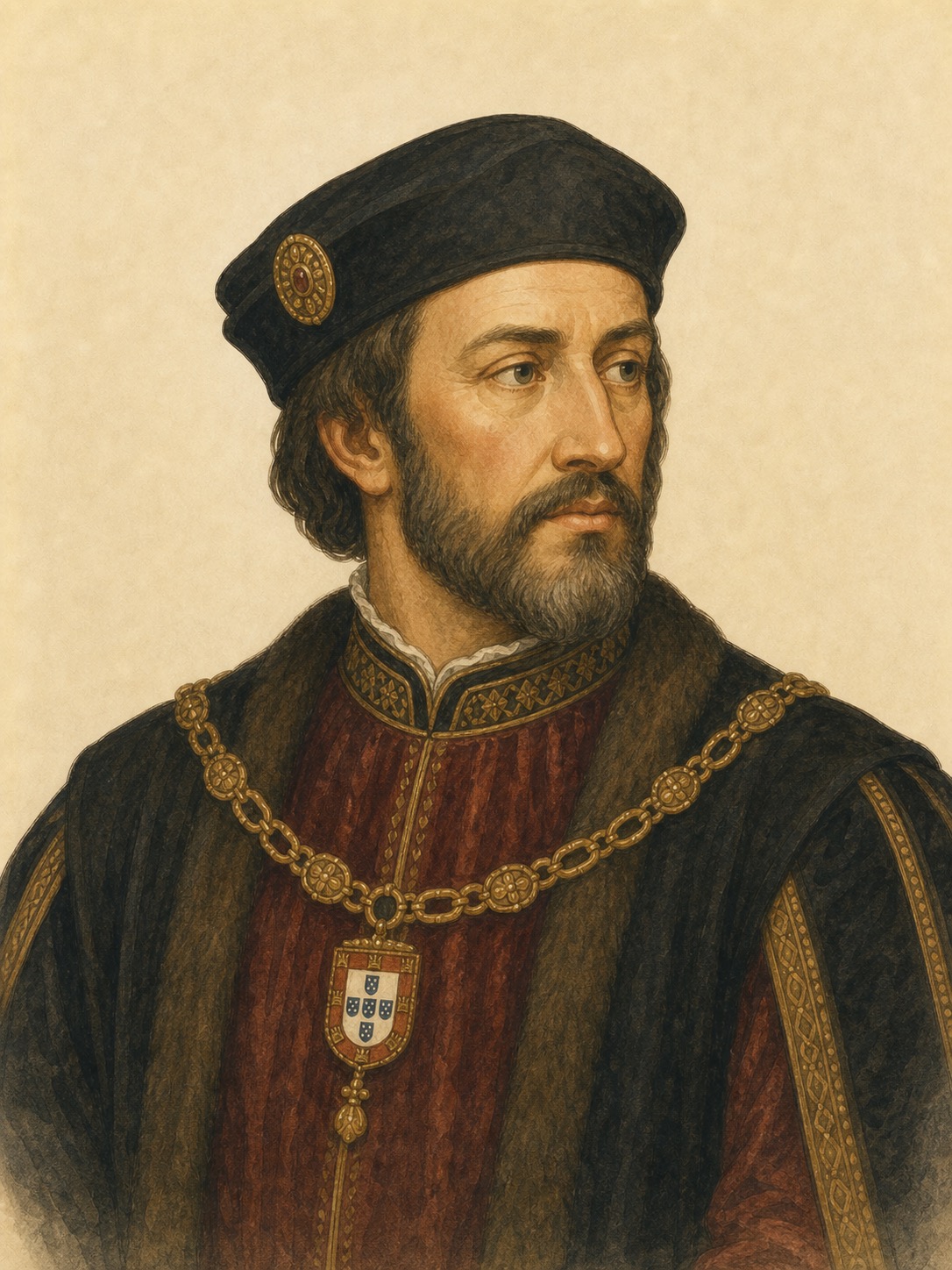
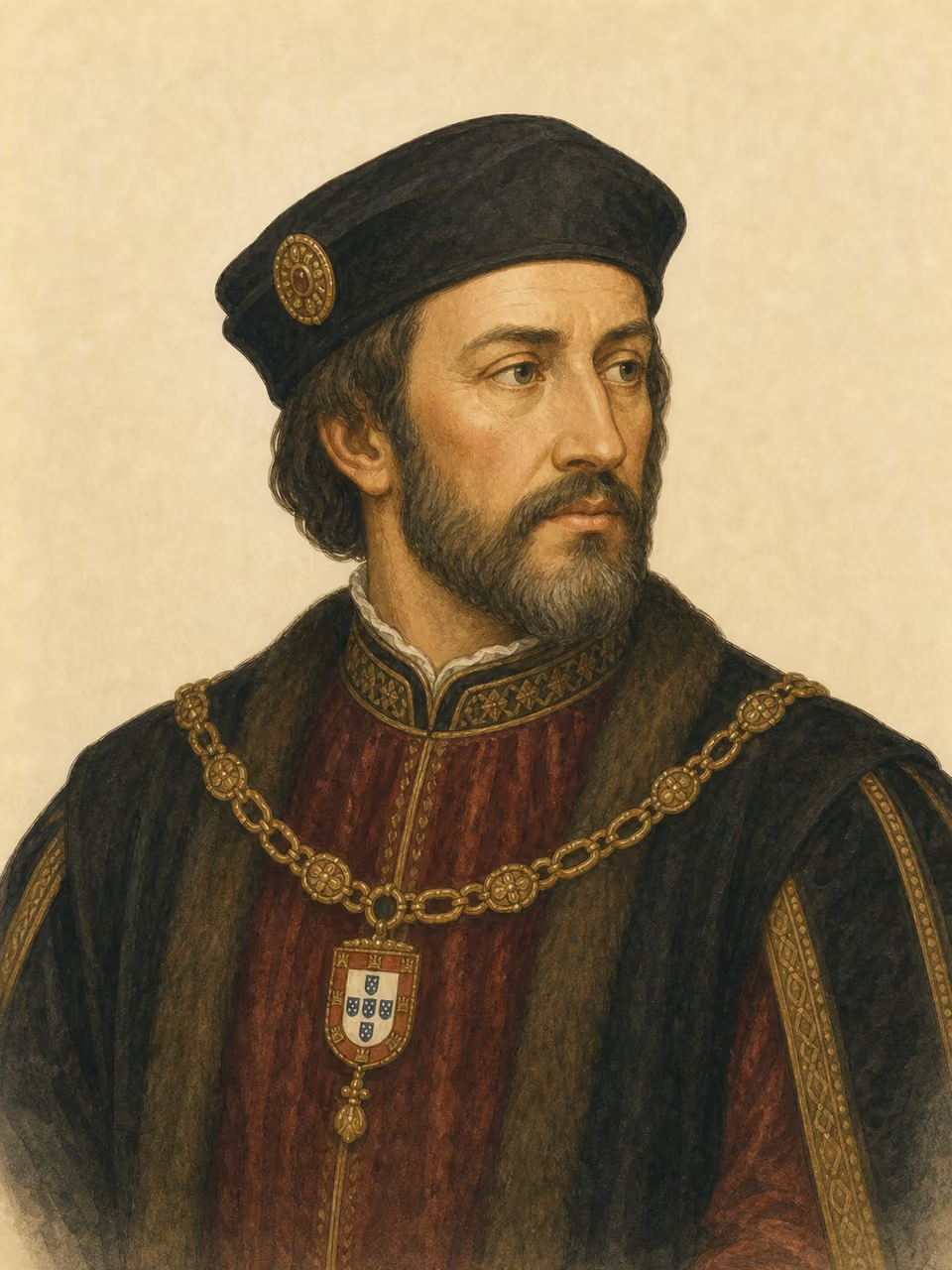
John II of Portugal
historical figure in context
Portuguese king of the Age of Exploration. He backed exploration along the African coast and the search for a route to India and took part in negotiations with Spain over overseas division. He represents the stage before the formation of a maritime empire.
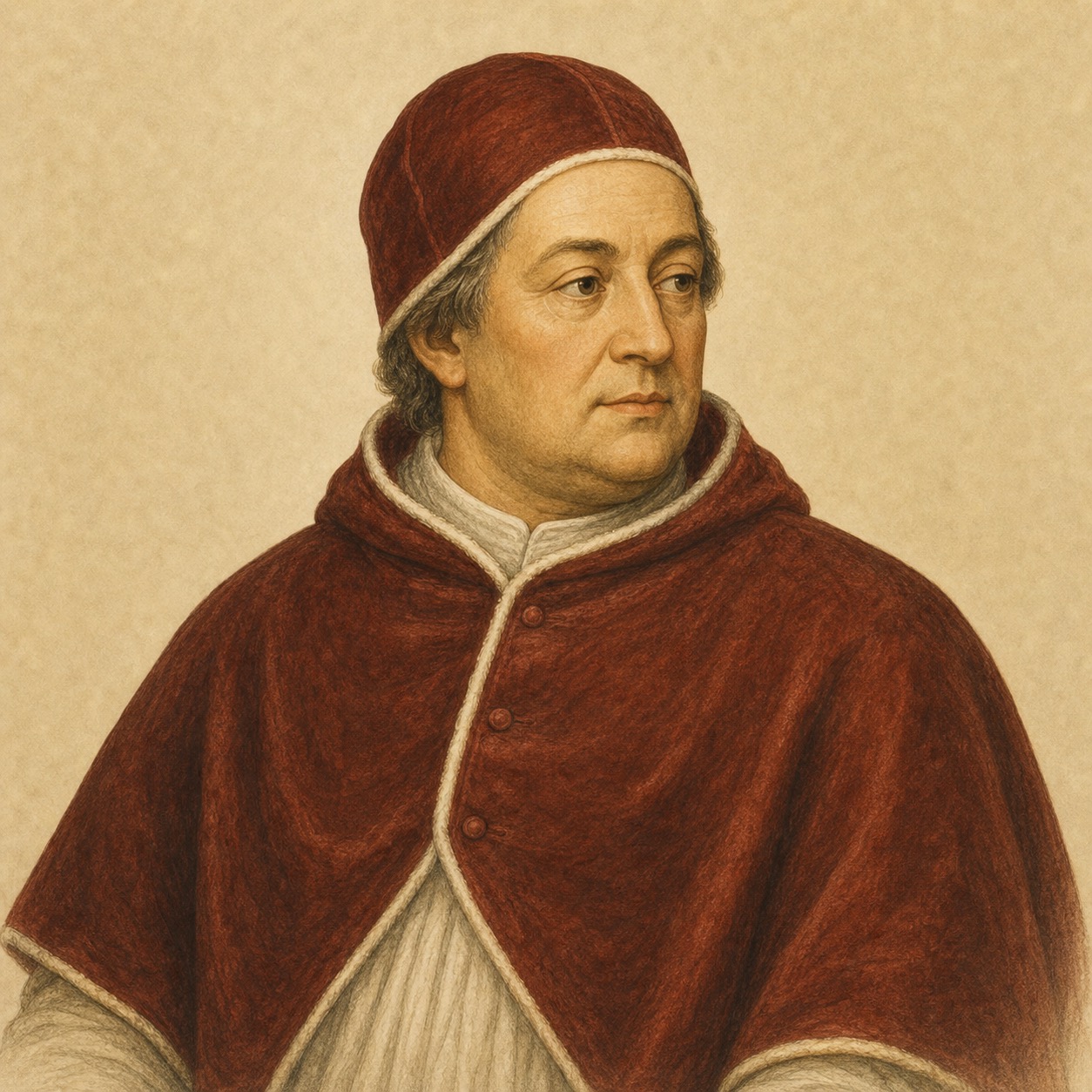
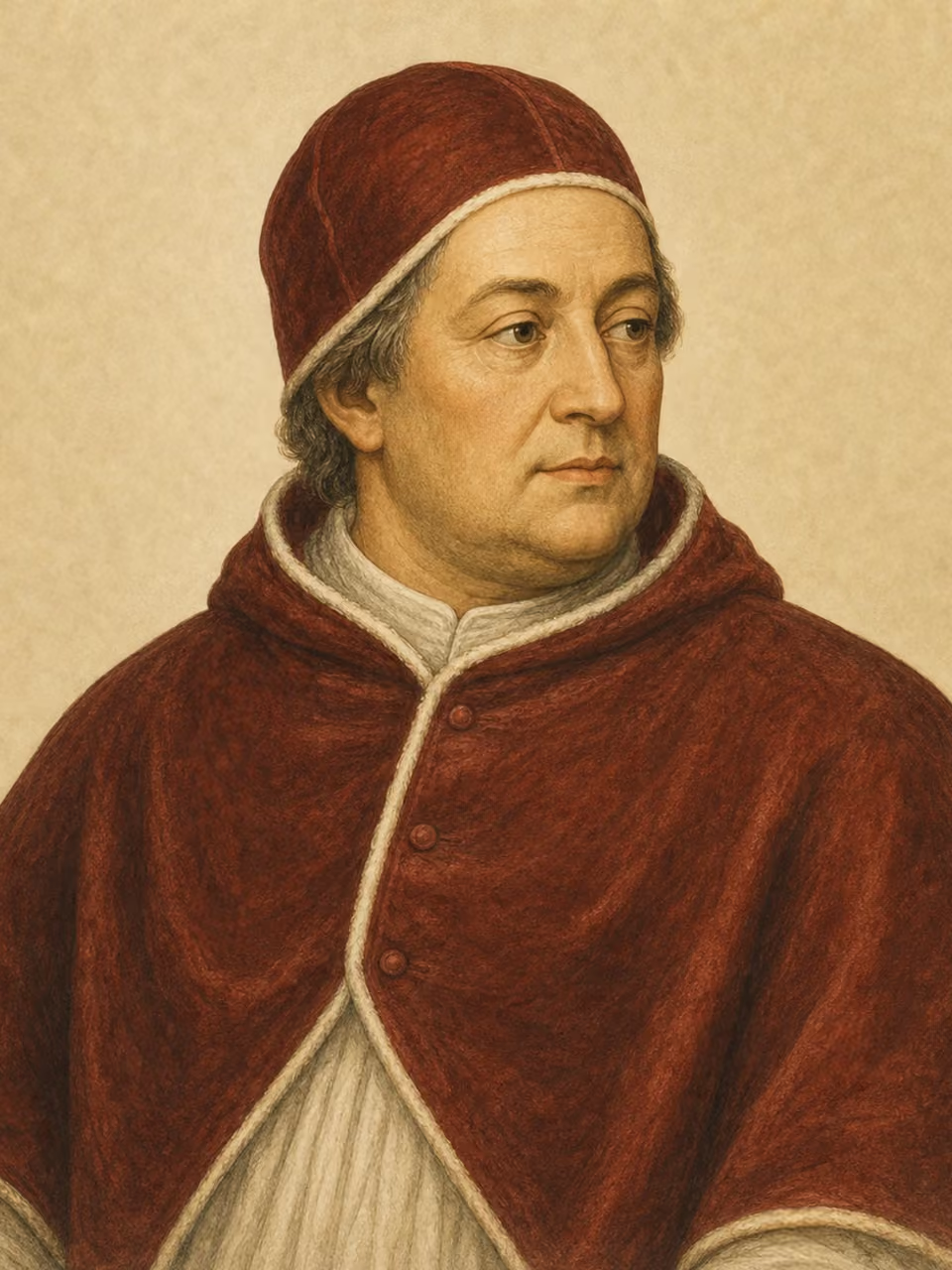
Alexander VI
historical figure in context
Pope during the Renaissance. A member of the Borgia family, he was deeply involved in papal politics and conflicts between various Italian powers. He is a person who considers the connection between religious authority and secular politics.
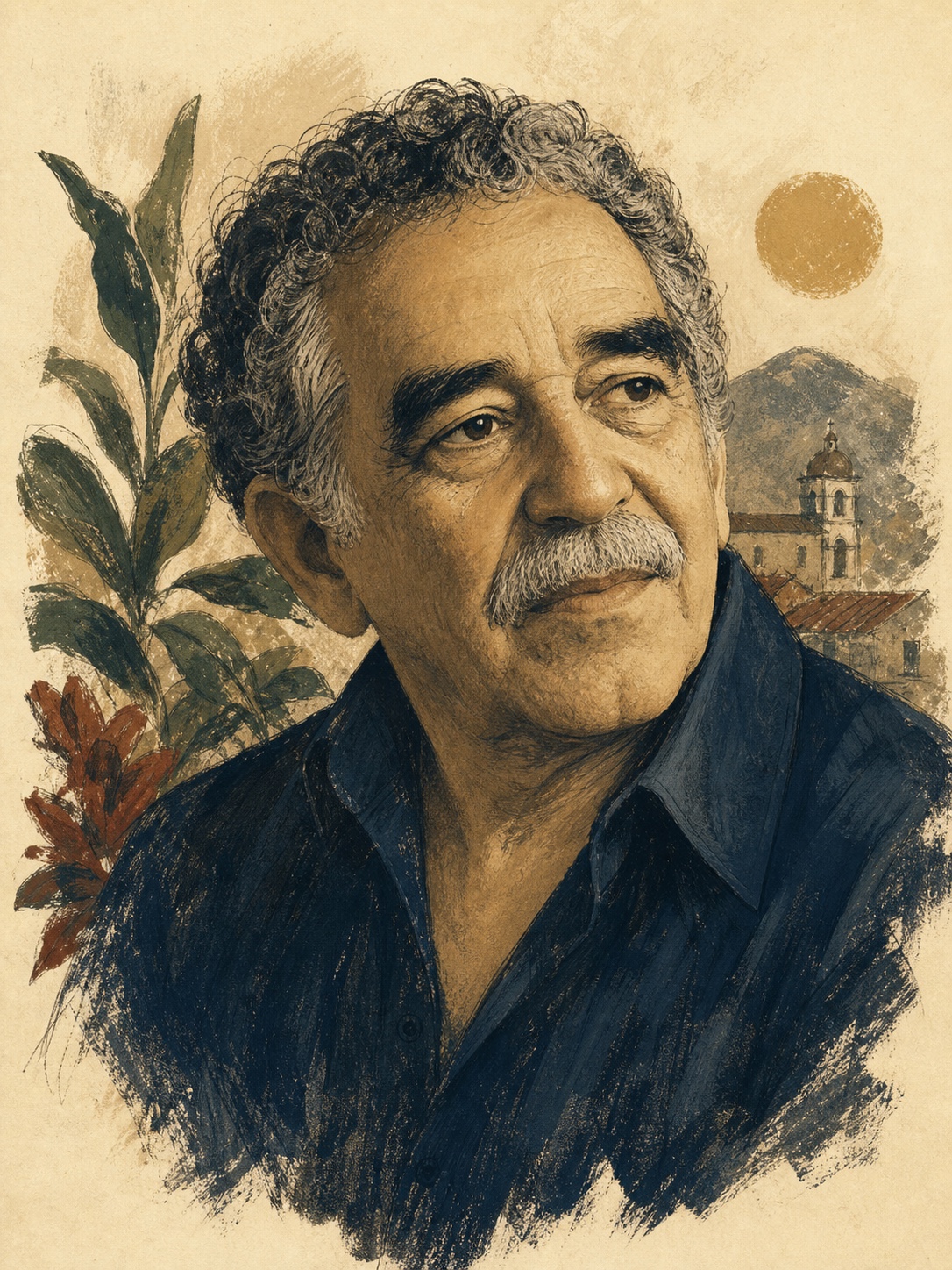
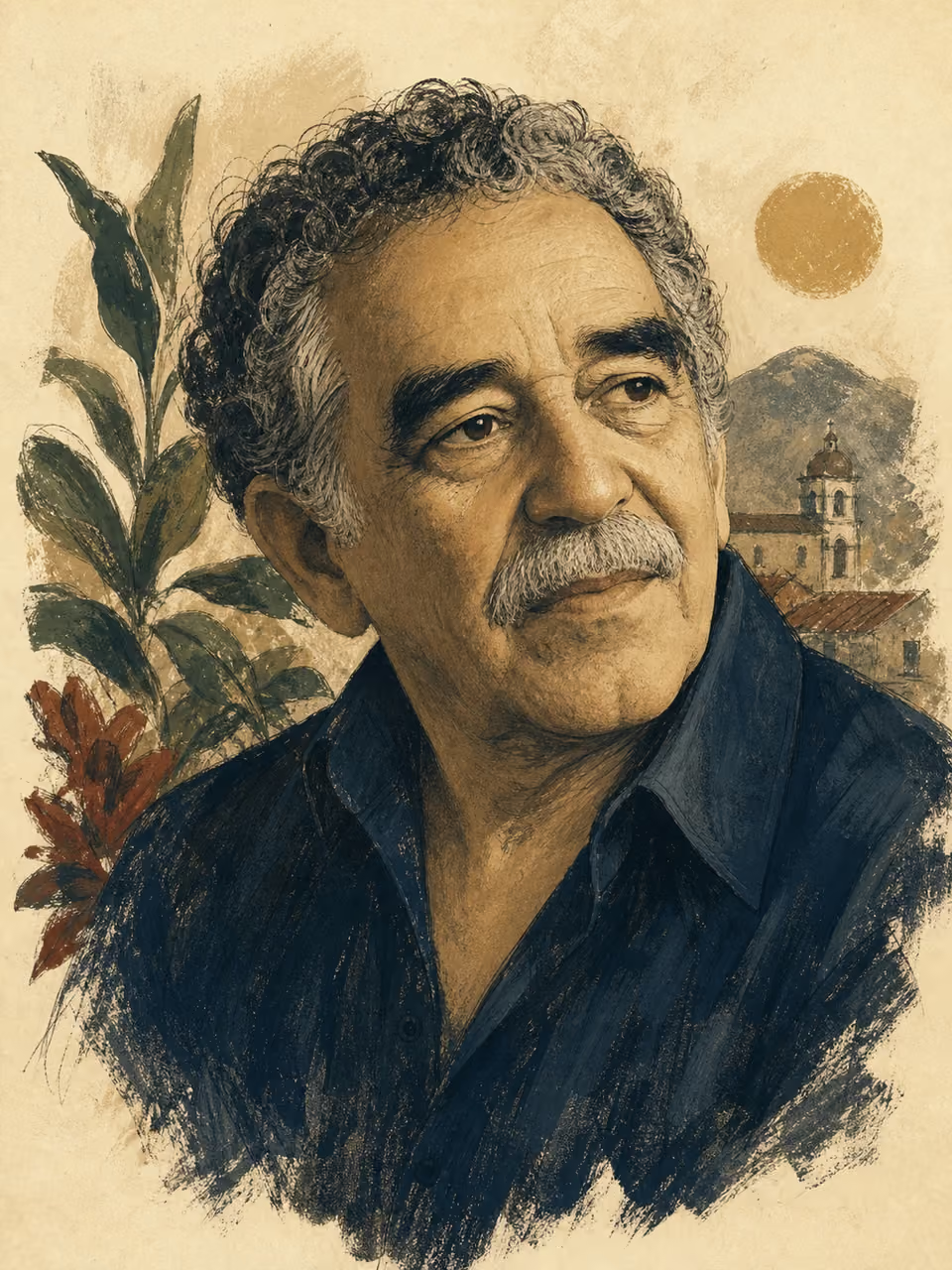
Gabriel García Márquez
historical figure in context
When One Hundred Years of Solitude appeared, Gabriel García Márquez compressed family saga, civil conflict, and mythical time into the town of Macondo. His training as a journalist gave that seemingly impossible world the observational density that let the marvelous and the political inhabit the same sentence.
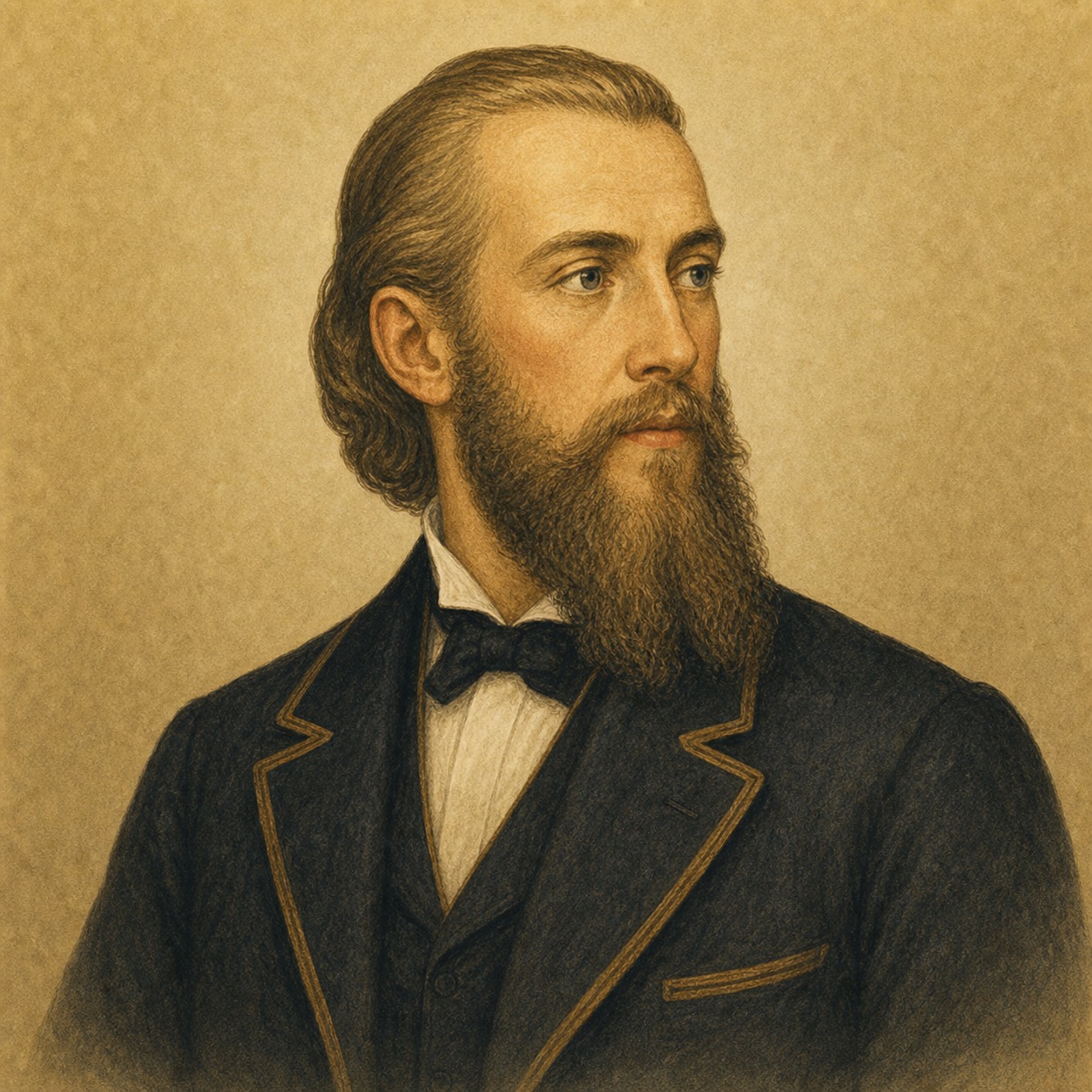
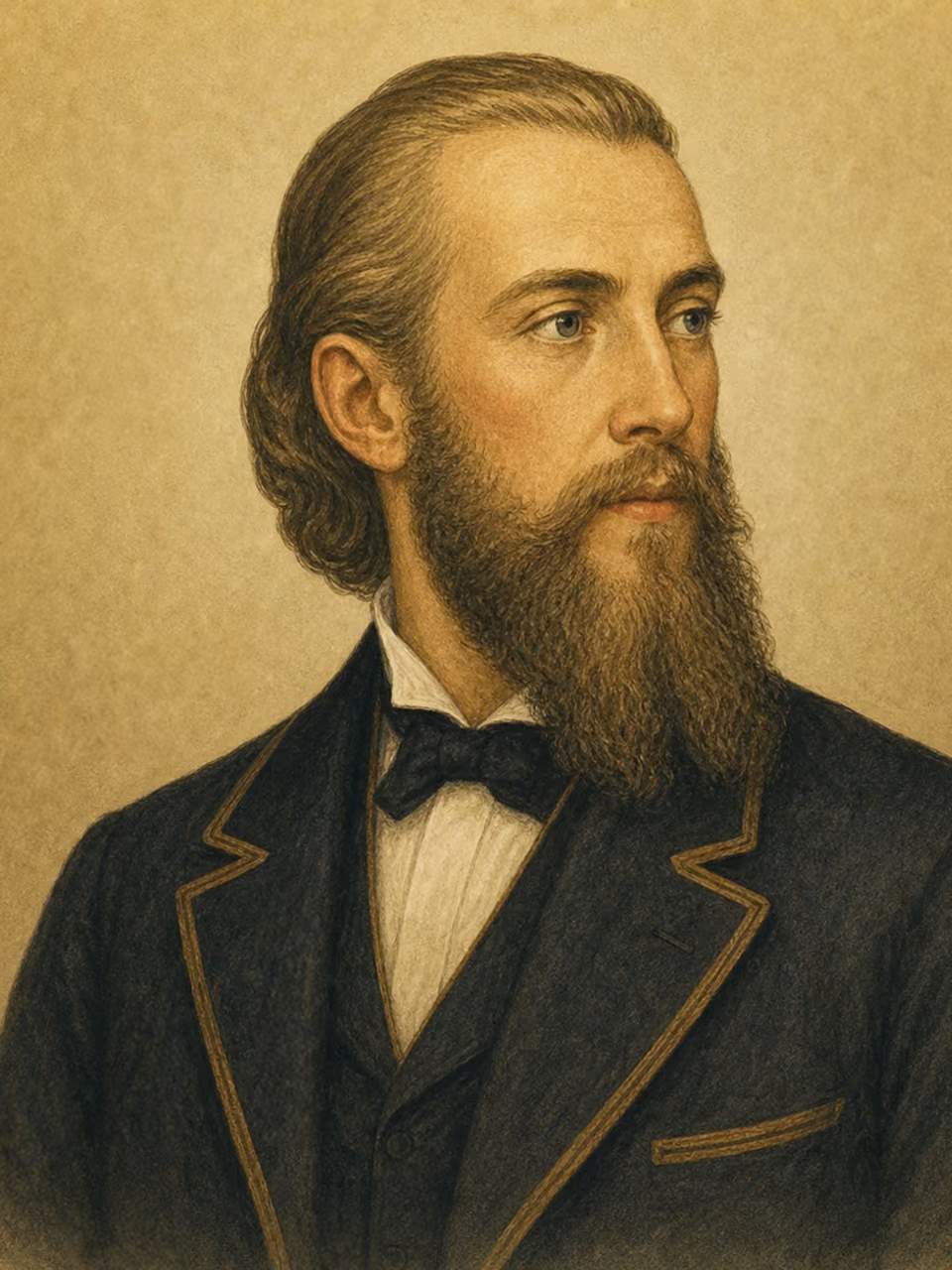
Maximilian I of Mexico
historical figure in context
Emperor of Mexico. With the support of Napoleon III, he became the ruler of Mexico's Second Empire, but was defeated by the republicans and executed. He is a person who thinks about nineteenth-century Latin America and imperialism.
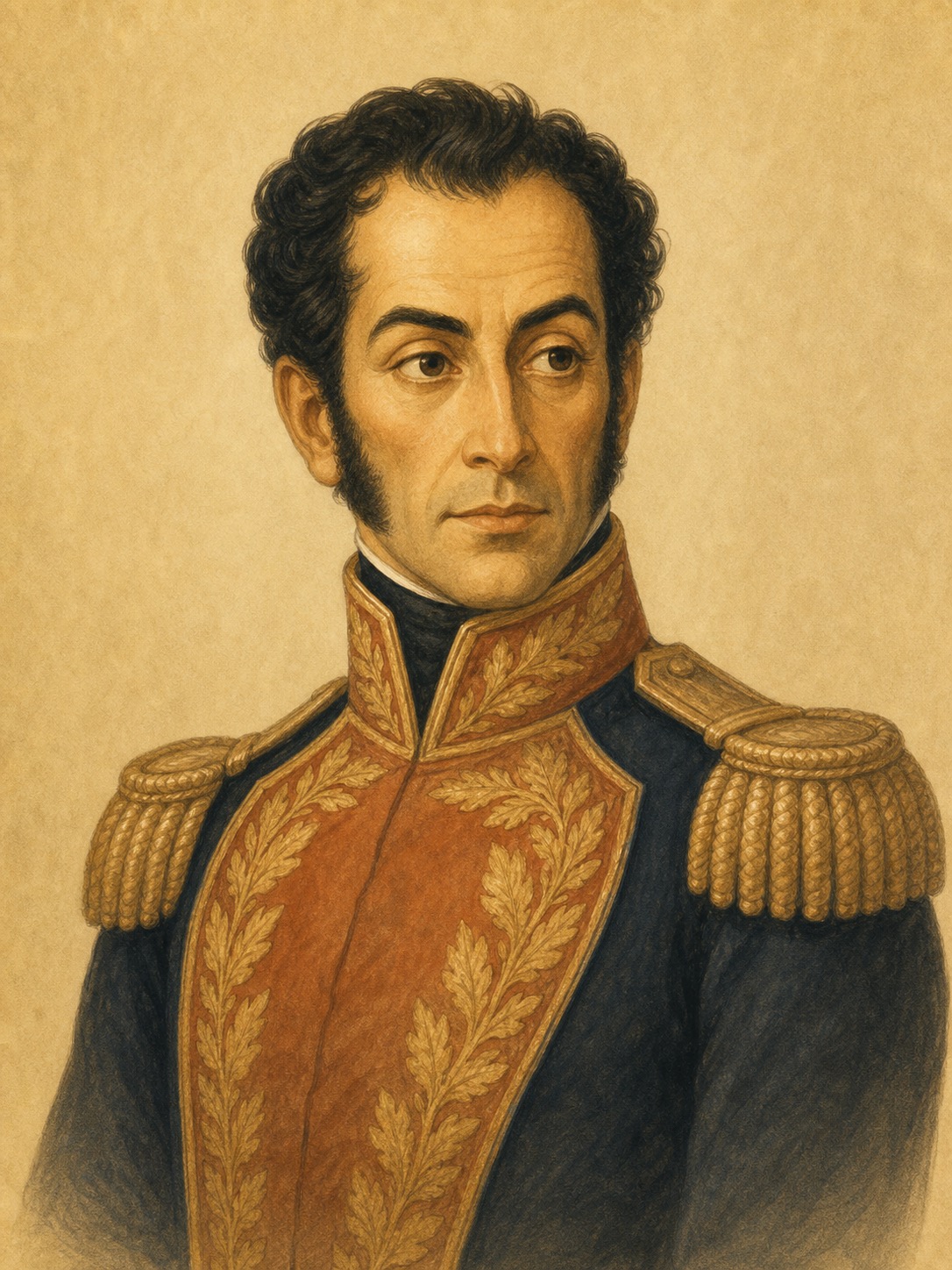
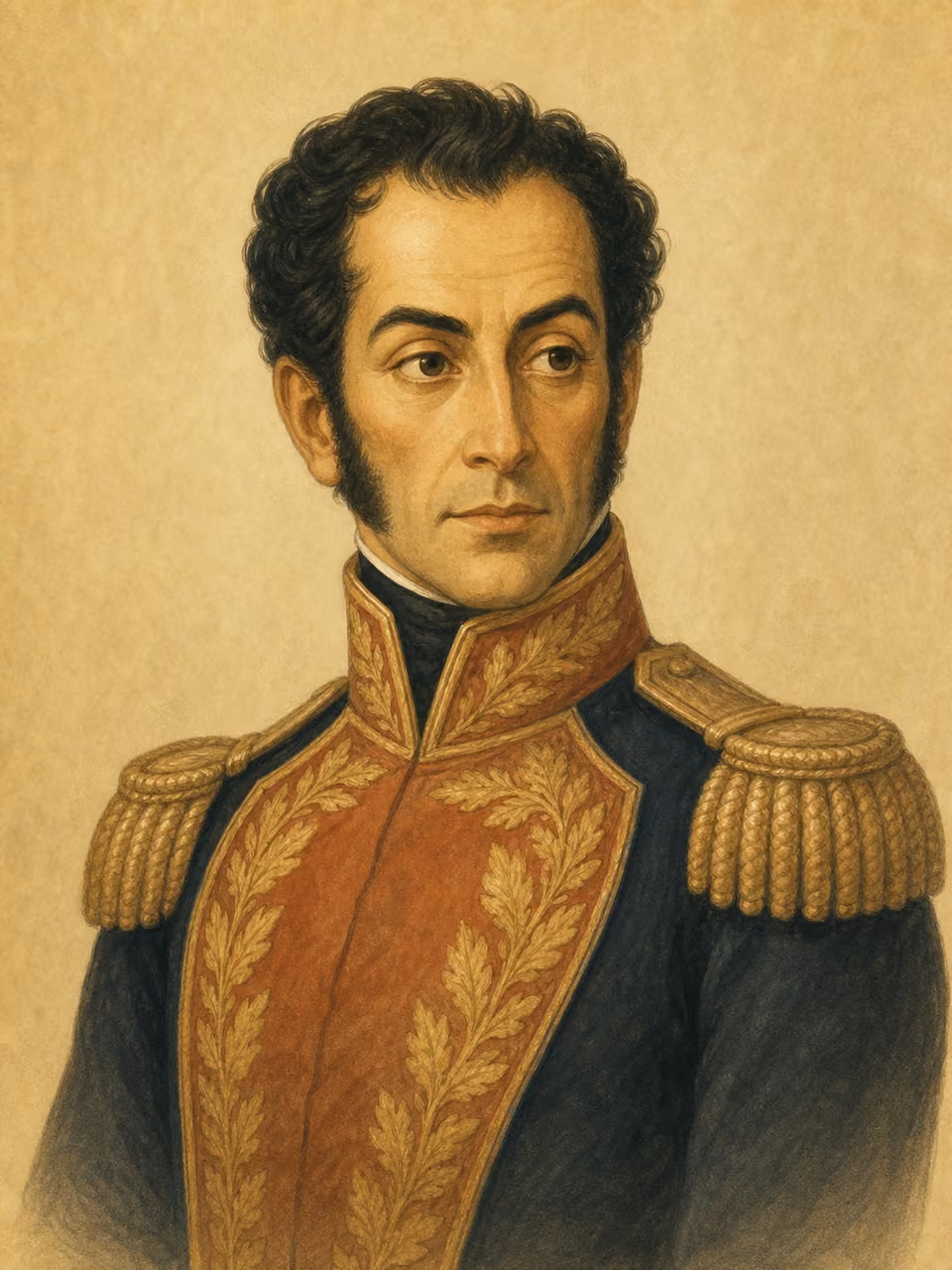
Simon Bolivar
historical figure in context
Through exile, return, and punishing campaigns such as the crossing of the Andes, Bolivar turned independence into a military and political project spanning much of northern South America. Yet victory did not end the story: the struggle to hold Gran Colombia together made the Liberator's career just as much about the fragility of state building as about battlefield triumph.
Related events
1474
Prelude
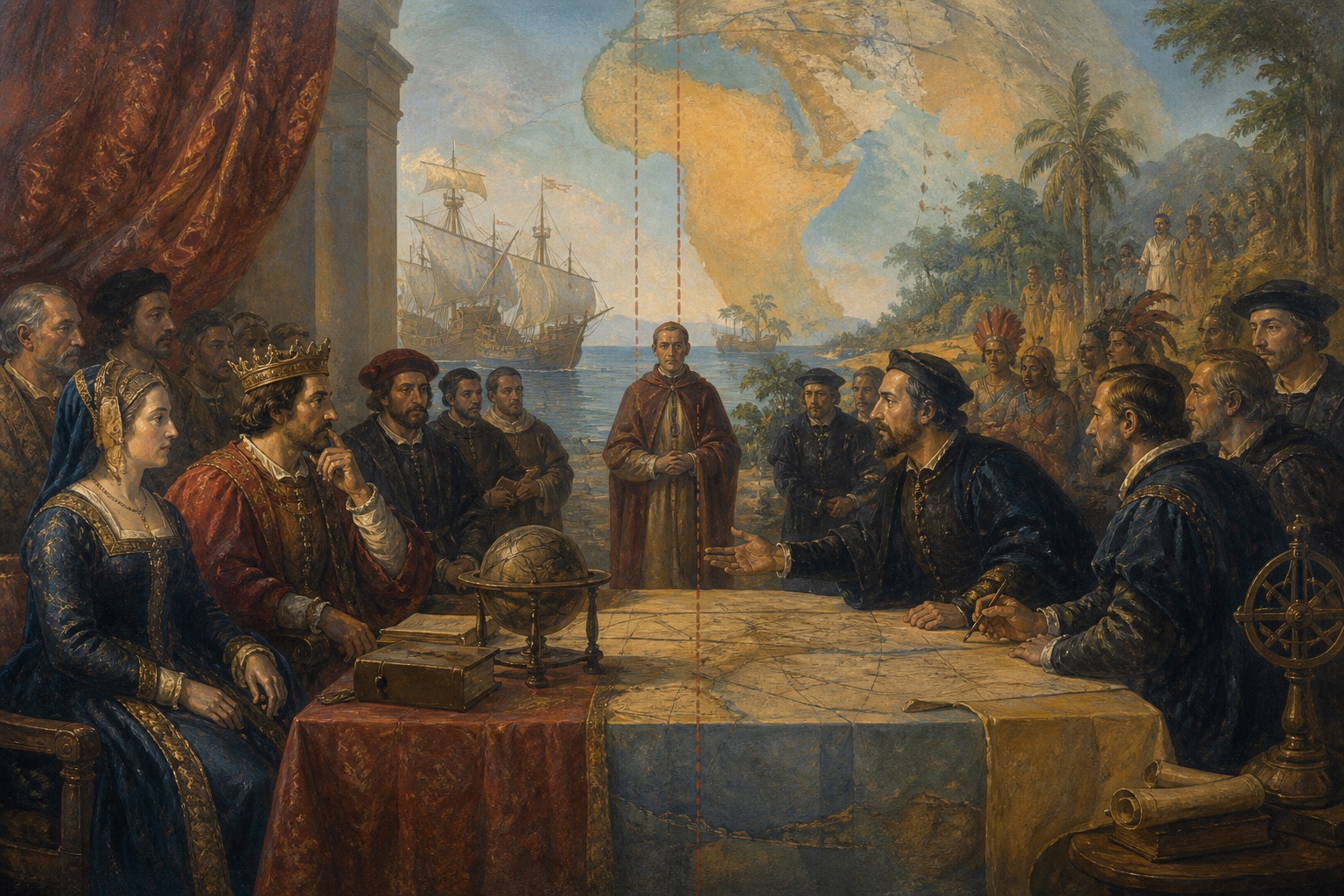
Prelude — Background: Portuguese Atlantic expansion and Columbus's 1492 voyage sharpened a dispute over navigation, trade, and claims to lands unknown to the two Iberian courts. After papal bulls favored Castile, Portuguese and Castilian envoys negotiated a new boundary at Tordesillas.
c. 1493
Rising tension
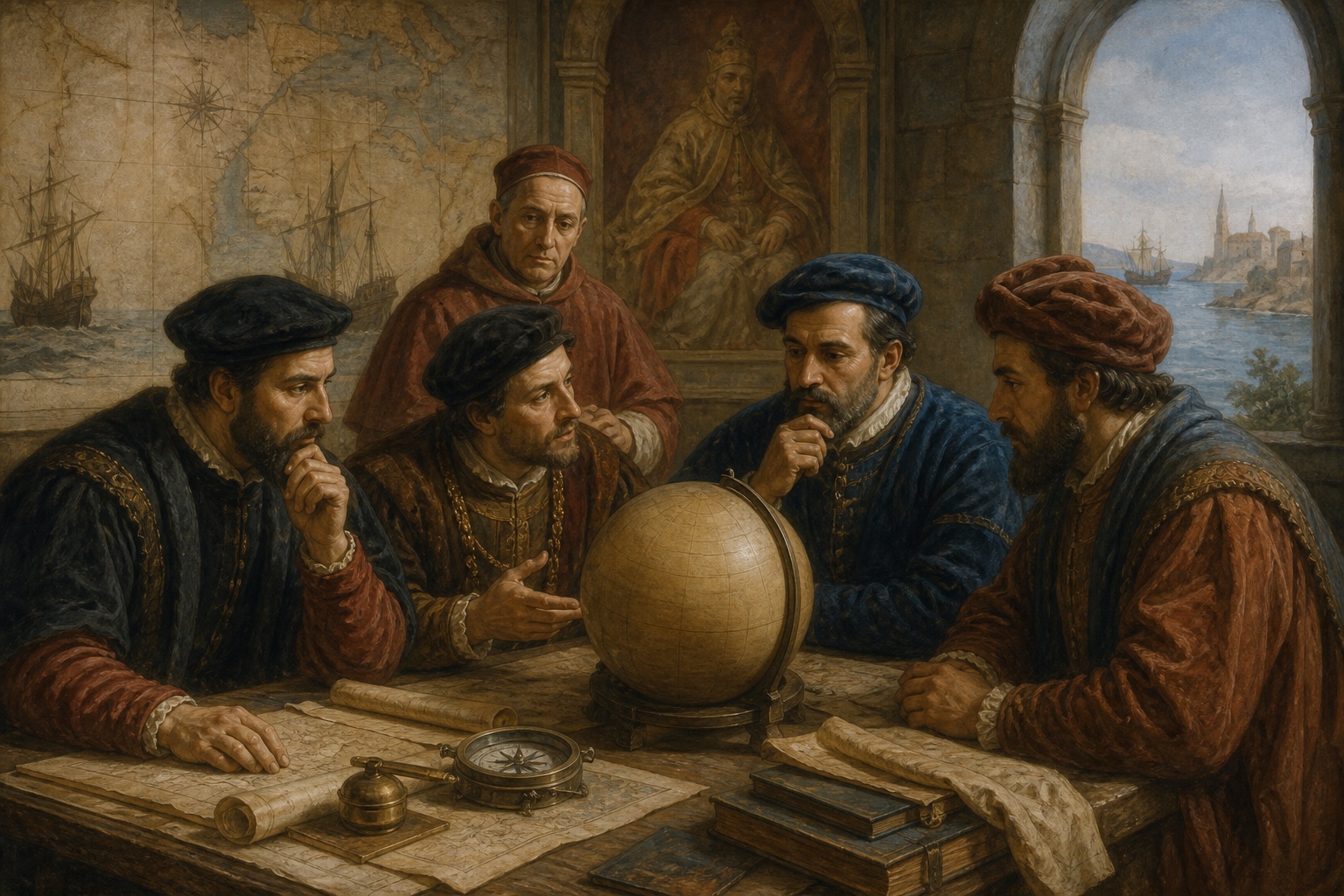
Rising tension — Build-up: Representatives signed the treaty on 7 June 1494. It assigned newly claimed lands east of the line to Portugal and those west of it to Castile, although contemporary navigators could not fix the meridian precisely and the agreement did not settle an opposite line in Asia.
1494
Treaty of Tordesillas
Current event
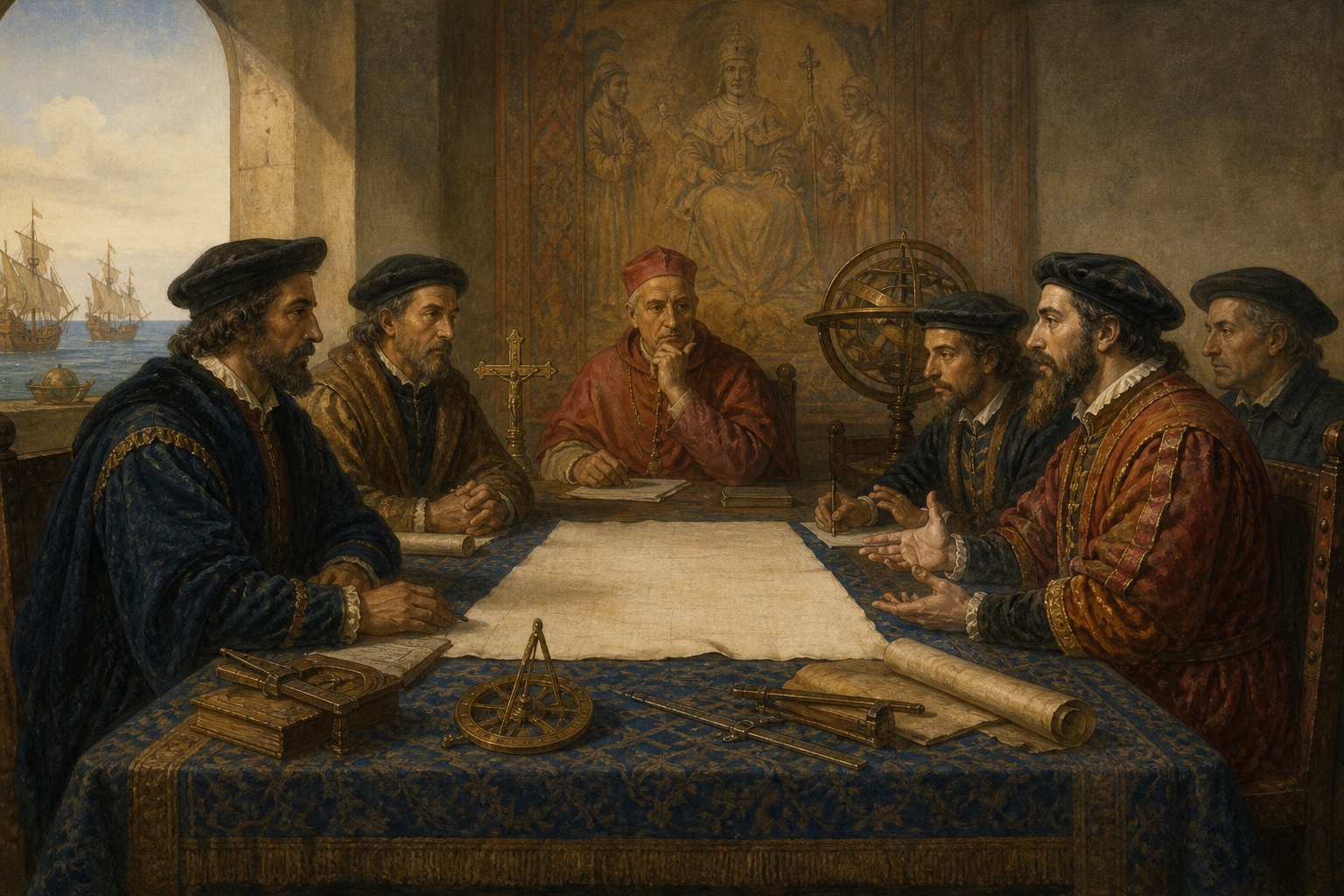
Treaty of Tordesillas — Central transition: The 1494 diplomatic agreement by which the crowns of Castile and Portugal moved their Atlantic line of demarcation to 370 leagues west of the Cape Verde Islands.
c. 1495
Immediate aftermath
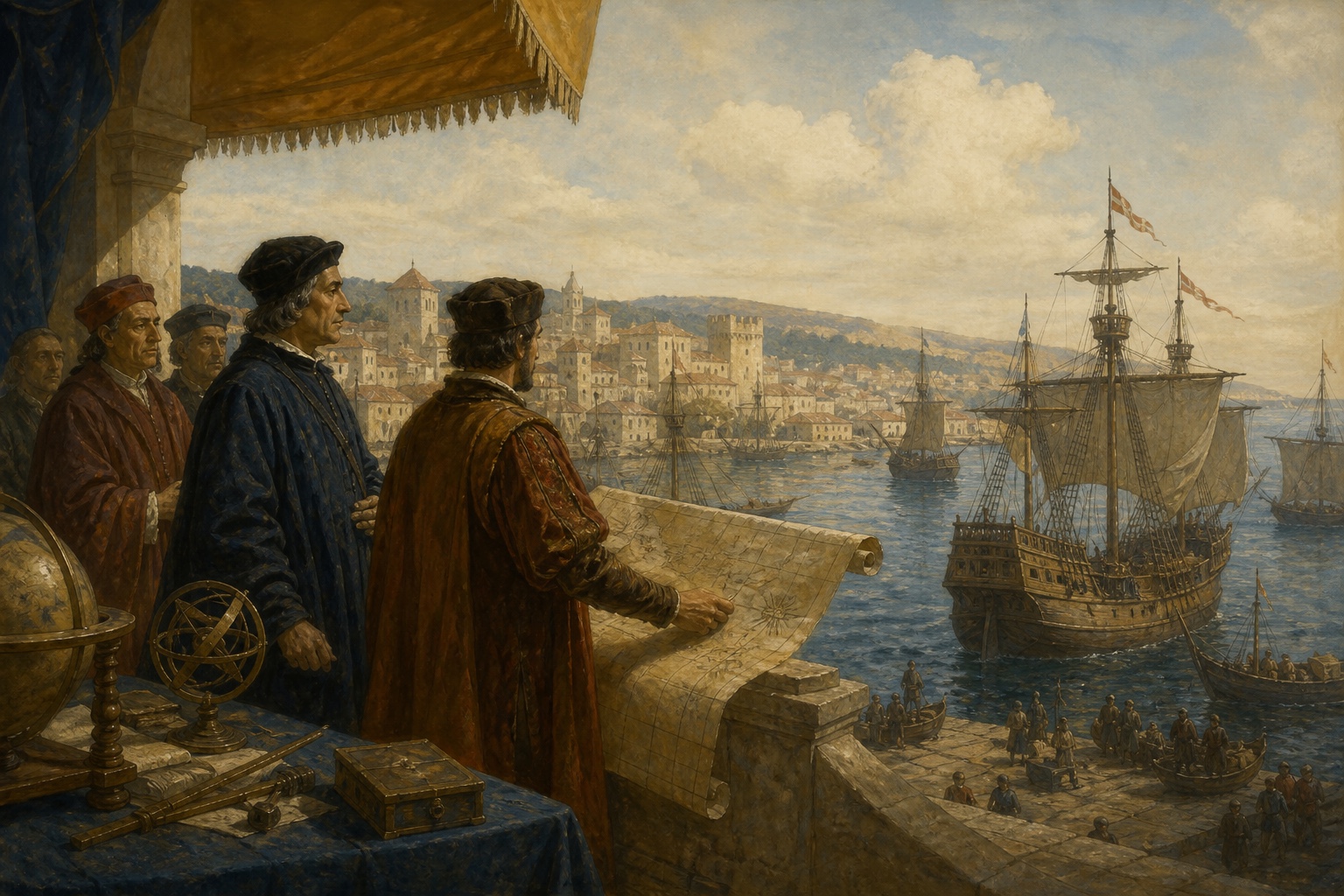
Immediate aftermath — Immediate result: The settlement gave the two crowns a diplomatic framework for rivalry and helped place the eastern part of South America within Portugal's sphere, later associated with Brazil. Further disputes produced the Treaty of Zaragoza in 1529, and settlement and conquest repeatedly crossed the paper boundary.
c. 1504
Long-term significance
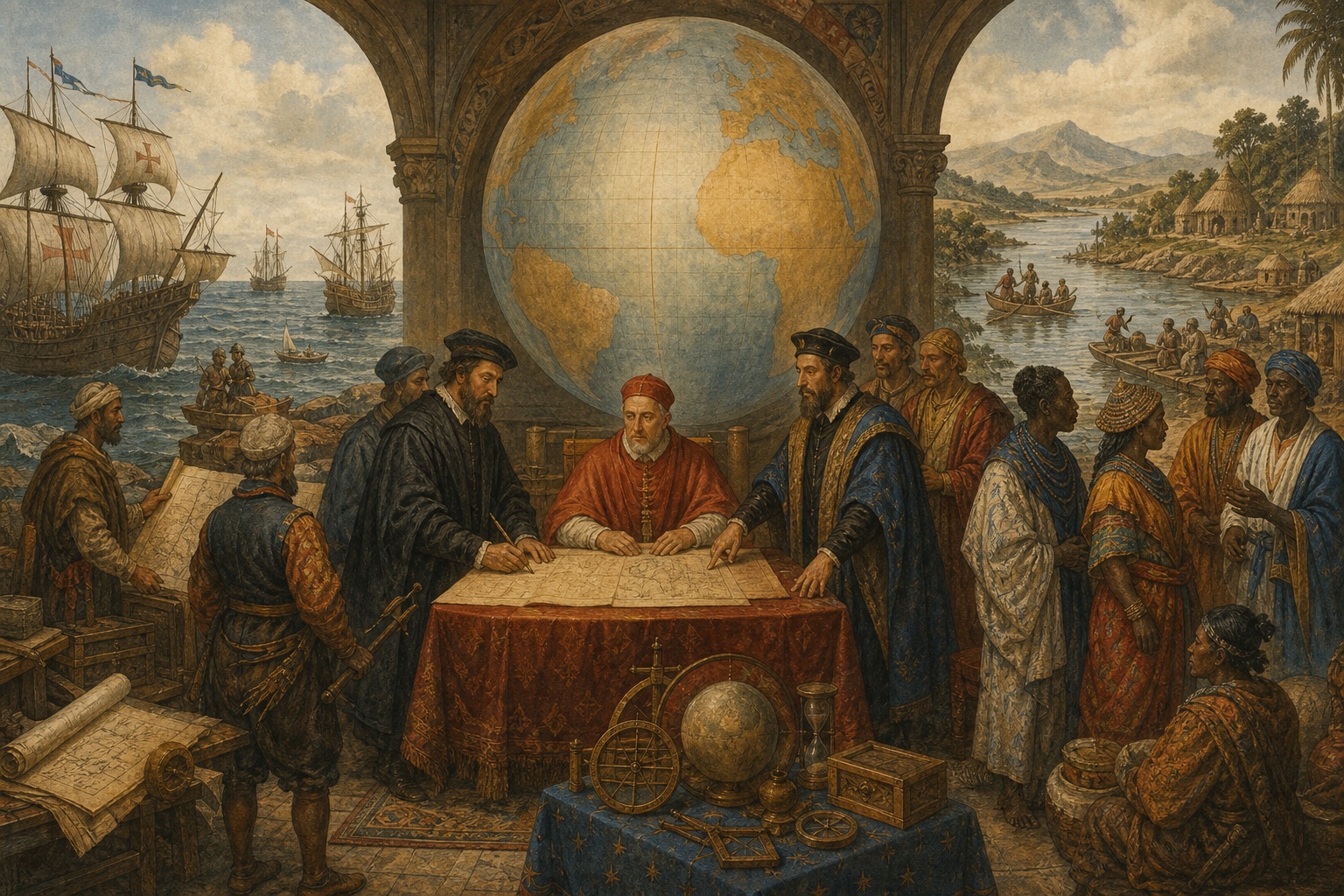
Long-term significance — Long-term significance: Tordesillas divided Spanish and Portuguese claims; it did not allocate French Saint-Domingue. French possession of western Hispaniola followed the 1697 Treaty of Ryswick. Its link to the Haitian Revolution is structural rather than direct: Haiti ruptured the longer Atlantic colonial order by defeating French colonial slavery.


Sources
- Treaty of Tordesillas — Treaty Tordesillas (UNESCO)unesco.orgThis UNESCO resource supports the chronology, setting, and course of Treaty of Tordesillas.
- Treaty of Tordesillas — 554978922 (Academic)academic.oup.comThis Academic resource supports the chronology, setting, and course of Treaty of Tordesillas.
- Treaty of Tordesillas — 10066 (E Revistas)e-revistas.uc3m.esThis E Revistas resource supports the chronology, setting, and course of Treaty of Tordesillas.