
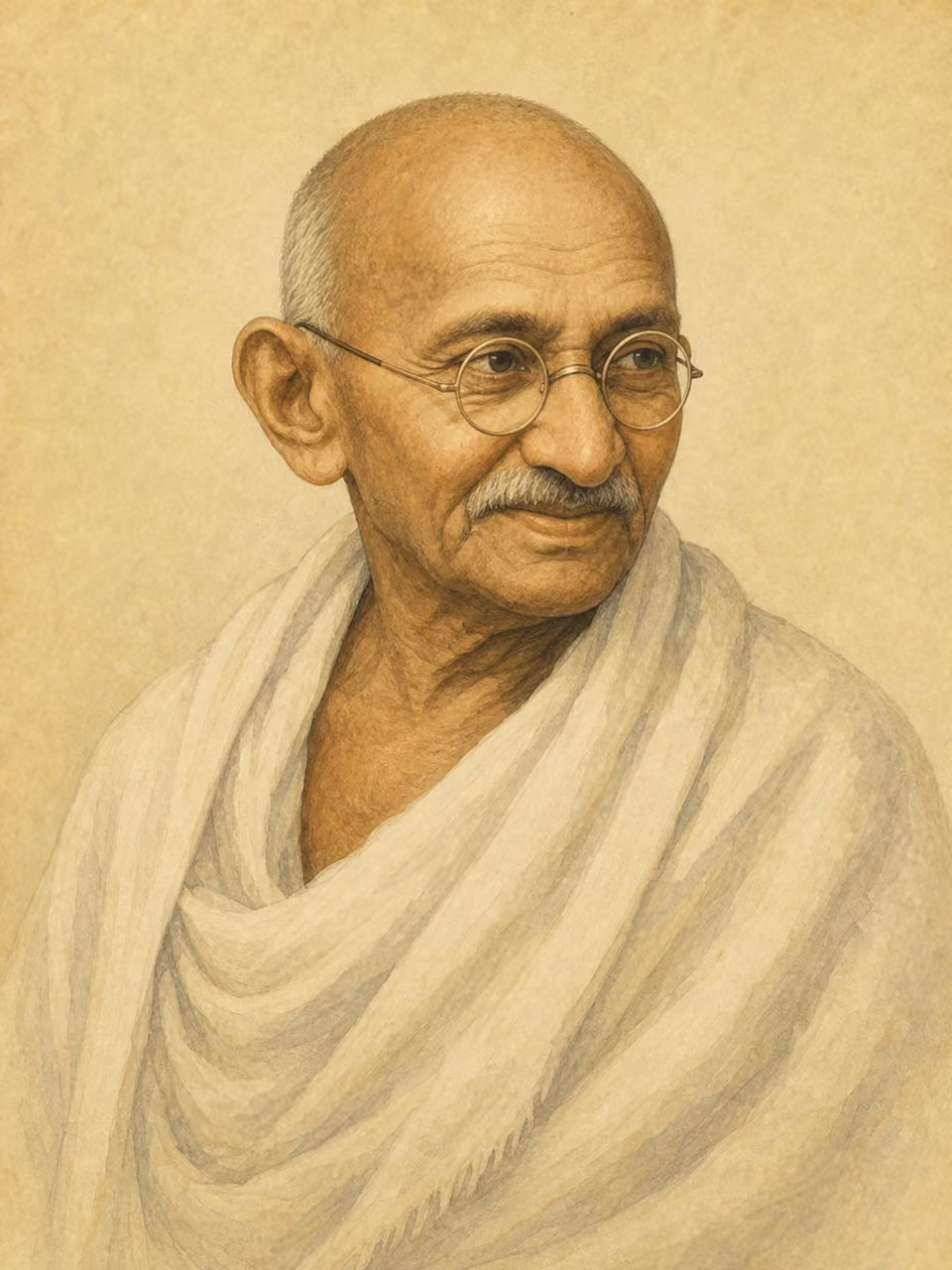
Mahatma Gandhi

Portrait: AI-generated imagined likeness

Mahatma Gandhi

Lawyer · Political activist · Writer

Years
1869–1948
Birthplace
India
Birth polity
British Raj
Era
Modern
Field
Social reform
Occupations
Lawyer · Political activist · Writer

Drawing on political experiments first tested against racial discrimination in South Africa, Gandhi returned to India and turned anti-colonial resistance into mass campaigns such as non-cooperation and the Salt March. He made fasting, spinning, and deliberate austerity into public political language, yet the years of communal conflict and Partition also exposed the limits of his moral authority.

View in catalog
Historical context

Places

  • Porbandar

    Birth

  • Sabarmati Ashram

    Residence

Works & achievements

  • Hind Swaraj

    1909

    Book

Events

  • Salt March

    1930

    Movement · Leader

  • Indian independence movement

    Movement · Leader

Origins

Origins map
Birth country
Birth country
India

Map: Natural Earth (PD)

Biography

Early life

Mahatma Gandhi was born in 1869 in Porbandar, studied law in London, and then worked in South Africa, where direct encounters with racial discrimination shaped his political thinking. Those years became the testing ground for the methods and moral language he later brought back to India.

Achievements

After returning to India, Gandhi organized mass campaigns that drew peasants, workers, and urban activists into anti-colonial politics. Through non-cooperation, the Salt March, and other campaigns, he linked self-rule to satyagraha, presenting nonviolence as both a political technique and an ethical discipline.

Character & anecdotes

Gandhi's fasting, spinning, and deliberate simplicity turned his own body and daily life into instruments of politics. At the same time, his career cannot be separated from the communal tensions and partition-era violence that his influence could not fully contain.

Historical Impact

Gandhi reshaped global politics because nonviolent civil disobedience became, through his campaigns, a portable method for later struggles over empire, civil rights, and peace. At the same time, scholarship and activism continue to examine the limits of his positions on caste, gender, and political compromise, so his legacy remains influential without being uncomplicated.

Related figures

View all in catalog