
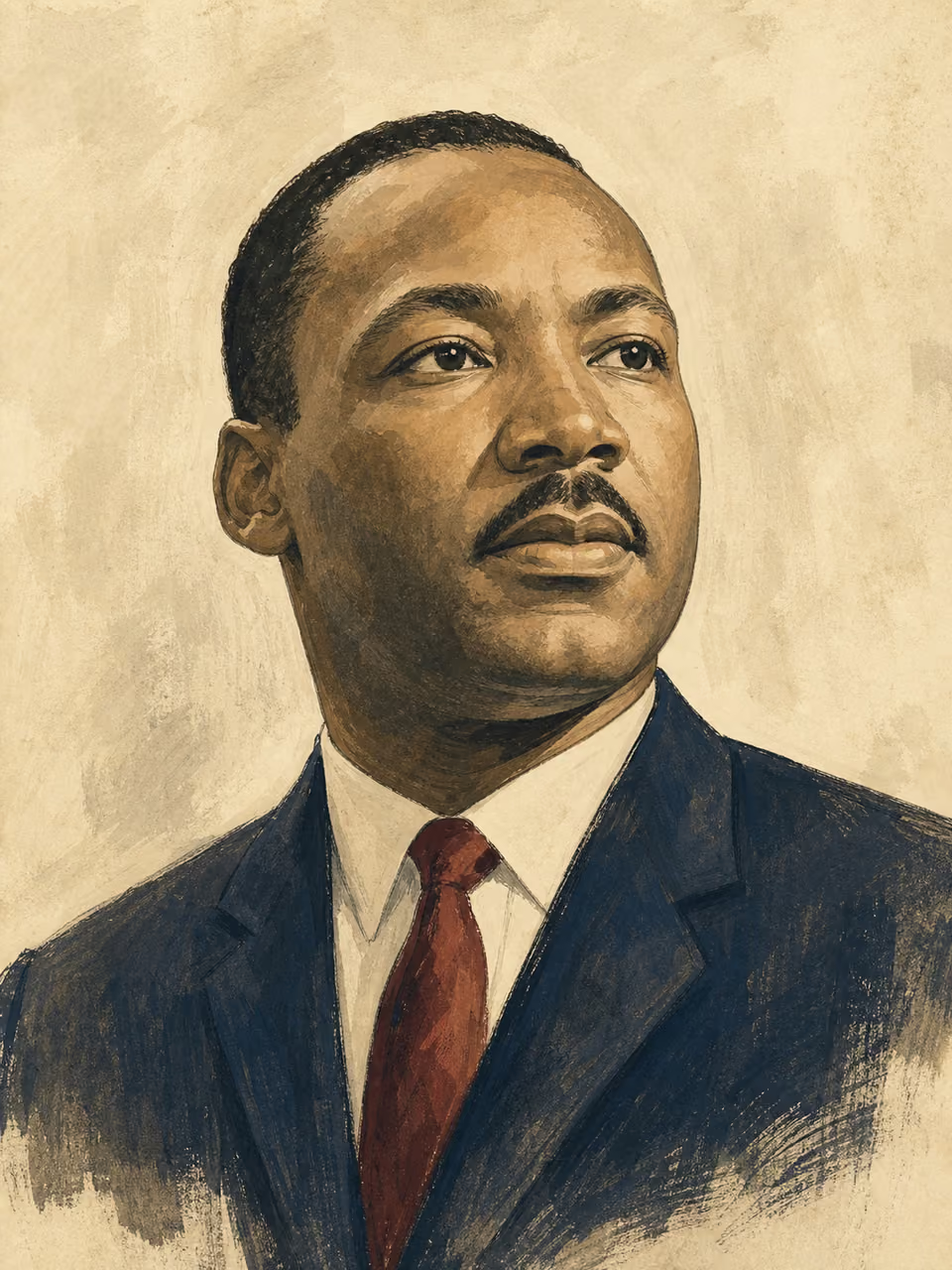
Martin Luther King Jr.

Portrait: AI-generated imagined likeness

Martin Luther King Jr.

Religious leader · Political activist · Writer

Years
1929–1968
Birthplace
United States
Birth polity
United States
Era
Contemporary
Field
Social reform
Occupations
Religious leader · Political activist · Writer

From the Birmingham jail, Martin Luther King Jr. answered calls for patience by arguing that direct action was necessary precisely because delay protected segregation. From Montgomery through the March on Washington and Memphis, he fused preaching, organizing, and disciplined protest into a sustained political performance.

View in catalog
Historical context

Places

  • Atlanta

    Birth

  • Memphis, Tennessee

    Death

Works & achievements

  • I Have a Dream

    1963

    Speech

Events

  • Montgomery bus boycott

    1955–1956

    Movement · Leader

  • March on Washington

    1963

    Movement · Leader

Origins

Origins map
Birth country
Birth country
United States

Map: Natural Earth (PD)

Biography

Early life

Martin Luther King Jr. was born in 1929 in Atlanta into a family of Baptist ministers. Educated at Morehouse College, Crozer Theological Seminary, and Boston University, he drew on Christian ethics, the Black church preaching tradition, and Gandhian nonviolence.

Achievements

King rose to national prominence during the Montgomery bus boycott and became a leading figure in the Southern Christian Leadership Conference. His role in campaigns such as Birmingham and the March on Washington helped build pressure behind the Civil Rights Act of 1964 and the Voting Rights Act of 1965, and he received the Nobel Peace Prize in 1964.

Character & anecdotes

His public letter from the Birmingham jail remains a powerful answer to calls for gradualism and patience. In his final years he widened his focus to the Vietnam War and poverty, and he was assassinated in Memphis in 1968 while supporting striking sanitation workers.

Historical Impact

King helped force the Civil Rights Act and Voting Rights Act into being, and he made nonviolent direct action a model for later protest movements around the world. His memory becomes historically thinner when reduced to a few ceremonial lines, because his later critiques of war, poverty, and economic injustice were also central to his democratic vision.

Notes

Martin Luther King Jr. Day is observed as a United States federal holiday on the third Monday of January.

Related figures

View all in catalog