
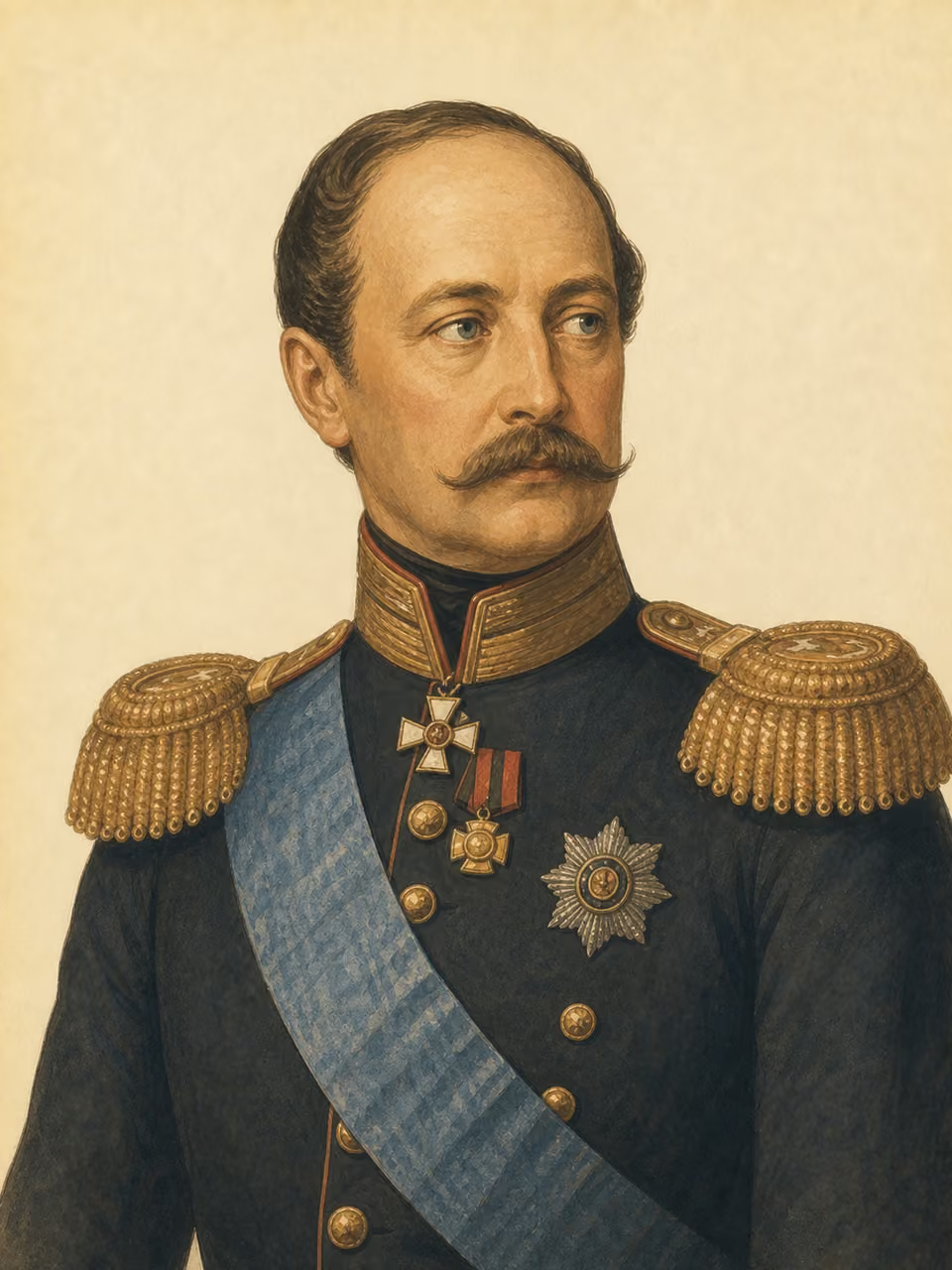
Nicholas I of Russia

Portrait: AI-generated imagined likeness

Nicholas I of Russia

Monarch

Years
1796–1855
Birthplace
Russia
Birth polity
Russian Empire
Era
Modern
Field
Politics
Occupations
Monarch

Russian emperor. He came to the throne after the Decembrist Rebellion and strengthened his tyranny and censorship. The Crimean War exposed Russia's weaknesses. He is a person who thinks about Russia and European international politics in the 19th century.

View in catalog

Historical context

Places

  • Saint Petersburg

    Work

Events

  • Decembrist revolt

    1825

    Political event · Opponent

  • Crimean War

    1853–1855

    War · Leader

Origins

Origins map
Birth country
Birth country
Russia

Map: Natural Earth (PD)

Biography

Early life

He was born as a prince of the Romanov dynasty, and ascended the throne amid confusion over the succession after the death of his older brother Alexander I. In Russia after the Napoleonic Wars, tensions between the conservative order and demands for reform were high.

Achievements

He suppressed the Decembrist rebellion and established a dictatorial system through bureaucracy, secret police, and censorship. It was also strongly involved in the European order, including suppressing the Polish uprising and putting pressure on the Ottoman Empire.

Character & anecdotes

Nicholas I was so wary of revolutionary movements that he was called the ``gendarme of Europe.'' On the other hand, a system that relied on military force exposed technological and administrative delays during the Crimean War.

Historical Impact

Studying Nicholas I reveals the contradiction between the conservative reaction under the Vienna regime and the Russian Empire's pressure to modernize. He is a person who connects Russian reform and European international relations. The tension between tyranny and modernization is also visible.