
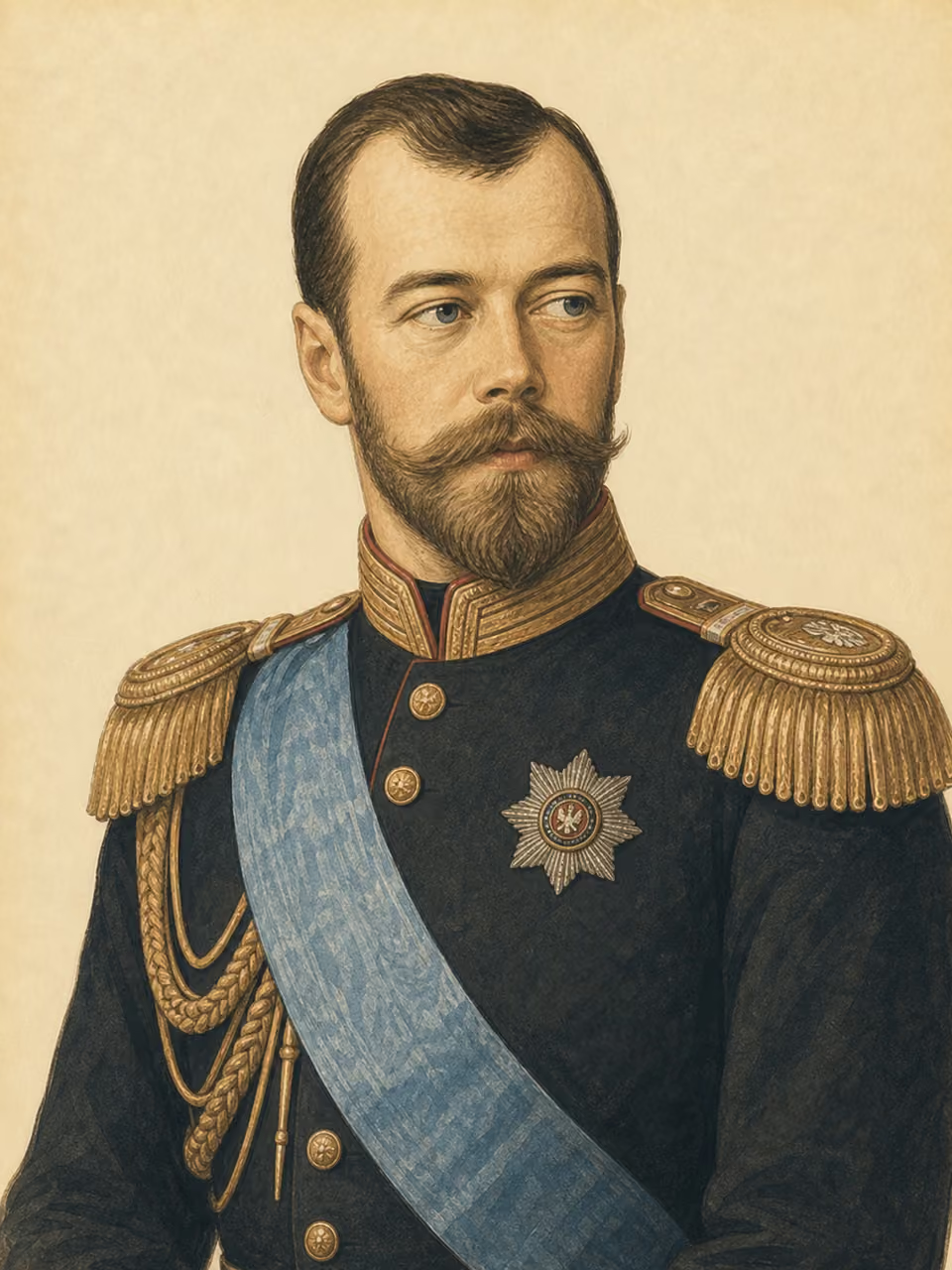
Nicholas II of Russia

Portrait: AI-generated imagined likeness

Nicholas II of Russia

Monarch

Years
1868–1918
Birthplace
Russia
Birth polity
Russian Empire
Era
Modern
Field
Politics
Occupations
Monarch

The last emperor of Russia. Unable to maintain his autocratic regime during the Russo-Japanese War, World War I, and revolution, he abdicated in 1917. He is a person who thinks about the Russian Revolution.

View in catalog

Historical context

Places

  • Saint Petersburg

    Work

Events

  • Russo-Japanese War

    1904–1905

    War · Leader

  • Russian Revolution of 1917

    1917

    Revolution · Subject

Origins

Origins map
Birth country
Birth country
Russia

Map: Natural Earth (PD)

Biography

Early life

He was born as the crown prince of the Romanov dynasty and ascended the throne in 1894. At the end of the 19th century, Russia was undergoing industrialization, but it was also plagued by peasant problems, labor movements, and ethnic problems.

Achievements

The empire built the Siberian Railway and expanded into East Asia, but its defeat in the Russo-Japanese War shook the empire's authority. Although it recognized the Duma after the 1905 revolution, its commitment to autocracy remained.

Character & anecdotes

Although Nicholas II was described as a family-oriented man, his delays in making political decisions deepened the crisis of the empire. The mistrust surrounding Rasputin also greatly damaged the dynasty's reputation.

Historical Impact

By studying Nicholas II, we can understand the process by which autocratic monarchies become unable to withstand the pressures of war, revolution, and popular politics in a modernizing society. He was a figure who became the starting point for the history of revolution in the 20th century. Conditions for the collapse of the monarchy are also possible.