
American Civil War
1861–1865
The 1861–1865 civil war between the United States and the seceded Confederacy, centrally caused by slavery and conflict over its territorial expansion. The boundary ends with the collapse of the principal Confederate armies.

- Period
- 1861–1865
- Kind
- War
- Regions
- North America
- Keywords
- slavery · Union · Confederacy · emancipation · Reconstruction
Follow the story · Four stages
Background
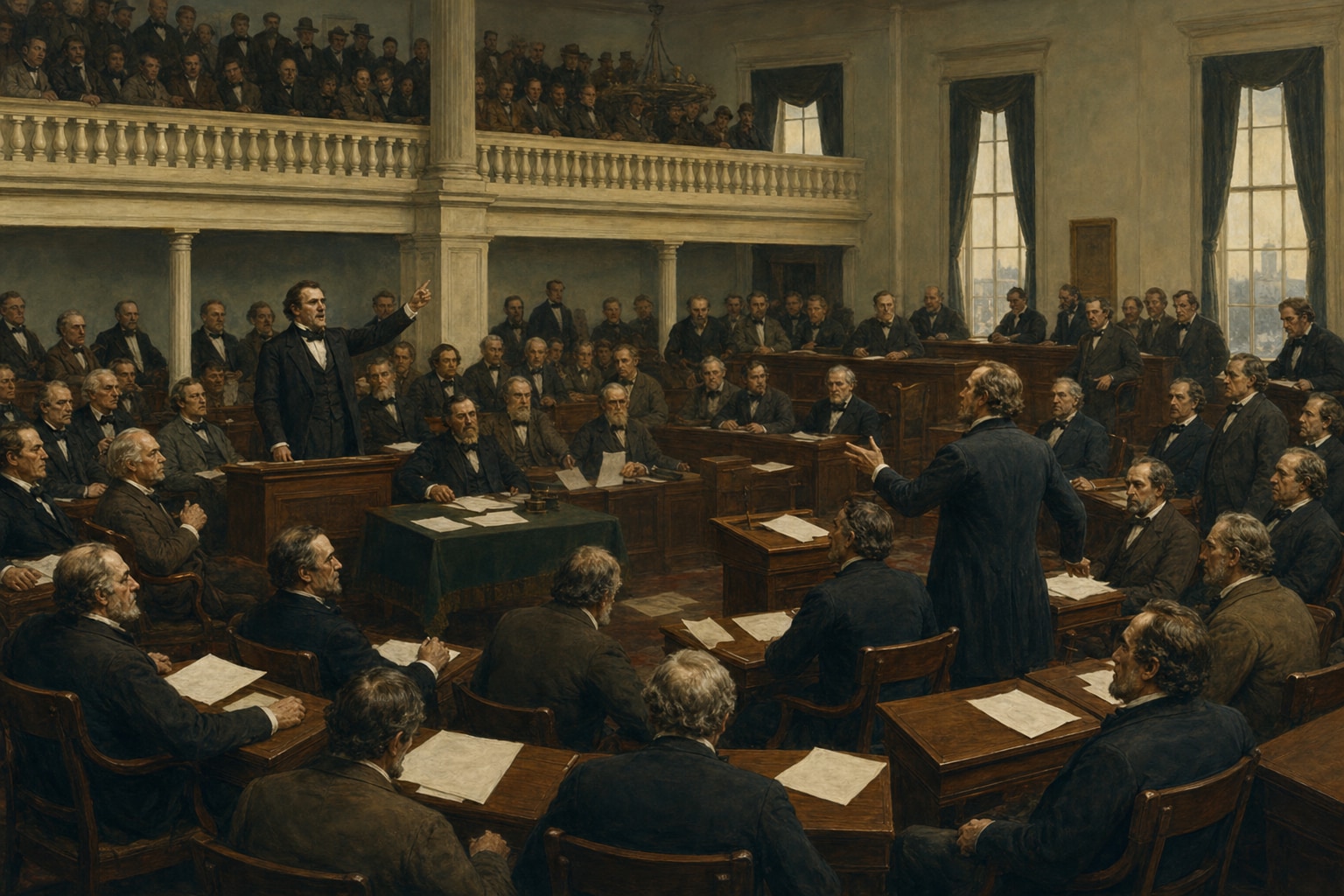
Political compromises over slavery's expansion broke down, and southern states seceded after Lincoln's election. The defense of a social order dependent on enslaved labor collided with the survival of the Union and led to armed conflict.
- The expansion of slavery into western territories repeatedly reopened conflict between free and slave states.
- The Compromise of 1850 and later political settlements delayed a rupture without resolving the status of slavery.
- After Abraham Lincoln's election, eleven Southern states seceded and formed the Confederacy.
Course
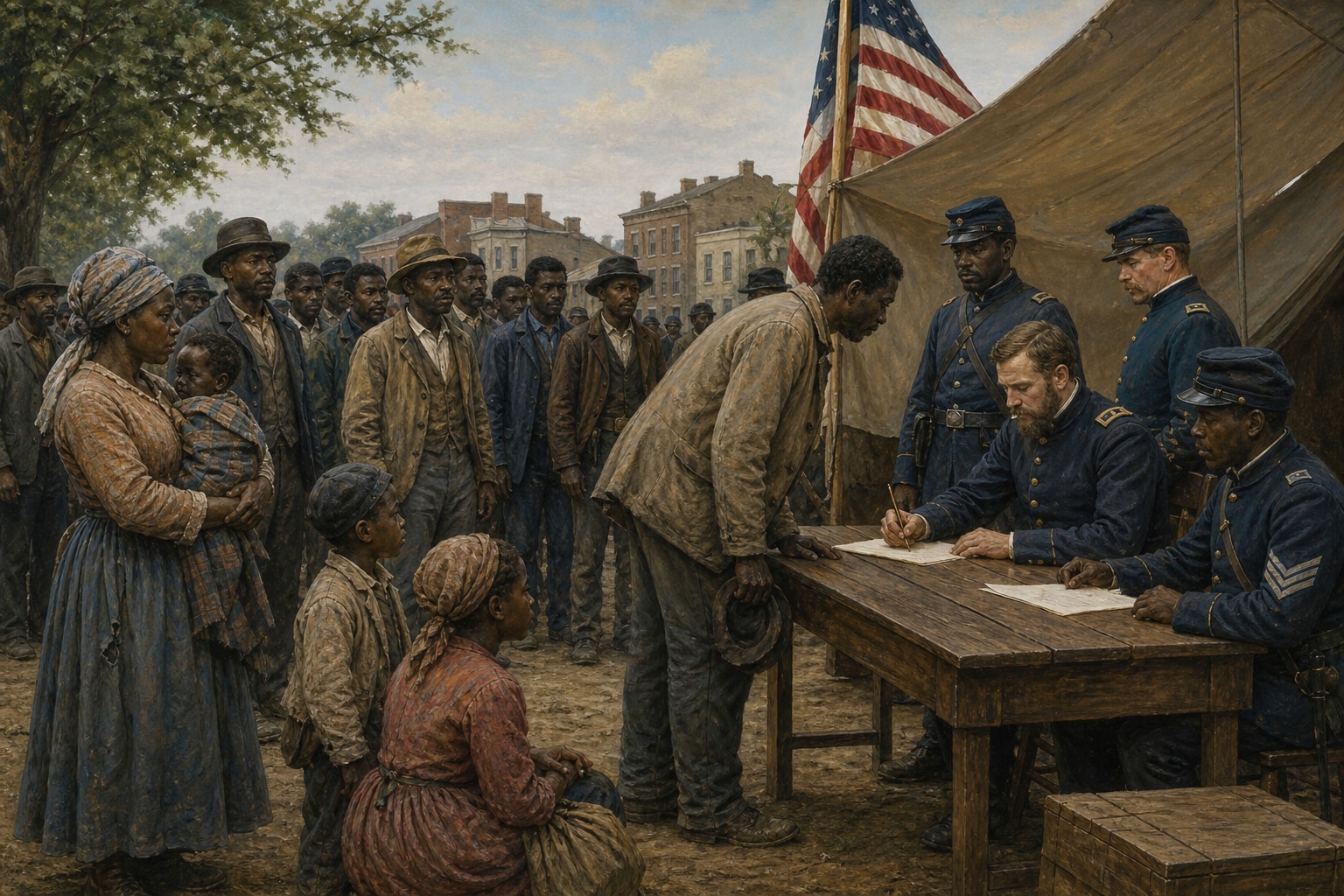
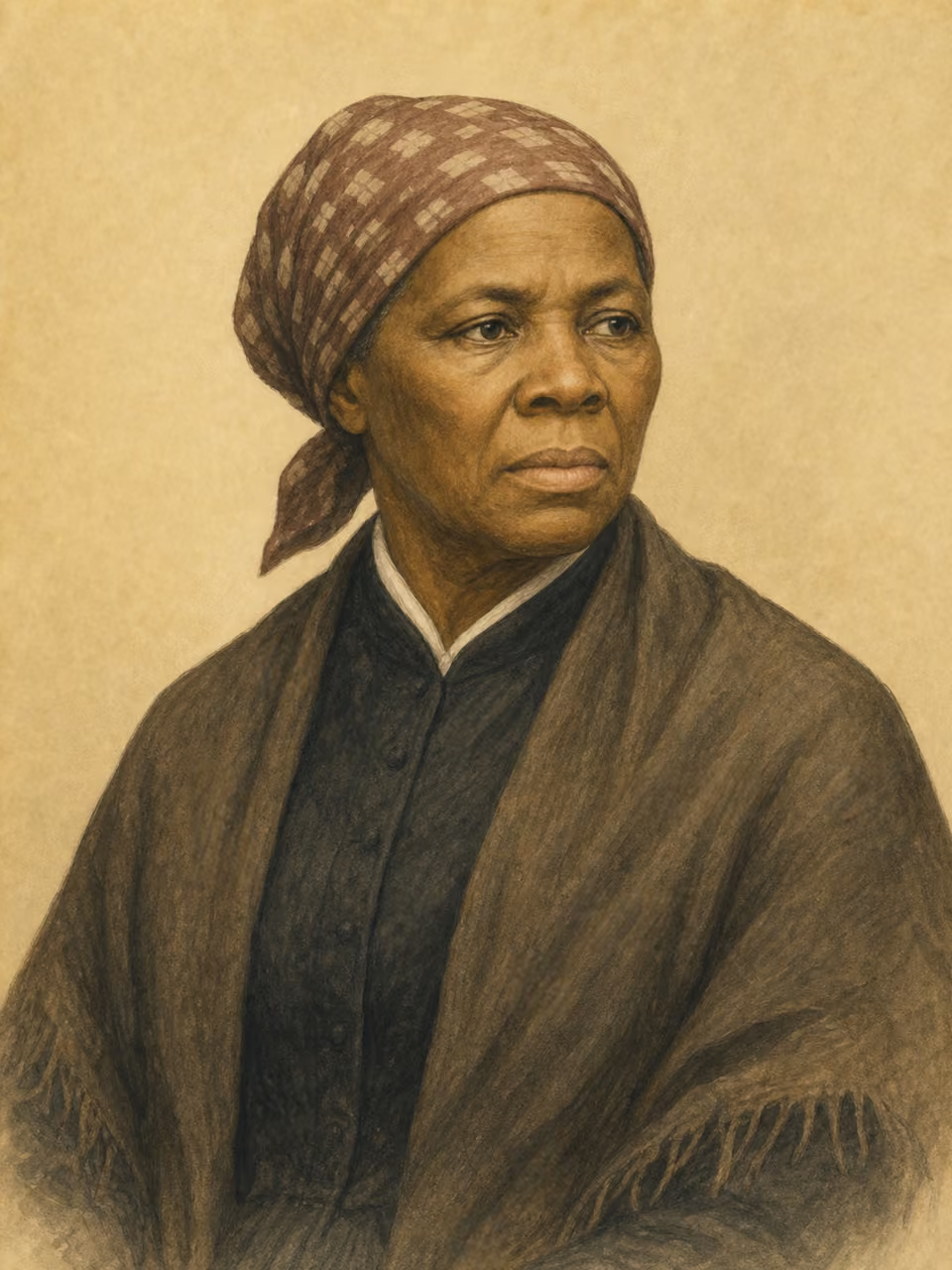
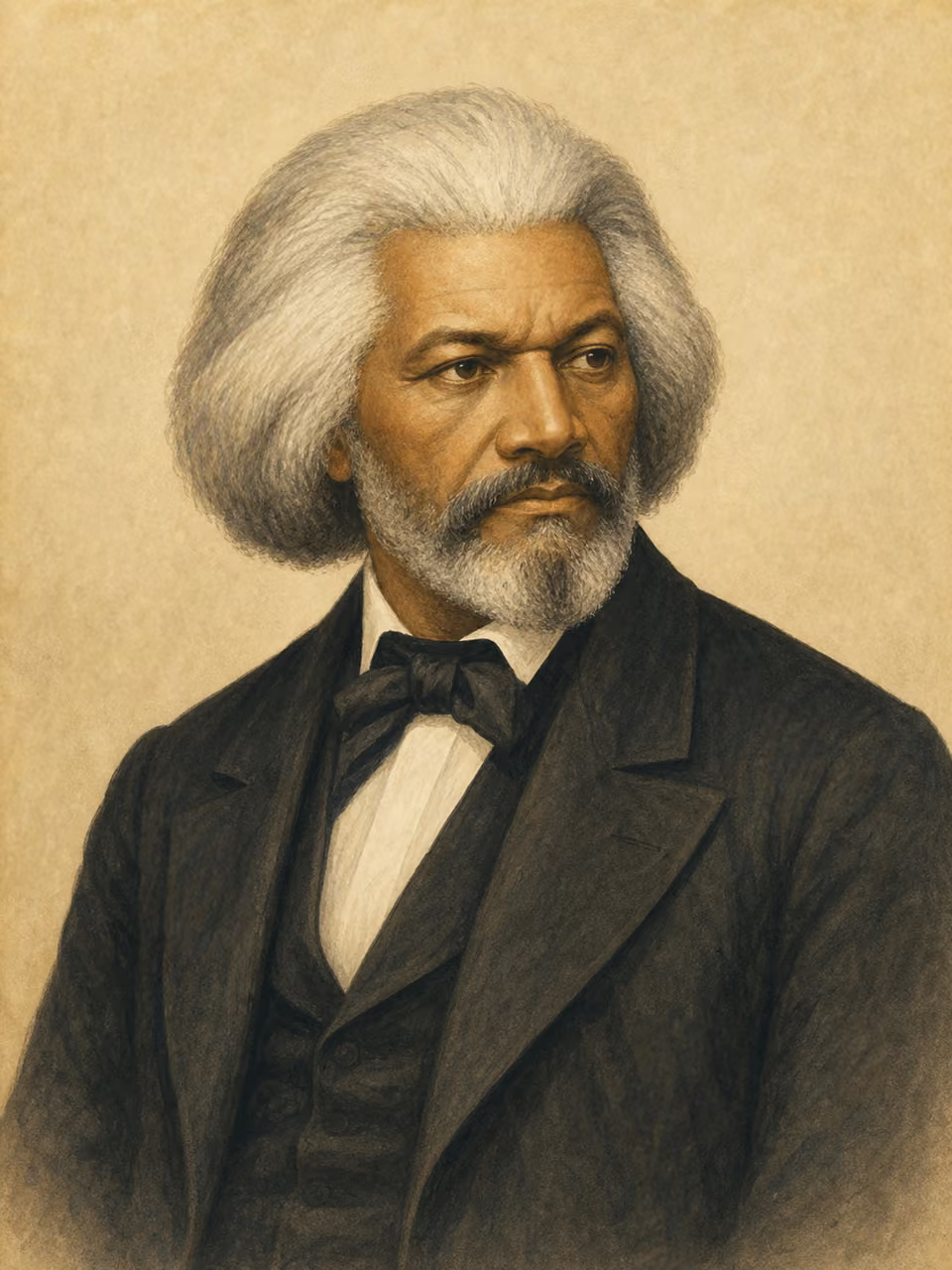
The conflict expanded from Fort Sumter into mass war as Union campaigns divided the Confederacy. Harriet Tubman served as scout, nurse, and raid leader; Frederick Douglass pressed for emancipation and Black enlistment and negotiated with the president.
- Fighting began in 1861 and grew into a mass war of armies, railroads, industry, and civilian resources.
- The Emancipation Proclamation made freedom a Union war aim, while Black men entered Union service in large numbers.
- Union victories at Gettysburg and Vicksburg in 1863 shifted the military balance, but costly campaigns continued for two more years.
Outcome
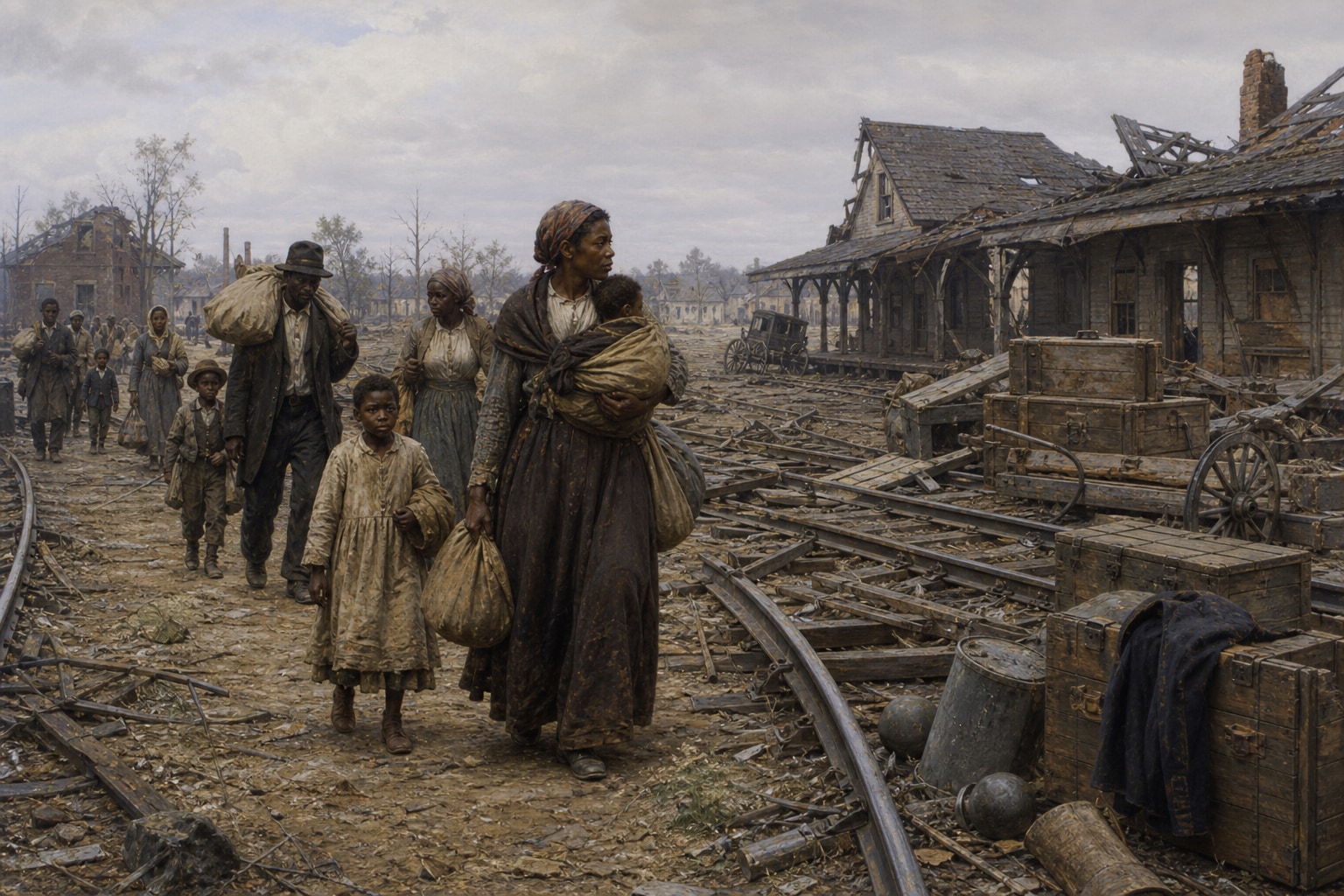
Union victory preserved the country. Wartime emancipation was followed by the Thirteenth Amendment's constitutional abolition of slavery and the beginning of Reconstruction, but land, racial violence, and equal citizenship remained unresolved.
- Confederate armies surrendered in the spring of 1865, preserving the United States under federal authority.
- The Thirteenth Amendment abolished slavery throughout the country later that year.
- The war left enormous loss of life and widespread destruction, especially across the South.
Historical significance
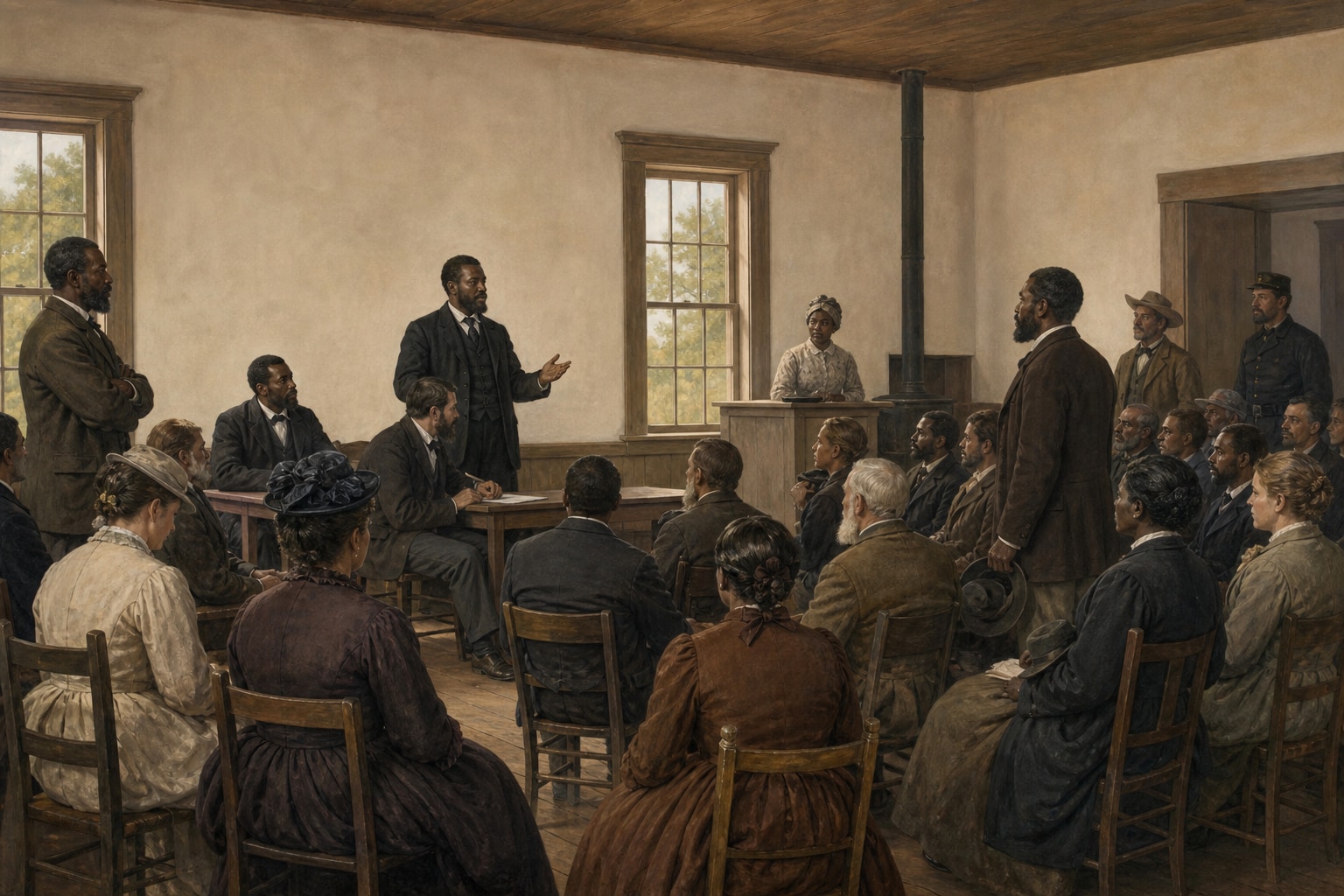
The war preserved the Union, ended legal slavery, and transformed federal authority and citizenship. Reconstruction's defeat and the reorganization of white supremacy left a deep gap between emancipation and equality.
- Reconstruction attempted to rebuild Southern governments and define freedom, citizenship, and voting rights after slavery.
- Harriet Tubman aided the Union as a nurse and scout, while Frederick Douglass pressed for emancipation and Black enlistment.
- Abolition transformed the Constitution, but racial equality remained contested and incomplete.


Related figures
Related events
1850
Compromise of 1850
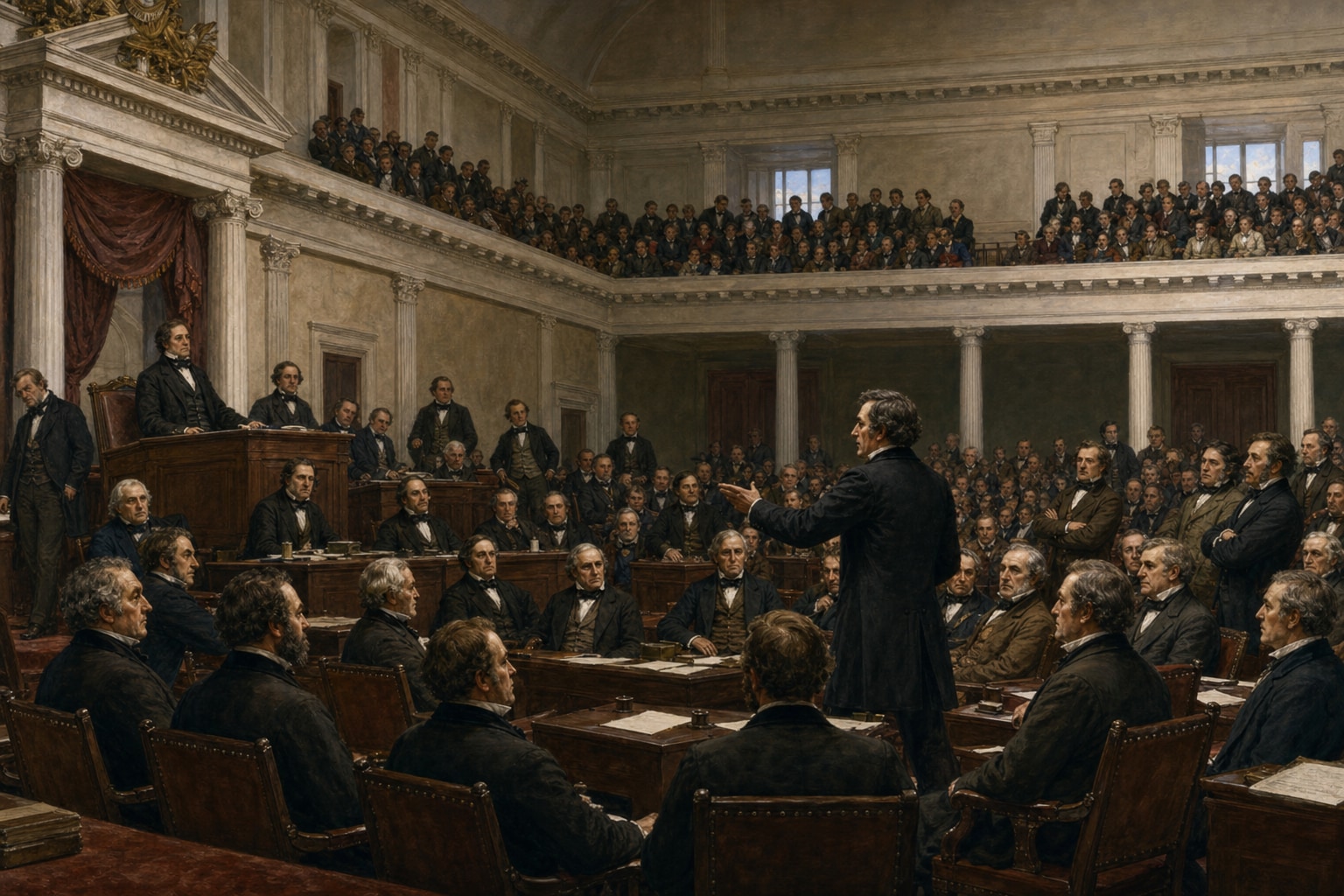
Congress passed a package of measures that deferred sectional rupture while sharpening disputes over slavery.
1860–1861
Secession crisis
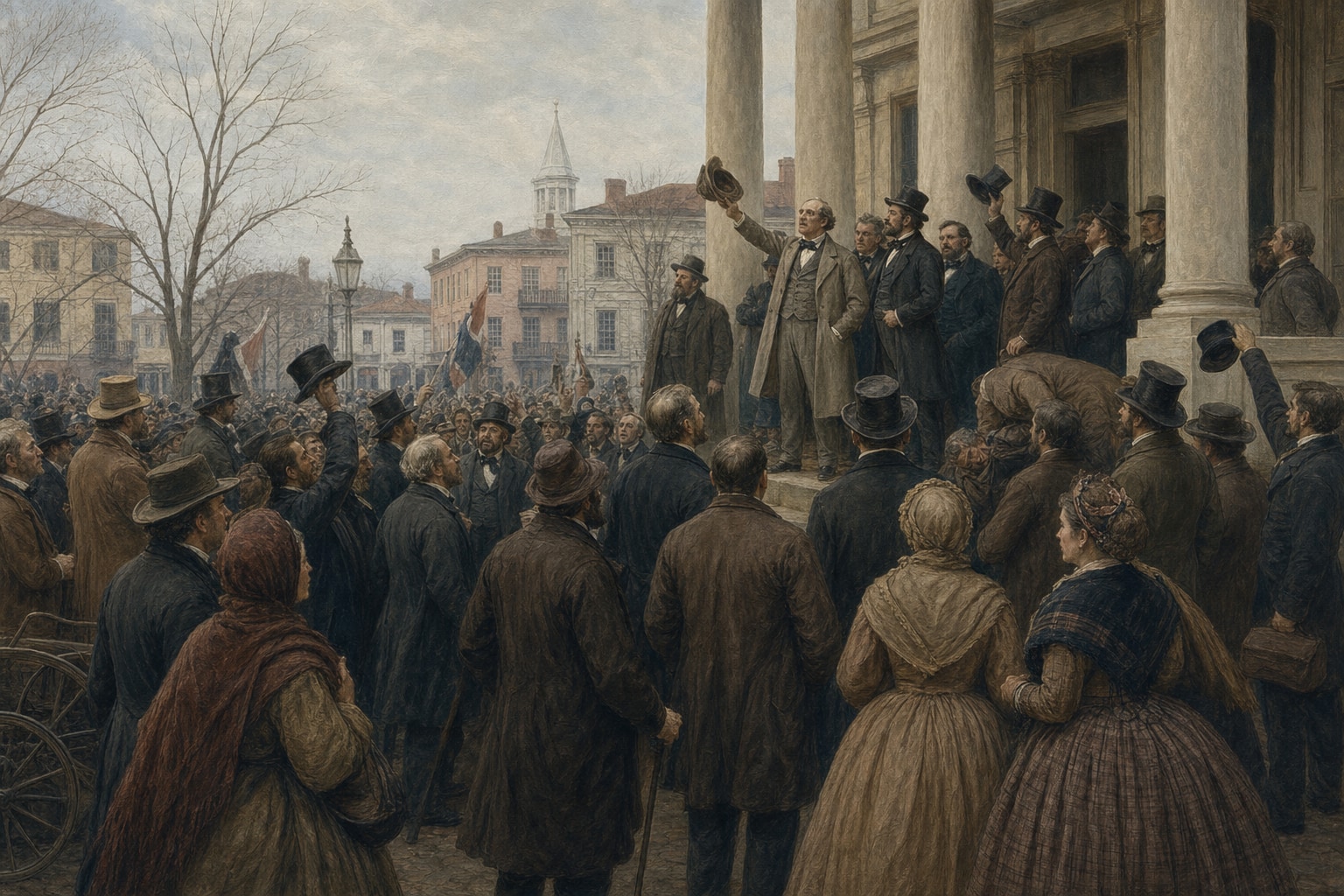
Eleven slave states left the Union after Lincoln's election and organized the Confederacy.
1861–1865
American Civil War
Current event
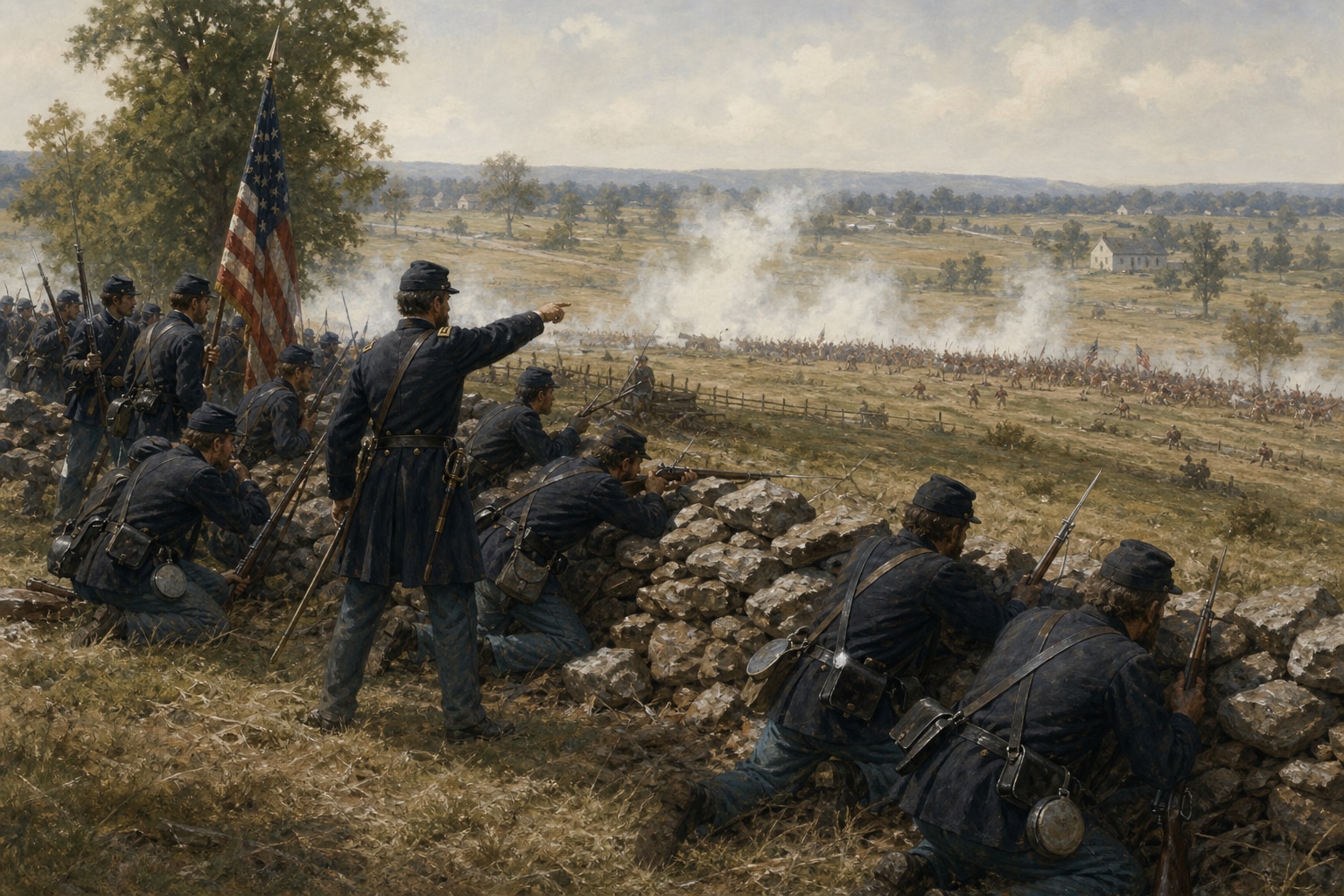
Union and Confederate forces fought a continental war that joined national survival to emancipation.
1865
Thirteenth Amendment ratified
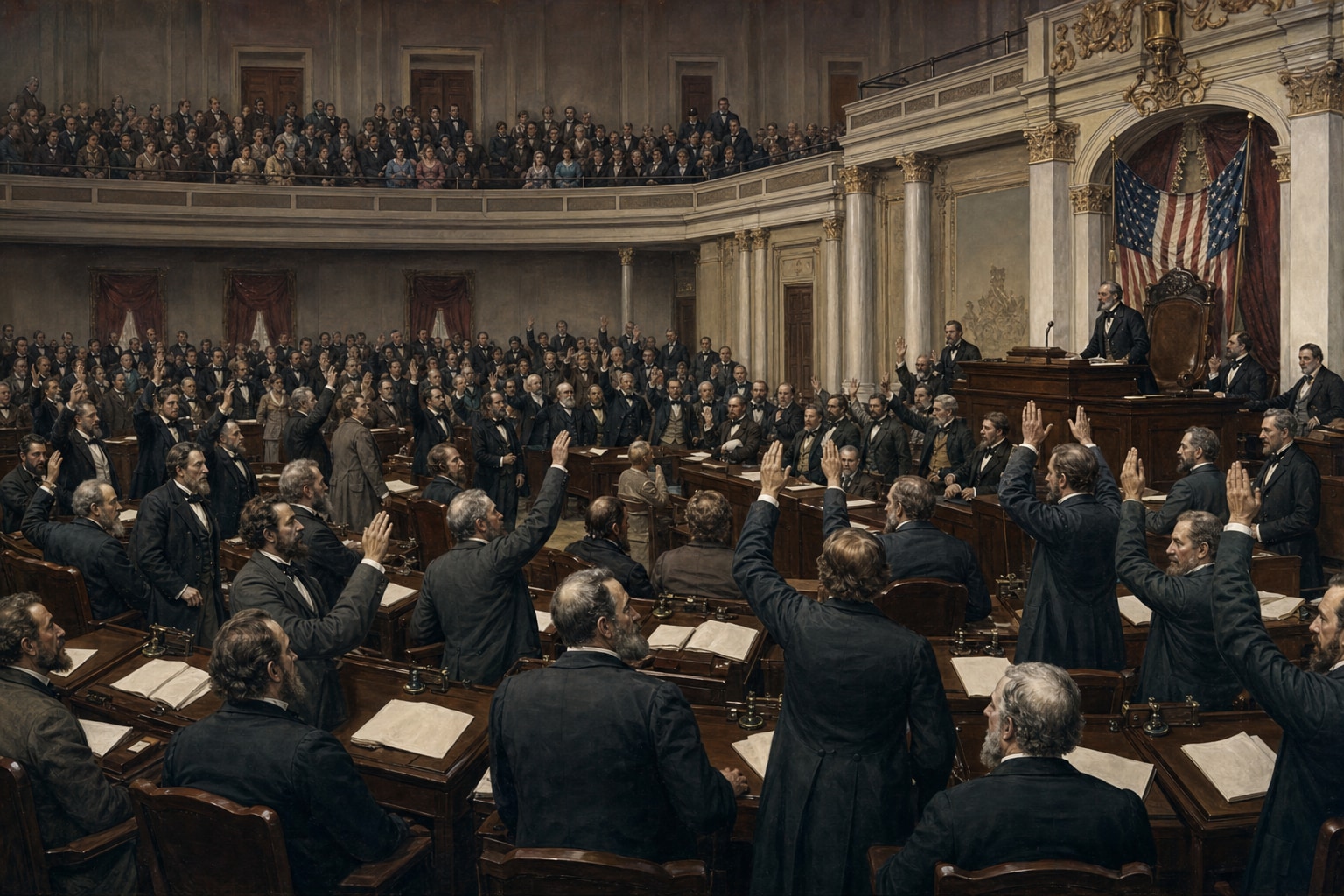
Ratification abolished slavery and involuntary servitude except as punishment for crime.
1867
Reconstruction Acts
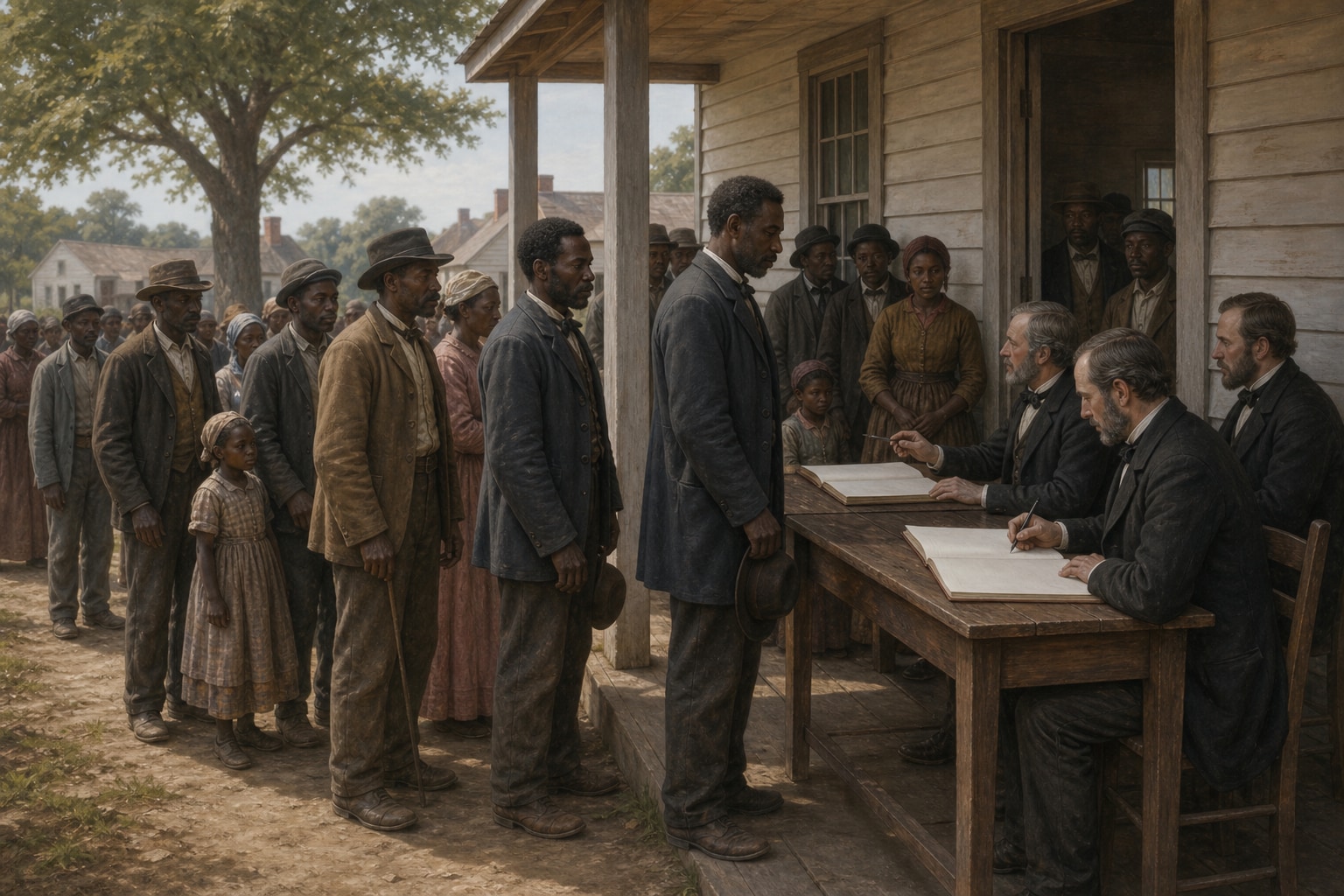
Congress placed former Confederate states under new requirements for government and readmission.


Sources
- American Civil WarWikipediaA general reference for the war's causes, chronology, major campaigns, and aftermath.
- Civil War PhotographsLibrary of CongressA primary visual collection documenting soldiers, battle sites, civilians, and wartime destruction.
- The Civil WarNational Park ServiceAn official overview of the conflict, its landscapes, participants, and consequences.
- Frederick Douglass and the Civil WarNational Park ServiceAn account of Douglass's wartime advocacy for emancipation, enlistment, and equal treatment.