Scientific Revolution
c. 1543–c. 1687
A retrospective label for interconnected changes in European natural knowledge, conventionally framed from Copernicus's 1543 publication to Newton's Principia in 1687.

- Period
- c. 1543–c. 1687
- Kind
- Cultural event
- Regions
- Europe
- Keywords
- Scientific Revolution · background · course · outcome
Follow the story · Four stages
Background
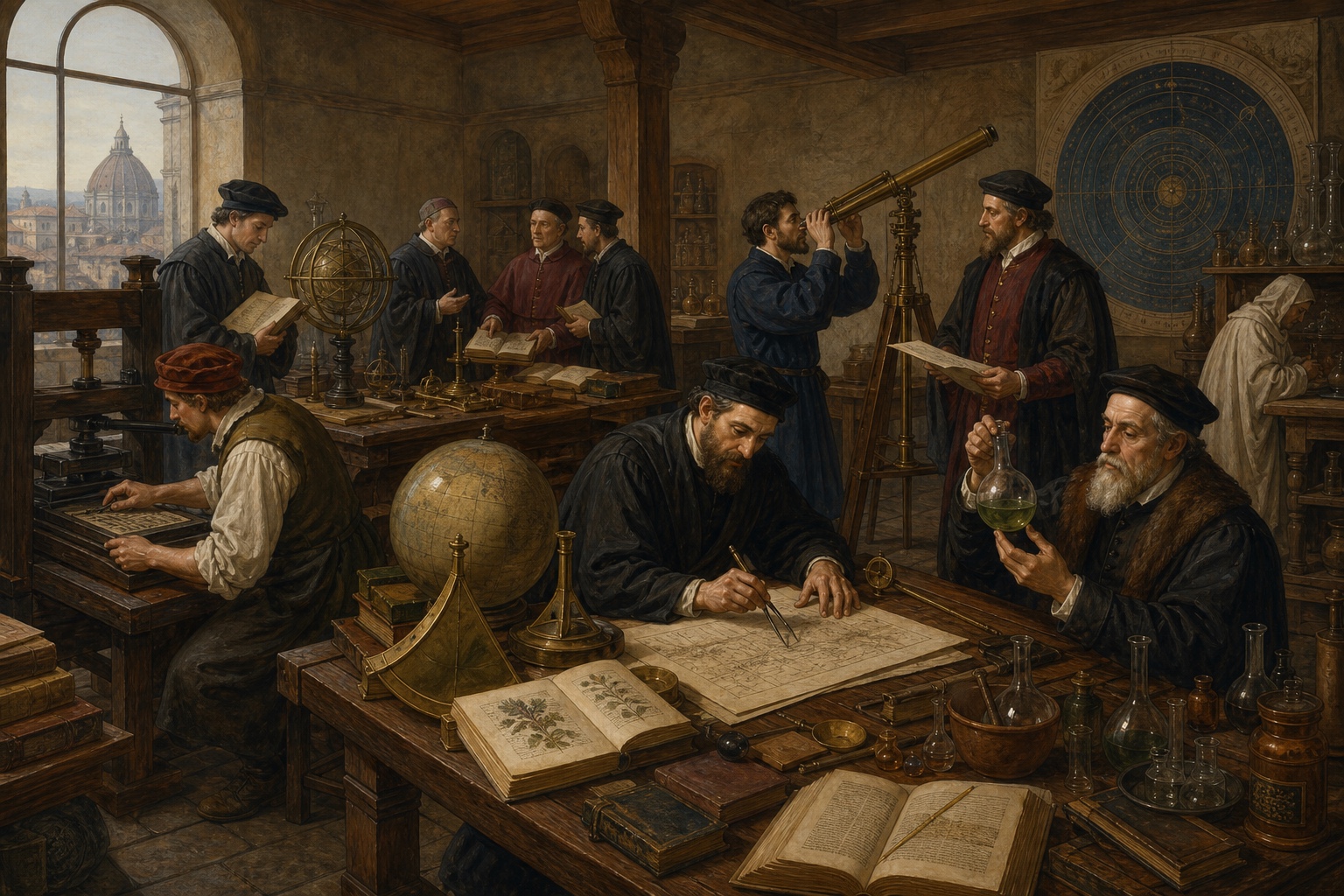
Renaissance recovery and criticism of ancient texts joined mathematical astronomy, artisanal knowledge, navigation, medicine, and knowledge transmitted from Greek, Islamic, and other traditions. Printing and networks of courts and universities widened argument even as religious and political authorities constrained it.
- Renaissance recovery and criticism of ancient texts joined mathematical astronomy, artisanal knowledge, navigation, medicine, and knowledge transmitted from Greek, Islamic, and other traditions.
- Printing and networks of courts and universities widened argument even as religious and political authorities constrained it.
- Core event: A retrospective label for interconnected changes in European natural knowledge, conventionally framed from Copernicus's 1543 publication to Newton's Principia in 1687.
Course
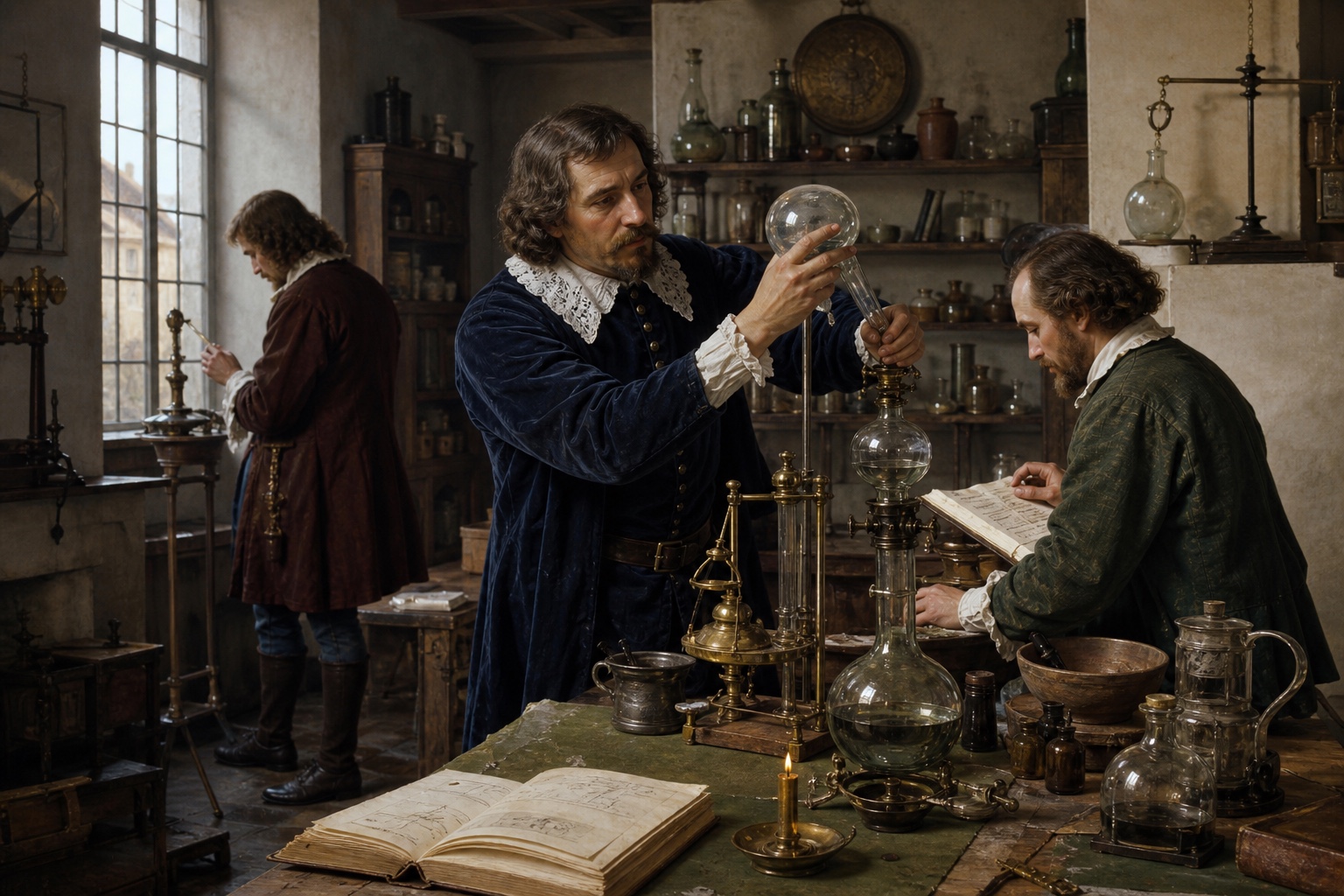
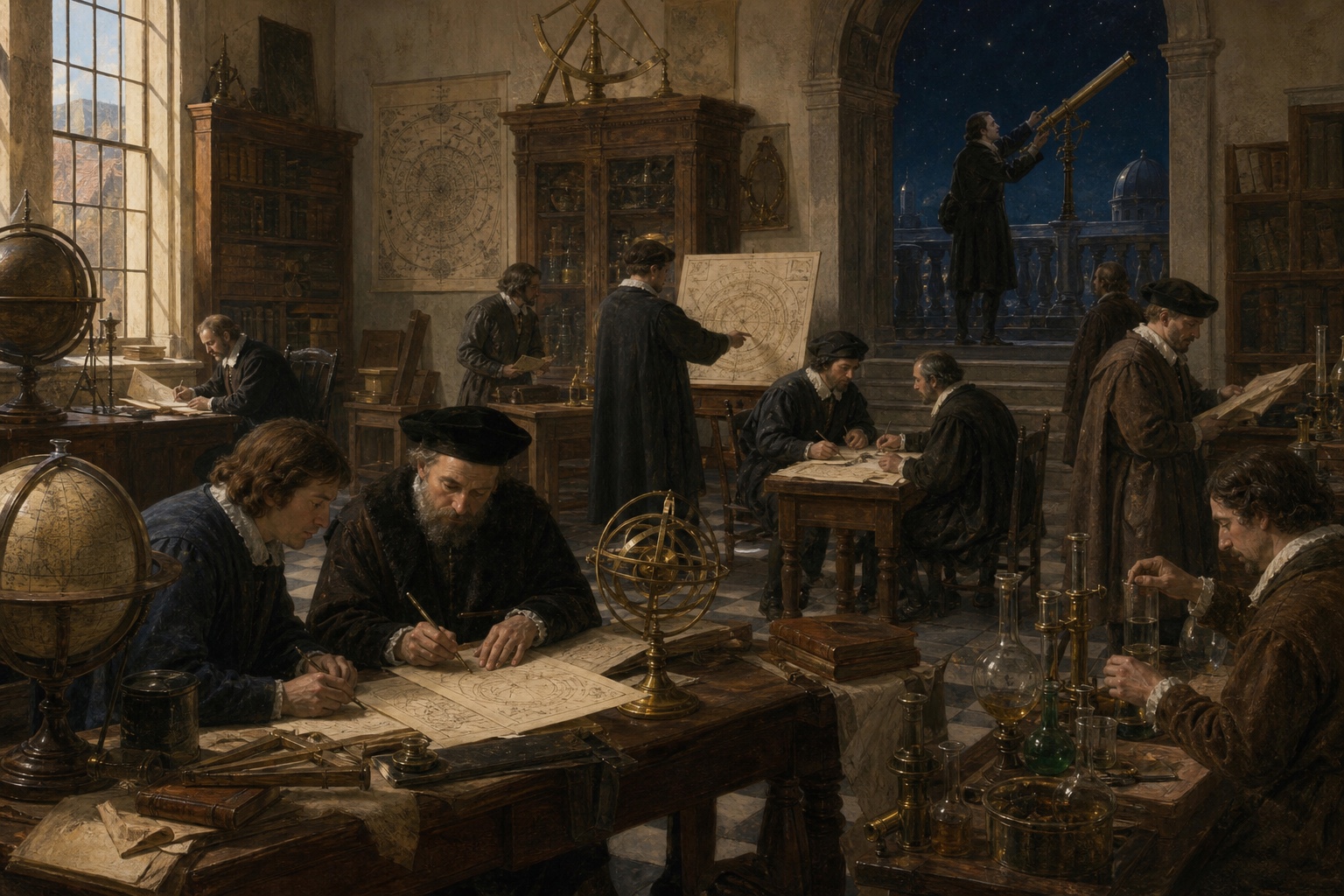
Copernican astronomy, Kepler's planetary laws, Galileo's telescopic and mechanical work, Baconian programs, Cartesian natural philosophy, Boyle's experiments, and many other projects changed questions and methods. Instruments, correspondence, academies, and journals—including the Royal Society and its Philosophical Transactions—made observation increasingly collective and public.
- Copernican astronomy, Kepler's planetary laws, Galileo's telescopic and mechanical work, Baconian programs, Cartesian natural philosophy, Boyle's experiments, and many other projects changed questions and methods.
- Instruments, correspondence, academies, and journals—including the Royal Society and its Philosophical Transactions—made observation increasingly collective and public.
- Conditions behind the action: Renaissance recovery and criticism of ancient texts joined mathematical astronomy, artisanal knowledge, navigation, medicine, and knowledge transmitted from Greek, Islamic, and other traditions. Printing and networks of courts and universities widened argument even as religious and political authorities constrained it.
Outcome
Newton's 1687 Principia joined terrestrial and celestial motion in a mathematical theory of gravitation and became a powerful later endpoint for the narrative. Yet no single method suddenly replaced all earlier knowledge, and natural philosophy, theology, alchemy, and craft remained entangled.
- Newton's 1687 Principia joined terrestrial and celestial motion in a mathematical theory of gravitation and became a powerful later endpoint for the narrative.
- Yet no single method suddenly replaced all earlier knowledge, and natural philosophy, theology, alchemy, and craft remained entangled.
- Process producing the result: Copernican astronomy, Kepler's planetary laws, Galileo's telescopic and mechanical work, Baconian programs, Cartesian natural philosophy, Boyle's experiments, and many other projects changed questions and methods. Instruments, correspondence, academies, and journals—including the Royal Society and its Philosophical Transactions—made observation increasingly collective and public.
Historical significance
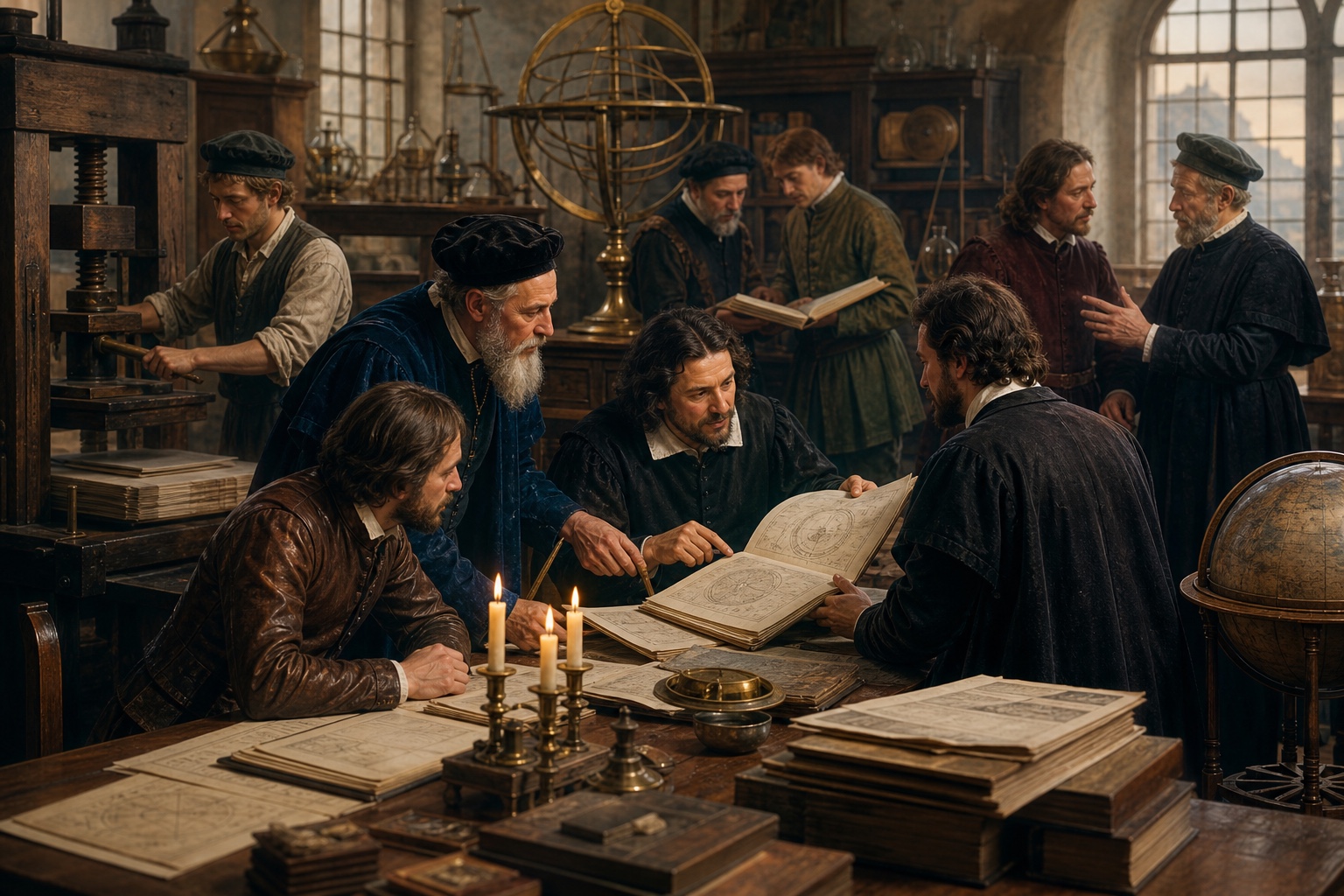
The label and its 1543–1687 boundaries are retrospective analytical frames, not a name used by participants for one coherent event. The changes nevertheless supplied experimental, mathematical, and institutional models that Enlightenment thinkers extended to nature and society, while modern historians debate how unified, revolutionary, or exclusively European the process was.
- The label and its 1543–1687 boundaries are retrospective analytical frames, not a name used by participants for one coherent event.
- The changes nevertheless supplied experimental, mathematical, and institutional models that Enlightenment thinkers extended to nature and society, while modern historians debate how unified, revolutionary, or exclusively European the process was.
- Immediate consequence: Newton's 1687 Principia joined terrestrial and celestial motion in a mathematical theory of gravitation and became a powerful later endpoint for the narrative. Yet no single method suddenly replaced all earlier knowledge, and natural philosophy, theology, alchemy, and craft remained entangled.


Related figures
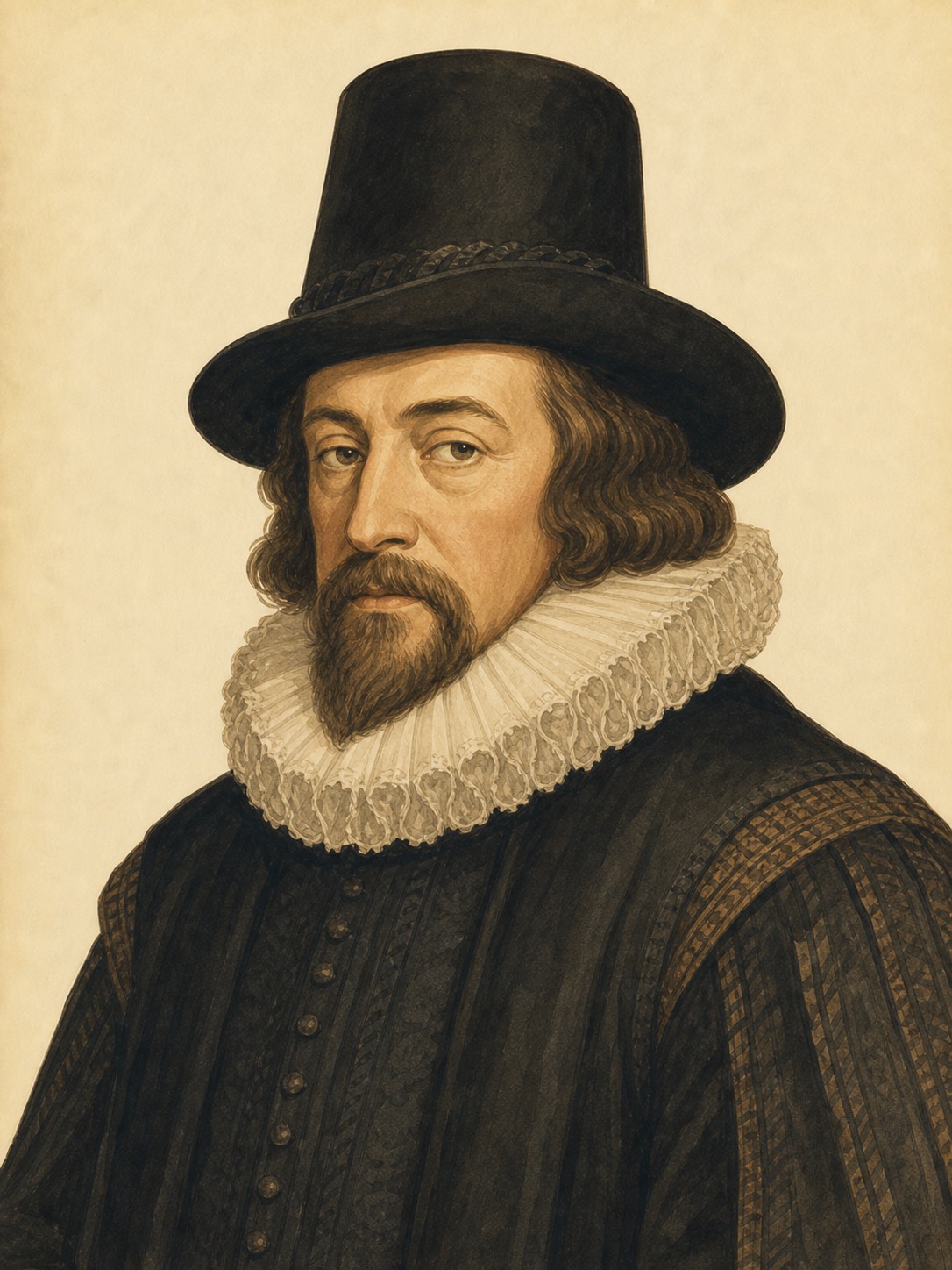
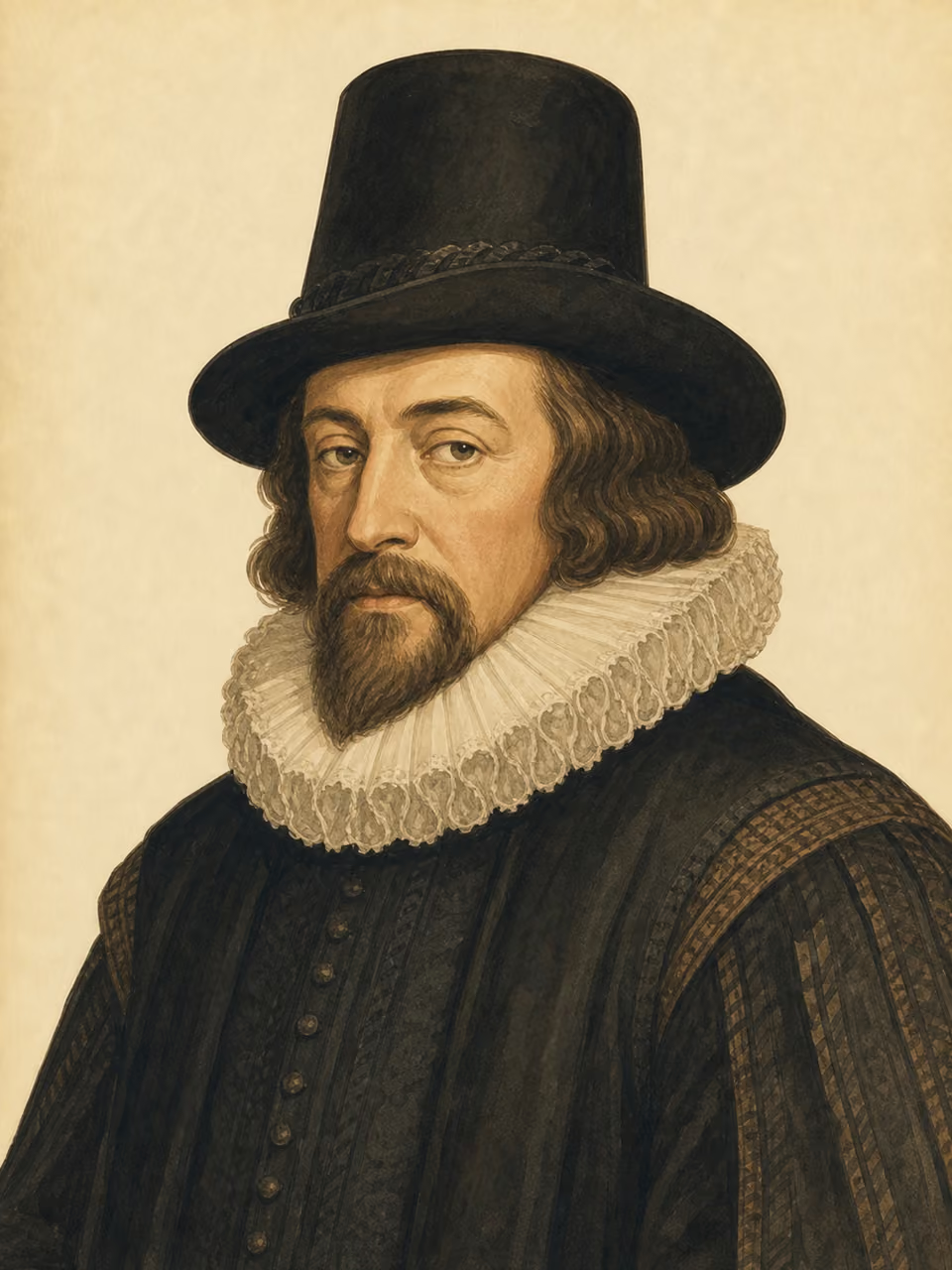
Francis Bacon
historical figure in context
English thinker and politician. He preached a method that emphasized experience and observation, and had a great influence on modern scientific methodology. He is a person who thinks about the scientific revolution and modern thought.
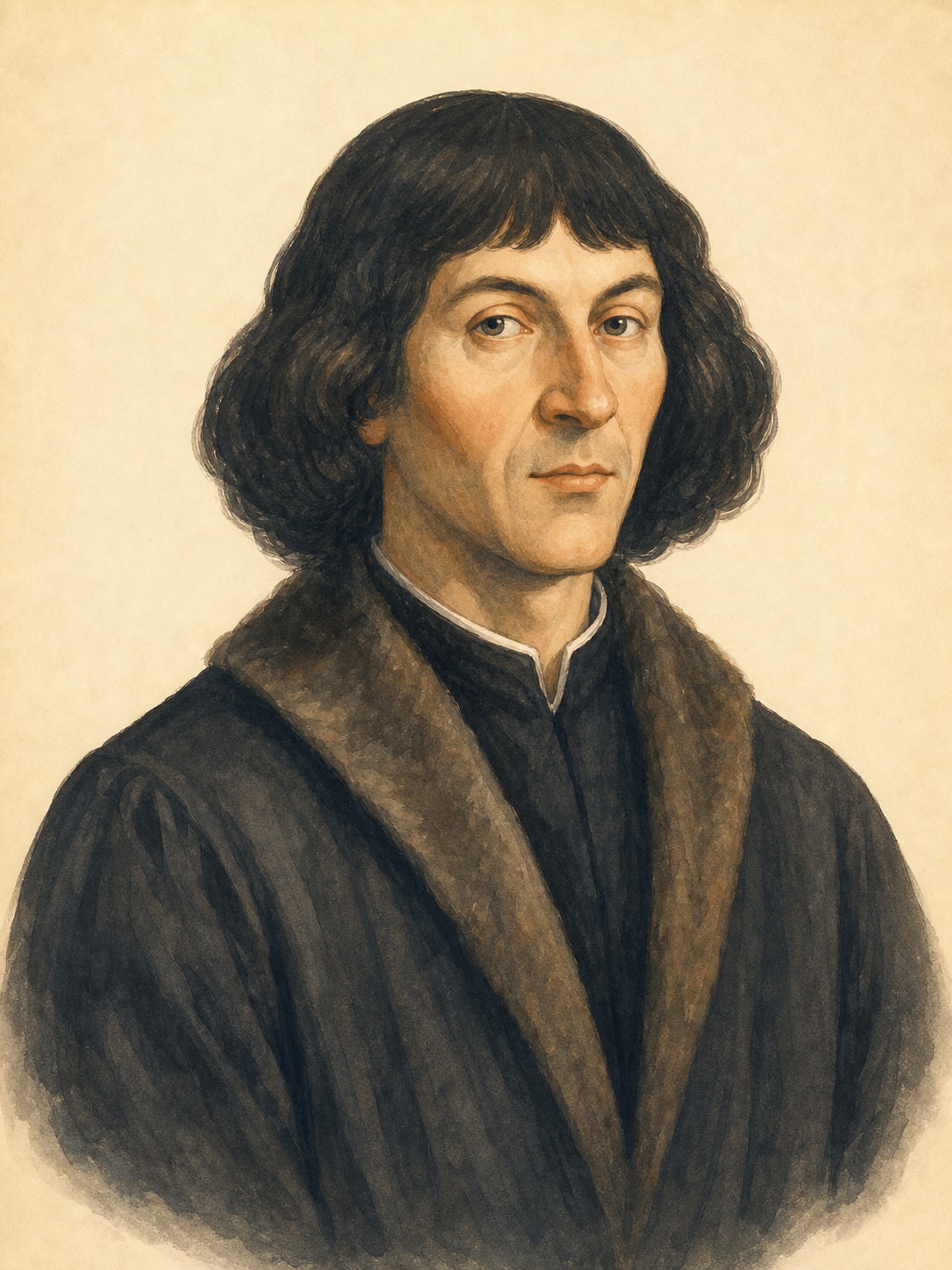
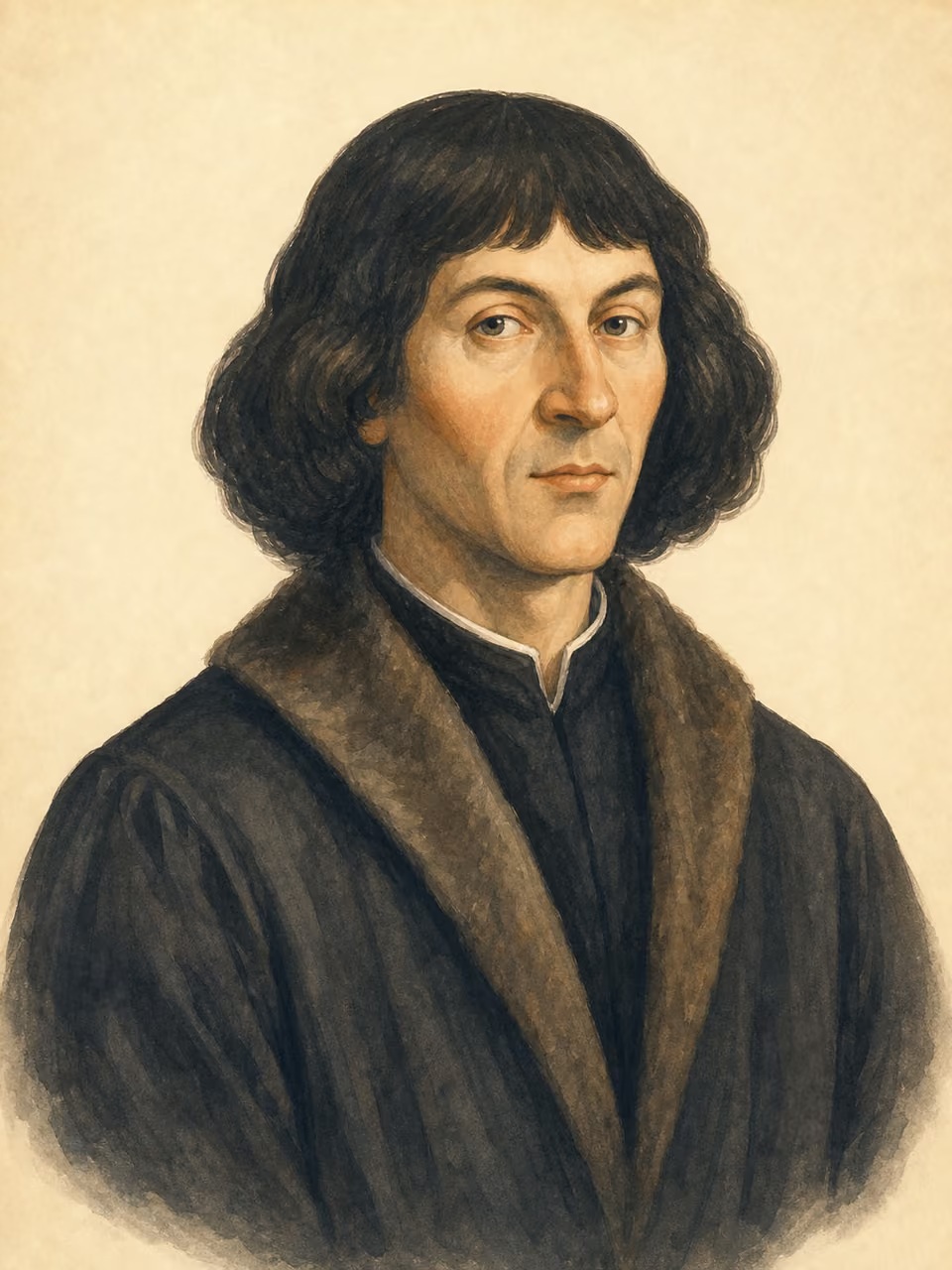
Nicolaus Copernicus
historical figure in context
An astronomer who systematically demonstrated the heliocentric theory. It is positioned as the starting point of the scientific revolution, as a turning point from medieval cosmology to modern science. It connects local history and world history and provides clues for deciphering changes during the same era.
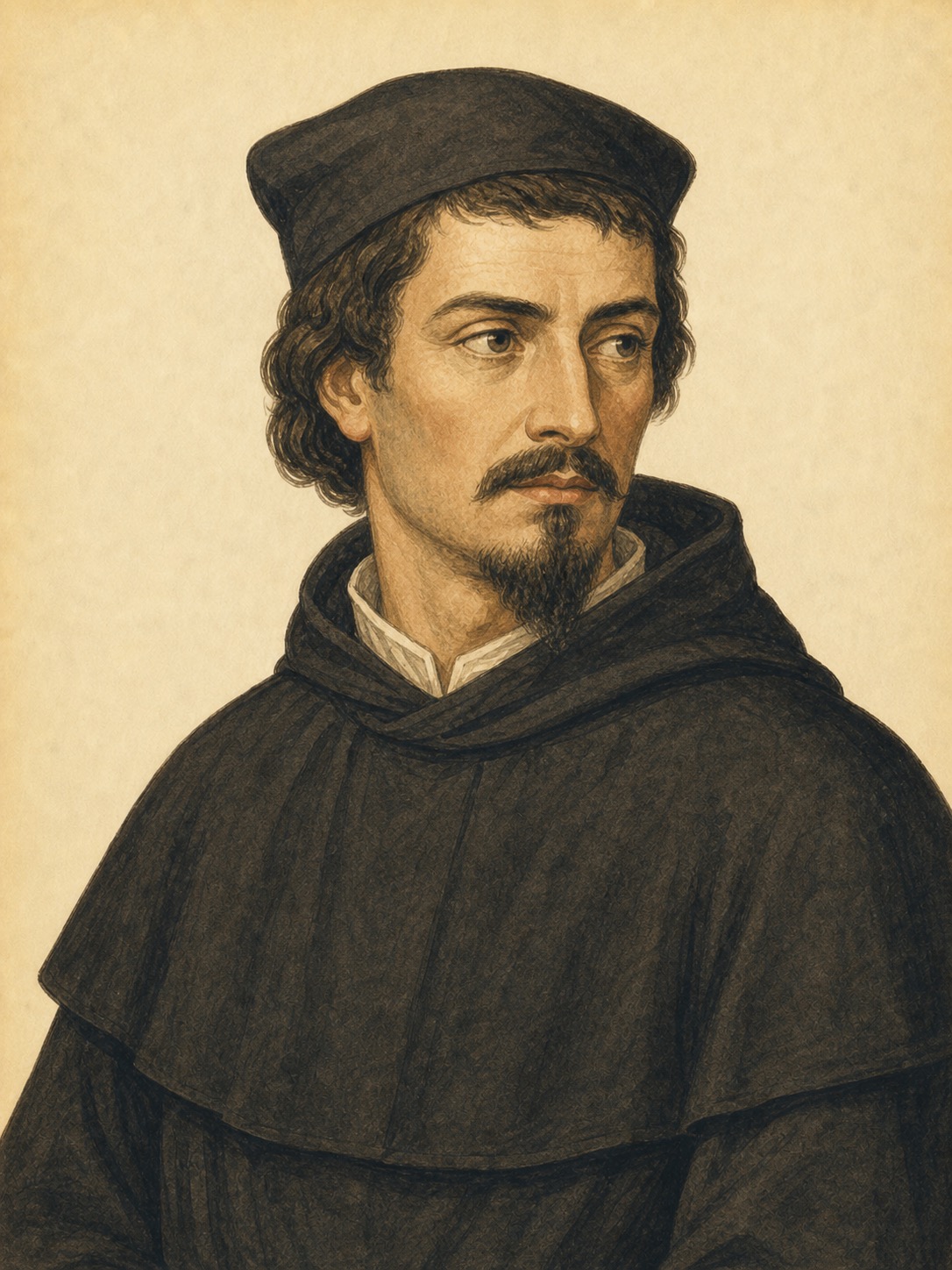
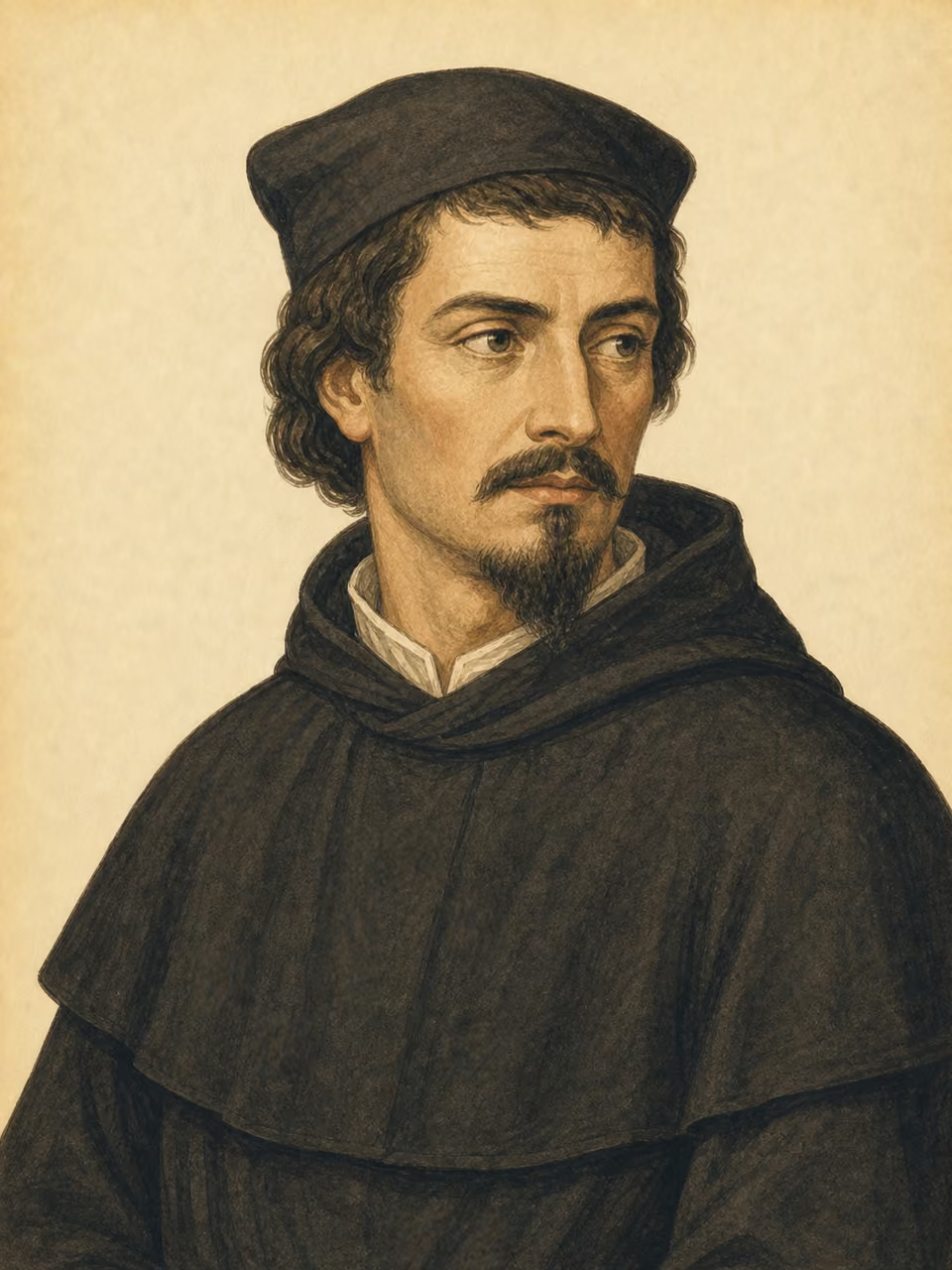
Giordano Bruno
historical figure in context
Italian thinker. He discussed infinite universes and multiple worlds, and was executed in Rome at the end of the Inquisition. He is a person who considers the tension between Renaissance thought, religious authority, and a scientific worldview. It is also an issue regarding freedom of thought.
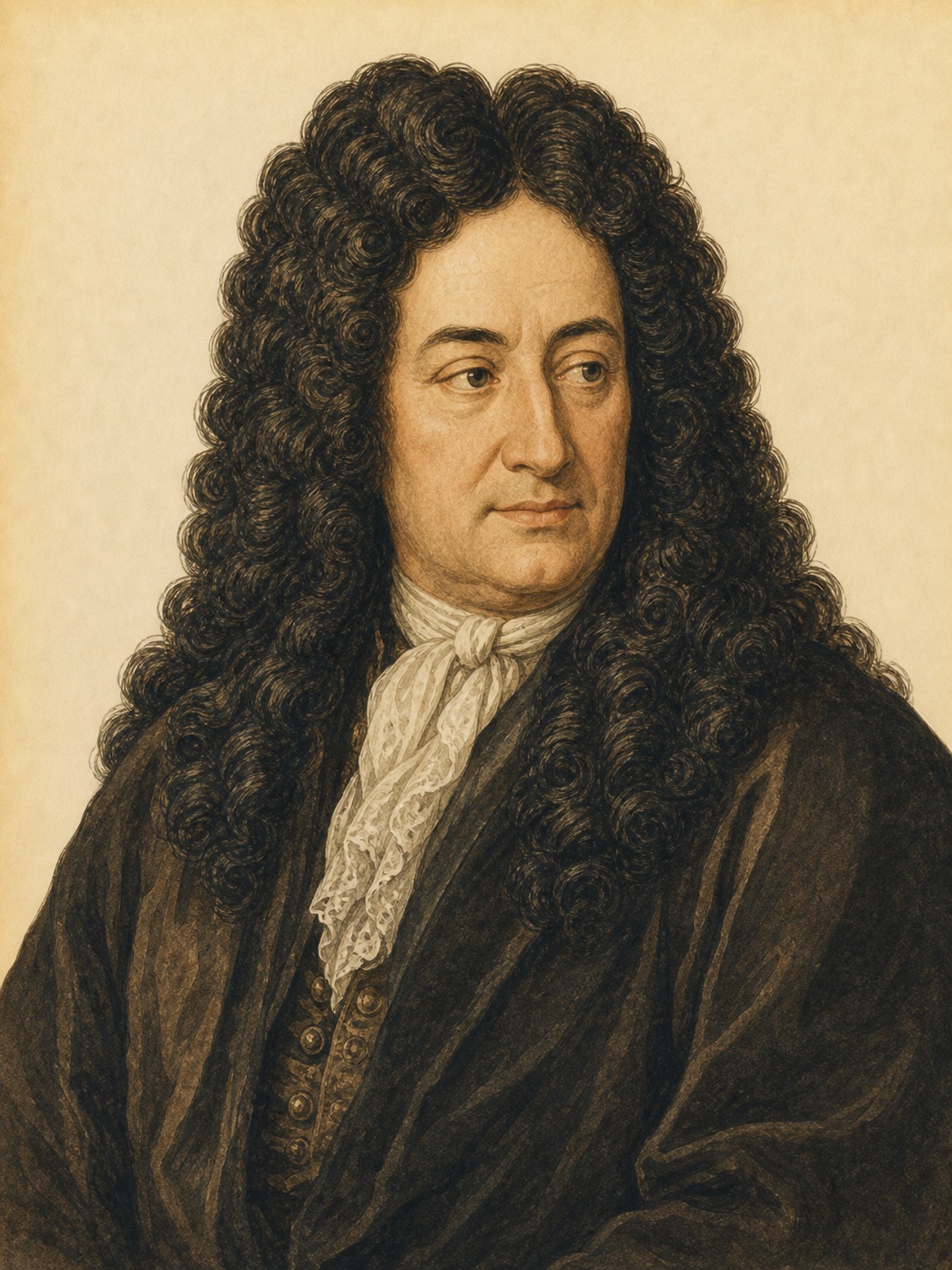
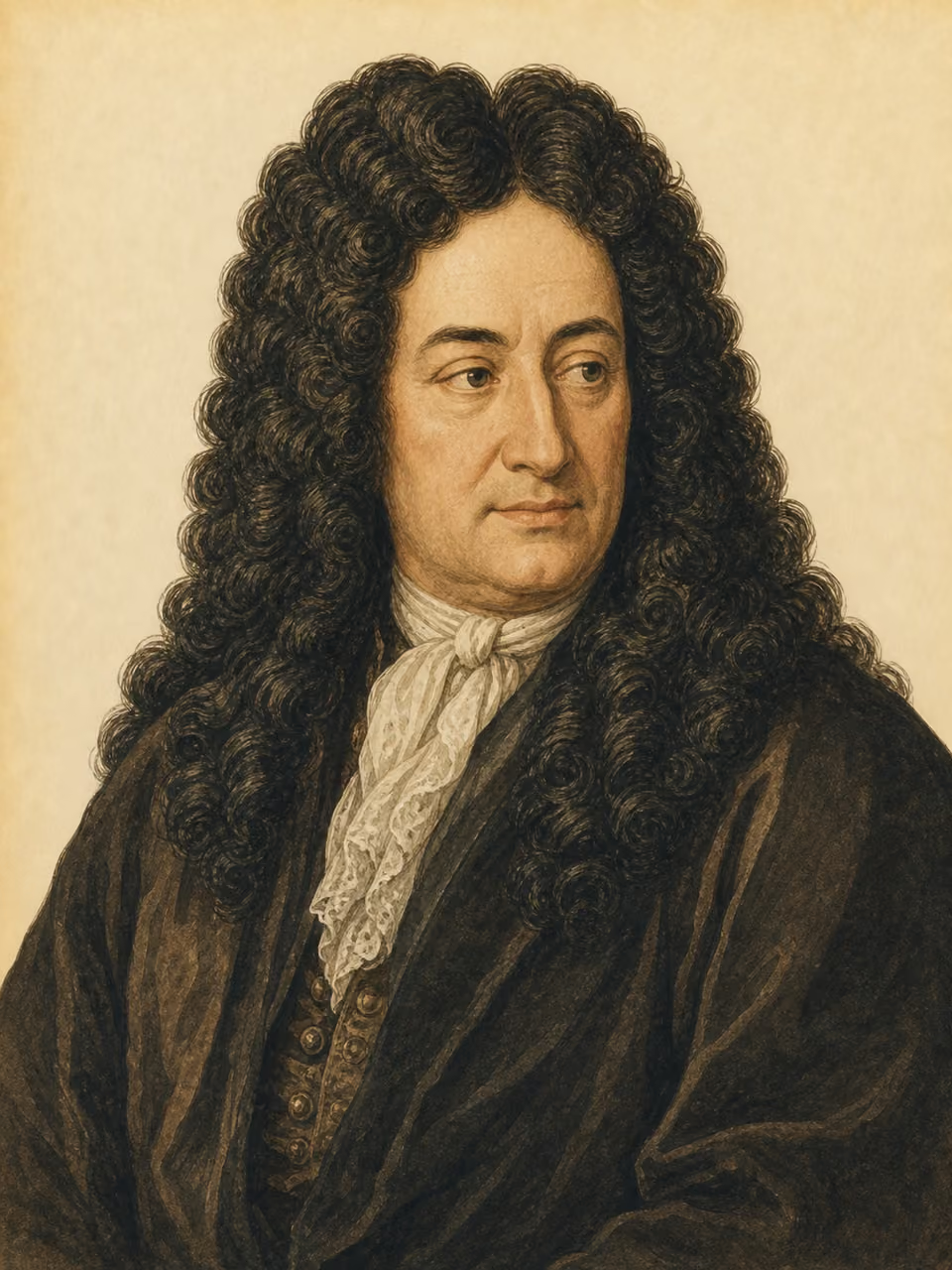
Gottfried Wilhelm Leibniz
historical figure in context
German philosopher and mathematician. Known for his calculus, monad theory, and rationalist philosophy, he represented modern European intelligence. He is a person who thinks about the scientific revolution and the Enlightenment.
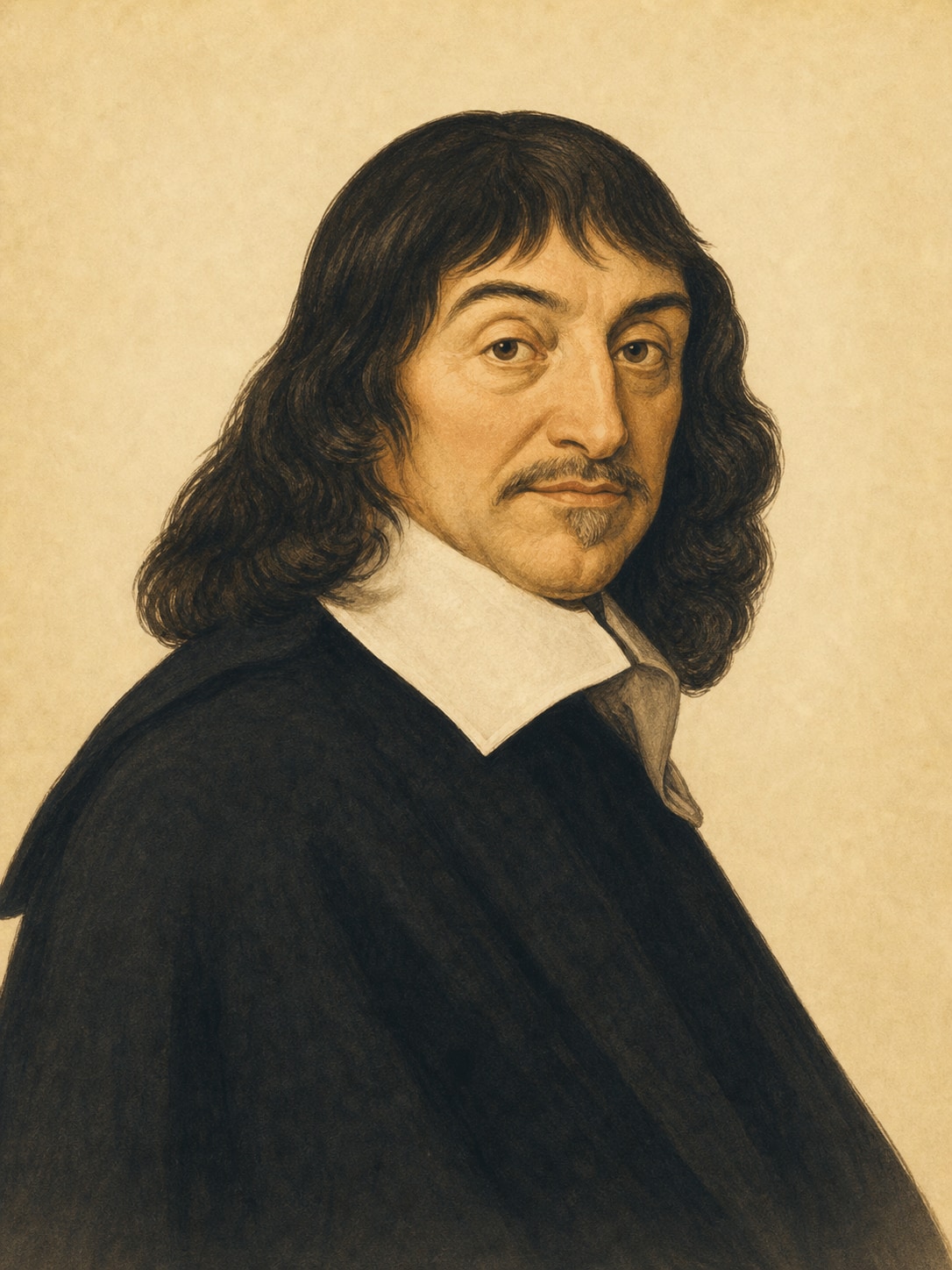
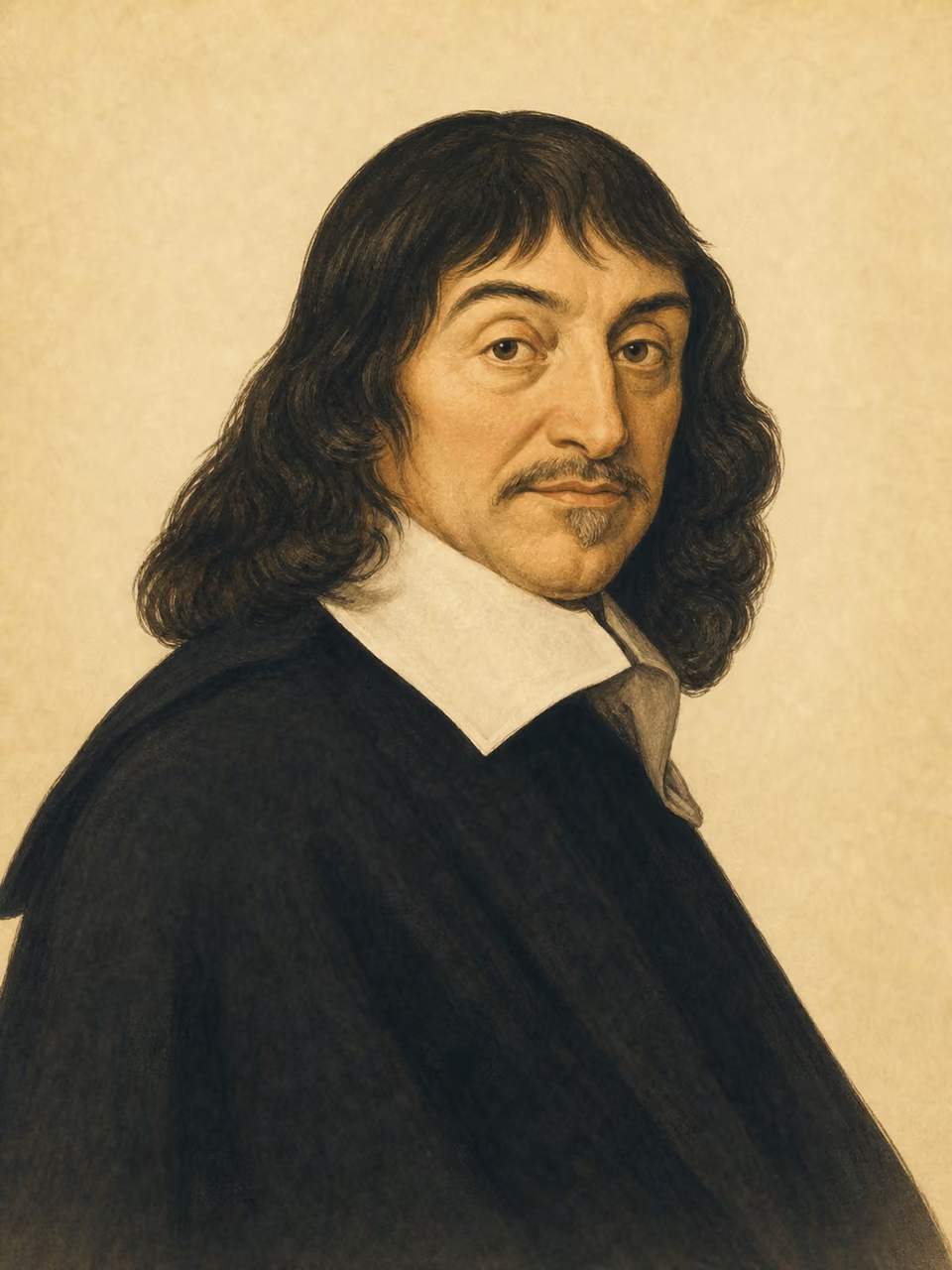
René Descartes
historical figure in context
A philosopher and mathematician representing early modern Europe. Known for his methodological skepticism and analytical geometry, he laid the foundations for modern rationalism and scientific thought. This book will help you understand the intersection between the scientific revolution and modern philosophy.
Related events
1523
Prelude
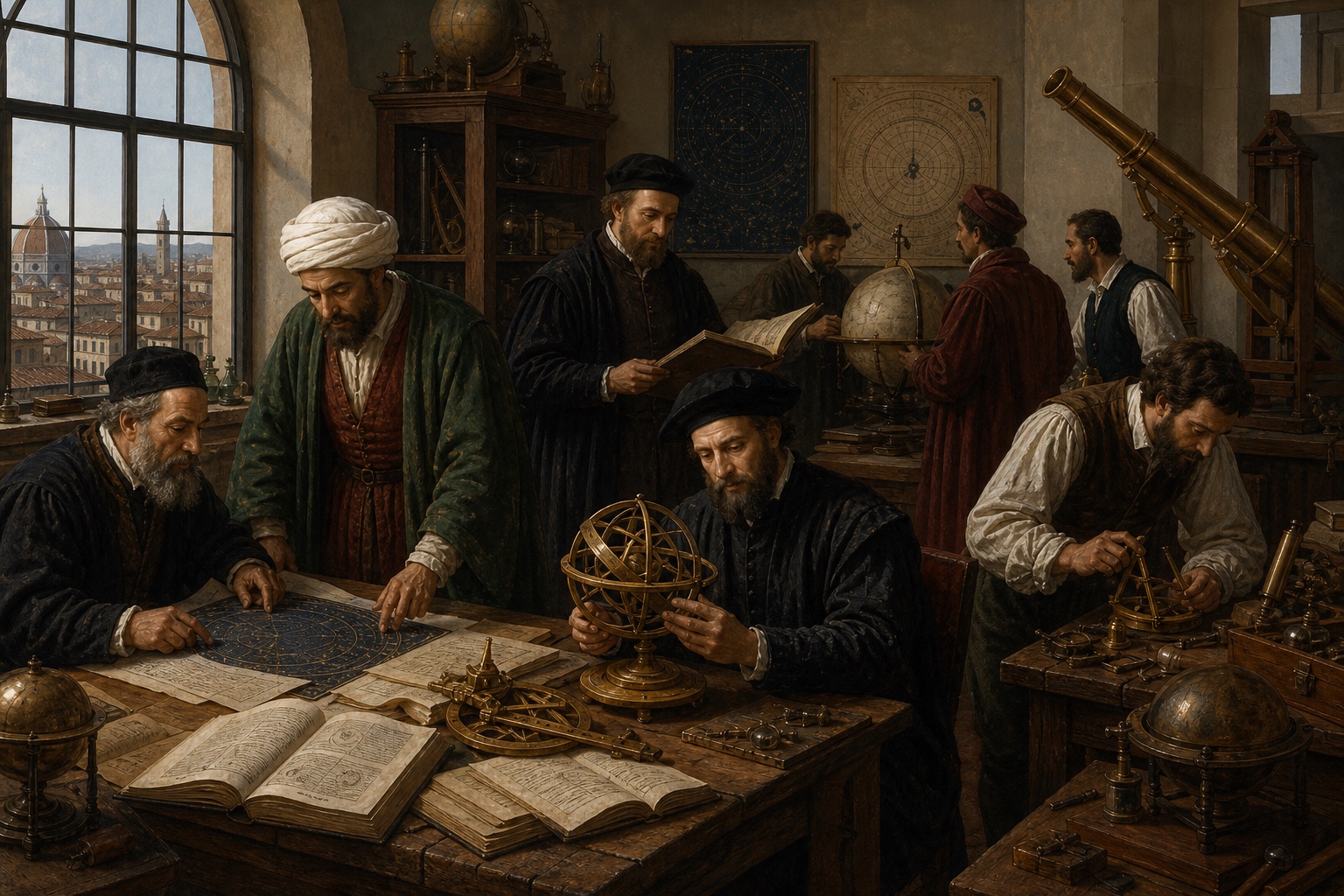
Prelude — Background: Renaissance recovery and criticism of ancient texts joined mathematical astronomy, artisanal knowledge, navigation, medicine, and knowledge transmitted from Greek, Islamic, and other traditions. Printing and networks of courts and universities widened argument even as religious and political authorities constrained it.
c. 1542
Rising tension
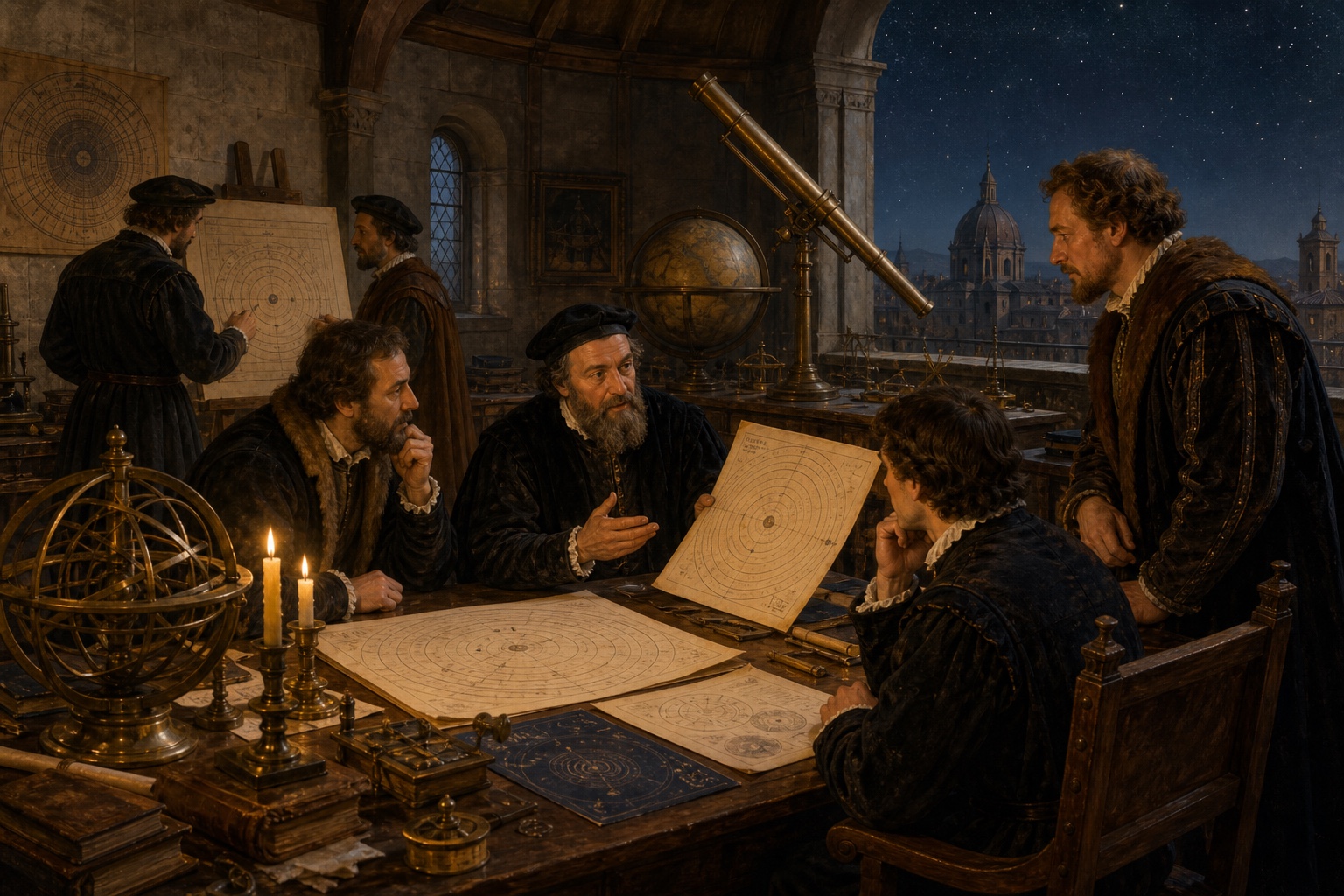
Rising tension — Build-up: Copernican astronomy, Kepler's planetary laws, Galileo's telescopic and mechanical work, Baconian programs, Cartesian natural philosophy, Boyle's experiments, and many other projects changed questions and methods. Instruments, correspondence, academies, and journals—including the Royal Society and its Philosophical Transactions—made observation increasingly collective and public.
c. 1543–c. 1687
Scientific Revolution
Current event
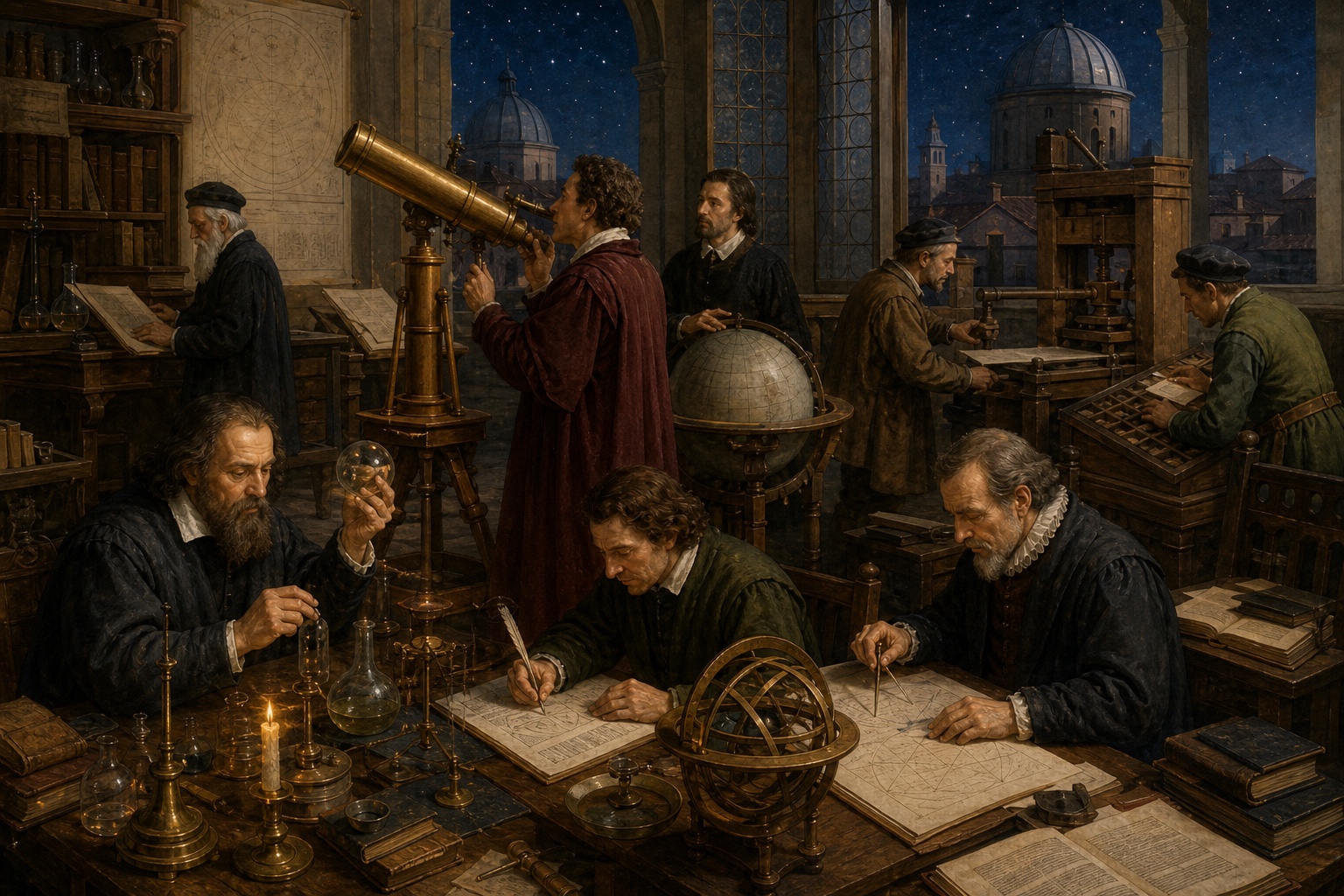
Scientific Revolution — Central transition: A retrospective label for interconnected changes in European natural knowledge, conventionally framed from Copernicus's 1543 publication to Newton's Principia in 1687.
c. 1688
Immediate aftermath
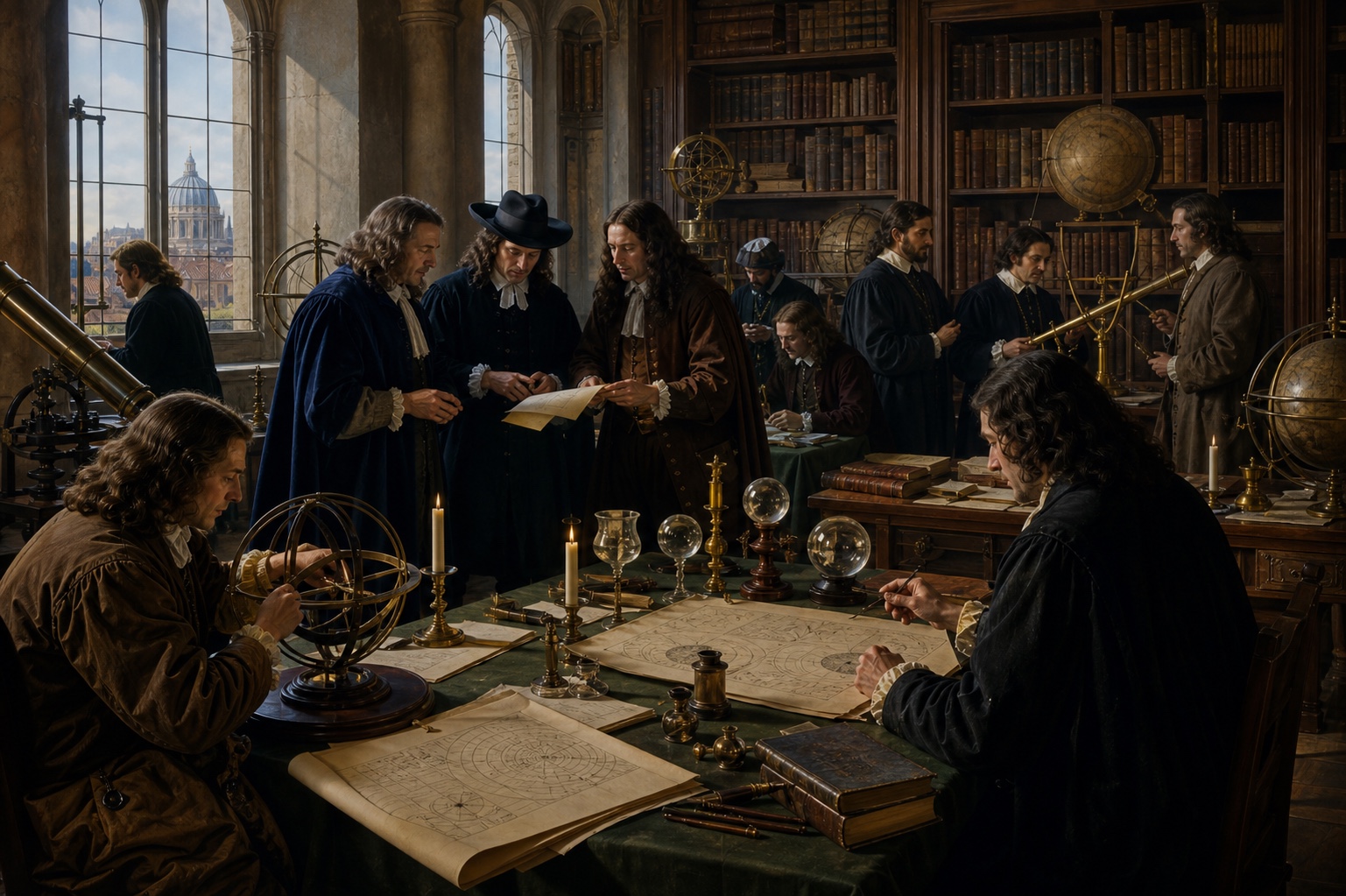
Immediate aftermath — Immediate result: Newton's 1687 Principia joined terrestrial and celestial motion in a mathematical theory of gravitation and became a powerful later endpoint for the narrative. Yet no single method suddenly replaced all earlier knowledge, and natural philosophy, theology, alchemy, and craft remained entangled.
c. 1697
Long-term significance
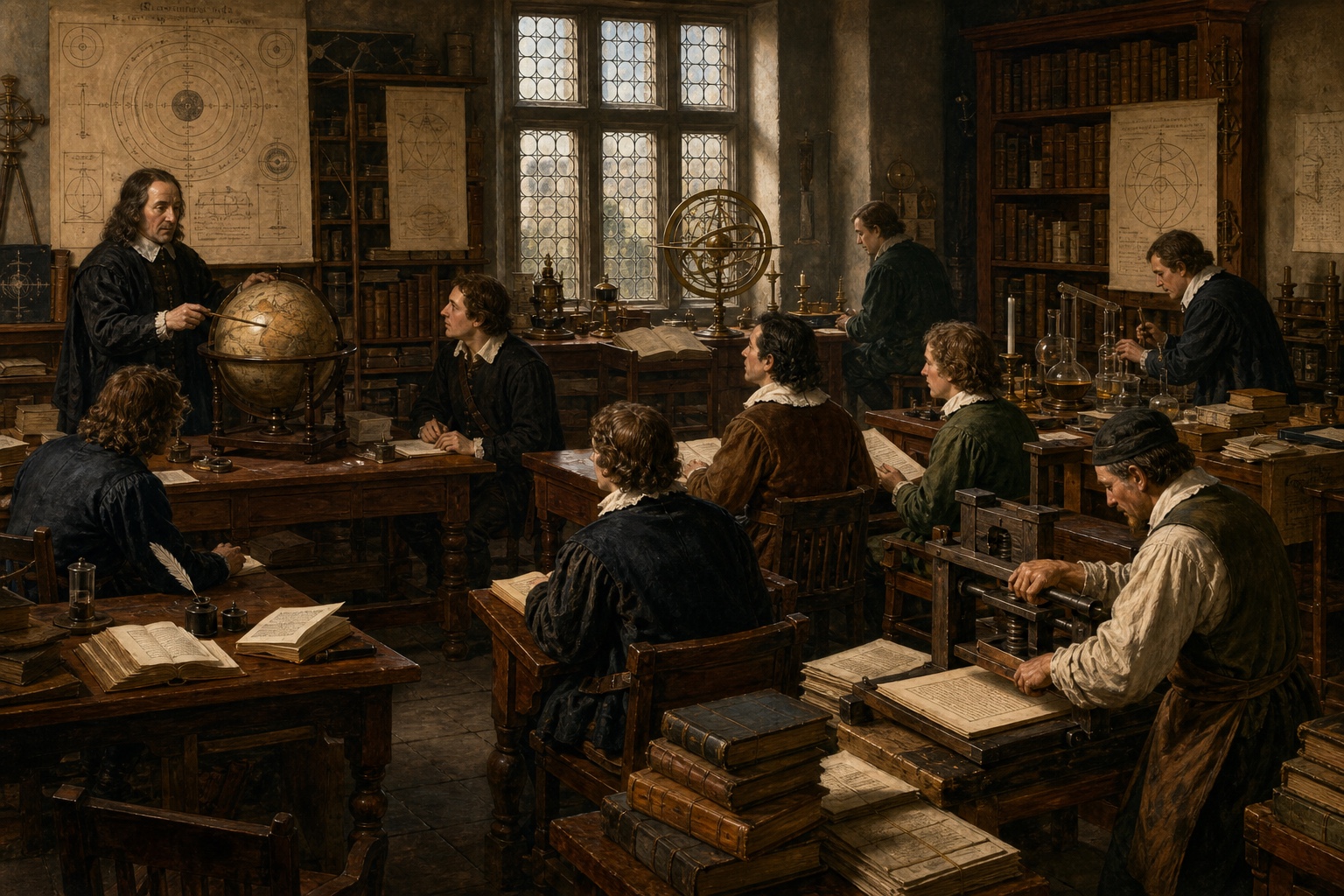
Long-term significance — Long-term significance: The label and its 1543–1687 boundaries are retrospective analytical frames, not a name used by participants for one coherent event. The changes nevertheless supplied experimental, mathematical, and institutional models that Enlightenment thinkers extended to nature and society, while modern historians debate how unified, revolutionary, or exclusively European the process was.


Sources
- Scientific Revolution — History (Royalsociety)royalsociety.orgThis Royalsociety resource supports the chronology, setting, and course of Scientific Revolution.
- Scientific Revolution — Principia (Royalsociety)royalsociety.orgThis Royalsociety resource supports the chronology, setting, and course of Scientific Revolution.
- Scientific Revolution — Scientific Revolutions (Plato)plato.stanford.eduThis Plato resource supports the chronology, setting, and course of Scientific Revolution.