
Bandung Conference
1955
The Asian-African Conference held in Bandung, Indonesia, on 18–24 April 1955, where representatives of twenty-nine governments discussed decolonization, development, racial discrimination, peace, and Cold War pressures.

- Period
- 1955
- Kind
- Conference
- Regions
- Southeast Asia, East Asia, South Asia, Middle East, Africa
- Keywords
- Bandung Conference · background · course · outcome
Follow the story · Four stages
Background
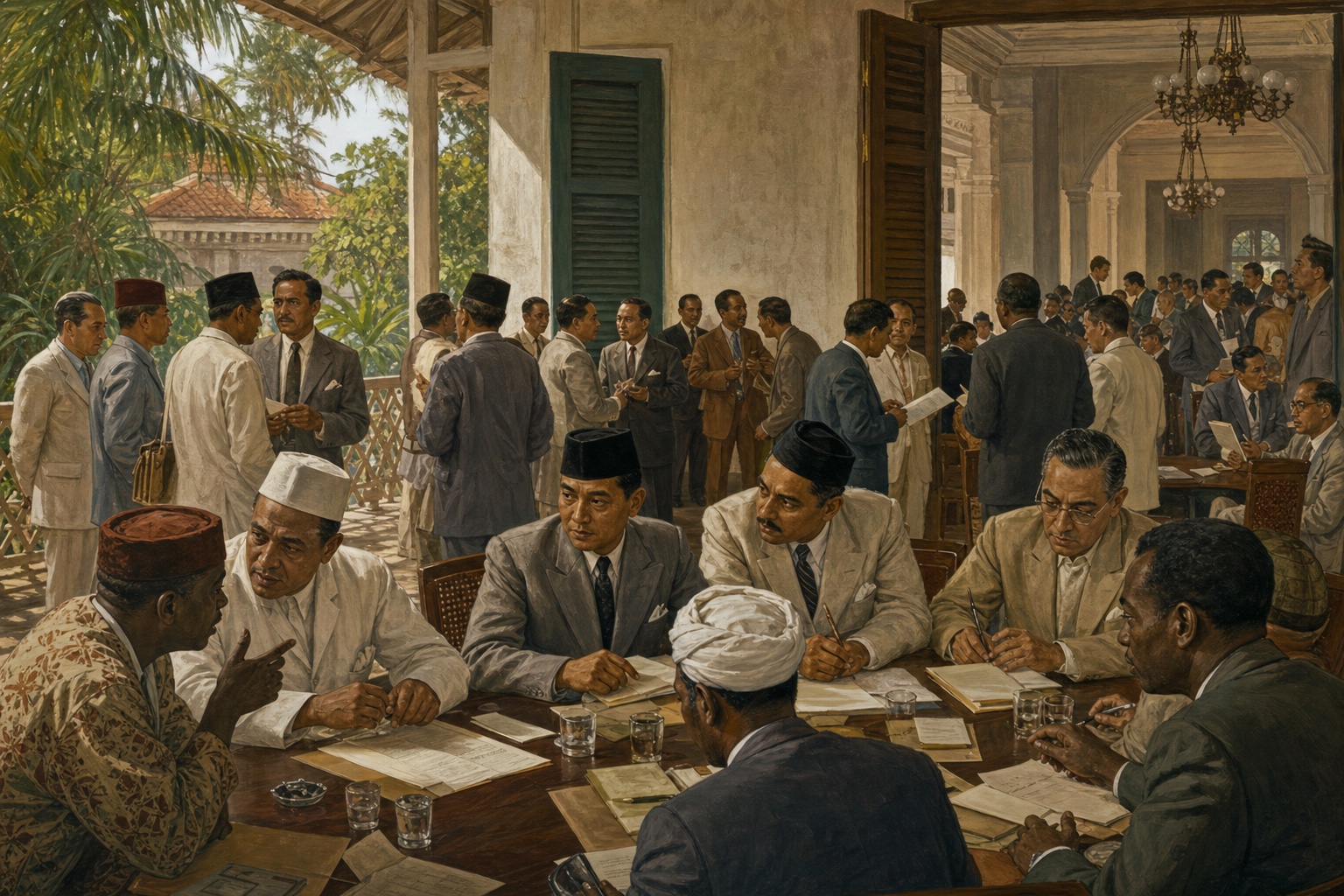
Newly independent governments faced colonial wars, unequal trade, and pressure to join US- or Soviet-led blocs after the Second World War. Indonesia, Burma, Ceylon, India, and Pakistan convened the meeting, while many African peoples still under colonial rule could not send sovereign governments. Participants also differed in alliances, political systems, and attitudes toward communism.
- Newly independent governments faced colonial wars, unequal trade, and pressure to join US- or Soviet-led blocs after the Second World War.
- Indonesia, Burma, Ceylon, India, and Pakistan convened the meeting, while many African peoples still under colonial rule could not send sovereign governments.
- Participants also differed in alliances, political systems, and attitudes toward communism.
Course
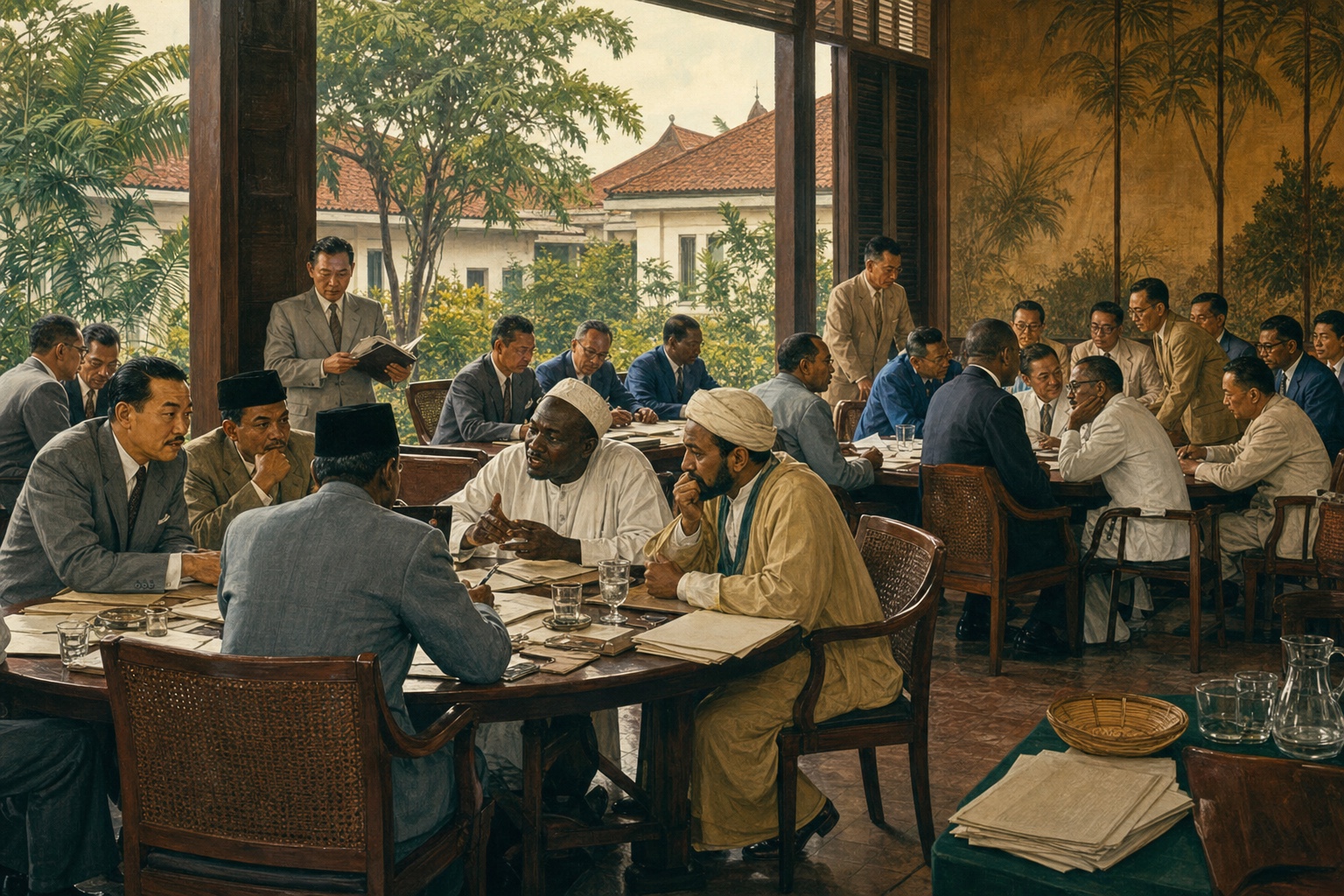
Delegations including Zhou Enlai's People's Republic of China negotiated committees on economic and cultural cooperation, human rights and self-determination, colonized peoples, and international peace. Disagreement was real, but consensus produced a final communiqué and ten principles emphasizing sovereignty, nonaggression, noninterference, equality, peaceful settlement, and cooperation.
- Delegations including Zhou Enlai's People's Republic of China negotiated committees on economic and cultural cooperation, human rights and self-determination, colonized peoples, and international peace.
- Disagreement was real, but consensus produced a final communiqué and ten principles emphasizing sovereignty, nonaggression, noninterference, equality, peaceful settlement, and cooperation.
- Conditions behind the action: Newly independent governments faced colonial wars, unequal trade, and pressure to join US- or Soviet-led blocs after the Second World War. Indonesia, Burma, Ceylon, India, and Pakistan convened the meeting, while many African peoples still under colonial rule could not send sovereign governments. Participants also differed in alliances, political systems, and attitudes toward communism.
Outcome
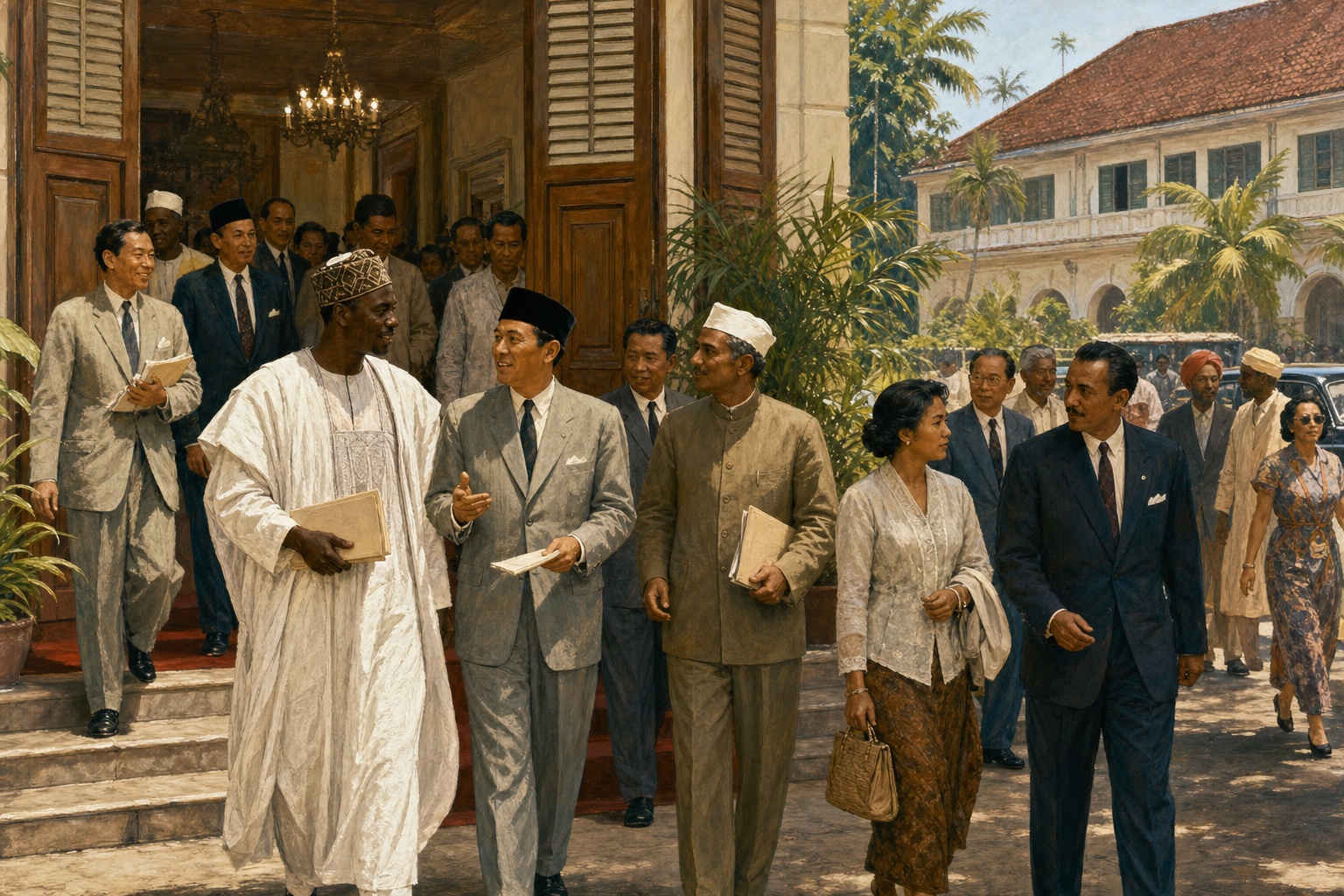
The conference condemned colonialism and racial discrimination and amplified Asian and African claims in world politics without creating a permanent organization. Bandung helped prepare political ground for nonalignment, but it was not the formal founding meeting of the Non-Aligned Movement: that movement was established at the first summit in Belgrade in 1961.
- The conference condemned colonialism and racial discrimination and amplified Asian and African claims in world politics without creating a permanent organization.
- Bandung helped prepare political ground for nonalignment, but it was not the formal founding meeting of the Non-Aligned Movement: that movement was established at the first summit in Belgrade in 1961.
- Process producing the result: Delegations including Zhou Enlai's People's Republic of China negotiated committees on economic and cultural cooperation, human rights and self-determination, colonized peoples, and international peace. Disagreement was real, but consensus produced a final communiqué and ten principles emphasizing sovereignty, nonaggression, noninterference, equality, peaceful settlement, and cooperation.
Historical significance
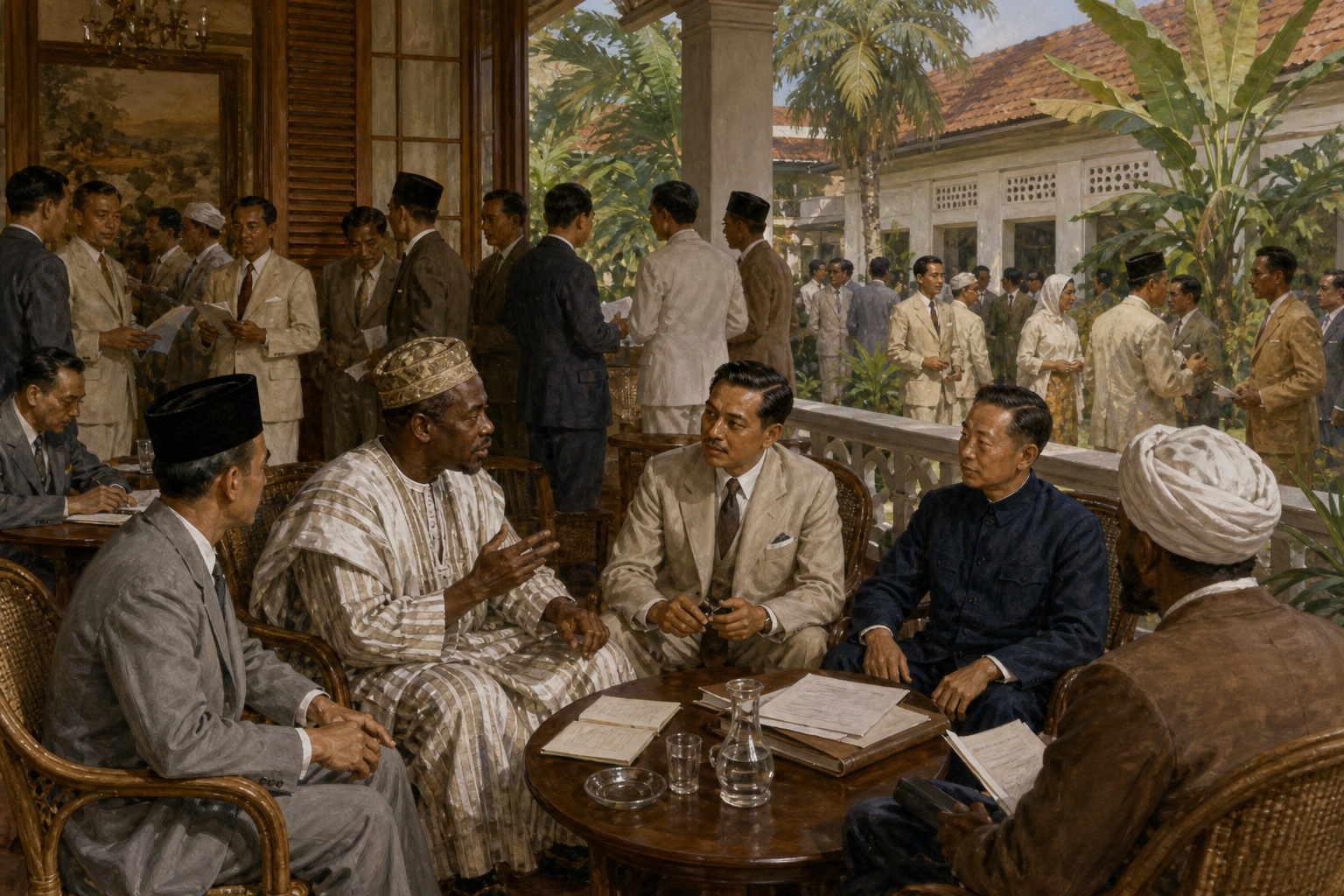
Bandung connected a post-Second World War wave of decolonization with governments born from distinct struggles, including China's 1949 revolution. Its principles and anti-racist declaration strengthened solidarity with African liberation and anti-apartheid campaigns. The 'Bandung spirit' was influential but never erased participants' conflicts, unequal power, or different relationships with the Cold War blocs.
- Bandung connected a post-Second World War wave of decolonization with governments born from distinct struggles, including China's 1949 revolution.
- Its principles and anti-racist declaration strengthened solidarity with African liberation and anti-apartheid campaigns.
- The 'Bandung spirit' was influential but never erased participants' conflicts, unequal power, or different relationships with the Cold War blocs.


Related figures
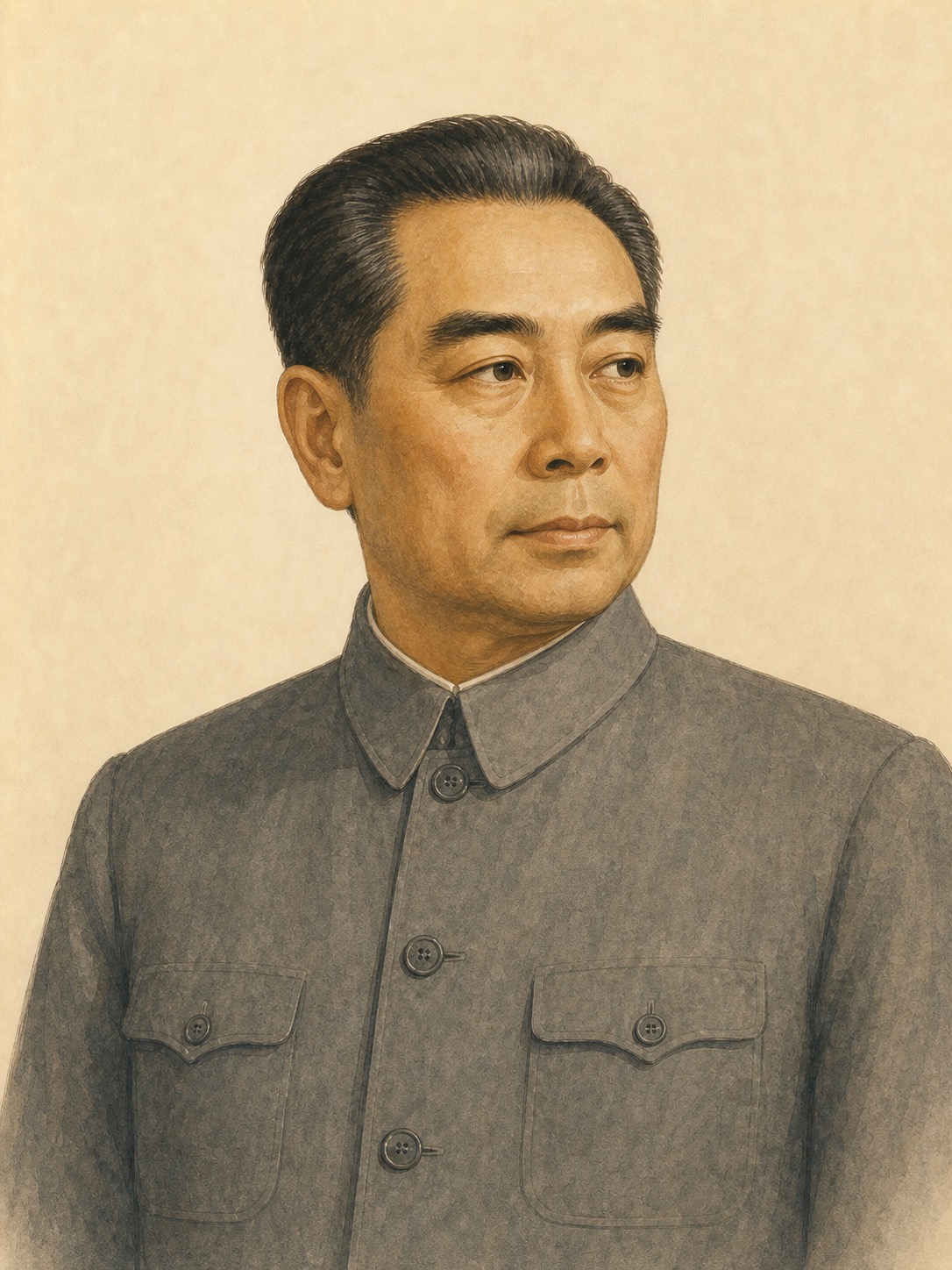
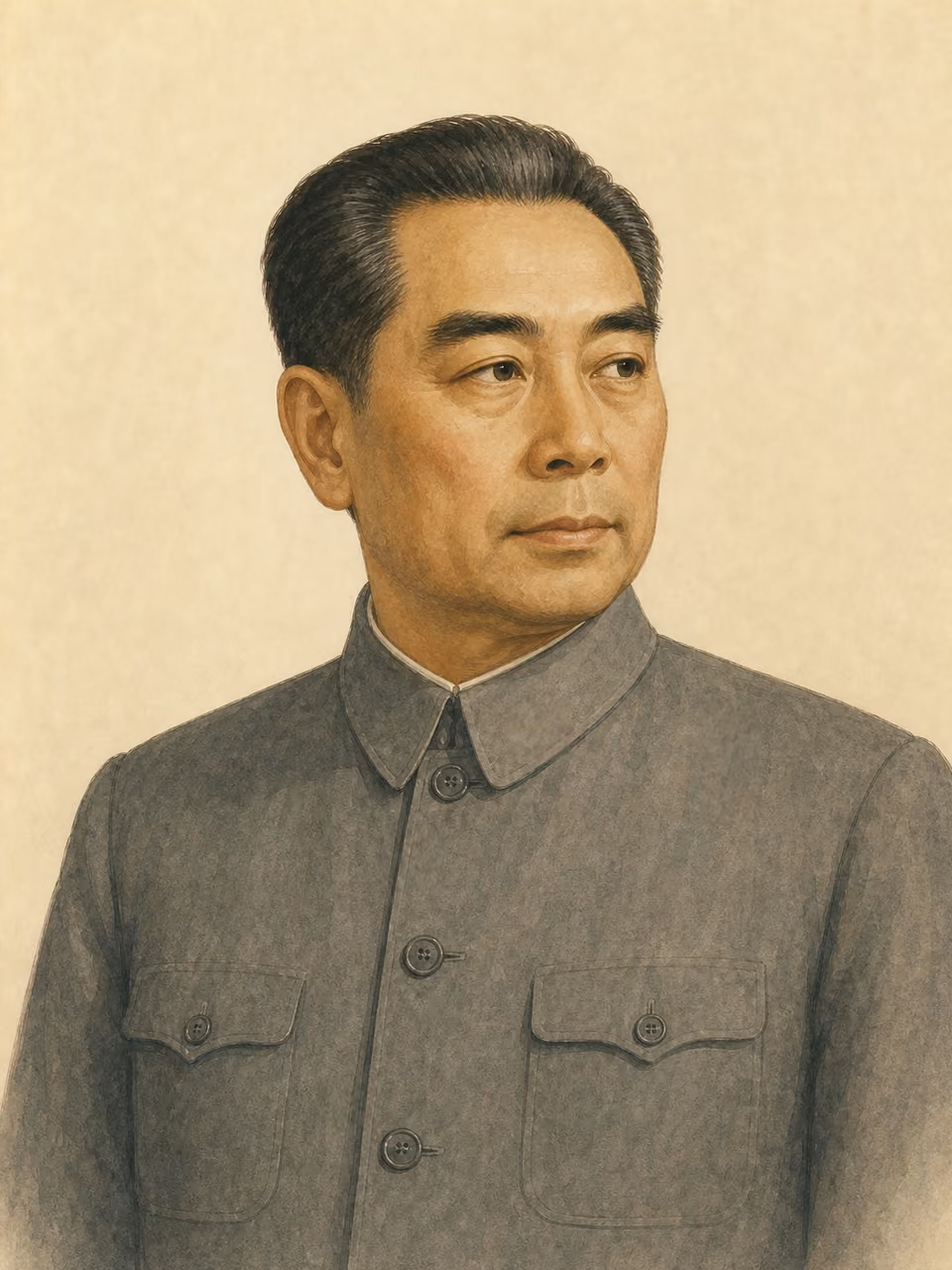
Zhou Enlai
historical figure in context
First premier of the People's Republic of China. He was long involved in revolutionary movements, state building, and diplomacy. As a figure who sustained the practical administration and foreign relations of a revolutionary regime, he is key to understanding China's international relations in the twentieth century.
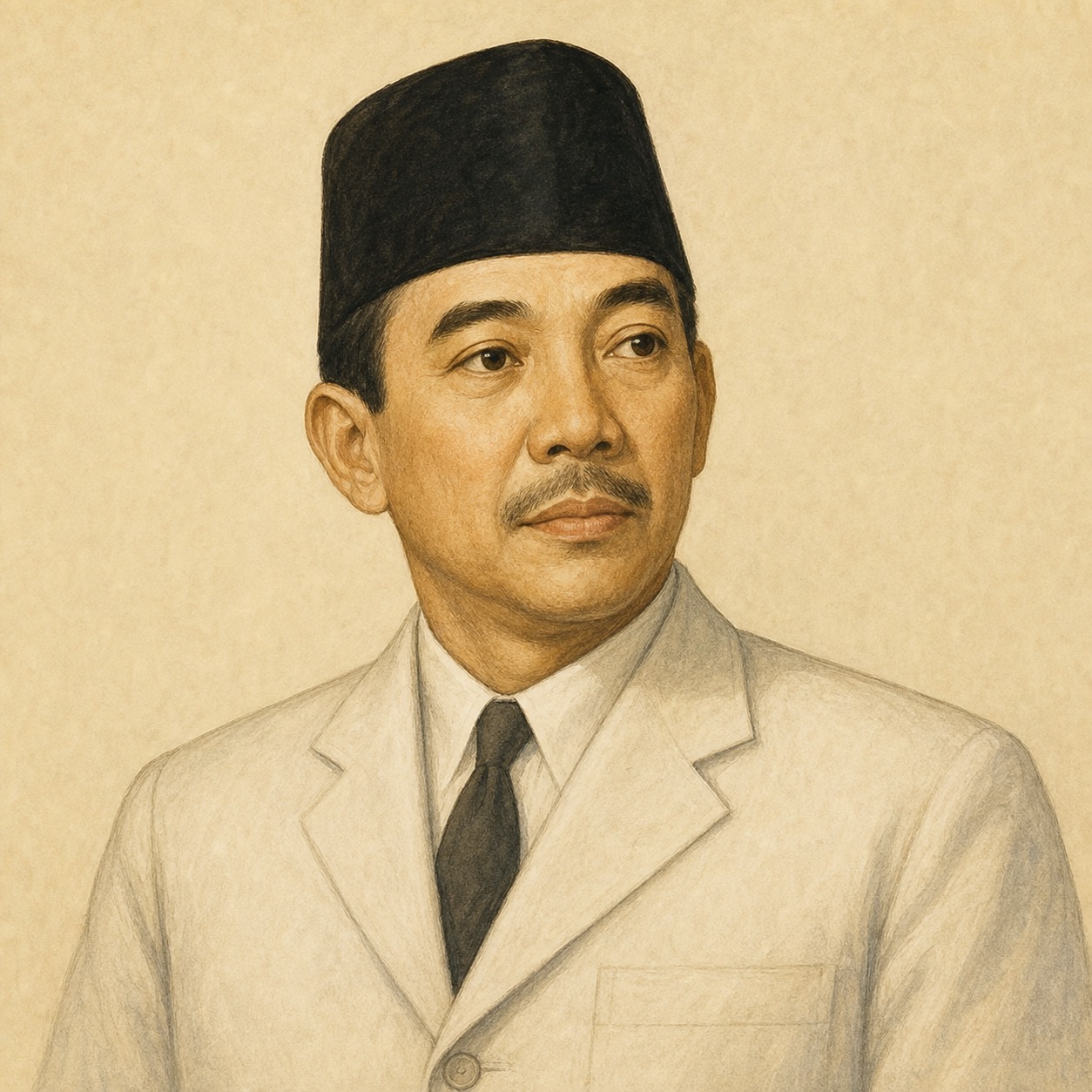
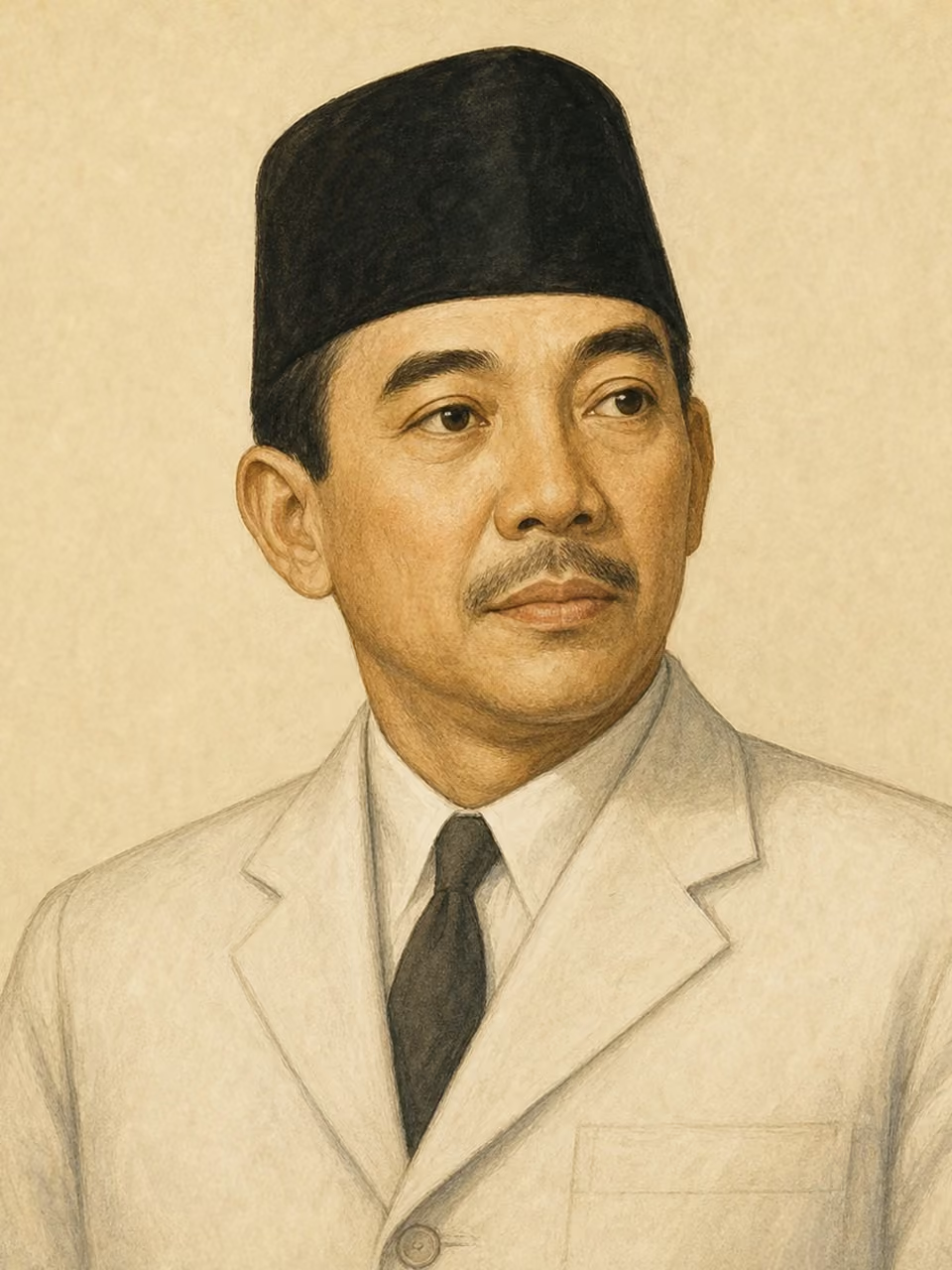
Sukarno
historical figure in context
Leader of Indonesian independence and the country's first president. He opposed Dutch colonial rule and called for the integration of a multiethnic state. He is important for considering decolonization and Third World diplomacy.
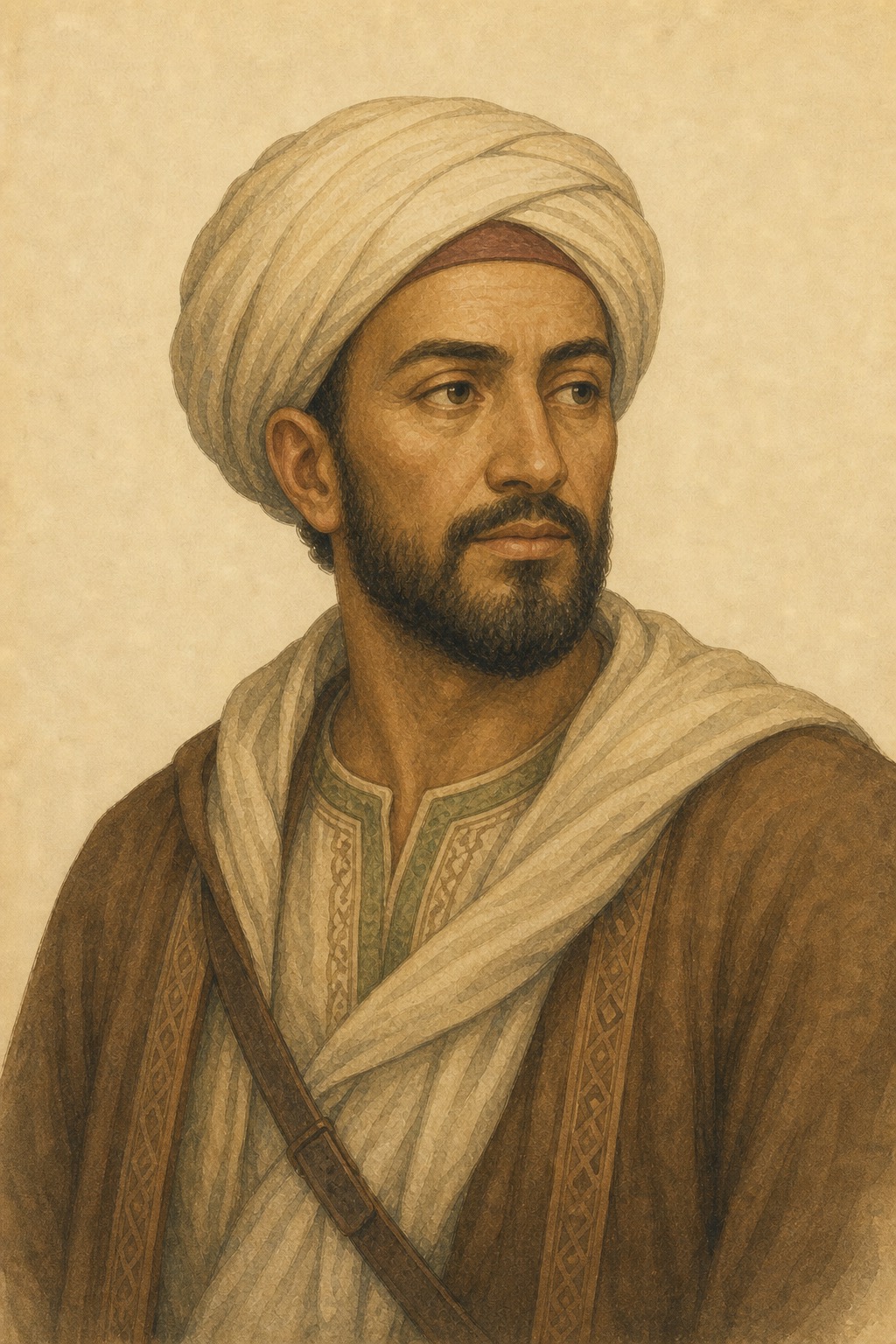
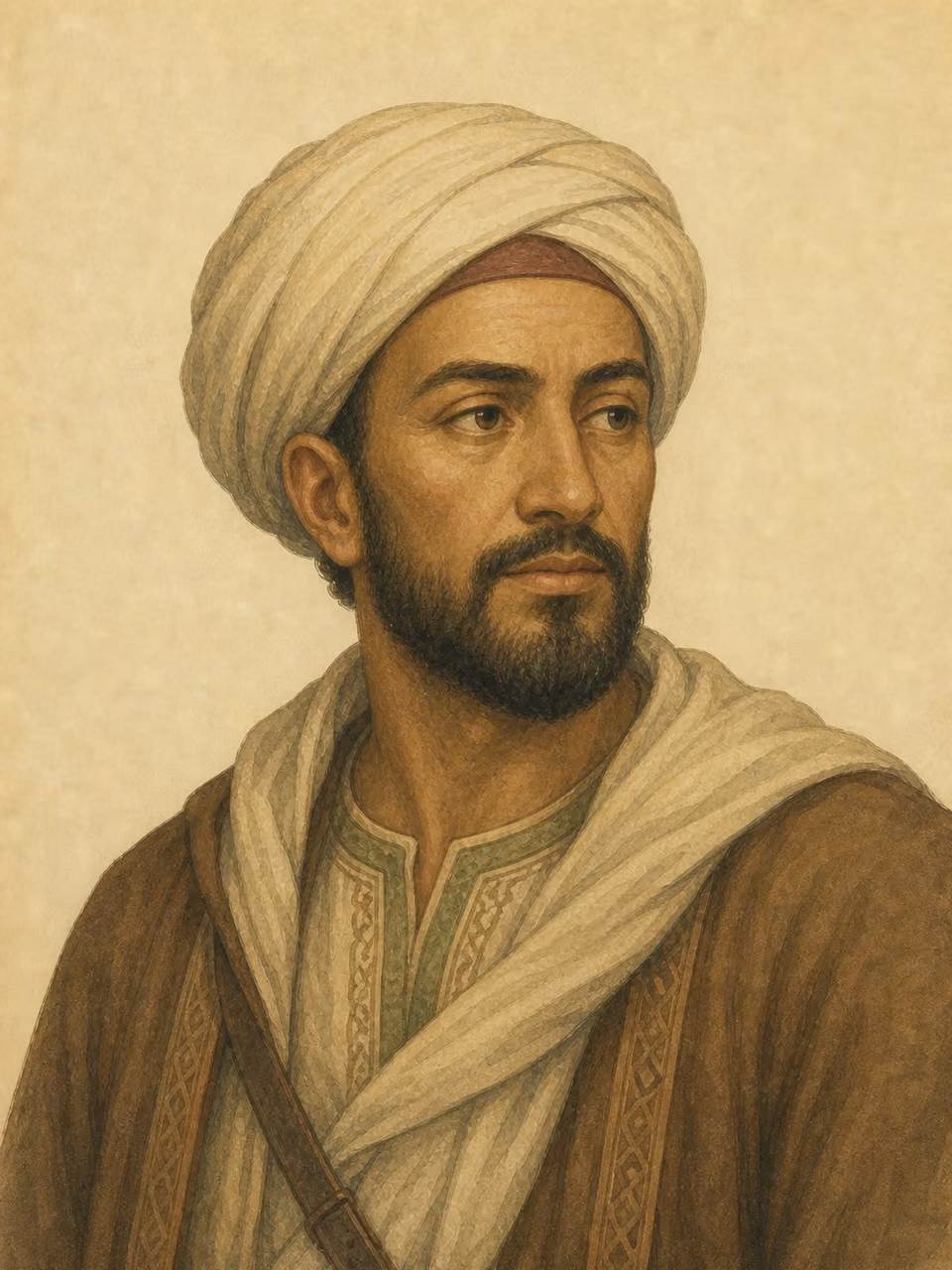
Ibn Battuta
historical figure in context
Ibn Battuta set out as a young jurist intending to make the pilgrimage to Mecca, then kept going for decades through ports, courts, commercial routes, and centers of learning across Afro-Eurasia. The Rihla preserves that motion in scenes of shipwreck, patronage, frustration, and opportunity, making travel feel like a social skill rather than mere adventure.
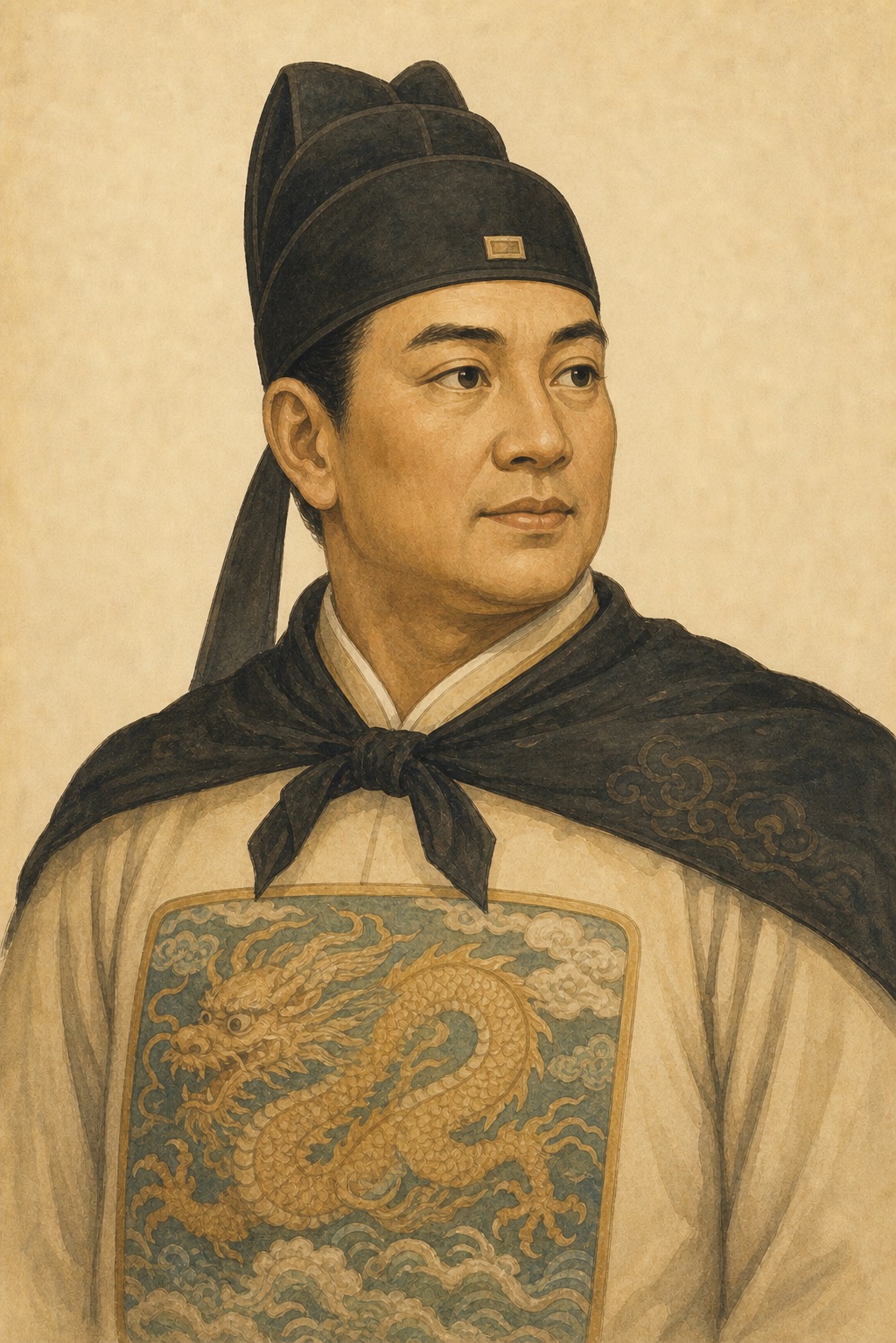
Zheng He
historical figure in context
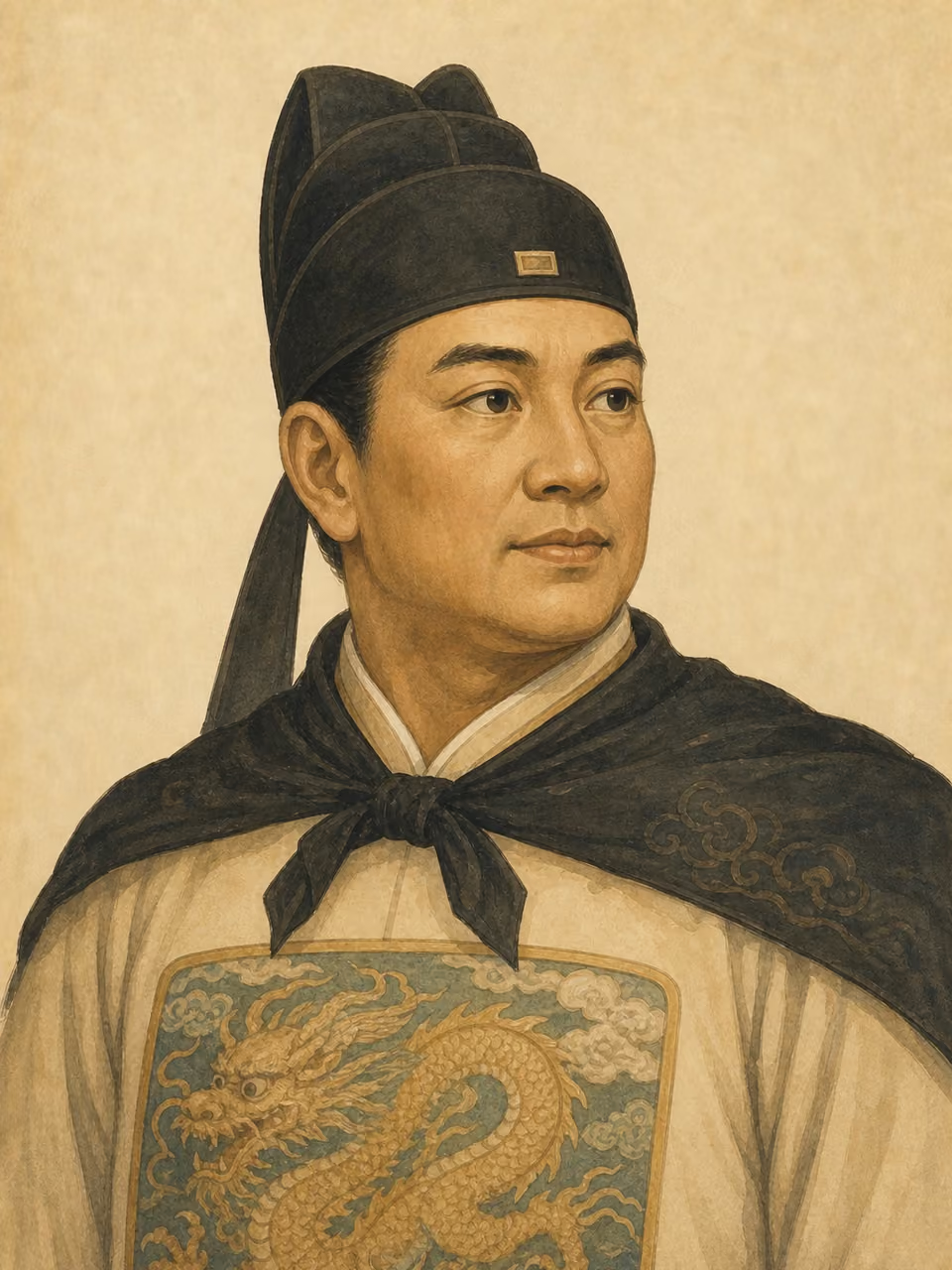
Zheng He rose from captivity and court service to command the great Ming expeditions that carried huge fleets through Southeast Asia and across the Indian Ocean. At each major port, those voyages combined diplomacy, exchange, and calculated display, revealing how far imperial power could be projected at sea when the court chose to invest in it.
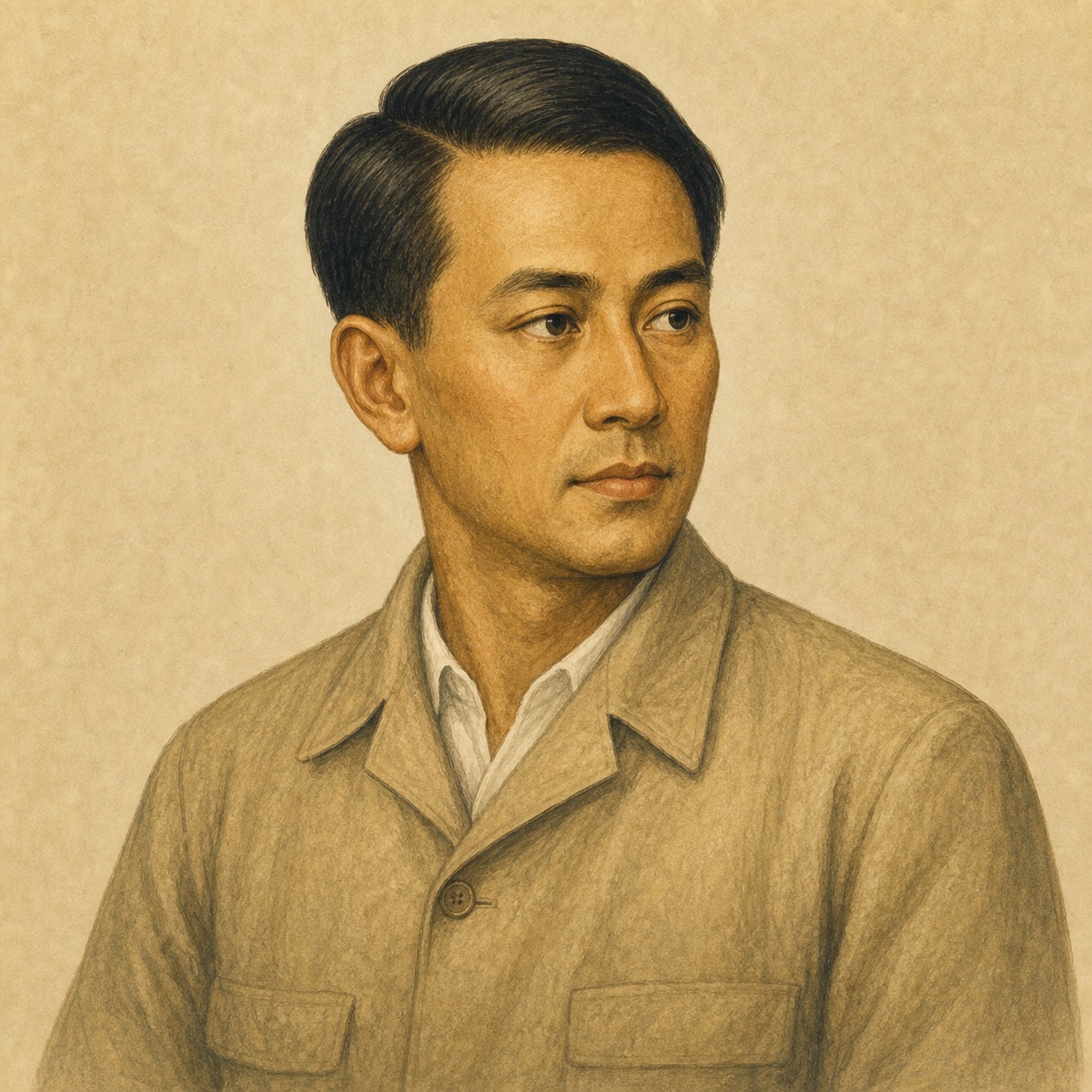
Aung San
historical figure in context
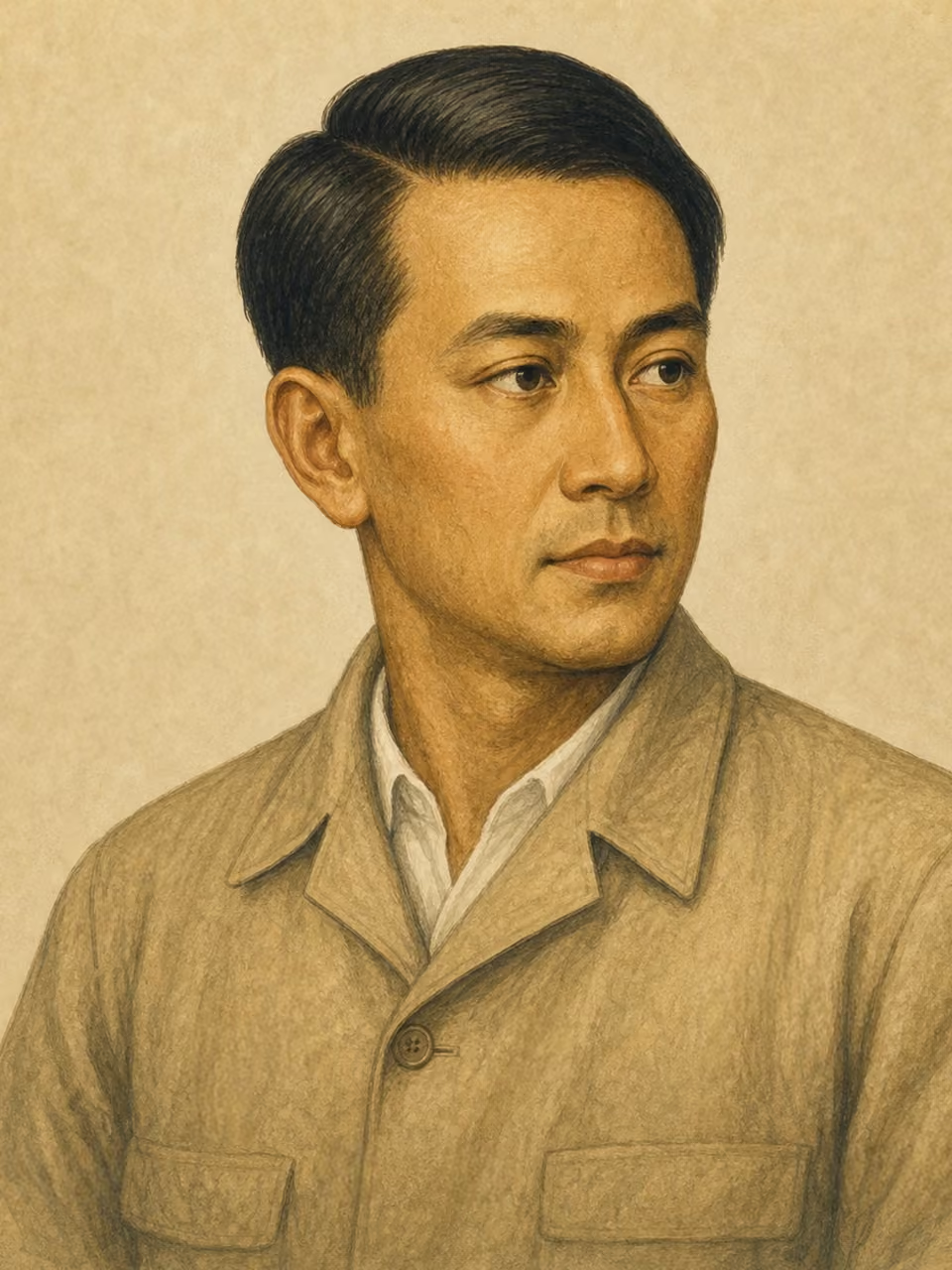
Leader of the Burmese independence movement. Through cooperation and confrontation with the Japanese military, they proceeded with post-war independence negotiations. He is an important figure in thinking about the decolonization of Southeast Asia.
Related events
1935
Prelude
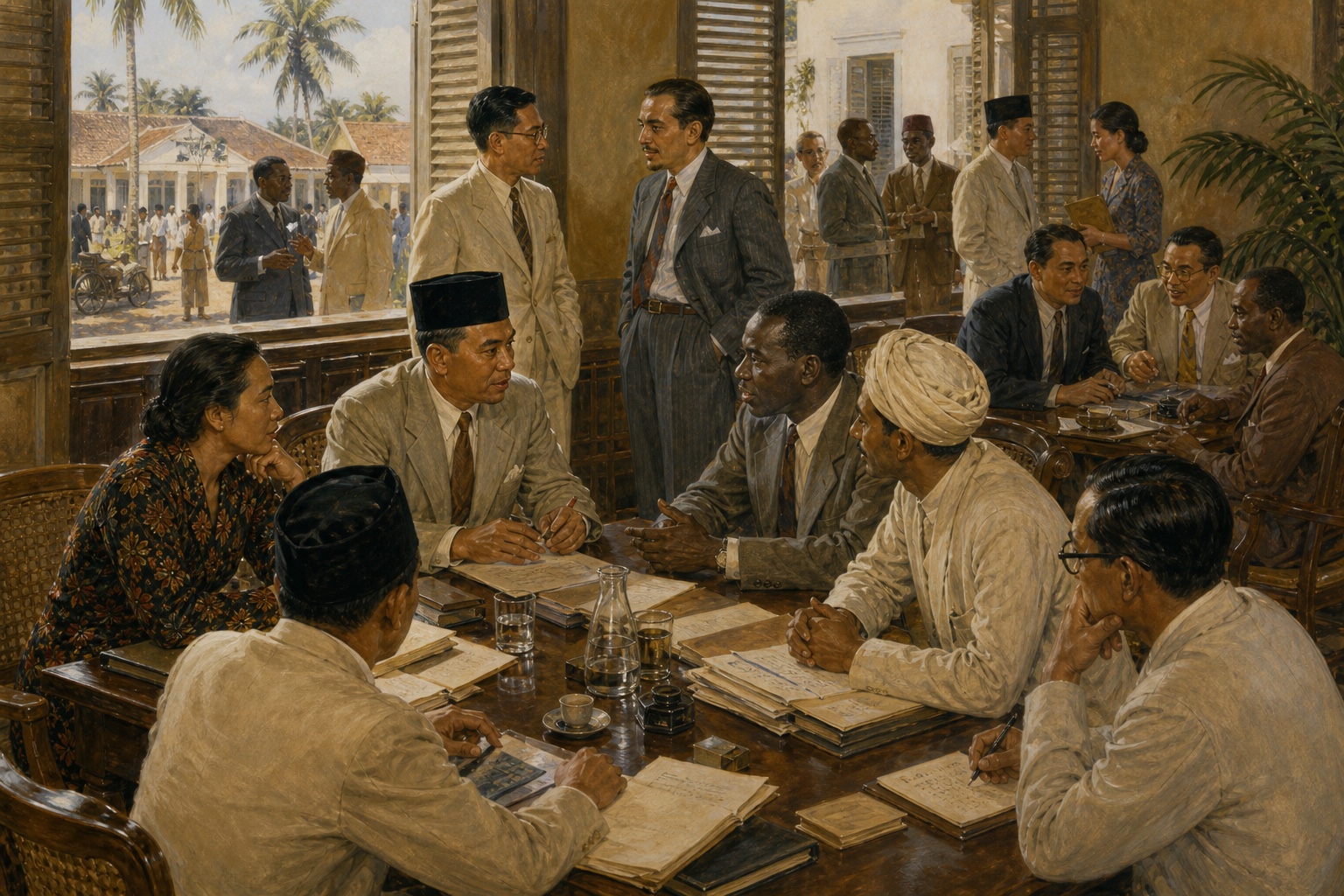
Prelude — Background: Newly independent governments faced colonial wars, unequal trade, and pressure to join US- or Soviet-led blocs after the Second World War. Indonesia, Burma, Ceylon, India, and Pakistan convened the meeting, while many African peoples still under colonial rule could not send sovereign governments. Participants also differed in alliances, political systems, and attitudes toward communism.
c. 1954
Rising tension
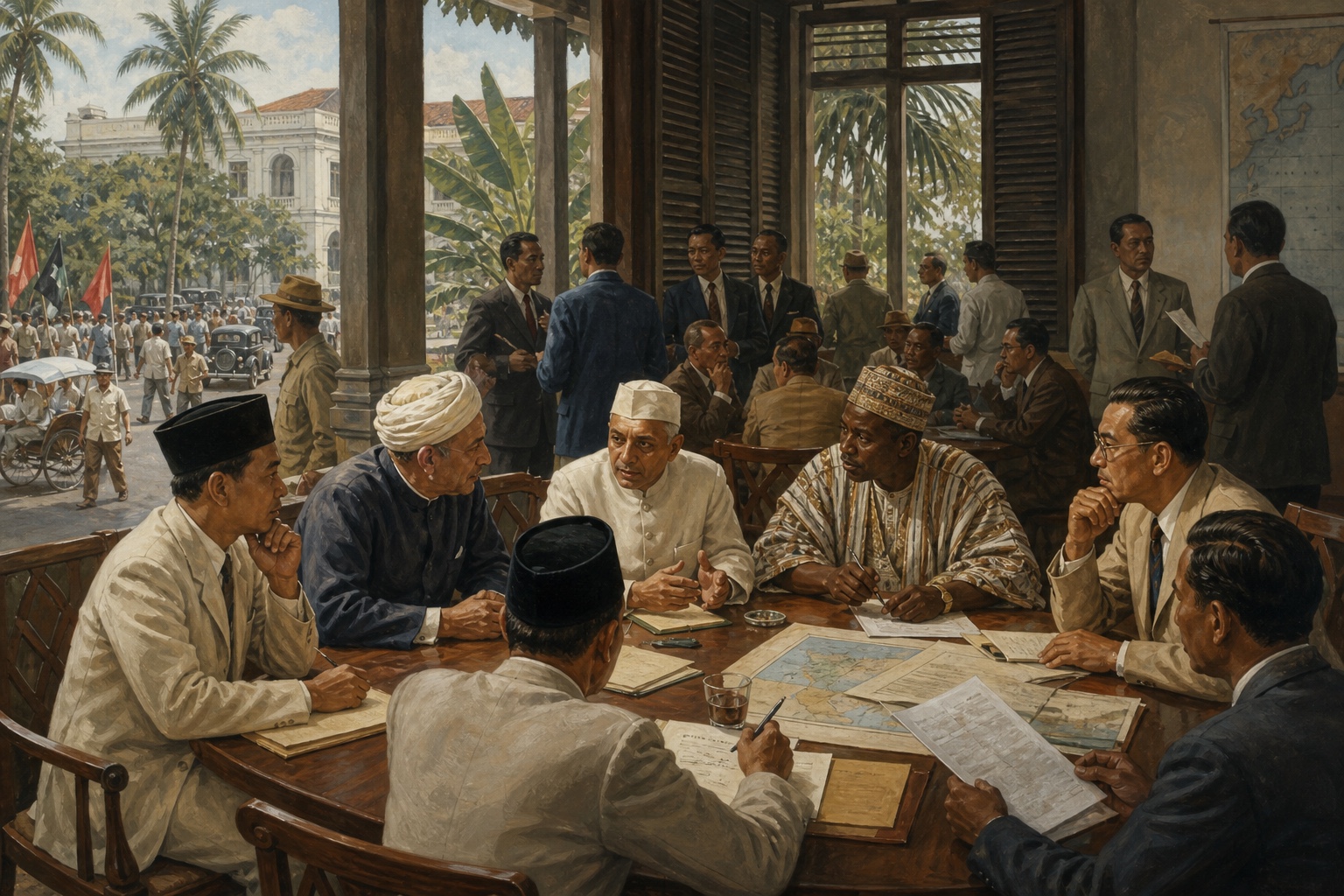
Rising tension — Build-up: Delegations including Zhou Enlai's People's Republic of China negotiated committees on economic and cultural cooperation, human rights and self-determination, colonized peoples, and international peace. Disagreement was real, but consensus produced a final communiqué and ten principles emphasizing sovereignty, nonaggression, noninterference, equality, peaceful settlement, and cooperation.
1955
Bandung Conference
Current event
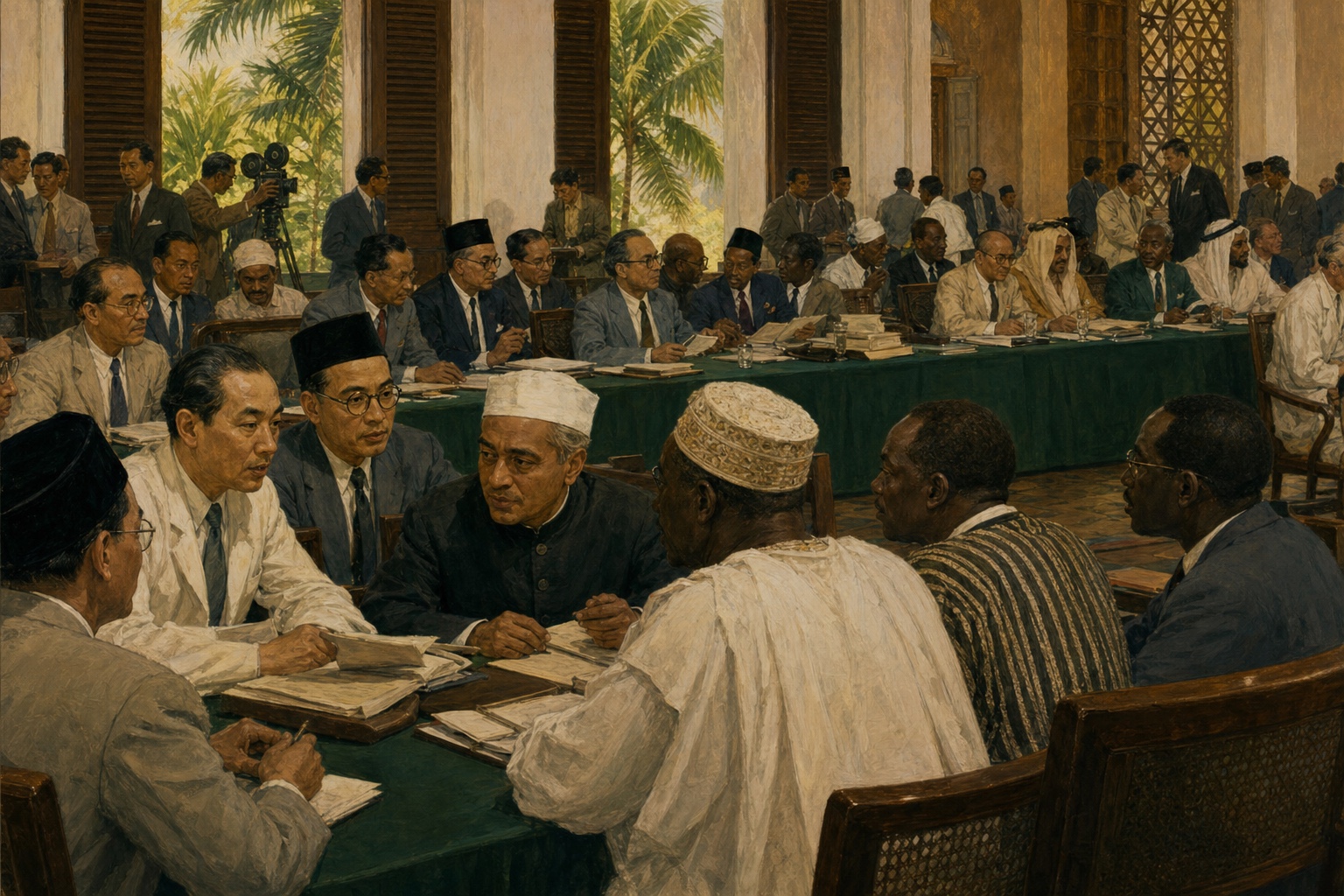
Bandung Conference — Central transition: The Asian-African Conference held in Bandung, Indonesia, on 18–24 April 1955, where representatives of twenty-nine governments discussed decolonization, development, racial discrimination, peace, and Cold War pressures.
c. 1956
Immediate aftermath
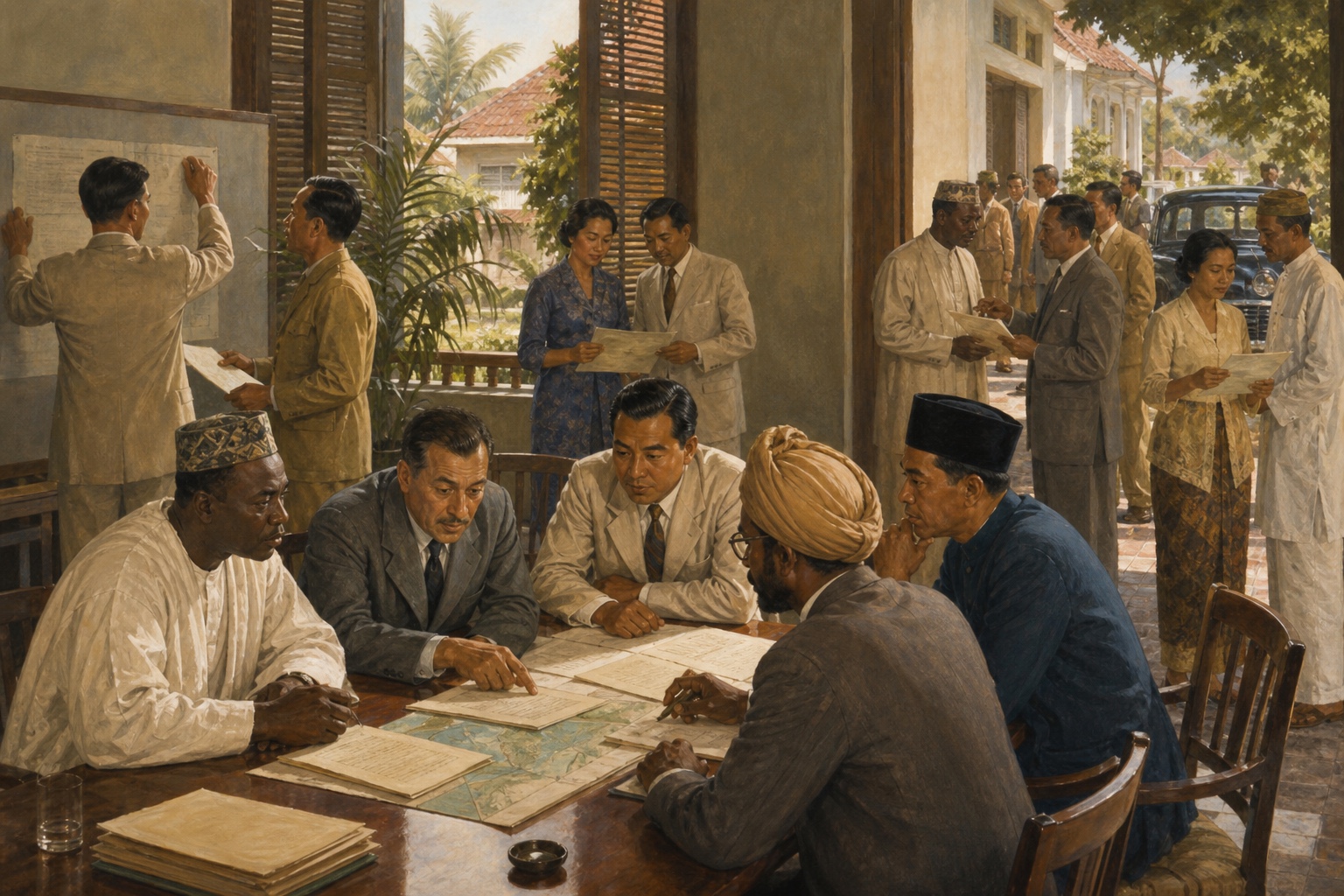
Immediate aftermath — Immediate result: The conference condemned colonialism and racial discrimination and amplified Asian and African claims in world politics without creating a permanent organization. Bandung helped prepare political ground for nonalignment, but it was not the formal founding meeting of the Non-Aligned Movement: that movement was established at the first summit in Belgrade in 1961.
c. 1965
Long-term significance
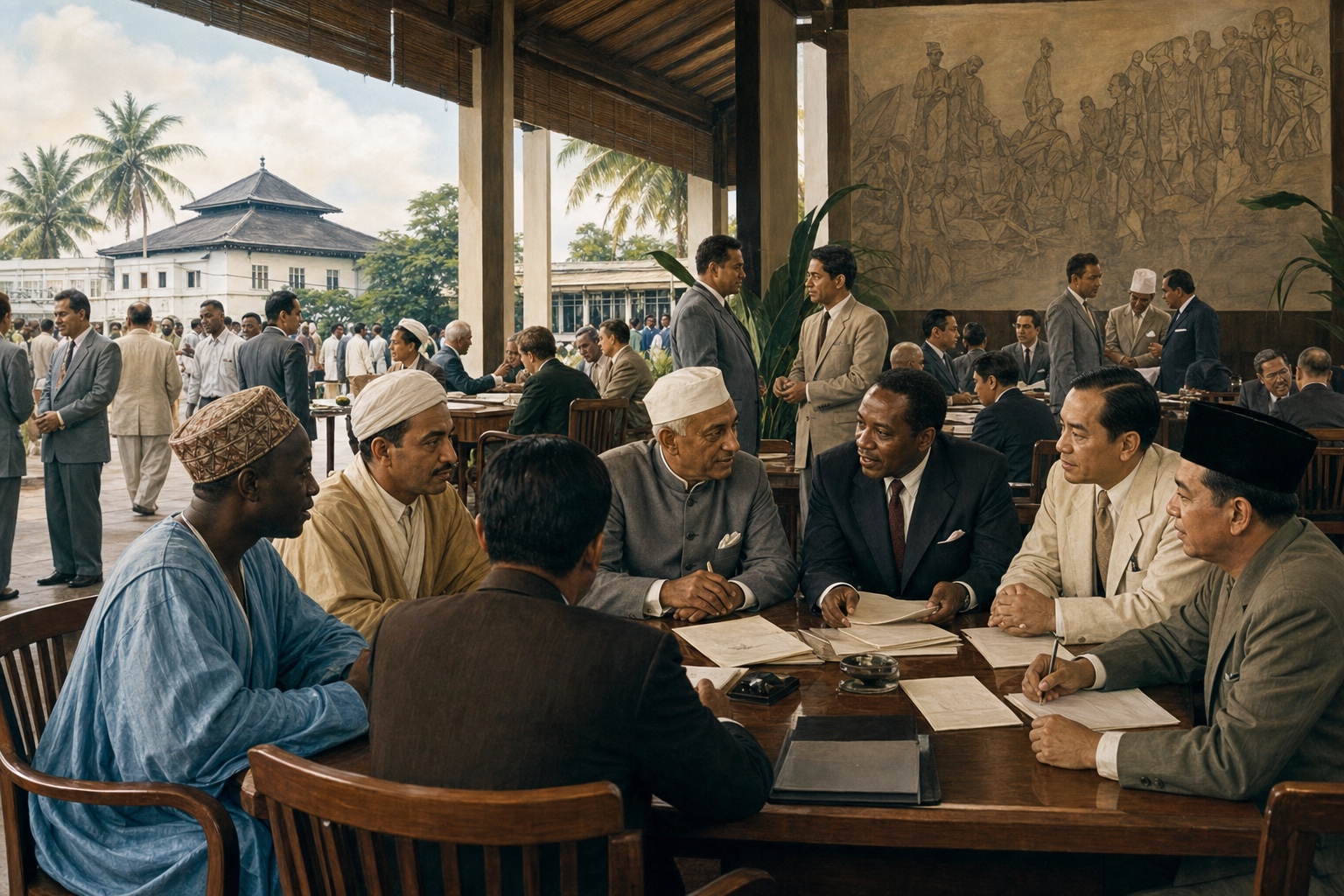
Long-term significance — Long-term significance: Bandung connected a post-Second World War wave of decolonization with governments born from distinct struggles, including China's 1949 revolution. Its principles and anti-racist declaration strengthened solidarity with African liberation and anti-apartheid campaigns. The 'Bandung spirit' was influential but never erased participants' conflicts, unequal power, or different relationships with the Cold War blocs.


Sources
- Bandung Conference — KAA 1955 (Mkaa)mkaa.kemlu.go.idThis Mkaa resource supports the chronology, setting, and course of Bandung Conference.
- Bandung Conference — Bandung Conf (U.S. Office of the Historian)history.state.govThis U.S. Office of the Historian resource supports the chronology, setting, and course of Bandung Conference.
- Bandung Conference — History (Nam)nam.go.ugThis Nam resource supports the chronology, setting, and course of Bandung Conference.