
Age of Enlightenment
c. 1685–c. 1815
A retrospective label for diverse seventeenth- and eighteenth-century intellectual and social projects that emphasized inquiry, criticism, and the possible improvement of human life.

- Period
- c. 1685–c. 1815
- Kind
- Movement
- Regions
- Europe, North America
- Keywords
- Age of Enlightenment · background · course · outcome
Follow the story · Four stages
Background
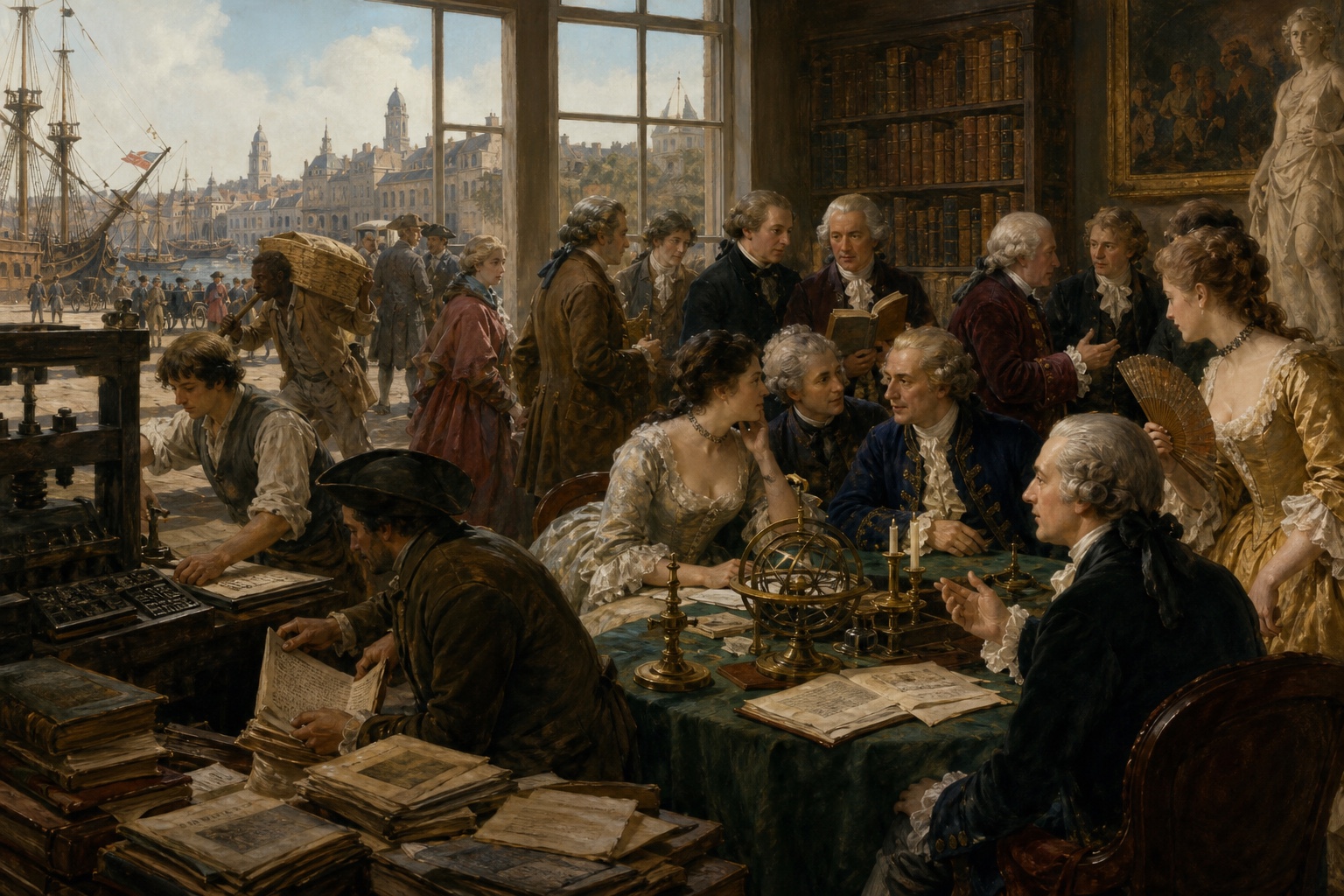
The Scientific Revolution's mathematical and experimental successes encouraged confidence that reason and experience could illuminate both nature and society. Earlier rationalists and empiricists, expanding print culture, religious conflict, commerce, empire, and sociable institutions provided different starting points across Europe and the Atlantic.
- The Scientific Revolution's mathematical and experimental successes encouraged confidence that reason and experience could illuminate both nature and society.
- Earlier rationalists and empiricists, expanding print culture, religious conflict, commerce, empire, and sociable institutions provided different starting points across Europe and the Atlantic.
- Core event: A retrospective label for diverse seventeenth- and eighteenth-century intellectual and social projects that emphasized inquiry, criticism, and the possible improvement of human life.
Course
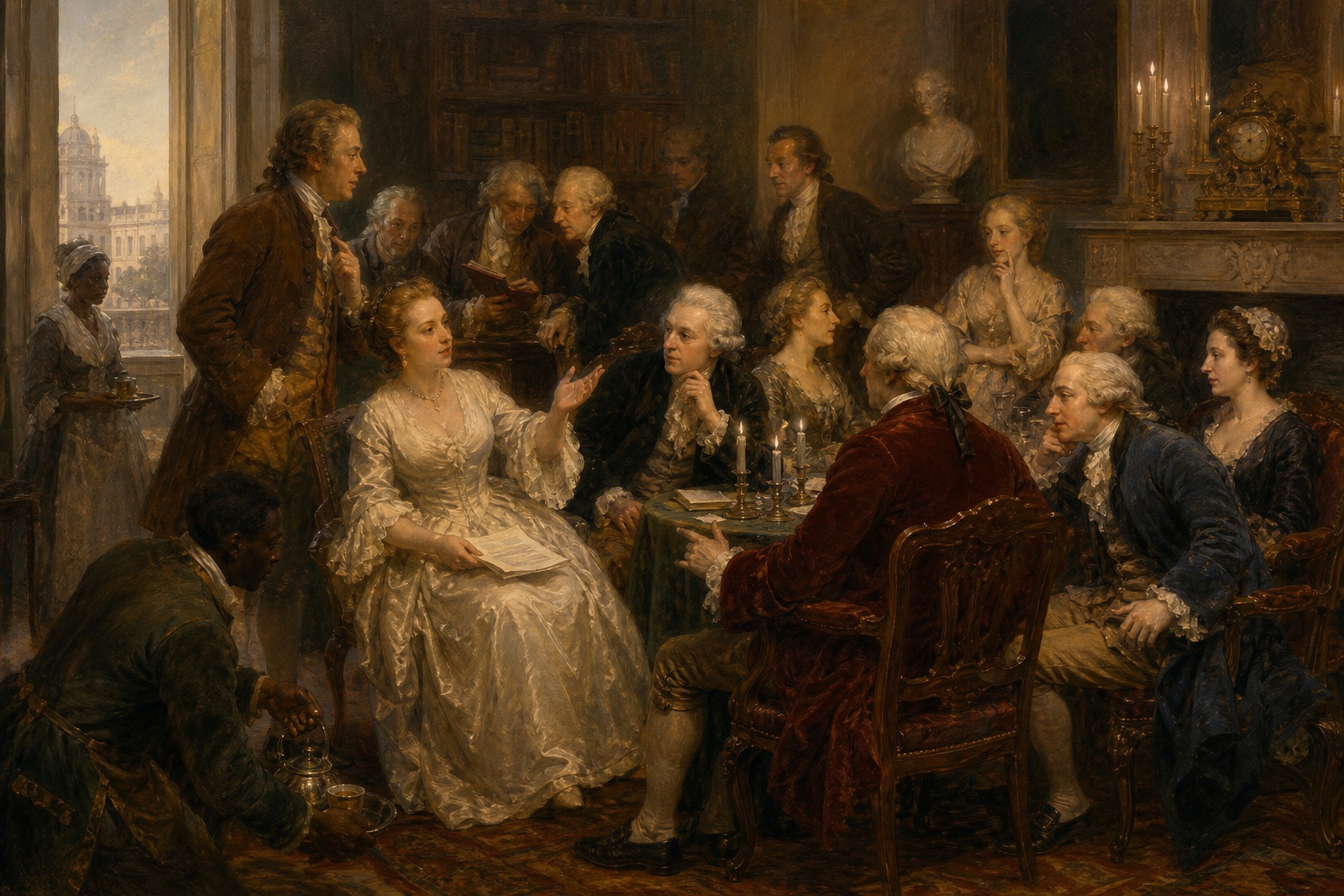
French philosophes, Scottish moral philosophers, German Aufklärer, and thinkers elsewhere debated toleration, natural rights, political economy, education, religion, and aesthetics. Encyclopedias, books, salons, academies, coffeehouses, and correspondence circulated ideas, while censorship, unequal literacy, colonialism, slavery, and exclusion shaped who could participate.
- French philosophes, Scottish moral philosophers, German Aufklärer, and thinkers elsewhere debated toleration, natural rights, political economy, education, religion, and aesthetics.
- Encyclopedias, books, salons, academies, coffeehouses, and correspondence circulated ideas, while censorship, unequal literacy, colonialism, slavery, and exclusion shaped who could participate.
- Conditions behind the action: The Scientific Revolution's mathematical and experimental successes encouraged confidence that reason and experience could illuminate both nature and society. Earlier rationalists and empiricists, expanding print culture, religious conflict, commerce, empire, and sociable institutions provided different starting points across Europe and the Atlantic.
Outcome
Enlightenment arguments informed reform, public criticism, and new accounts of legitimate government. Ideas of natural rights, consent, and representative authority entered the American Revolution, but political action also arose from imperial taxation, colonial institutions, war, and local interests rather than philosophy alone.
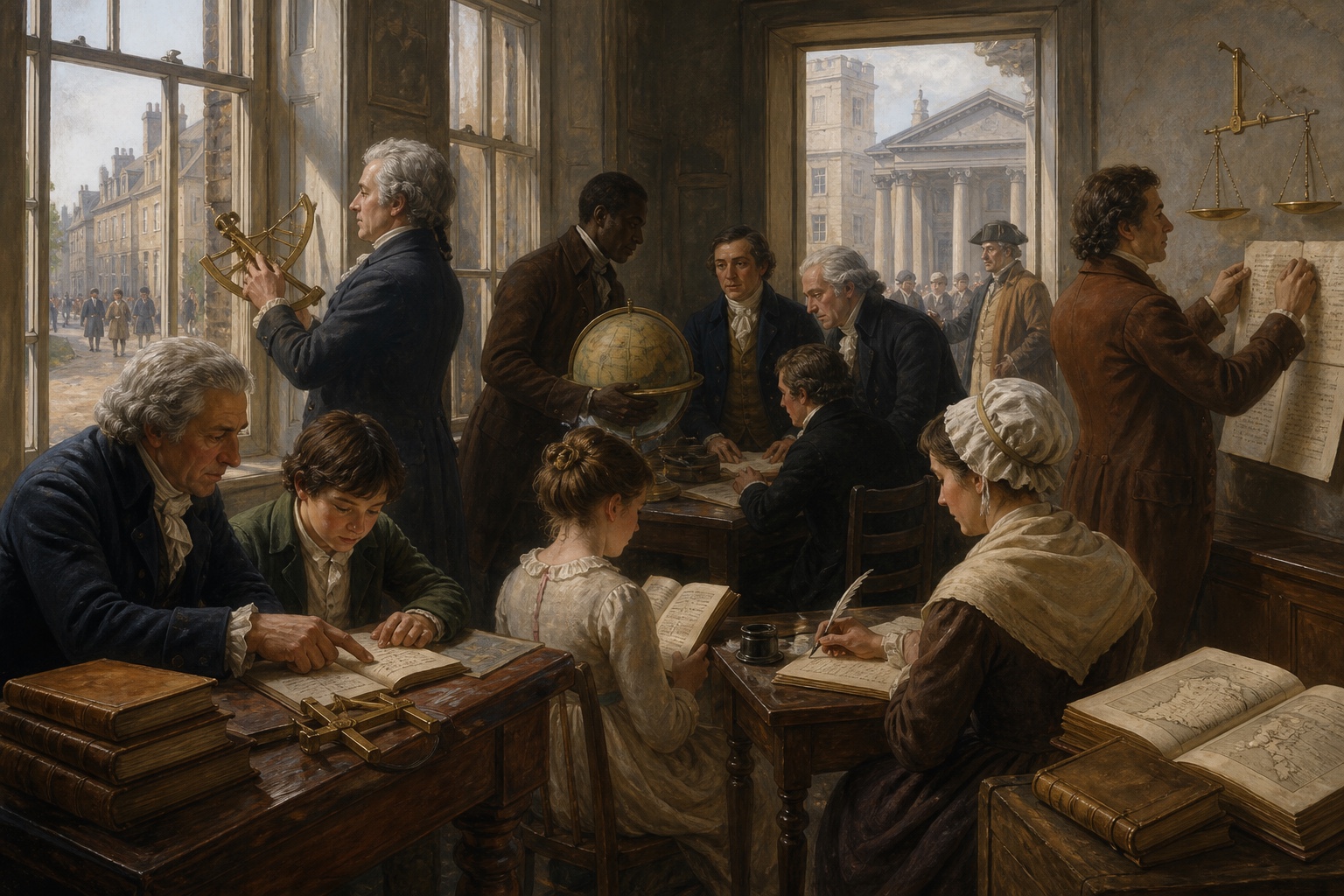
- Enlightenment arguments informed reform, public criticism, and new accounts of legitimate government.
- Ideas of natural rights, consent, and representative authority entered the American Revolution, but political action also arose from imperial taxation, colonial institutions, war, and local interests rather than philosophy alone.
- Process producing the result: French philosophes, Scottish moral philosophers, German Aufklärer, and thinkers elsewhere debated toleration, natural rights, political economy, education, religion, and aesthetics. Encyclopedias, books, salons, academies, coffeehouses, and correspondence circulated ideas, while censorship, unequal literacy, colonialism, slavery, and exclusion shaped who could participate.
Historical significance
The Enlightenment supplied enduring languages of liberty, equality, evidence, and progress, while many participants tolerated or reinforced hierarchies of gender, race, class, and empire. The term and approximate 1685–1815 boundaries are retrospective analytical frames: contemporaries pursued varied, sometimes conflicting enlightenments without a single agreed program or endpoint.
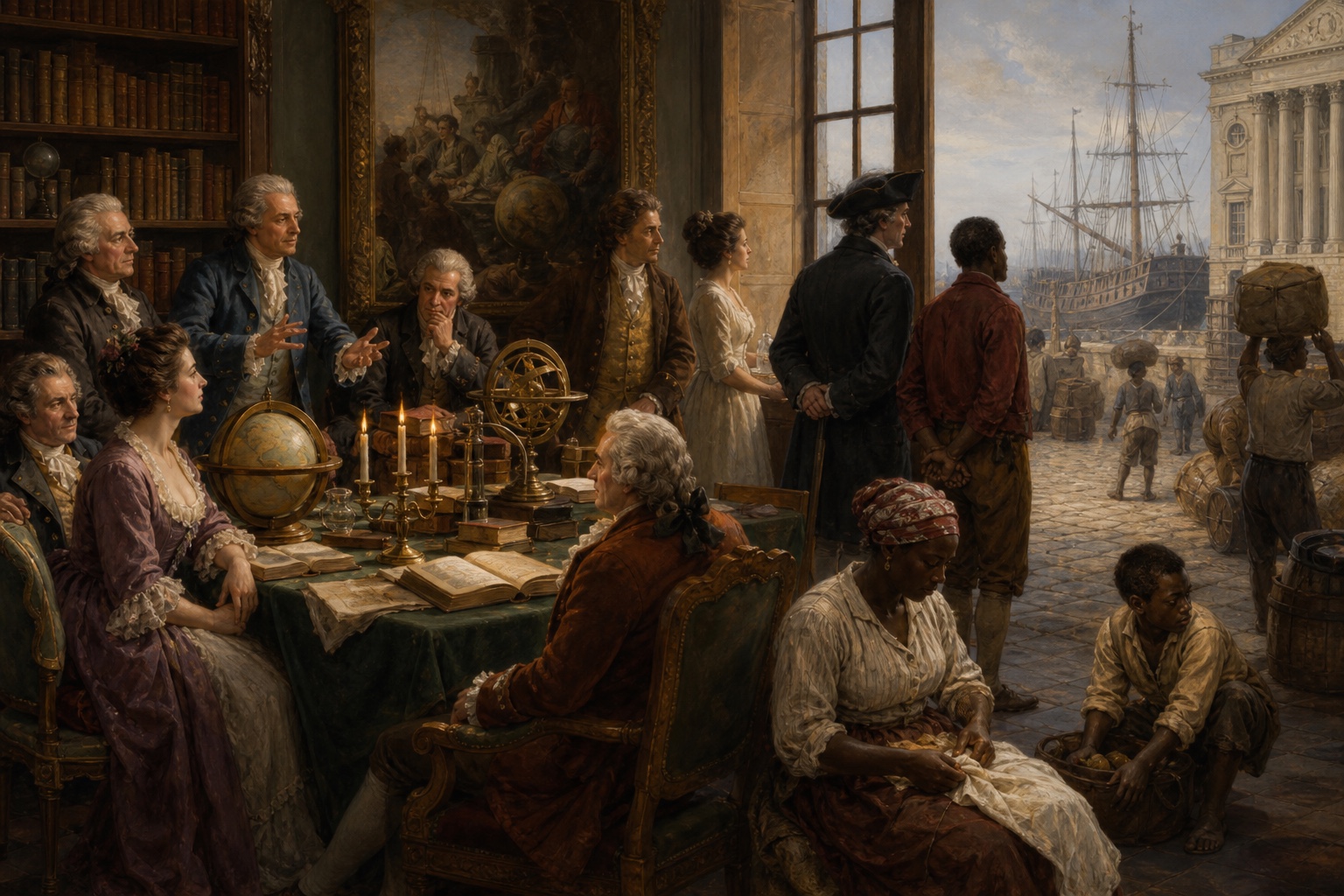
- The Enlightenment supplied enduring languages of liberty, equality, evidence, and progress, while many participants tolerated or reinforced hierarchies of gender, race, class, and empire.
- The term and approximate 1685–1815 boundaries are retrospective analytical frames: contemporaries pursued varied, sometimes conflicting enlightenments without a single agreed program or endpoint.
- Immediate consequence: Enlightenment arguments informed reform, public criticism, and new accounts of legitimate government. Ideas of natural rights, consent, and representative authority entered the American Revolution, but political action also arose from imperial taxation, colonial institutions, war, and local interests rather than philosophy alone.


Related figures
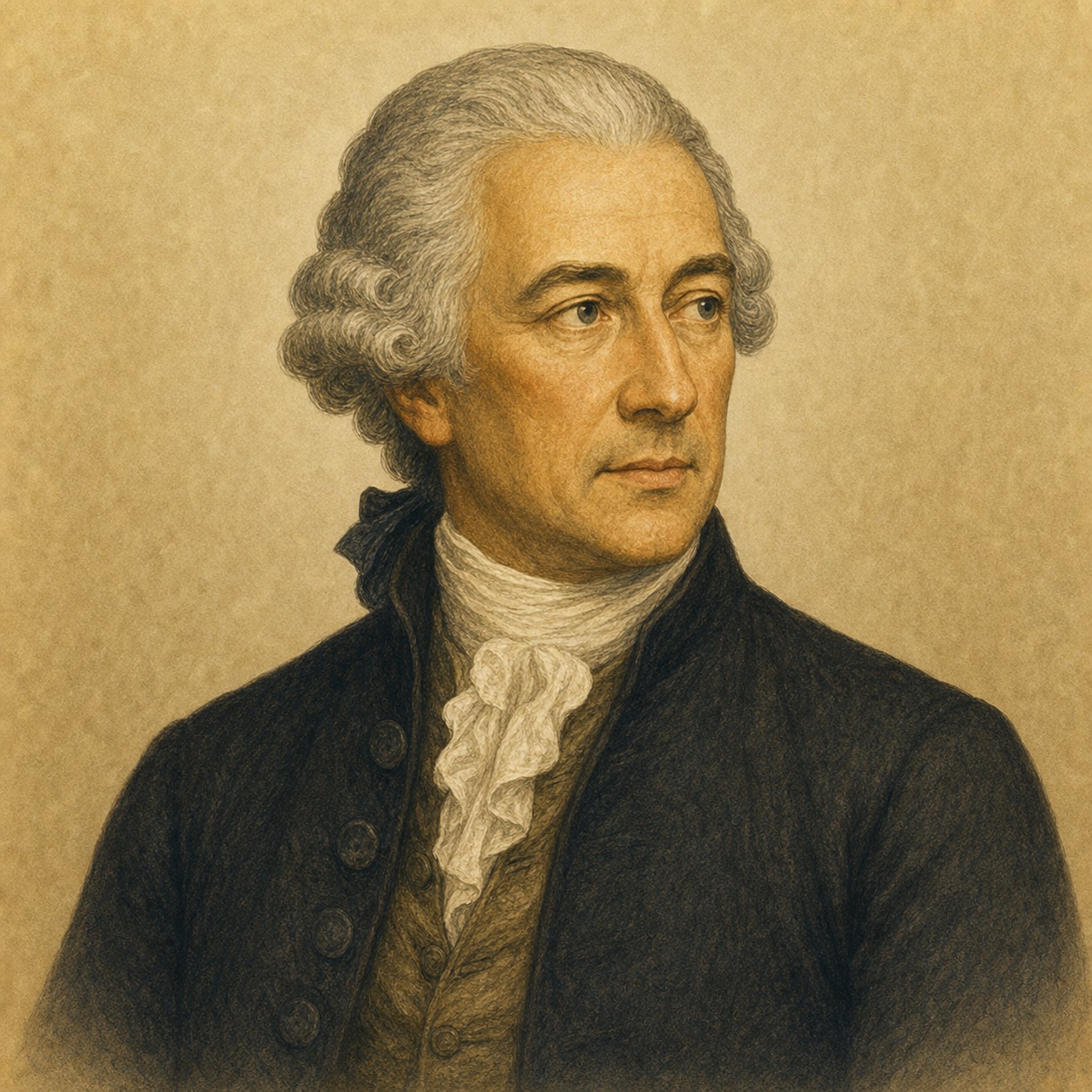
Denis Diderot
historical figure in context
French Enlightenment thinker and editor. As a central figure in the Encyclopedia, he promoted a movement to systematize and publish knowledge. He is a person who thinks about the Enlightenment philosophy of 18th century Europe.
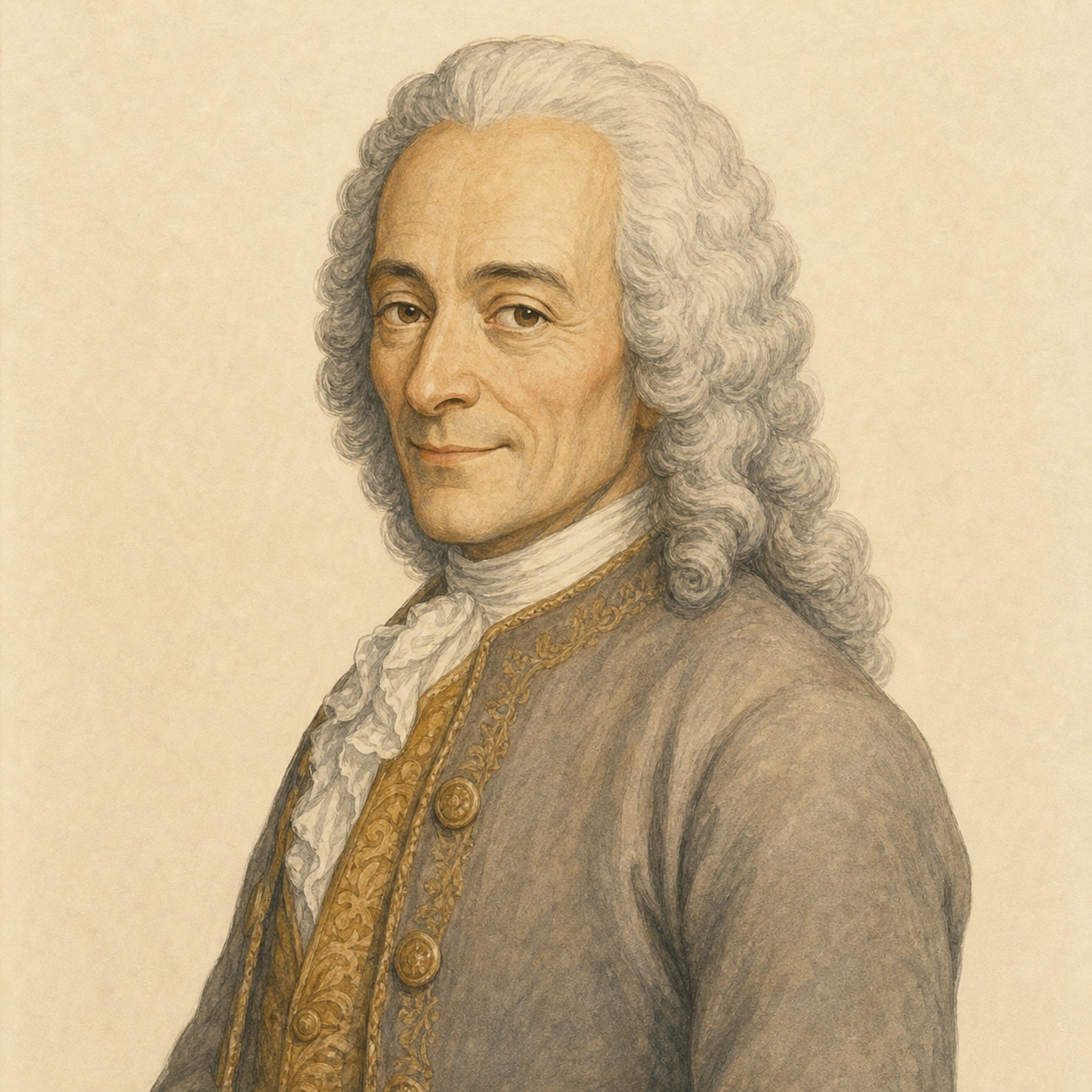
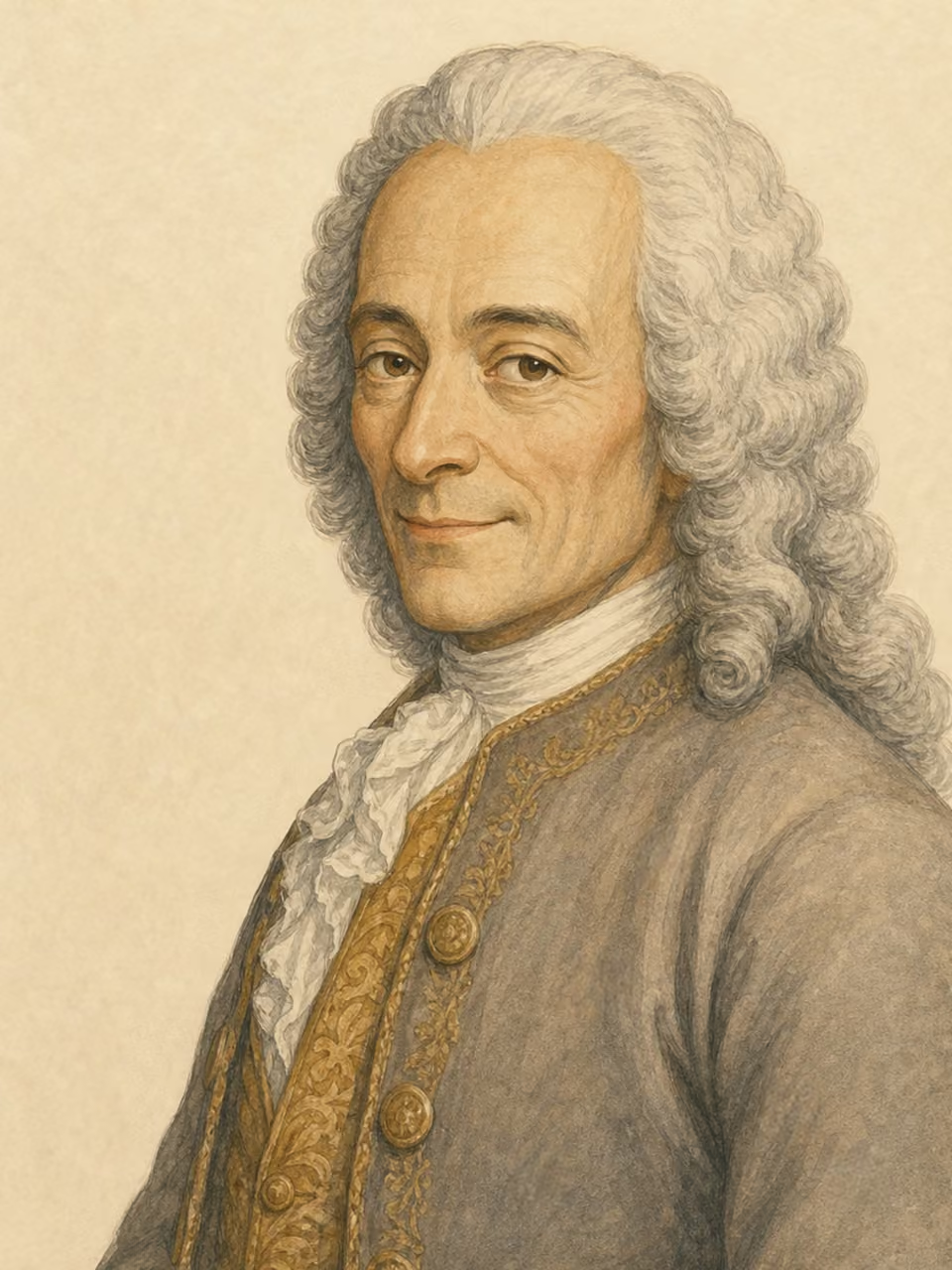
Voltaire
historical figure in context
Writer and philosopher who represents the French Enlightenment. He criticized religious intolerance and despotic power and argued for reason and tolerance. He symbolizes the intellectual changes of eighteenth-century Europe.
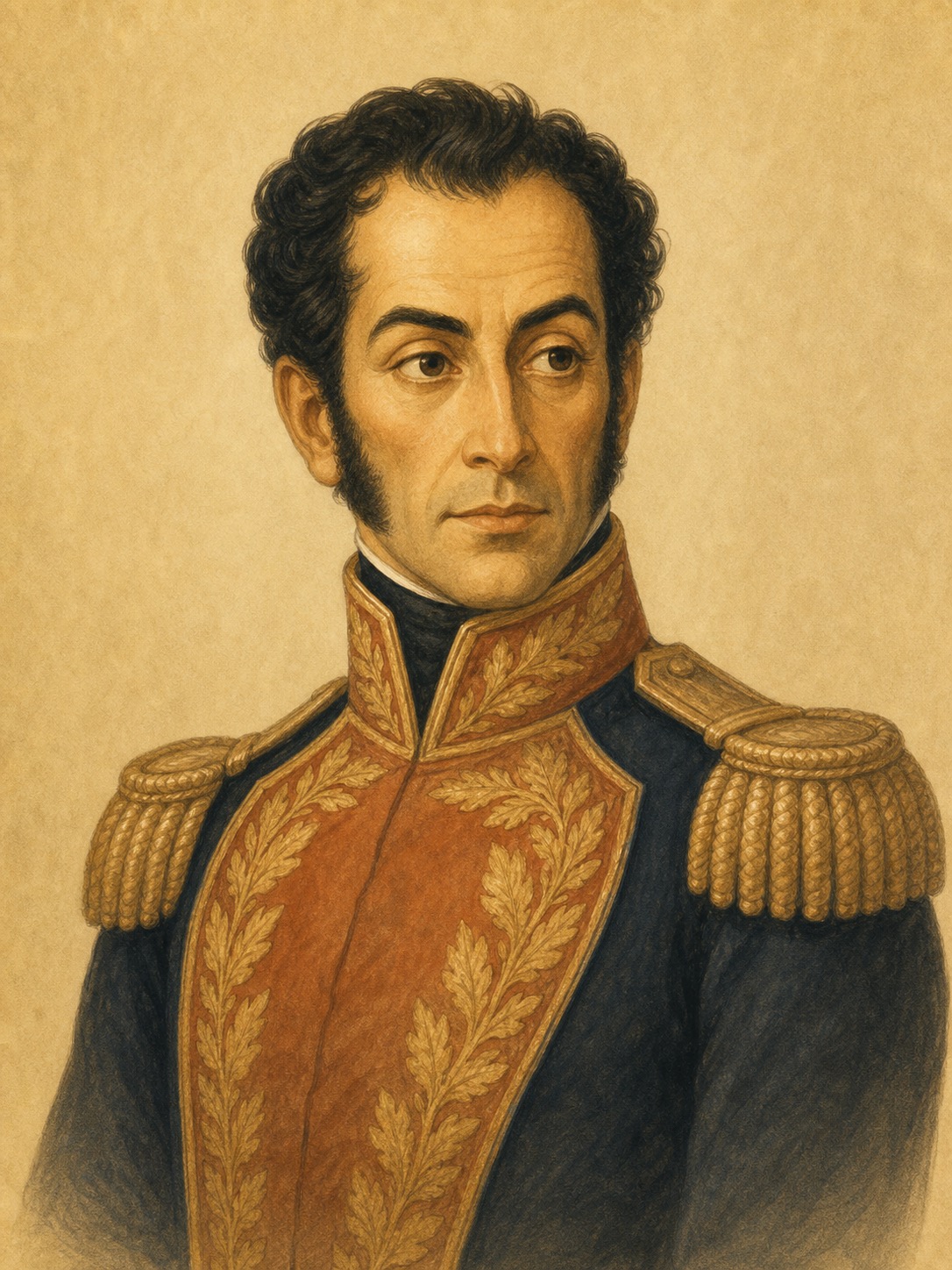
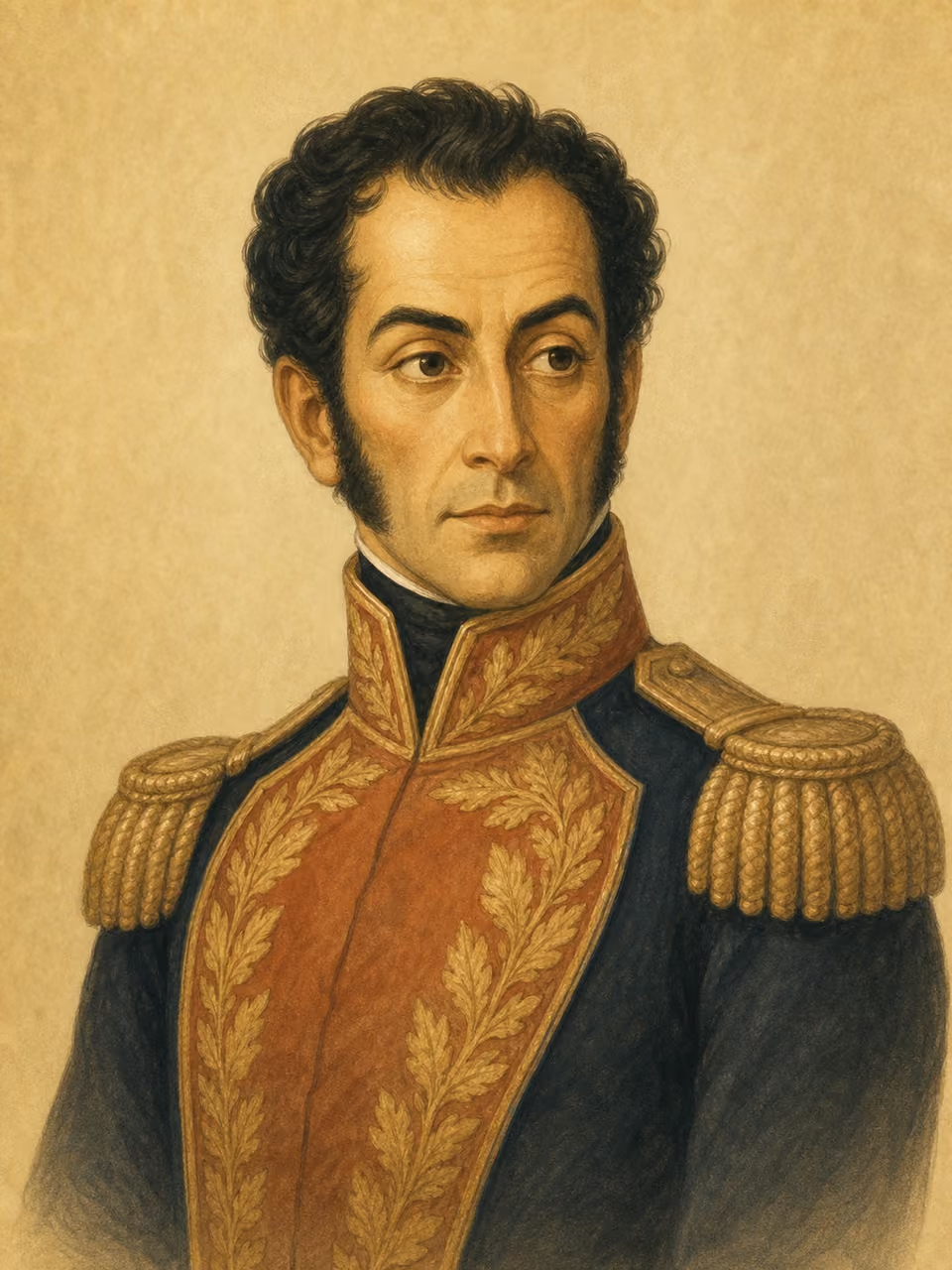
Simon Bolivar
historical figure in context
Through exile, return, and punishing campaigns such as the crossing of the Andes, Bolivar turned independence into a military and political project spanning much of northern South America. Yet victory did not end the story: the struggle to hold Gran Colombia together made the Liberator's career just as much about the fragility of state building as about battlefield triumph.
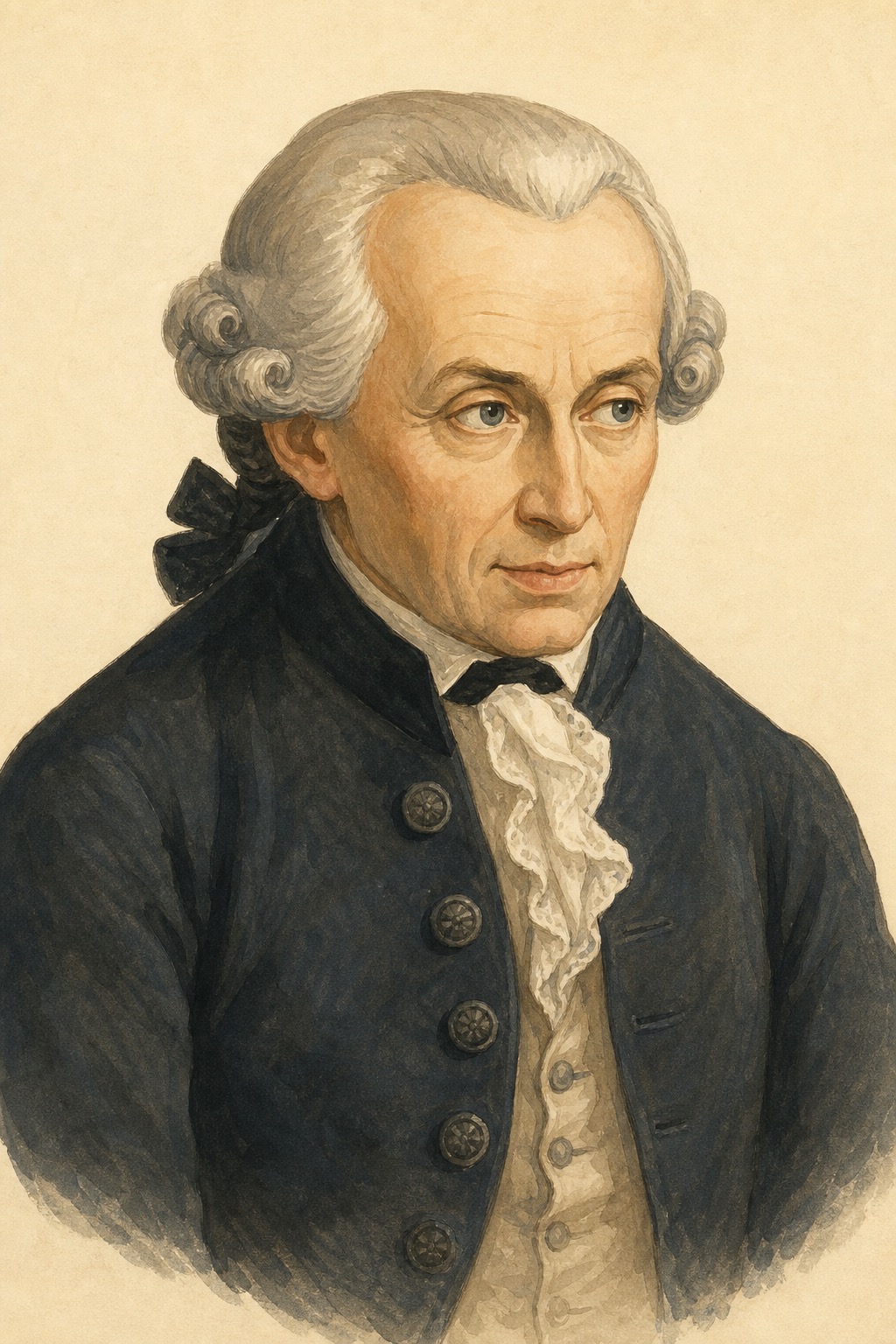
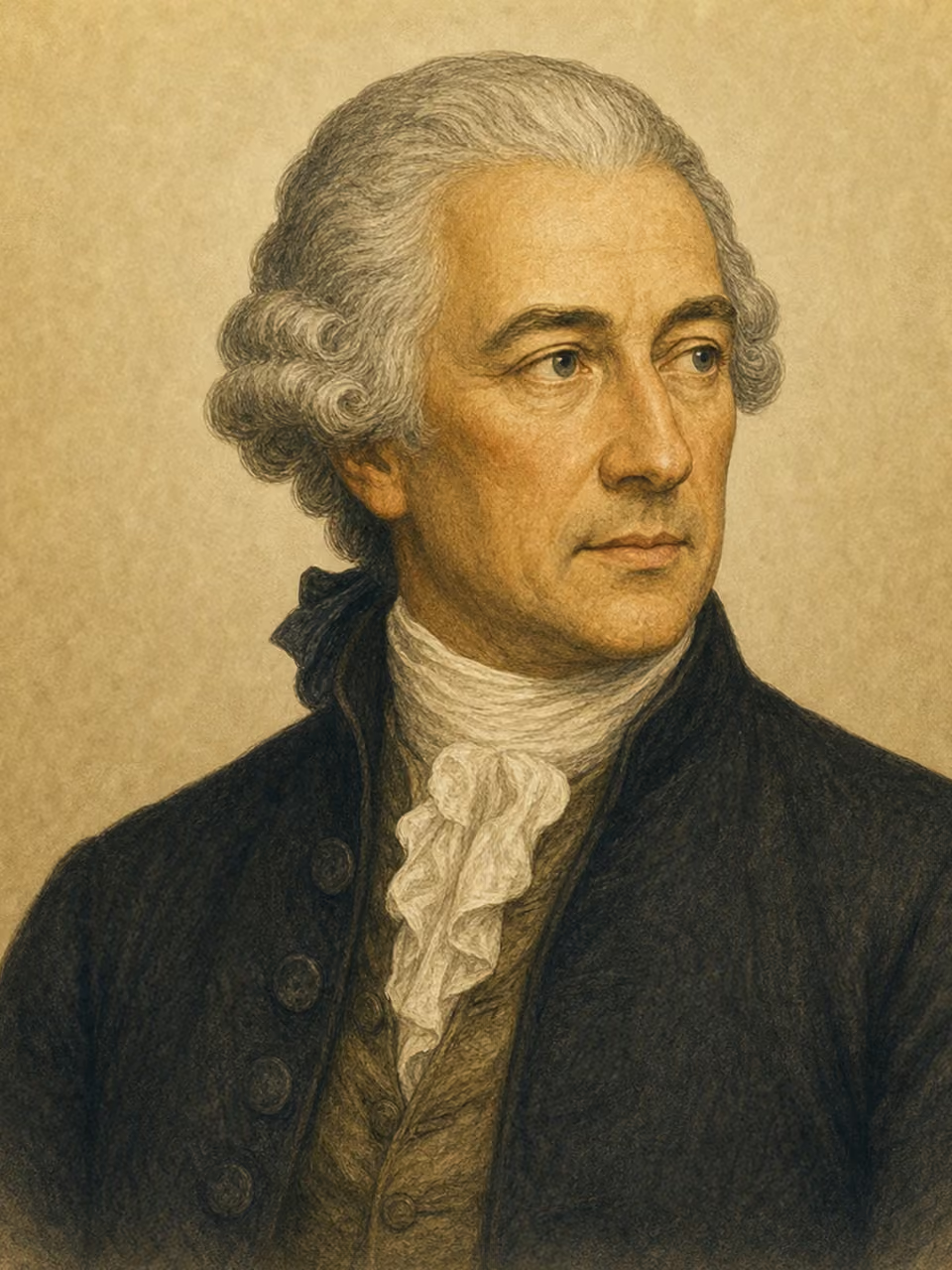
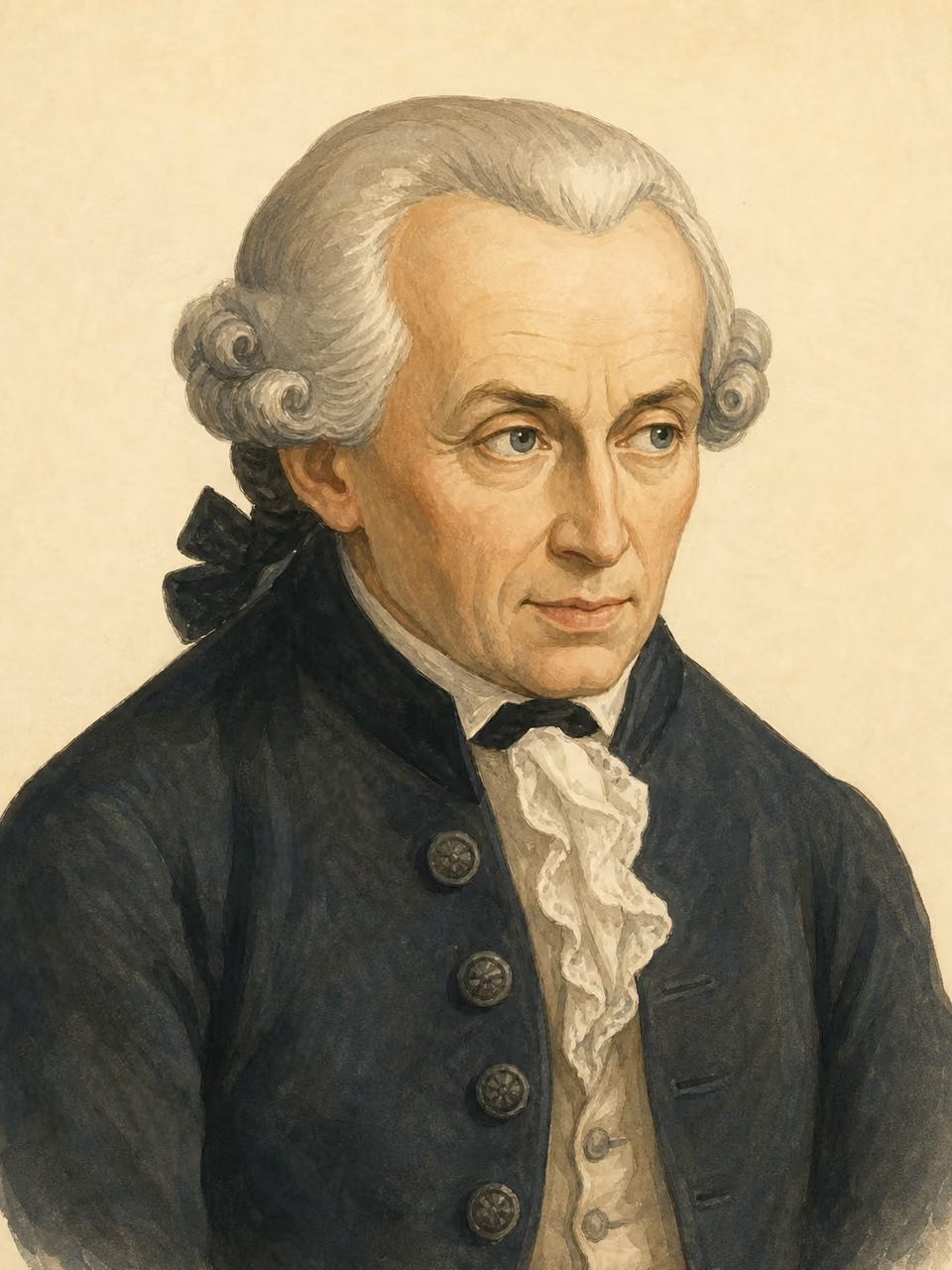
Immanuel Kant
historical figure in context
Prussian philosopher. He questioned the limits and possibilities of reason, and had a great influence on modern thought with his ``Critique of Pure Reason'' and ``What is Enlightenment?'' He is a person who thinks about Enlightenment ideas.
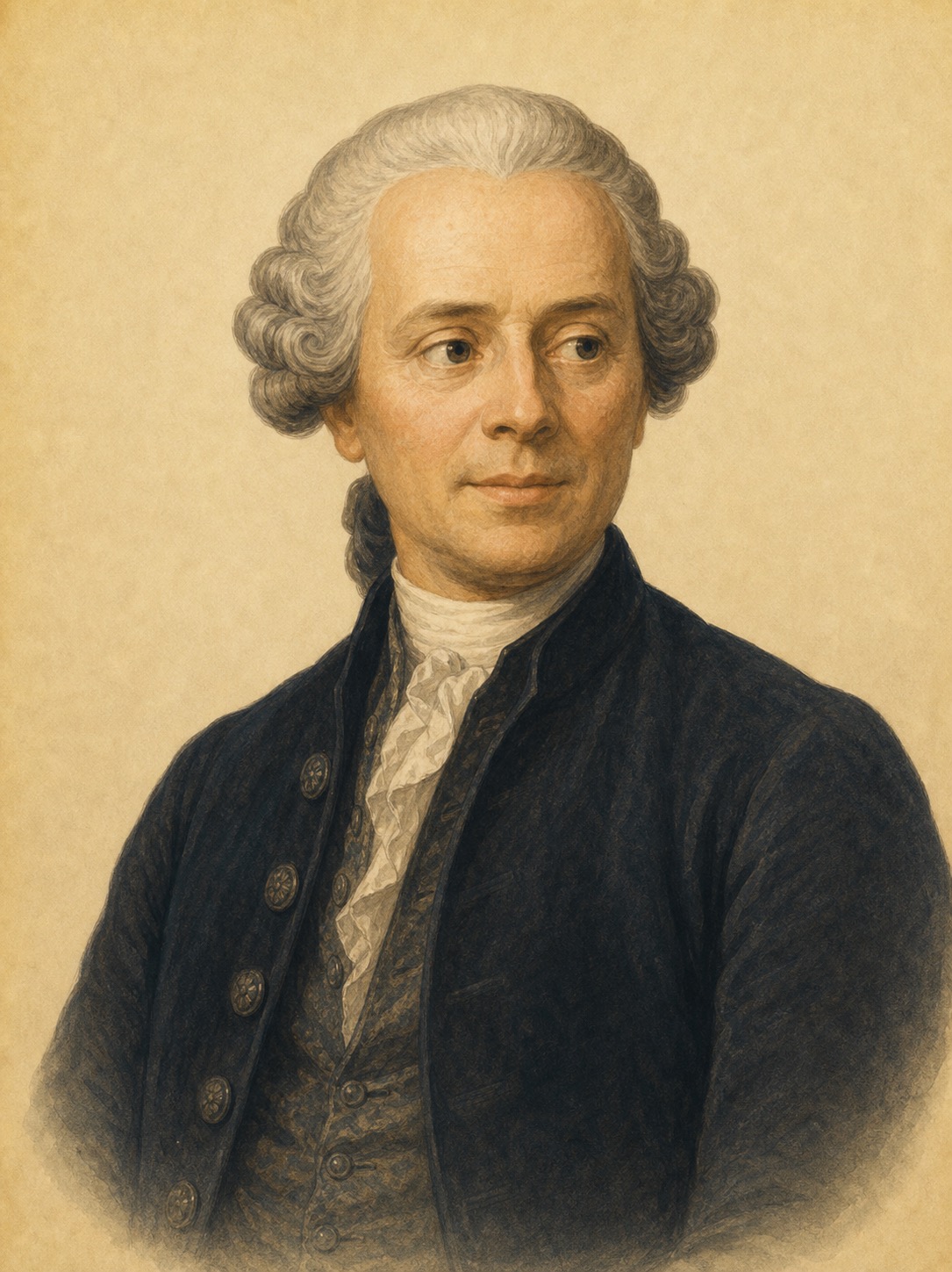
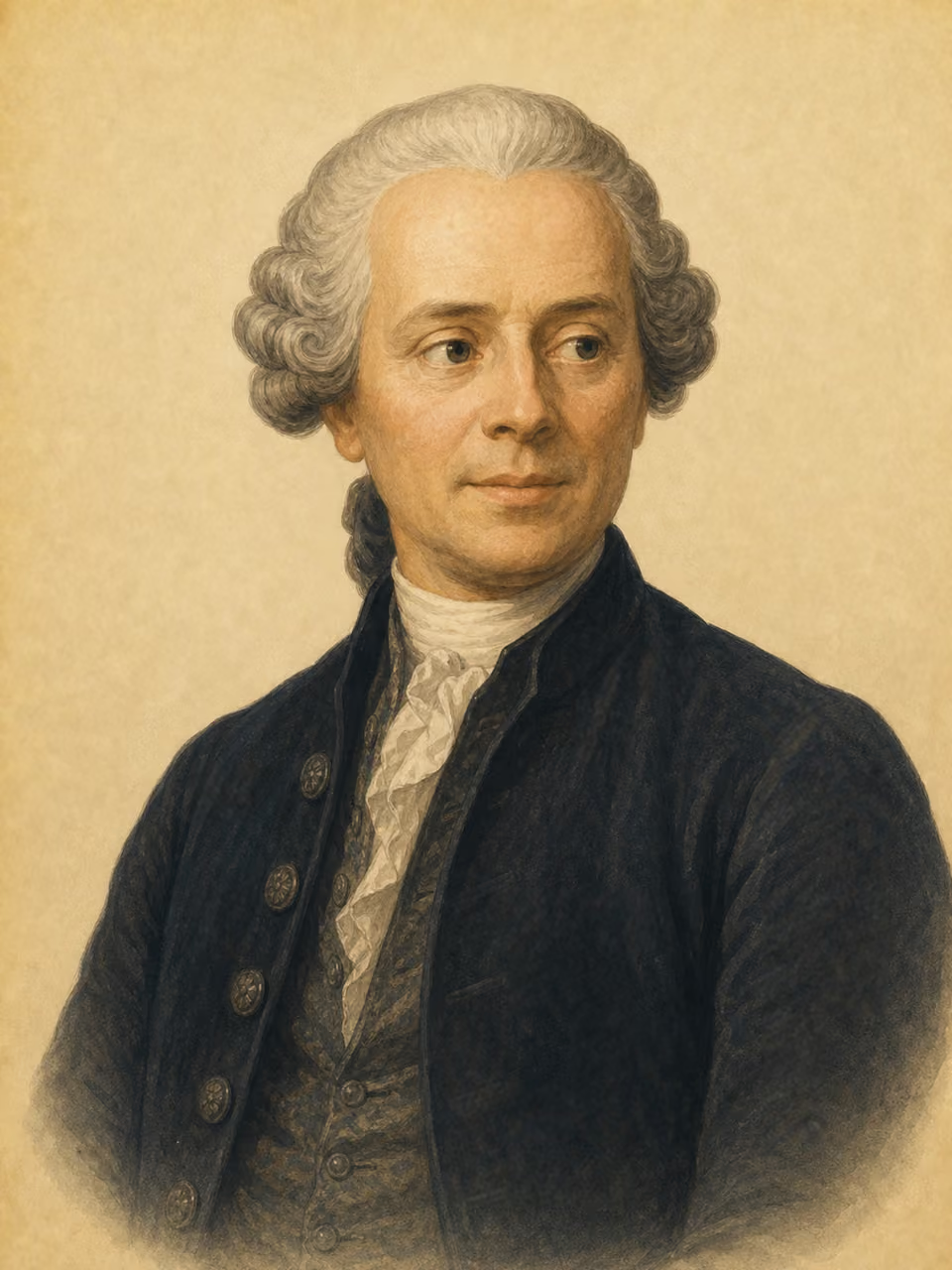
Jean le Rond d Alembert
historical figure in context
French mathematician and Enlightenment thinker. Known for his research into mechanics, he co-edited the Encyclopedia with Diderot. He is a figure who connects science and Enlightenment thought in the 18th century.
Related events
1665
Prelude

Prelude — Background: The Scientific Revolution's mathematical and experimental successes encouraged confidence that reason and experience could illuminate both nature and society. Earlier rationalists and empiricists, expanding print culture, religious conflict, commerce, empire, and sociable institutions provided different starting points across Europe and the Atlantic.
c. 1684
Rising tension
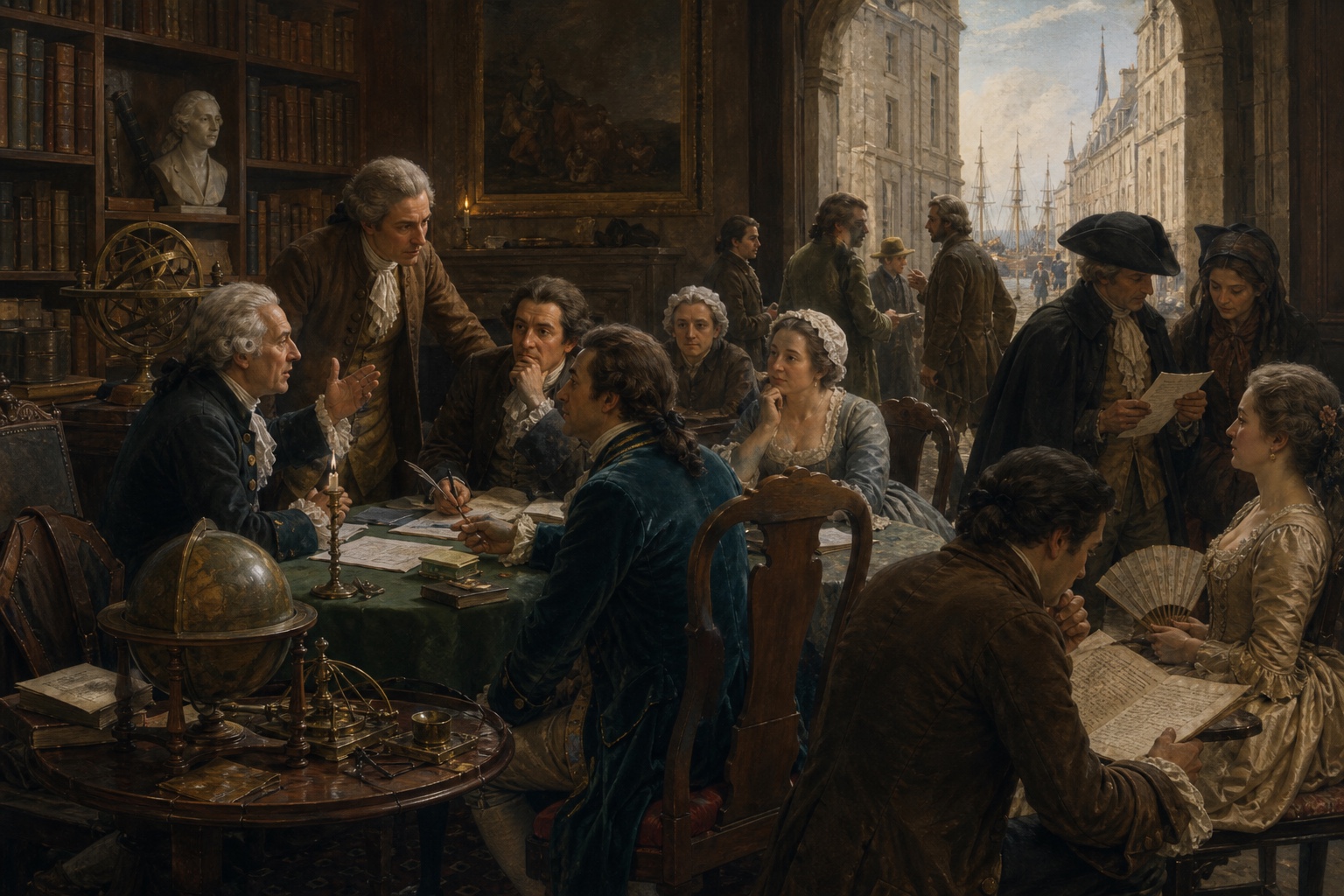
Rising tension — Build-up: French philosophes, Scottish moral philosophers, German Aufklärer, and thinkers elsewhere debated toleration, natural rights, political economy, education, religion, and aesthetics. Encyclopedias, books, salons, academies, coffeehouses, and correspondence circulated ideas, while censorship, unequal literacy, colonialism, slavery, and exclusion shaped who could participate.
c. 1685–c. 1815
Age of Enlightenment
Current event
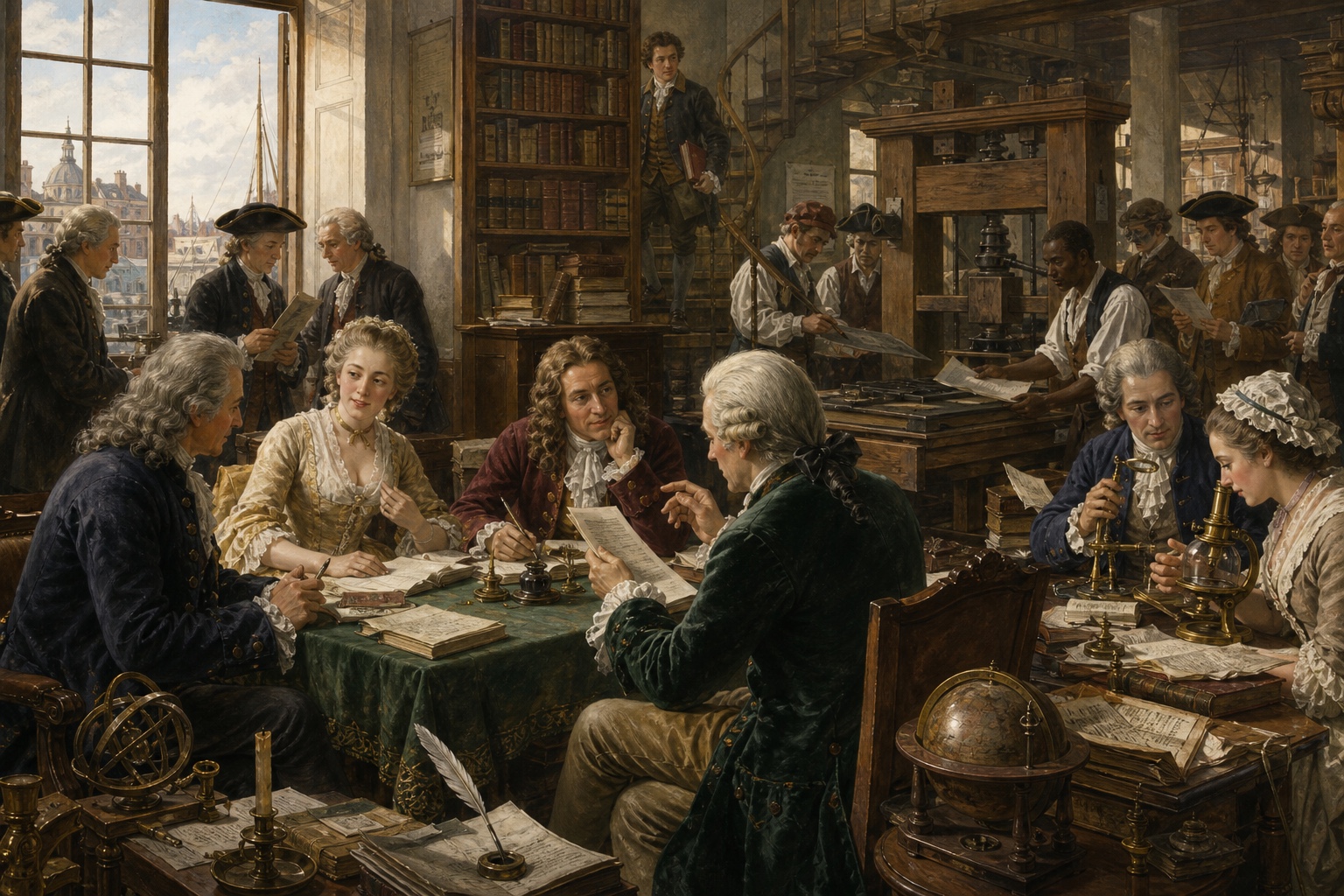
Age of Enlightenment — Central transition: A retrospective label for diverse seventeenth- and eighteenth-century intellectual and social projects that emphasized inquiry, criticism, and the possible improvement of human life.
c. 1816
Immediate aftermath
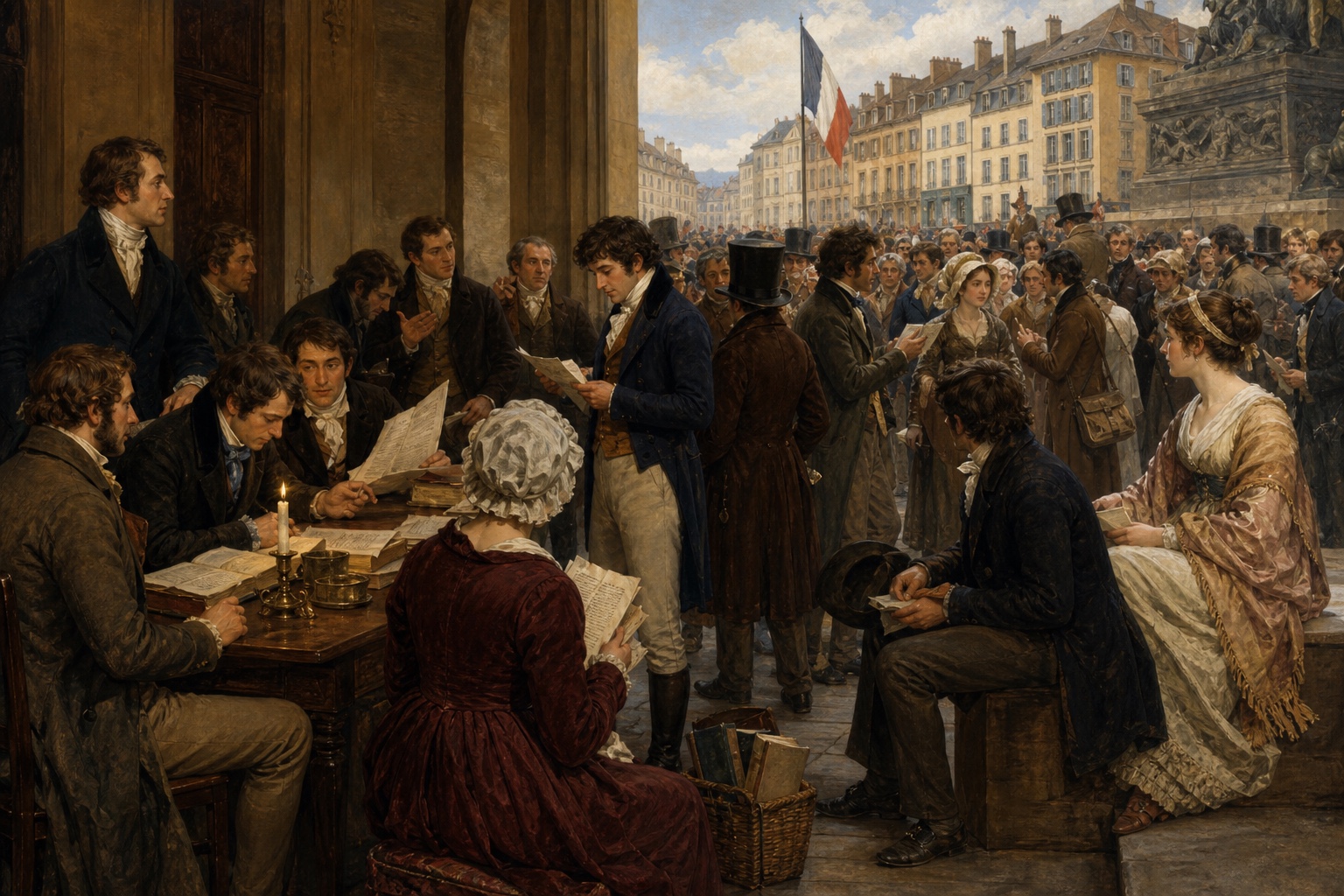
Immediate aftermath — Immediate result: Enlightenment arguments informed reform, public criticism, and new accounts of legitimate government. Ideas of natural rights, consent, and representative authority entered the American Revolution, but political action also arose from imperial taxation, colonial institutions, war, and local interests rather than philosophy alone.
c. 1825
Long-term significance
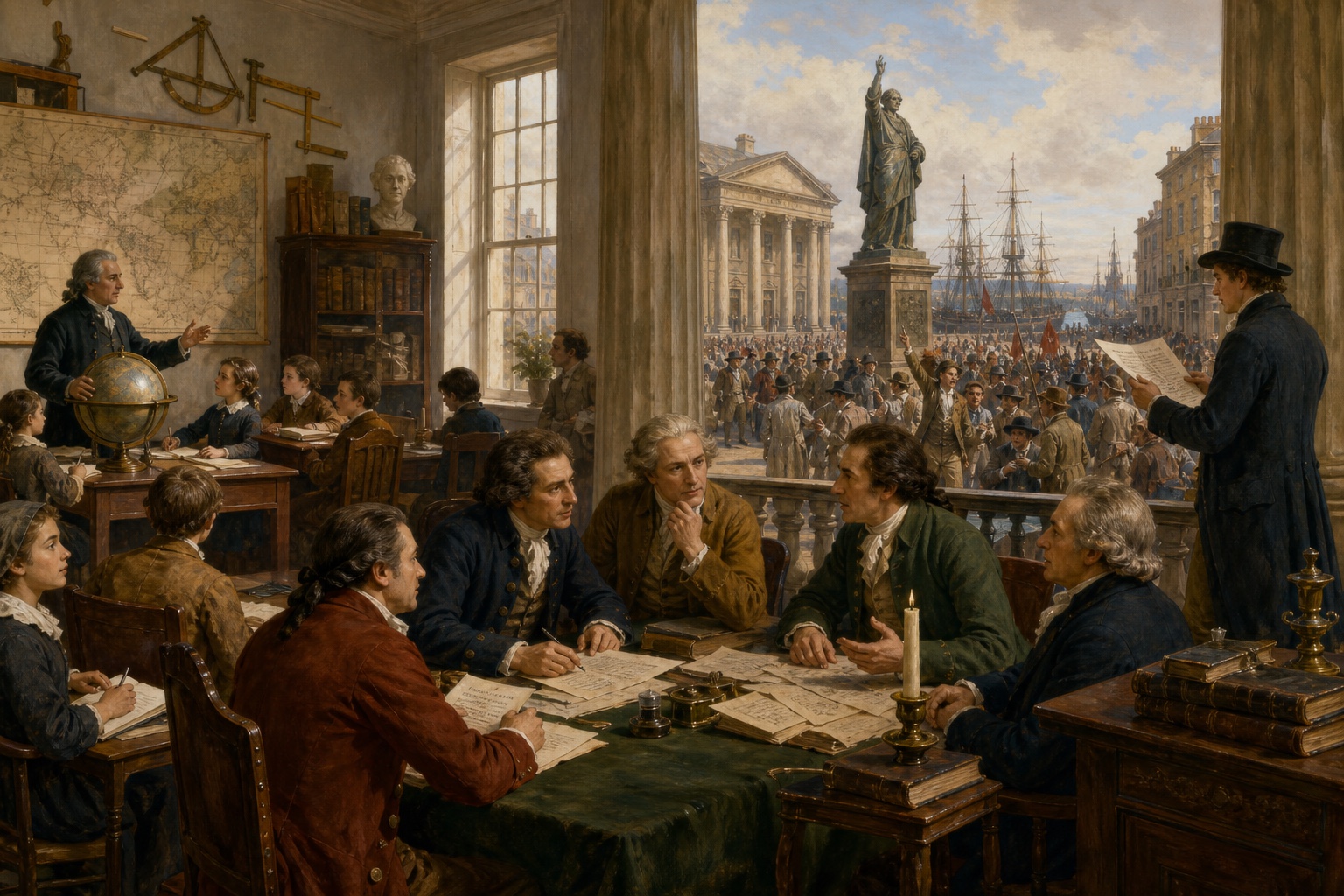
Long-term significance — Long-term significance: The Enlightenment supplied enduring languages of liberty, equality, evidence, and progress, while many participants tolerated or reinforced hierarchies of gender, race, class, and empire. The term and approximate 1685–1815 boundaries are retrospective analytical frames: contemporaries pursued varied, sometimes conflicting enlightenments without a single agreed program or endpoint.


Sources
- Age of Enlightenment — Enlightenment (Plato)plato.stanford.eduThis Plato resource supports the chronology, setting, and course of Age of Enlightenment.
- Age of Enlightenment — Content Section 0 (Open)open.eduThis Open resource supports the chronology, setting, and course of Age of Enlightenment.
- Age of Enlightenment — 2AE72EAB2D947A9E4AB1B6E4C7FAC7C6 (Cambridge University Press)cambridge.orgThis Cambridge University Press resource supports the chronology, setting, and course of Age of Enlightenment.